10 Scariest Horror Movie Families
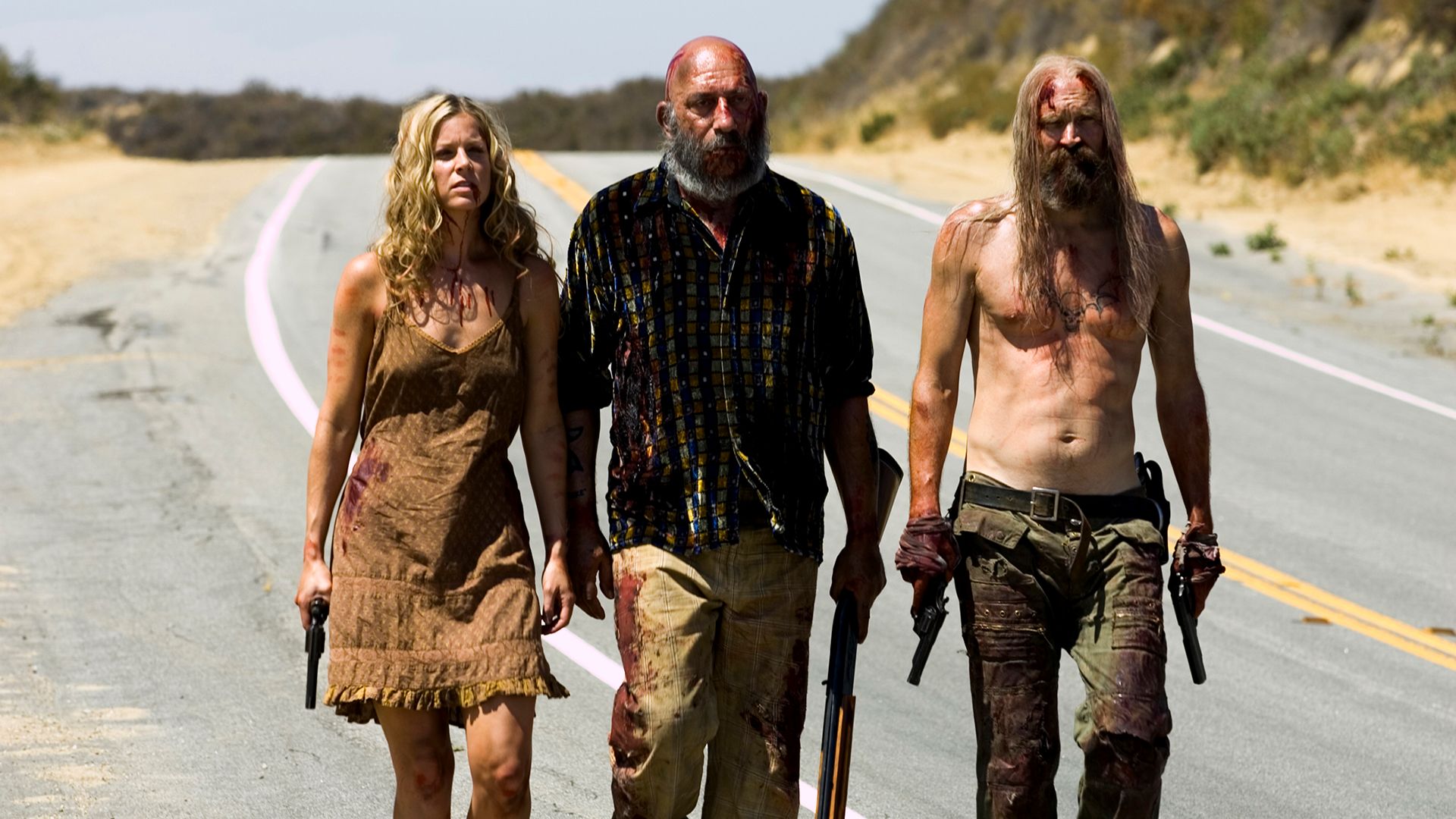
Horror has no shortage of terrifying monsters, masked killers, and supernatural threats, but some of the genre’s most disturbing villains are united by something far more familiar: family. Whether they’re protecting a murderous inheritance, enforcing a twisted religious mission, or treating unsuspecting travelers as dinner, these families turn the bonds that should provide safety and affection into instruments of terror.
Their shared history makes them especially frightening, because their brutality isn’t simply the work of one disturbed individual. It’s a way of life passed between generations, protected by relatives who see cruelty as normal.
Horror families come in many forms: wealthy dynasties with murderous traditions, isolated clans who hunt strangers, and parents whose authority makes their children’s lives unbearable. What makes them especially disturbing is the way their violence becomes part of everyday life. Dinner, inheritance, religious devotion, and even a wedding can become occasions for cruelty, with relatives protecting one another long after any ordinary sense of morality has disappeared.
The Odets Family
Wrong Turn (2003)

The cannibalistic killers in Wrong Turn make the wilderness feel like their private hunting ground. Three Finger, Saw Tooth, and One Eye use traps, local knowledge, and the isolation of the West Virginia woods to ambush stranded travelers.
The Wrong Turn wider franchise gradually fills in the brothers’ history, introducing their association with Maynard and their time in a psychiatric facility in Wrong Turn 4: Bloody Beginnings (2011) and Wrong Turn 5: Bloodlines (2012). That backstory adds a layer of grim history to the family, although the films’ continuity is hardly tidy.
The Odets brothers are frightening because they combine cunning with an almost casual brutality. Three Finger, in particular, becomes a recurring threat across the original six-film series, making escape from their territory feel temporary at best.
The Le Domas Family
Ready Or Not (2019)

The Le Domas family turn a wedding-night tradition into a bloodbath in Ready or Not. After marrying Alex Le Domas, Grace (Samara Weaving) draws hide-and-seek from the family’s mysterious game box. She soon learns that the relatives must hunt her before dawn, following a pact they believe sustains their immense fortune.
Their wealth makes the ritual possible: the family can transform a mansion into a hunting ground while treating murder as an inconvenient obligation. Their fear of Mr. Le Bail, the supernatural figure behind the pact, exposes how completely the generations of privilege have become dependent on a bargain they barely understand.
The 2026 sequel, Ready or Not 2: Here I Come, widens the mythology after Grace survives, introducing four rival families competing for control of the High Seat. Le Domas's most frightening inheritance is the belief that wealth makes any sacrifice acceptable.
The Robeson Family
The People Under The Stairs (1991)

The Robesons from The People Under the Stairs disguise their cruelty behind respectable suburban appearances. Known as Mommy and Daddy, they maintain absolute control over the children they steal and imprison. Their house is a carefully constructed nightmare of locked rooms, traps, and hidden passages.
When Fool breaks in, he discovers pale children confined in the basement, some of whom have been driven to cannibalism. Roach, whose tongue was removed as punishment for speaking, survives by moving through the walls. Alice, whom the Robesons present as their daughter, has been abused into obedience and does not initially understand that she was stolen from her birth parents.
Their household rules turn discipline into a system of terror. The Robesons’ crimes are especially disturbing because they extend their control over the children’s identities, bodies, and futures. Their home is a private institution where cruelty has been disguised as family order.
The Meiks Family
Frailty (2001)

In Frailty, a father tells his sons that an angel has ordered him to kill people who are secretly demons. He receives names and weapons for the task, then expects Adam and Fenton to accept the killings as a sacred duty. Frailty's Adam appears to believe him; Fenton suspects their father has become dangerously delusional.
The family’s horror lies in the moral trap this creates for the boys. Disobeying their father means rejecting the person responsible for their safety, while obeying means becoming complicit in murder.
Bill Paxton’s performance makes the father’s conviction unnerving because he approaches violence with the certainty of someone performing an unpleasant but necessary job. The Meiks are frightening because their violence is wrapped in a worldview that makes ordinary moral objections seem like evidence of corruption.
The Merrye Family
Spider Baby (1967)

The Merrye siblings live in a decaying mansion, affected by a hereditary condition that causes mental and physical regression as they age. Virginia, Elizabeth, and Ralph are cared for by Bruno, the family chauffeur, who tries to keep their dangerous behavior hidden. Virginia’s spider game is particularly disturbing: she traps visitors and attacks them with knives, treating murder as childish play.
Their behavior becomes even more dangerous when distant relatives arrive to challenge their claim to the family estate. The Merryes’ inherited condition gives Spider Baby its macabre premise, but their isolation allows their violence to continue with little interference.
The family’s story ends in destruction, with Bruno using dynamite against the household he has spent years trying to contain. The final suggestion that the condition may reappear in a later generation gives their story a lingering chill.
The Armitage Family
Get Out (2017)
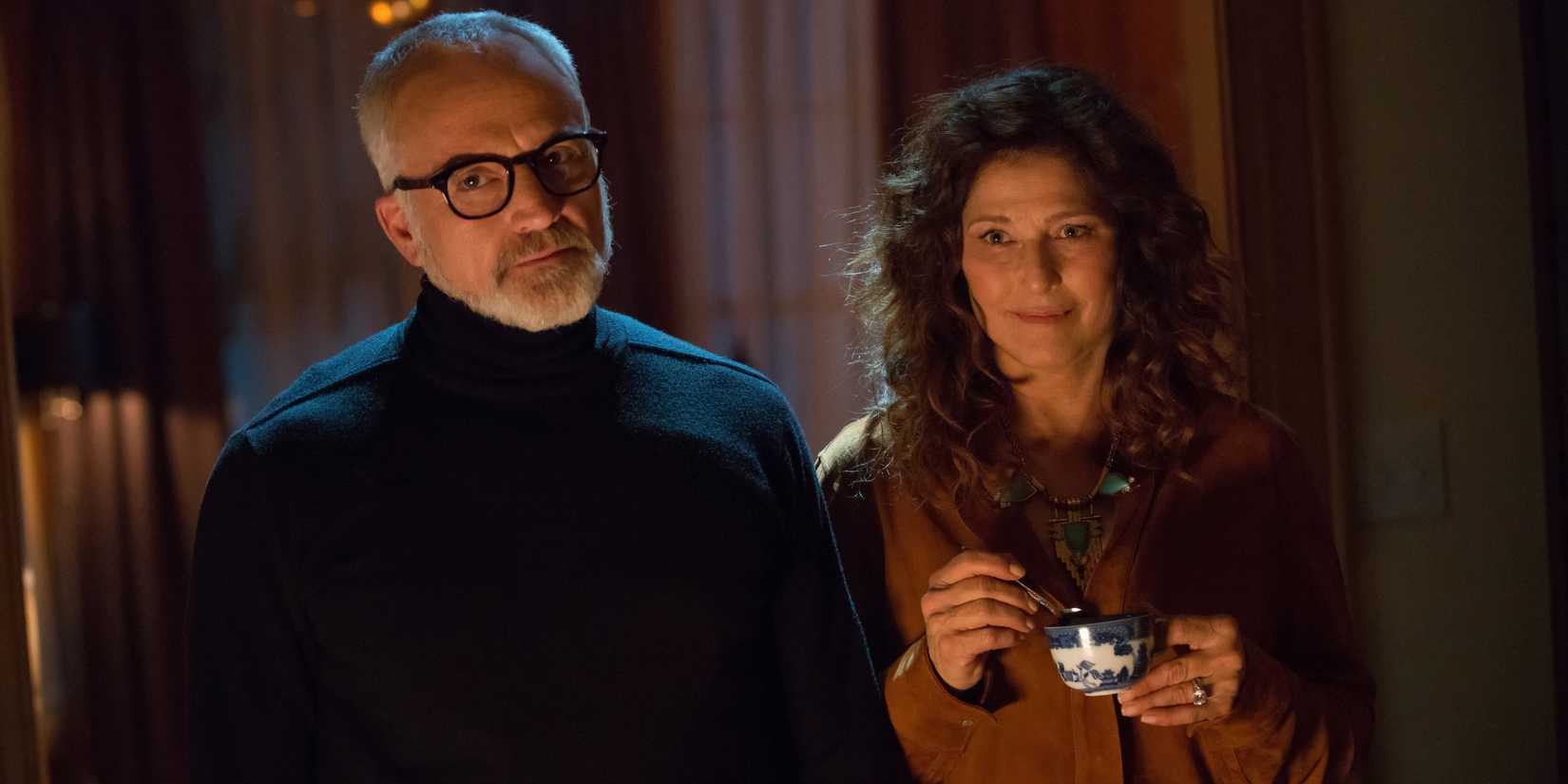
The Armitages’ welcoming manners make their crimes in Get Out much easier to conceal. When Chris Washington (Daniel Kaluuya) visits girlfriend Rose’s family estate, Dean’s awkwardly progressive comments and Missy’s offer of hypnosis initially seem like uncomfortable social encounters.
The truth is the Coagula, a procedure that allows wealthy white people to take control of Black bodies while leaving their original consciousness trapped in the Sunken Place. Dean supplies the medical expertise, Missy uses hypnosis to immobilize victims, and Rose lures unsuspecting partners to the estate.
Their operation is a family enterprise, maintained through coordinated deception and a shared belief that Black bodies can be appropriated for their own benefit. Rose’s role makes Chris’s predicament especially cruel: the relationship he trusts is part of the trap. The Armitages’ horror comes from the way racism, entitlement, and medical control converge inside a family that considers itself civilized.
The Jupiter Clan
The Hills Have Eyes (1977)

In Wes Craven’s The Hills Have Eyes, the Jupiter clan survives in the desert by attacking travelers who stray into its territory. Led by Papa Jupiter, the family targets the stranded Carters, turning their broken-down vehicle and remote surroundings into a deadly disadvantage. The clan’s violence is brutal, but Ruby’s treatment reveals how thoroughly cruelty governs its own household.
Ruby is abused by her relatives and punished for showing sympathy toward their victims. Her eventual decision to help the Carters exposes the weakness beneath the clan’s supposed unity: loyalty is demanded through fear, not affection.
The 2006 remake gives the antagonists a different origin, linking their deformities to nuclear testing and fallout rather than focusing on the original film’s cannibal clan mythology. Both versions, however, make the desert a place where ordinary social protections collapse. The Jupiters know the terrain and exploit the Carters’ vulnerability, while their internal violence shows that even family membership offers little safety.
The Firefly Family
House Of 1000 Corpses (2003)

In House of 1000 Corpses, Captain Spaulding’s roadside attraction draws a group of young travelers toward the family’s home, where Mother Firefly, Baby, Otis, and their relatives subject them to torture and murder.
The sequels, The Devil’s Rejects (2005) and 3 from Hell (2019), develop the clan beyond the original film’s haunted-house atmosphere. In the second movie, Baby, Otis, and Captain Spaulding become fugitives pursued by a vengeful sheriff, shifting attention to the family’s survival and the violence they inflict along the way.
The third film continues their story after they survive an apparent death sentence. Across the trilogy, the Fireflies’ defining trait is their refusal to treat other people as human beings. Their loyalty to each other is fierce, and it only makes them more dangerous.
The Sawyer Family
The Texas Chain Saw Massacre (1974)

The Sawyers make slaughterhouse work the foundation of their family life. In the original The Texas Chain Saw Massacre, Leatherface kills travelers who wander onto the family’s property, while his relatives help dispose of victims and turn human remains into household objects and food.
The dinner scene is their most disturbing ritual. Sally Hardesty is tied up and tormented while the family argues over her fate and brings in the elderly grandfather. The sequels expand the Sawyers’ grotesque domestic world. The Texas Chainsaw Massacre 2 (1986) gives the family a more openly comic, theatrical personality, while Leatherface: The Texas Chainsaw Massacre III (1990) returns to a more conventional slasher approach.
Across these variations, the relatives make the killer’s violence feel learned and reinforced at home. Leatherface is terrifying on his own, but the family’s participation turns murder into a shared tradition.
The Duncan Family
The Loved Ones (2009)

The Duncan family in The Loved Ones turns a rejected school dance invitation into a horrifying exercise in torture. When Lola Stone (Robin McLeavy) asks Brent Mitchell (Xavier Samuel) to the prom and he declines, she enlists her father to help abduct him.
Their home becomes a makeshift torture chamber, where Lola dresses Brent for a grotesque private prom and subjects him to increasingly sadistic punishments. The Duncans are so disturbing because of their warped version of familial devotion. Lola’s father doesn't attempt to restrain his daughter's cruelty; he actively facilitates it, helping her torture Brent as though indulging an ordinary teenage whim.
Their shared enthusiasm makes the violence feel disturbingly domestic. Unlike families driven by supernatural curses or elaborate horror traditions, the Duncans from The Loved Ones are terrifying because, despite their apparent normality, their brutality is personal and deliberate.

- Release Date
- September 13, 2009
- Runtime
- 84 minutes
- Director
- Sean Byrne
KioskNews shows a cleaned-up reading view extracted from the publisher’s page — the original always lives on their site, not ours.