How Starlink slowdown hit Ukraine’s front line soldiers pushing Russia back
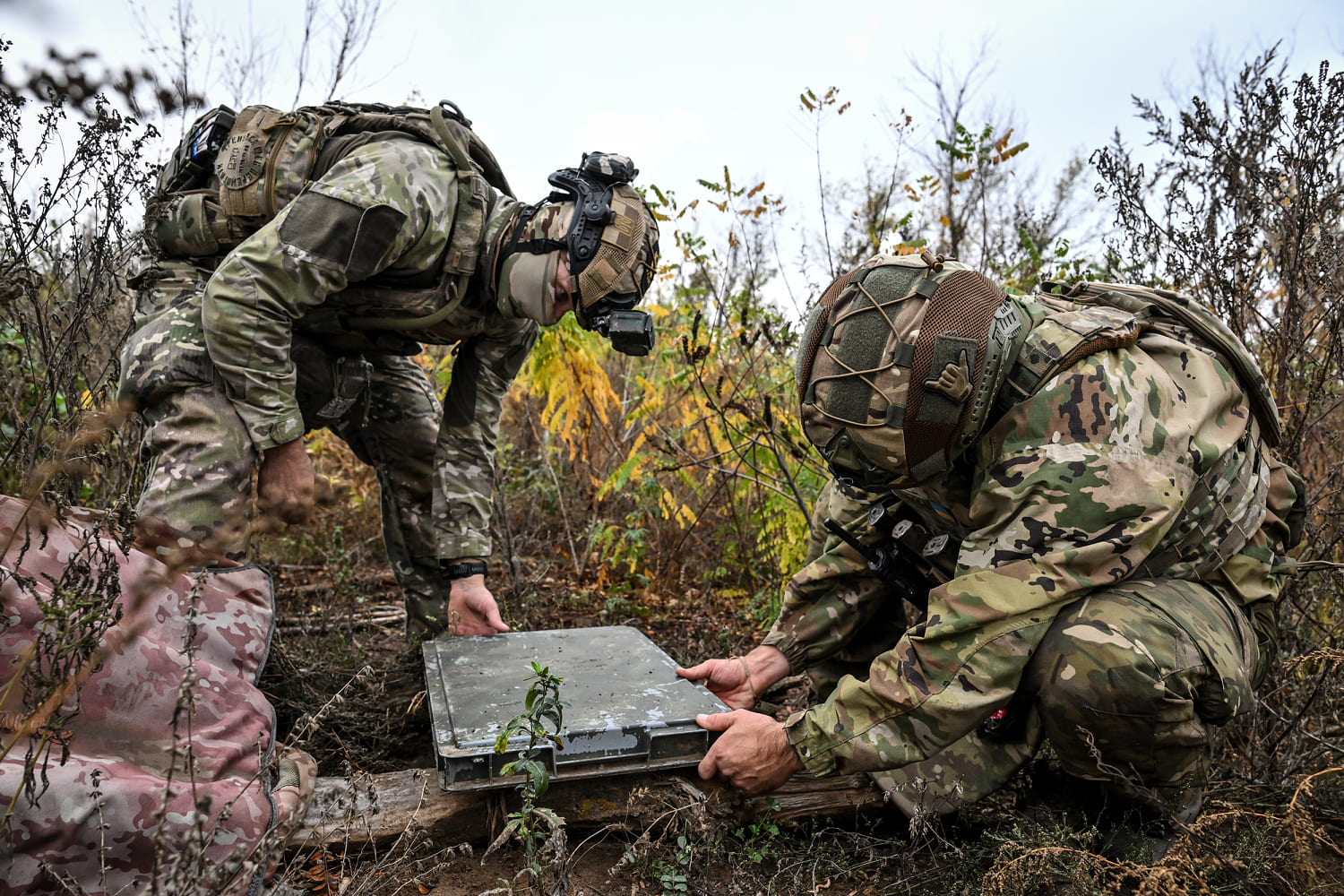
The drone unit he leads has been helping push back Russian troops on the front lines in southeastern Ukraine. Then, late last Tuesday, a drone launched toward Russian troops suddenly lost connection.
“As it was picking up speed, contact with the drone was lost in an instant,” according to the commander, 47, who is serving on the border between the eastern Donetsk and southern Zaporizhzhia regions, and only wanted to be identified by his call sign Flint due to the sensitivity of his service.
The drone fell to the ground, aborting the mission, Flint said in a series of messages on WhatsApp. He fears the technology inside “may have fallen into enemy hands.”
“Only after analyzing the flight, it became clear that the issue was specifically related to the Starlink speed limit,” he added.
Ukraine said last week that limits were imposed without warning on its use of Starshield, the military variant of the Starlink internet service run by Elon Musk’s SpaceX, affecting battlefield missions reliant on it.
President Donald Trump said Thursday that Musk had restored the service in Ukraine, but Kyiv said Friday that it was not seeing any lifting of restrictions. Trump did not say why the limits were in place, though Musk had previously said that “any limits on speed or usage are decided by the U.S. military and ultimately POTUS.” Ukraine had also warned of gaps in intelligence sharing from the U.S., something the White House has denied.
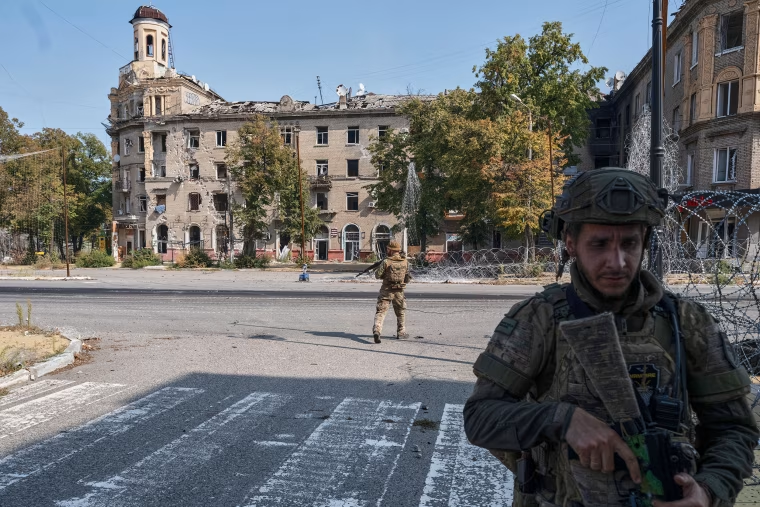
A second drone pilot, serving in the eastern Kharkiv region, said that Ukraine does not have an alternative that’s as effective as Starlink for flying drones, but it also affects the unit’s movements — and ultimately survival chances out in the field.
“When we drive into a position, we have a Starlink Mini mounted on the vehicle, and we always try to get there as fast as possible, because if we drive slowly, the enemy will spot us and a drone will catch up with us,” said the pilot, who also only wanted to be identified by his call sign, Dovbush. “So we try to drive fast, but when we drive fast, the connection drops.”
That leaves them with a radio as the only alternative for communication, Dovbush, 31, said, while a lack of reliable connection has impacted reconnaissance drones used to identify targets, he added.
“It’s a knife in the back,” Flint, the drone unit commander, said of the apparent withdrawal of U.S. support.
He said his unit relies on Starshield to fly attack and reconnaissance drones at anything from Russian troops to command posts to tanks. “Its primary role is maintaining the connection with the drone, so this is a very significant loss for us,” he added.
Should Starshield restrictions continue, a large portion of their drones will never even get off the ground, he said, while others will be highly vulnerable, flying at lower speeds. “They could practically be swatted out of the sky with a stick,” he said.
“And the scariest part is that all this is happening against the backdrop of offensive operations on many areas of the front line, including ours,” he added.
Ukrainian President Volodymyr Zelenskyy said Friday that restrictions on Starlink were still in place, but that U.S. Secretary of State Marco Rubio had told him it would be fully back in about 48 to 72 hours.
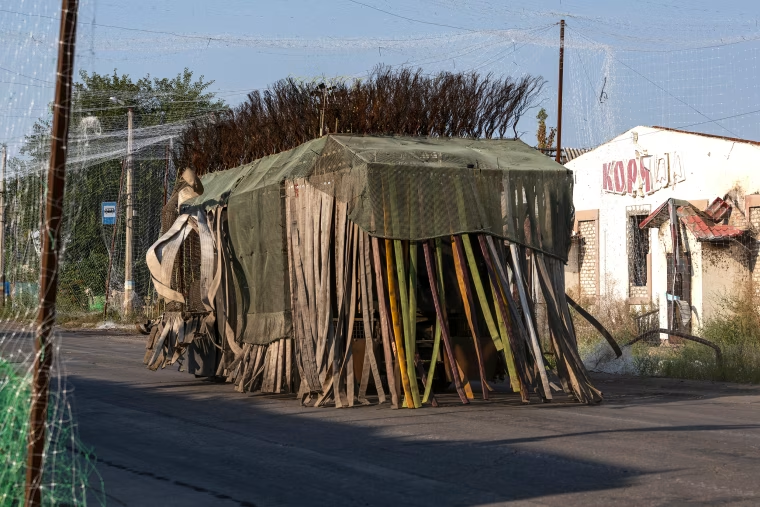
Before the latest collapse in relations with Washington, Ukraine’s military had been chipping away at land seized by Russia in the eastern Donetsk region, part of the Donbas heartland that the Kremlin has been struggling to capture.
In one major operation, more than 100 square miles of territory and 16 settlements have been reclaimed, Ukrainian officials have said, crediting methods like using bomber drones to fly robot vehicles behind enemy lines.
The offensive — dubbed Operation Vivaldi — was made public several weeks before the drastic turn from the United States. Trump has agreed to a diesel deal with Russia, waived sweeping new sanctions and seen his peace envoy laud Russian President Vladimir Putin as a “humanitarian.” Ukraine accused the U.S. of briefly withholding intelligence warnings about Russian attacks, and has said the Starlink slowdown has affected battlefield missions.
The U.S. has vehemently denied freezing Ukraine out, but the slew of dramatic developments have left Ukrainian troops disheartened. NBC News spoke with five soldiers, mostly drone operators, who said they felt betrayed by the U.S., and Trump in particular.
Ukrainian officials say that the offensive has disrupted Russia’s assault on Sloviansk and Kramatorsk, key Ukrainian strongholds in the Donbas region.
“We prevented the enemy from flanking the Sloviansk-Kramatorsk agglomeration and trapping it in a pincer movement,” said Brig. Gen. Andrii Biletskyi, commander of the Third Army Corps, which led the operation. The offensive, in which Biletskyi said some 8.000 Russian troops were killed, saw Ukraine use bomber drones to deliver robot vehicles deep behind enemy lines and convert Soviet-era armored personnel carriers into exploding units to “blow up the enemy’s most heavily fortified positions,” he added.
“That was us,” a Ukrainian drone pilot told NBC News as he said his unit was redeploying elsewhere. “Our reconnaissance drone positions moved forward every three weeks,” the soldier, 24, who only wanted to be identified by his call sign Lucky because of the sensitive nature of his service, said in a series of audio messages on WhatsApp.
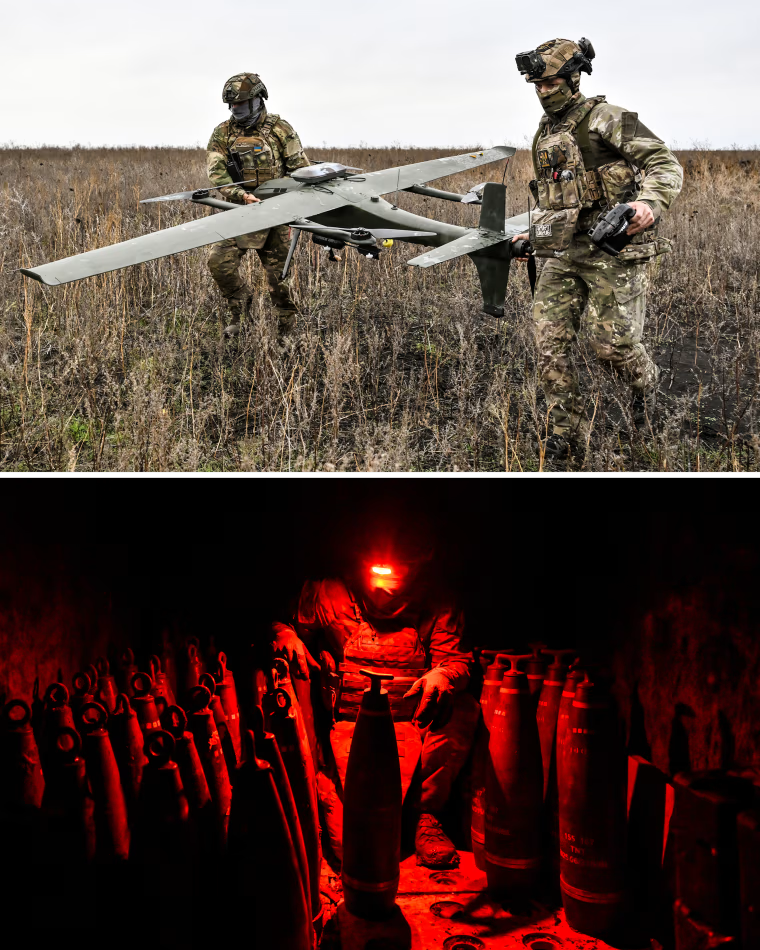
During a meeting with his army chiefs last week, Putin said Russian forces were on the offensive along the entire front line. “The pace of advancement has increased significantly,” he added.
But George Barros, a senior Russia analyst with the Washington-based Institute for the Study of War, which has provided daily analysis of the battlefield situation in Ukraine, said they assess that Russia has seized a net of only about 40 square miles across all of Ukraine since the beginning of the year. “That means that the daily average Russian rate of advance is far below 0.4 square miles per day. This is a literal foot-pace advance,” he said. “In the month of September, we observed evidence to assess that the Ukrainians actually liberated and took back more territory than the Russians did.”
Putin’s army chief, Gen. Valery Gerasimov, told the Russian leader that the Ukrainian offensive was a series of “PR stunts” that achieved nothing and cost Ukraine 3,500 troops who had been either killed or wounded.
But Barros said the offensive allowed Ukraine to push forward with tanks and armored personnel carriers into the drone-dominated battlefield, negate Russian drone defenses and find ways to push its forces forward and make gains.
Critically, it stopped the northern encirclement of the stronghold cities in Donetsk, putting a wrench in Putin’s plans to complete the capture of Donbas this year, military experts said.
“Ukraine’s Operation Vivaldi was unquestionably a major success,” said Rajan Menon, senior research scholar at Columbia University’s Saltzman Institute of War and Peace Studies.
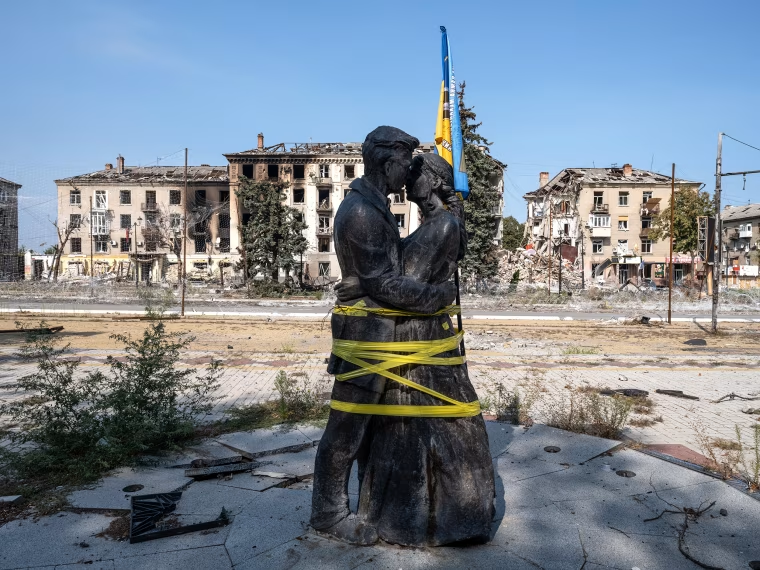
But the Starshield slowdown is a “severe problem for Ukraine,” Menon said, “and a godsend for Putin.”
If the restrictions continue for the medium- to long-term, Russian forces will be able to restore their logistics in the regions close to the front line that they control and that Ukraine has been pummeling with middle-range strikes this year, Barros said. As a result, Russia could regain resources to push forward with greater operational tempo, he added, increasing the likelihood of a breakthrough.
But at least two of the soldiers interviewed told NBC News that Starlink was not slowed down universally across the front lines.
A drone technician serving in Donetsk, who also asked not to be named due to the sensitive nature of his service, said his unit hasn’t seen any major drops in performance. “Given the recent weather, the speed dips and service seemed normal,” the soldier, 31, said, adding that he was aware that other units were experiencing difficulties.
The Pentagon responded to NBC News’ request for comment on the soldiers’ criticisms by referring to Defense Secretary Pete Hegseth’s remarks Wednesday in which he reiterated that the U.S. has not changed its posture toward Ukraine in any way, calling its fight against Russia “a heroic effort.”
KioskNews shows a cleaned-up reading view extracted from the publisher’s page — the original always lives on their site, not ours.