Every Ryan Murphy ‘Monster’ Season, Ranked


Michael Block is a 14 time GLAM Award nominated writer, producer, and host of the podcast Block Talk. Throughout his time in the entertainment industry, he has worked on and off Broadway as a stage manager, written several produced plays, critiqued hundreds of theatrical performances, drag and cabaret shows, and has produced events randing from drag competitoons to variety concerts!
On Block Talk, he interviews nightlife personalities, covers the wide world of entertainment through features, ranking episodes, and recaps ALL of Drag Race, as well as Dragula and Survivor. He has interviewed hundreds of RuGirls that span the globe at DragCon NYC, DragCon LA, and DragCon UK.
In his free time, he makes one-of-a-kind jewelry and gift baskets with his mom. He is a proud member of the LGBTQ+ community.
Sign in to your Collider account
Content Warning: This list contains brief mentions of sexual assault and abuse.There's no denying that the creative juices are always flowing in Ryan Murphy's brain. As one of Hollywood's most prolific creators, Murphy has given the entertainment world everything from Glee and Nip/Tuck to the 9-1-1 universe and Pose, but he's always been fascinated by true crime. From the O.J. Simpson trial to the President Bill Clinton scandal, dramatic crime stories have landed well with viewers, but when he pivoted to the world's most infamous murderers, both acquitted and found guilty, that's when something new ignited.
Since 2021, Murphy and Ian Brennan's big hit on Netflix has been Monster. The biographical crime anthology series dramatizes high-profile killers in American history. With a new focus each season, the core of the series has remained intact, but the vantage point has been different. As a result, each season has had incredible highs and tragic lows. Some creative choices bombed while others flourished. Now that Season 4 has concluded, it's time to rate the seasons amongst one another.
4 'Monster: The Ed Gein Story' (2025)

For Season 3, showrunner Brennan took the opportunity to go back in time to provide a commentary on the present via the story of Ed Gein. The eight-episode season starred Charlie Hunnam as Ed, depicting the horrifying life and crimes of the 1950s Wisconsin murderer and grave robber. The series depicted Ed and his overbearing, fanatically religious mother, August (Laurie Metcalf), in their isolated, decaying farm. Following his mother's death and an upbringing that instructed him to fear women and the outside world, Ed spirals into a life of shocking and gruesome mutilations. But Monster: The Ed Gein Story didn't end there. The season wove Ed's story into how it inspired pop culture and Hollywood, including. Alfred Hitchcock's (Tom Hollander) Psycho, The Texas Chain Saw Massacre, and The Silence of the Lambs, while impressing an opinion on humanity's twisted obsession with true crime and how media and isolation shape monsters.
To start, like every season of Monster, the show is anchored by extraordinary performances. Hunnam and Metcalf were phenomenal. Stepping outside his usual roles, Hunnam delivered an eerie, unsettlingly calm performance as Ed. He offered a haunting disconnect, from a gentle giant to harboring a profound psychosis within. Per usual, Metcalf dominated as the ferociously intense Augusta. Brennan did a strong job of exploring how a deteriorating mind and shattered life can lead to grotesque crimes, giving Ed a bit of a softer side. But when the series strayed away from Ed, that's where it suffered. He certainly inspired many of Hollywood's greatest horror villains, but instead of keeping it an anecdote, the series turned it into a narrative mechanic.
The reason why Monster: The Ed Gein Story drops to the bottom is that it pulled far too much attention away from the primary character—an issue that will come into play for the next entry as well. The script meandered into pop culture tangents that didn't add to Ed's arc. Learning about Anthony Perkins' (Joey Pollari) struggles is certainly fascinating; it felt more like the subplots should have been an entirely different series. Further, the tonal shifts didn't match the initial story. There are many things that we could ponder Ed dreaming about, but the dying serial killer imagining a surreal dream dance sequence to "Owner of a Lonely Heart" by Yes with Ted Bundy (John T. O'Brien) and Charles Manson (John Drea) cameos was a step too far. At least in All That Jazz, the main character earned a swan song before death. Purists of Ed's story will certainly be against many of the artistic liberties taken, making Season 4 an unfortunate experiment at the expense of a truly interesting subject.
3 'Monster: The Lizzie Borden Story' (2026)
History was made as the fourth season of Monster spotlighted the series' first female killer: Lizzie Borden. Moving beyond the child's skipping rope rhyme—used smartly and sparingly throughout—Monster: The Lizzie Borden Story introduced audiences to the infamous story through the lens of a young woman living in a suffocating environment. Led by Ella Beatty, the eight-episode series depicts the moments leading up to the 1892 axe murders of her father, Andrew (Charlie Hunnam), and stepmother, Abby (Rebecca Hall), the action itself, and the aftermath upon her acquittal. Another season that took drastic artistic liberties, Season 4 uses broader themes about female rage, trauma, and societal oppression to mirror Lizzie's actions.
The series dramatizes Lizzie's harrowing experience living under the brutality of her father's second wife while introducing a fictionalized, intimate bond and alliance with the family's Irish maid, Bridget "Maggie" Sullivan (Vicky Krieps). Though there is no factual truth that this relationship was genuine, the narrative needed it as a means for the two women to plot against their abusers. The chemistry between Beatty and Krieps is sensational, and would have been right for any other scripted story. Unfortunately, trying to pigeon-hole a queer storyline into a historically unsolved case felt as if it was undercutting Lizzie's tale. Though not nearly as brazen as its predecessor, Monster: The Lizzie Borden Story made a distinct connection to a major modern killer, Aileen Wuornos (Sarah Paulson), as well as the notorious 16th-century countess Elizabeth Báthory (Krieps). As wonderful as it was to see Paulson take on the infamous serial killer, one cannot forget that Lily Rabe also played the role in Murphy's American Horror Story: Hotel. Brennan did find some narrative connections between Lizzie and Aileen, but it felt like her presence was only there to let Paulson play and do what she does best.
Despite the series' flaws, Monster: The Lizzie Borden Story did feature some standout elements. Beatty captured the cold-blooded horror with her blank stares. There's nothing like seeing a blood-spattered, emotionless face! If it weren't for Hall's sensational performance, the series may have fallen into the gutter. Despite being a victim of murder, Hall made the emotionally abusive Abby someone you'd relish seeing what was coming to her. The season mastered the atmospheric elements of oppressive late-19th-century Victorian New England. Mastering the production design was crucial to the storytelling, as it helped show how, despite being connected through crime, each story is a product of its time. There was great hype for this season as Lizzie remains a mystery, but all the season did was distort the truth for entertainment.
Collider Exclusive · Villain Personality Quiz Which Criminal Mastermind Would Be Your Nemesis? Lecter · Joker · Moriarty · Chigurh
Four of the finest criminal minds ever put on screen. One of them would look at you and see something worth their time. Eight questions decide which one comes for you, why they picked you, and what they would want when they arrived.
🍷Lecter
🃏Joker
♟️Moriarty
🪙Chigurh
01
What would a criminal mastermind notice about you first? Great villains choose their opponents carefully. Something about you got their attention.
02
How do they make first contact? The introduction tells you everything about what is coming next.
03
What do you actually believe about right and wrong? Every nemesis is really an argument about the thing you believe most.
04
What finally gets under your skin? Everybody has a pressure point. Finding yours is the whole plan.
05
They have made their move. How do you fight back? This is the part of the film where the audience finds out who you are.
06
What would they use against you? A good villain never brings a weapon you have not already handed them.
07
What do they actually want from you? The money is never the point. Something else always is.
08
How does it end between the two of you? Eight questions in, this is the one that decides who comes for you.
The Case File Is Complete Your Nemesis Is…
Four criminal masterminds. One of them was always going to be yours. Here is who comes for you, why they picked you out of everyone available, and what they want from the encounter.
Hannibal Lecter
Your nemesis does not want to beat you. He wants to know you completely, and he is patient enough to wait for it. The frightening part is how good the conversation is.
- Lecter is the most dangerous kind of opponent: the one who finds you interesting. He never raises his voice, because he has never needed to.
- You keep a great deal to yourself and you are careful about what you show. That reserve is exactly the door he would knock on.
- The films understood something other thrillers missed. The horror is not the violence. It is being perfectly understood by the wrong person.
- He would be unfailingly polite about all of it. That is the worst part.
The Joker
Your nemesis is not after money, territory or revenge. He is after a demonstration, and you are the person he has chosen to prove his point on.
- The Joker only picks opponents who believe in something. Your decency is not a defence against him. It is the entire reason he showed up.
- He has no plan you can predict and nothing you can take away, which removes every tool you would normally reach for.
- His whole argument is that you are one bad day away from being him, and you would spend the rest of your life proving him wrong.
- He would call it a magic trick. You would call it the worst night of your life.
Moriarty
Your nemesis respects you, which sounds flattering until you work out what it means. He chose you because nobody else was worth his time.
- Moriarty is the original criminal mastermind, the template every later one borrows from: a mind the equal of the hero's, pointed the wrong way.
- You enjoy being the cleverest person in the room. He is counting on exactly that, and he has already built the room.
- This is the rare nemesis who would be genuinely disappointed if you lost badly. He needs the game to be worth playing.
- It ends the way these things always end. Two people, one problem, and only one way down.
Anton Chigurh
Your nemesis has no personal interest in you whatsoever, and that is precisely what makes him unsurvivable. You are not a rival. You are a stop on the way.
- Chigurh does not negotiate, gloat or explain. He arrives, he asks one question, and the answer was decided long before you opened your mouth.
- You trust yourself to handle things. He is the one problem in the world that has no interest in how capable you are.
- No Country for Old Men rewrote the screen villain by removing the thing audiences quietly rely on: the sense that talking might work.
- Call it. He will wait.
2 'Monsters: The Lyle and Erik Menendez Story' (2024)

No season of Monster has blown up modern pop culture than Monsters: The Lyle and Erik Menendez Story. Adding an "S" to the title, the third season told the story of the 1989 murder of José and Kitty Menendez (Javier Bardem and Chloë Sevigny) at the hands of their sons, Lyle and Erik (Nicholas Alexander Chavez and Cooper Koch). Predominantly showcasing their lives prior to the crime as well as the trial, verdict, and the media frenzy that was attached, the season used multiple perspectives, theories, and viewpoints to capture both the prosecution's narrative and the brothers' claims of abuse. For this season, the mission was to ask the tough question: who are the real monsters?
As one of the most prominent murder trials of the late 20th century, Murphy and Brennan had less wiggle room to take artistic license, instead offering a strong case for why the brothers might have been telling the truth despite their convictions. The series focused heavily on forcing modern audiences to reflect on the allegations of severe sexual, physical, and emotional abuse Lyle and Erik suffered. By presenting the narrative that their objective wasn't money, it created a new sense of empathy. In turn, it recontextualized how society treats male survivors of sexual abuse. The season should be applauded for the brave risks taken, namely the extraordinary Episode 5 single-take. Koch established himself as a future Hollywood star through his raw monologue, explaining his history of abuse to his defense attorney, Leslie Abramson (Ari Graynor).
The campy nature of the '80s was on full display, nearly becoming a character more than a backdrop. Of course, it wouldn't be a Murphy and Brennan project without some drastic narrative decisions. The outlandish implication and visual suggestion of an incestuous, sexual relationship between the brothers seemed more for shock value than any historical truth. This was just one of the many stances the real-life brothers took against the show, which Erik publicly slammed as "dishonest portrayals" and "blatant lies." That said, had the series not been as viral as it was, it may not have opened up the chance for another chance. The series reignited massive public interest, which pressured the legal system to re-examine their life-without-parole sentences and consider new evidence of abuse.
1 'Monster: The Jeffrey Dahmer Story' (2022)

Sometimes it just doesn't get better than the OG. Monster: The Jeffrey Dahmer Story is proof. Casting Murphy's golden-child star, Evan Peters, to portray Jeffrey Dahmer may have been some of the best casting of the decade. The dark, twisted first season chronicled the serial killer's life and crimes. The 10-episode thriller explores the murders of 17 men and boys during the period from 1978 to 1991. A truly harrowing and visceral story, Monster: The Jeffrey Dahmer Story highlighted how police negligence, homophobia, and systemic racism allowed Dahmer to continue his crime spree in plain sight despite the warnings. Rather than glorifying the titular individual, the series did its best to highlight the victims' humanity and the enduring grief of their families.
One of the most infamous serial killers in American history, the first season did a smart job of exploring the troubled childhood, difficult family dynamics, and isolation that may have shaped Dahmer. Murphy and Brennan established a heavy, incredibly uncomfortable atmosphere that captures the terror of the events. As a thriving crime thriller, the season dove deep into Dahmer's mind, allowing Peters to provide a career-best performance. He was only outdone by the sensational performance of Niecy Nash as Dahmer's neighbor Glenda Cleveland. She wasn't just a singular character; Nash ensured that Glenda was the voice of every individual who repeatedly raised the red flags and was silenced.
The major negatives attached to the season were the lack of consultation with the victims' families. In turn, it caused many to relive the trauma of a horrible moment in their lives. By recreating many real-life moments, it did highlight the truth of the events, but without guidance or approval, it may have felt invasive to some. Monster: The Jeffrey Dahmer Story was a voyeuristic entry into a gruesome period that captured pop culture's obsession with true crime. Thanks to the brilliant performances by Peters and Nash, the limited series became the anthology we keep tuning into.
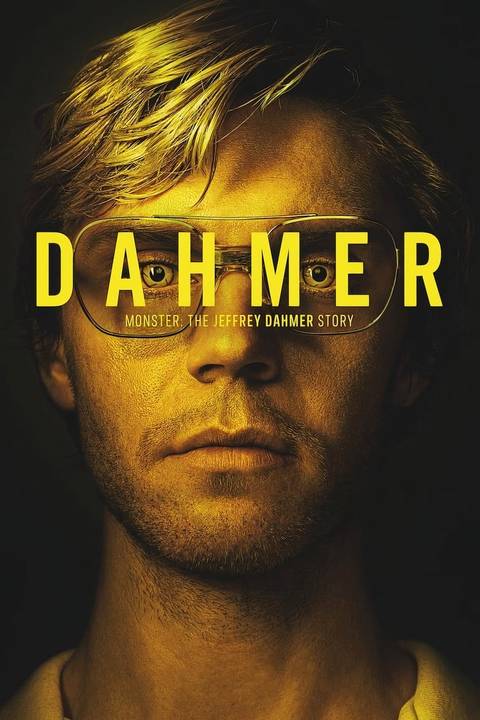
Dahmer - Monster: The Jeffrey Dahmer Story
- Release Date
- 2022 - 2022
- Network
- Netflix
- Showrunner
- Ian Brennan, Ryan Murphy
- Directors
- Jennifer Lynch, Clement Virgo, Paris Barclay, Carl Franklin
-

Jeffrey Dahmer
-

Lionel Dahmer
-

Molly Ringwald
Shari Dahmer
-

Michael Learned
Catherine Dahmer
- Writers
- Ryan Murphy, Ian Brennan
- Main Genre
- Crime
- Seasons
- 1
- Producers
- Lou Eyrich, Richard Jenkins, Todd Kubrak, Reilly Smith, Todd Nenninger
- Creator(s)
- Ryan Murphy, Ian Brennan
- Story By
- ryan murphy
- Streaming Service(s)
- Netflix
KioskNews shows a cleaned-up reading view extracted from the publisher’s page — the original always lives on their site, not ours.