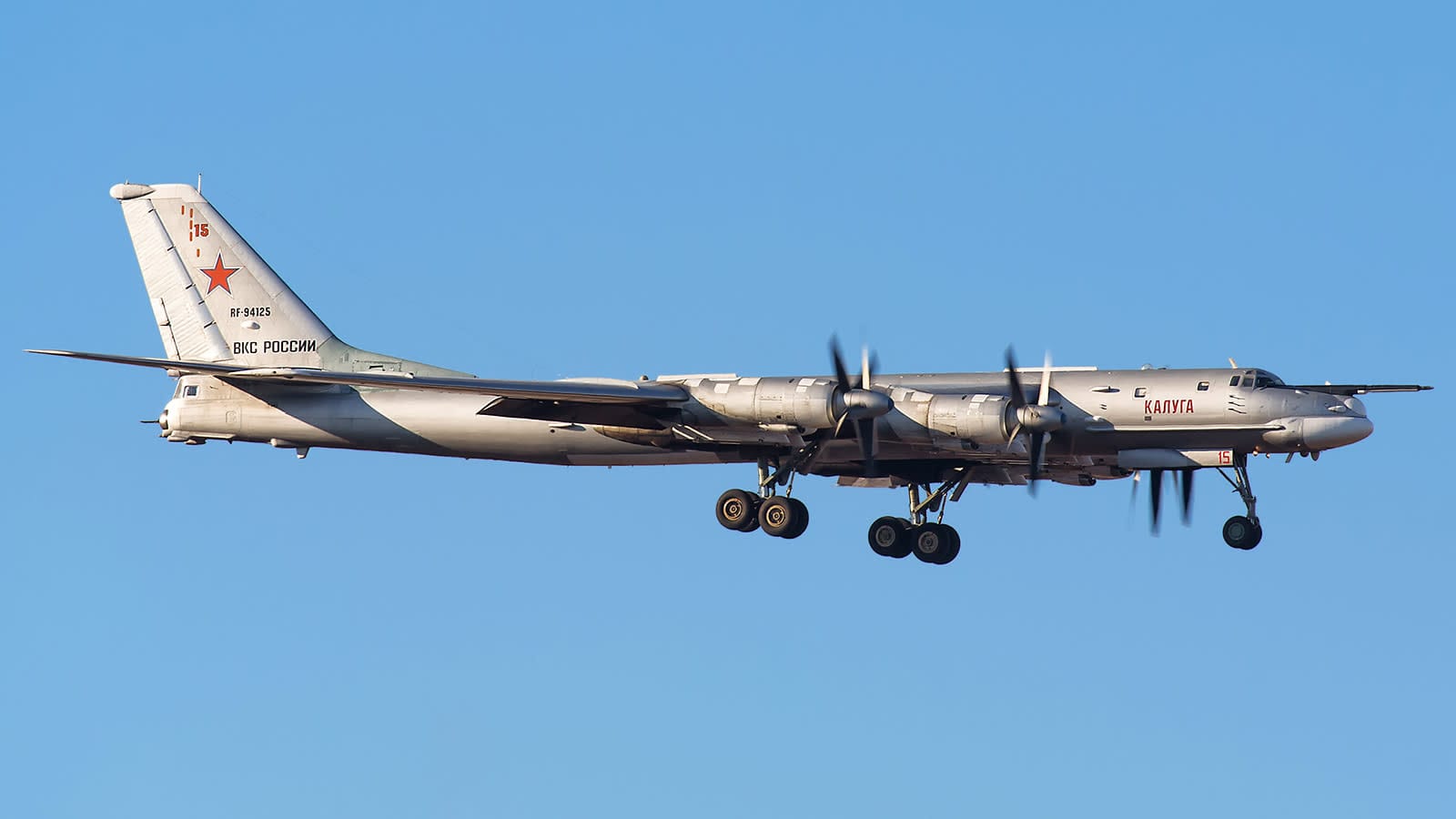
Russian Tu-95 bomber crashes near China, killing at least six on board, state media reports

The plane crashed during a training flight in the Amur Region, north of China, Russia's Defense Ministry said.

A Tupolev Tu-95 strategic bomber crashed in Russia's Amur Region, north of China, killing six on board, with one survivor, Russia's Defense Ministry said on Tuesday.
"On September 29, a Tu-95 plane making a training flight crashed in an uninhabited area in the Amur Region," state media TASS cited the ministry as saying.
"According to preliminary data, six crew members died, while one was injured and taken to a hospital," the defense ministry added.
The aircraft was not carrying any munitions, according to TASS.
The Russian Air Force dispatched a delegation to the crash site to investigate the circumstances that led to the crash, TASS said.
Russian jets have crashed several times in 2026
This recent incident is not the first time a Russian military aircraft has crashed in the region in recent months.
In June, a Russian Tu-22M3 strategic bomber aircraft crashed during a training flight in Siberia's Irkutsk region, the Russian Defense Ministry said at the time.
The ministry was cited as saying that the crew had managed to eject and had survived the incident.
On March 31, a Russian An-26 military transport plane crashed into a cliff in Crimea, killing 29 people on board, due to a possible technical malfunction, the ministry said on April 1.
KioskNews shows a cleaned-up reading view extracted from the publisher’s page — the original always lives on their site, not ours.