The 8 Best Sci-Fi Horror Books of All Time, Ranked

Jeremy has more than 2900 published articles on Collider to his name, and has been writing for the site since February 2022. He's an omnivore when it comes to his movie-watching diet, so will gladly watch and write about almost anything, from old Godzilla films to gangster flicks to samurai movies to classic musicals to the French New Wave to the MCU... well, maybe not the Disney+ shows.
His favorite directors include Martin Scorsese, Sergio Leone, Akira Kurosawa, Quentin Tarantino, Werner Herzog, John Woo, Bob Fosse, Fritz Lang, Guillermo del Toro, and Yoji Yamada. He's also very proud of the fact that he's seen every single Nicolas Cage movie released before 2022, even though doing so often felt like a tremendous waste of time. He's plagued by the question of whether or not The Room is genuinely terrible or some kind of accidental masterpiece, and has been for more than 12 years (and a similar number of viewings).
When he's not writing lists - and the occasional feature article - for Collider, he also likes to upload film reviews to his Letterboxd profile (username: Jeremy Urquhart) and Instagram account.
He has achieved his 2025 goal of reading all 13,467 novels written by Stephen King, and plans to spend the next year or two getting through the author's 82,756 short stories and 105,433 novellas.
Sign in to your Collider account
What do you want from an introduction to a topic like this, really? You know what a science fiction book is. Dune, Brave New World, Neuromancer, all that jazz (but not All That Jazz; that one’s a movie). And what a horror book is? That’s also fairly self-explanatory. Some of those aforementioned sci-fi books might have horrific parts, too, but being sometimes scary or unsettling isn't always enough for a sci-fi book to also work as a horror one.
The following books, though, do qualify for both genres. They are among the best sci-fi horror books of all time, and most of them split the balance between those two genres fairly evenly (and then a few more might well dip their toes into other genres as well, but which ones? Eh, you'll have to read on; come on, don’t be lazy).
8 'I Am Legend' (1954)
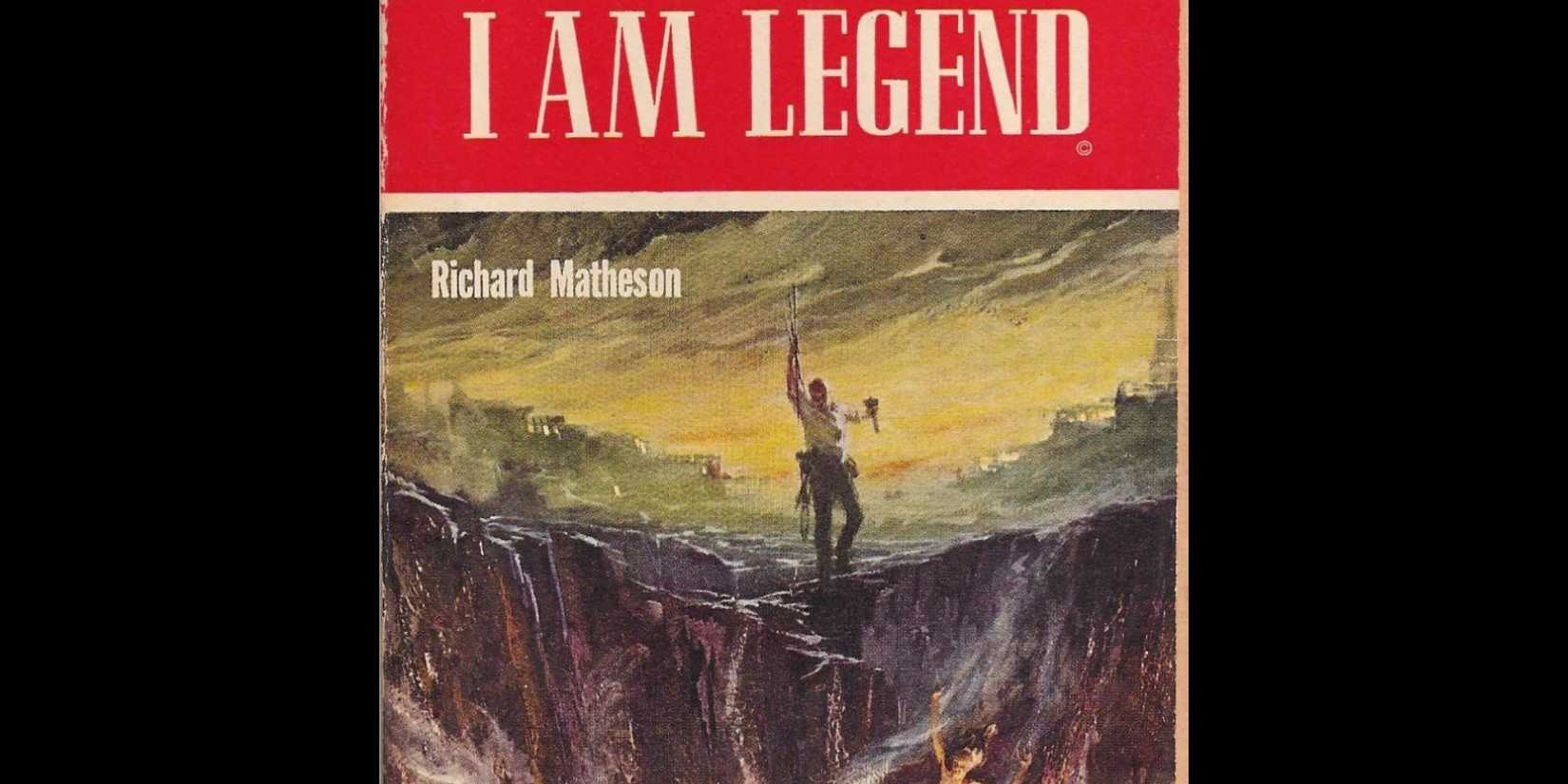
I Am Legend is quintessential as a work of post-apocalyptic fiction, and then it also stands out for being about vampires, more or less, but with a sci-fi spin rather than the more expected fantasy/supernatural leaning. But saying it’s just about vampires is also underselling it, since they are a threat, but it’s mostly focused on one man trying to survive in the aftermath of a global catastrophe, with the conflict between him and those vampire-like creatures being a bit more complex than it initially seems.
Lots of what I Am Legend is easy to take for granted nowadays, because even if it didn’t invent the genres it tackled, it nonetheless tackled them in interesting ways, and in an overall manner that proved influential. The legacy of I Am Legend (ha) does also go beyond literature, of course, since you can see the sort of impact it had on certain movies, games, and other forms of entertainment, too.
7 'The Island of Doctor Moreau' (1896)

There are some other books by H.G. Wells that could probably go here, and then if you're looking at his works of science fiction that don’t have prominent horror elements, he’s got even more classics, of course, but maybe it’s The Island of Doctor Moreau that impresses the most as something belonging to both genres. An honorable mention should probably go out to The Invisible Man, though, which came out the following year.
The Island of Doctor Moreau is another definitive and influential book, so the kind where it’s hard to really know what to say about it, more than a century on from its publication and everything. It does stand out as something that really has to be read, because there are some infamously not-great adaptations of this story that really fail to capture what’s interesting and unsettling about the source material's narrative (and themes) at hand here.
6 'I Who Have Never Known Men' (1995)

While it was initially published near the end of the 20th century, I Who Have Never Known Men feels almost as though it could be a more modern release, just because it’s attained a whole other level of popularity more recently, and also, it does very much feel timeless. It could've been written even longer ago, or it could've been written yesterday, or at any point in between, and it’d still be remarkable.
Lots of it is unnerving in a quiet sort of way, and there are some alarming and grisly moments that aren’t so quiet, too.
Of all the books here, it’s probably the biggest stretch labeling I Who Have Never Known Men as a horror novel on top of being a sci-fi one, but lots of it is unnerving in a quiet sort of way, and there are some alarming and grisly moments that aren’t so quiet, too. It’s dystopian initially, but then goes in an interesting direction and feels more post-apocalyptic at times, too, ultimately being very interesting as a sparse and bleak novel about some kind of strange future, and carrying with it a good deal of (mostly) understated horror at the same time, too.
5 'The Long Walk' (1979)

Stephen King managed to write a few books under the Richard Bachman pseudonym before King and Bachman were outed as one and the same, and of all the Bachman books (including those published post-outing), The Long Walk is the best. The pseudonym is also a convenient way to include two Stephen King books here, because yes, he’s written a few compelling works of sci-fi/horror under his proper name, and one more will be mentioned shortly.
As for The Long Walk, it’s more dystopian than something heavy on science fiction, but that bleak future is still worth something, and to its credit, some of what The Long Walk has to say about what’s considered entertainment or worthy of being televised would've felt more out-there and/or futuristic back in 1975, compared to now. If you're disappointed by the lack of sci-fi elements regardless, then you're not going to be let down if you enter into The Long Walk for horror, because it is absolutely grueling and devastating to read on a psychological front.
4 'The Stepford Wives' (1972)

While it is a satirical book, it might be a stretch to call The Stepford Wives an outwardly funny (or overall comedic) one, but if you get a little dark comedy out of the satire, then sure, that’s probably valid. It’s easier to label this as a sci-fi/horror book over calling it a comedy one, though, and then it’s also worth stressing that the ways in which this does qualify as a work of science fiction might constitute a spoiler.
Still, the term “Stepford wife” has become well-known as a shorthand or term of sorts, in a similar way to various bits of language from Nineteen Eighty-Four becoming famous even among those who haven’t read the entirety of the text. So, something being off in The Stepford Wives is apparent before reading it, and then very apparent not long after you start, and then there’s a good deal of tension and dread in the build-up to revealing just what’s going on. It’s effective, ultimately, and there’s a lot offered here, in terms of things to think about, and all that goes toward keeping the novel feeling relevant all these decades later as well.
3 'The Day of the Triffids' (1951)

The main threat of The Day of the Triffids is mysterious and bizarre, which hopefully adds to the horror, unless you can’t get on board with the idea of plants being this dangerous. Those plants are coined the triffids, and there’s a possibility they're linked to a meteor shower that’s caused some people to go blind, or maybe it’s some kind of hellish coincidence, but in any event, the whole situation is a bit of a nightmare, to say the least.
Everything going on in The Day of the Triffids threatens the existence of humanity, and the world itself, so the stakes are about as high as they can be, and then what it all relates to in the real world (analogies and all that) proves further disquieting. It’s all very much a mid-20th century sci-fi/horror novel, albeit in ways that are still interesting to engage with today, and then in some other ways, The Day of the Triffids does maintain a certain degree of relevance, even when read in 2026 (or beyond).
2 'Firestarter' (1980)

If you look at the early years of Stephen King’s career as a published writer, you do see a lot of horror focused on, especially with his first three non-Bachman books, Carrie, Salem’s Lot, and The Shining. The Stand was more dark fantasy with some horror, and then The Dead Zone saw him tackling science fiction without too much horror, even if parts of that book were extremely tense and occasionally disturbing.
Arguably, then, Firestarter is the first truly effective merging of horror and sci-fi King did, or at least the first he wrote as Stephen King. But even if you're counting The Long Walk (1979), Firestarter does have a bit more of a focus on sci-fi elements, with some of the powers here reminiscent of Carrie for sure, but with a bit more by way of explanations behind them. Further, Firestarter is a great thriller, and it really keeps the momentum going impressively well for a decently lengthy duration. It’s very readable and easy-to-like, ultimately having quite a bit of an emotional punch, too.
1 'Frankenstein' (1818)

Very few novels tied to the sci-fi genre can claim to be as influential and important as Frankenstein, with the historical value of this one being a big reason why it’s worthy of the #1 spot. It was forward-thinking in the sense that it did a lot that science fiction hadn’t really done, or grappled with, up until that point, if “sci-fi” was even a genre back in 1818.
And then Frankenstein wouldn’t be here if it weren't also great as a horror novel, with there being an understated sort of creepiness to much of it that’s proven timeless. There is so much to be found here, and so there have been various adaptations of Frankenstein, plus plenty of other movies and other books that have taken influence from it, with everything here working on multiple levels, and overall being the kind of thing you can spin in different ways. It’s remarkable, is the main thing, and there really aren’t too many books more than 200 years old that still feel so effortless to read.
KioskNews shows a cleaned-up reading view extracted from the publisher’s page — the original always lives on their site, not ours.