Can’t have uniform fossil fuel phase-out timetable, countries must decide: Environment Minister Bhupender Yadav
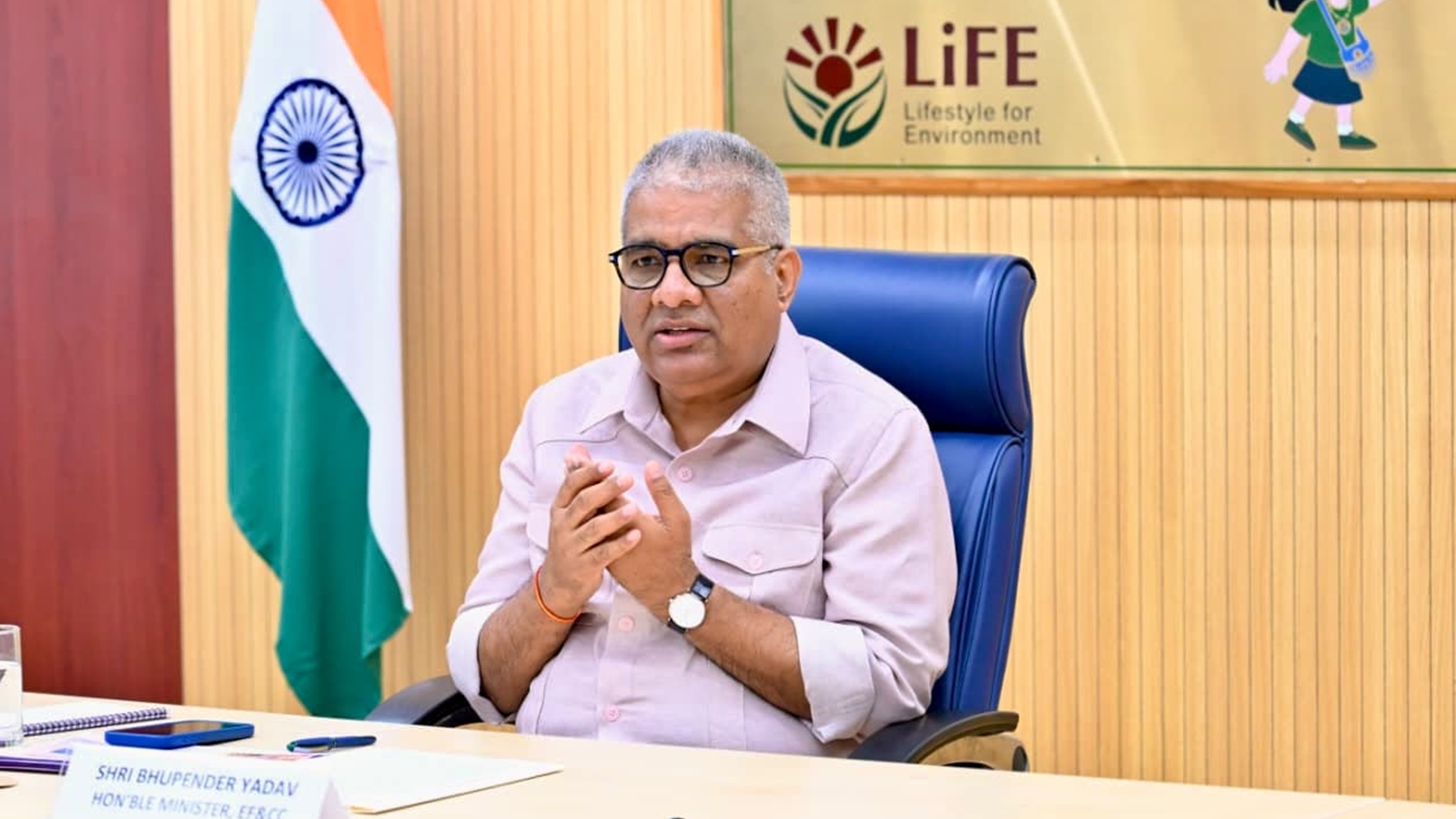
While acknowledging the need for an accelerated shift to cleaner and renewable sources of energy, India on Wednesday said it was opposed to attempts to prescribe a uniform pathway for a transition away from fossil fuels as it overlooked the specific needs and circumstances of different countries.
In an interview with The Indian Express after the just-concluded COP31 meeting in Antalya (Turkey), Environment Minister Bhupender Yadav said it was important to ensure that energy transitions are “just, orderly, equitable and nationally-determined”.
Fossil fuel transition was one of the biggest issues of discussion at COP31, and the absence of any mention of a roadmap on this in the main declaration, named Antalya Pact, led the European Union and many other countries to reject it. It was the first time in many years that the annual climate meeting could not adopt the main political declaration initiated by the host country.
India had not taken an explicit position on the inclusion, or otherwise, of the provision on fossil fuel transition in the declaration, but had maintained that any mention of a phase-out must recognise the differing circumstances of countries.
 COP31 President Murat Kurum surrounded by advisors during the closing plenary at the COP31 in Antalya, Turkey. (Reuters/File)
“India is not opposed to an accelerated clean energy transition. However, a uniform fossil fuel phase-out timetable cannot be imposed on countries with vastly different circumstances,” Yadav told The Indian Express.
“India fully recognises the urgency of addressing climate change and accelerating the transition towards cleaner, more sustainable energy systems. Our actions demonstrate this commitment through the rapid expansion of renewable energy, including more than 170 GW of installed solar capacity, alongside improvements in energy efficiency and investments in emerging clean technologies,” he said.
“However, energy transitions must be just, orderly, equitable and nationally determined. Countries differ considerably in their development levels, energy requirements, resources and technological capabilities. For India, reliable and affordable energy remains essential for industrial development, employment generation, poverty alleviation and improving living standards,” he said.
Story continues below this ad
The minister said it was unfortunate that the Antalya Pact could not be adopted, but emphasised that this must not be seen as a weakening of the multilateral process or a setback to global climate action. “Reaching consensus is naturally challenging,” he said, while acknowledging that it nonetheless remained “essential for meaningful and lasting collective action”.
“Absence of consensus on one decision does not mean climate action has stopped. COP31 did deliver decisions on several important issues, including just transition and technology,” he said.
Yadav said there were many provisions in the Antalya Pact that India was happy about, including a reminder to the developed countries about their unfulfilled obligations on climate finance, and a reaffirmation on safeguards against unilateral trade-related climate measures like the Carbon Border Adjustment Mechanism imposed by the European Union.
“Several of these provisions reflected India’s sustained engagement, working closely with BASIC (group of Brazil, South Africa, India and China) and LMDC (Like Minded Developing Countries) partners… Although the Antalya Pact was not adopted, the understandings developed during these negotiations provide a useful foundation for future discussions and cooperation,” he said.
Story continues below this ad
Yadav said India has always been clear about certain important issues in these negotiations, and these were articulated repeatedly during COP31 and will continue to be emphasised in future.
“First, climate finance must remain a clear obligation of developed countries under Article 9.1 of the Paris Agreement. Developing countries cannot be expected to undertake increasingly ambitious actions without predictable and affordable financial resources, technology transfer and capacity-building. Second, climate action must reflect different national circumstances. No uniform energy transition pathway or mitigation timetable can be prescribed for all countries, particularly where energy access, employment, poverty eradication and economic development remain pressing priorities. Third, India strongly emphasised the need to protect food security and livelihoods in discussions on methane emissions. Agriculture supports millions of small and marginal farmers, and livestock has important economic, social and cultural significance. Prescriptive methane targets that overlook these realities would be inappropriate and unacceptable,” he said.
KioskNews shows a cleaned-up reading view extracted from the publisher’s page — the original always lives on their site, not ours.