IEU-CEPA to slash 10 percent tariff gap on labor-intensive goods: DEN
Jakarta (ANTARA) - The forthcoming implementation of the Indonesia-European Union Comprehensive Economic Partnership Agreement (IEU-CEPA) is expected to eliminate a 10 percent tariff gap on Indonesian labor-intensive exports to Europe, putting the country on equal footing with regional competitor Vietnam.
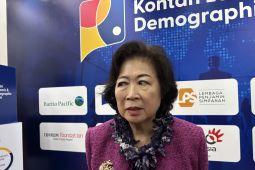
"Currently, when our labor-intensive products enter Europe, they face a tariff gap of around 10 percent compared to Vietnam,” National Economic Council (DEN) Deputy Chair Mari Elka Pangestu said in Jakarta on Tuesday.
“Hopefully next year (if IEU-CEPA comes into effect) that 10 percent gap will no longer exist, placing us on par with Vietnam,” she added.
Mari Elka explained that equalizing tariff access will strengthen Indonesia's position in attracting investment relocations across various manufacturing sectors.
However, she emphasized that capturing these opportunities requires the government's commitment to facilitating swift and clear investment realization.
According to Mari, inter-agency coordination remains one of the primary challenges facing Indonesia in attracting capital. She urged the government to define priority sectors and strengthen synchronization between central ministries and regional administrations.
She cited ongoing labor-intensive investments in Central Java and East Java as key examples that require continued government facilitation to ensure smooth entry and operation.
Mari added that establishing policy certainty and maintaining a favorable business environment are critical factors as countries compete for global capital.
As investors will gravitate toward the most attractive countries and sectors, she urged the government to send clear signals regarding Indonesia’s investment policy direction to encourage both domestic and foreign private firms to keep investing.
“How we maintain the business and investment climate to encourage domestic and foreign private companies to continue investing will be crucial,” Mari concluded.
The IEU-CEPA has entered its final administrative stretch, with legal teams currently finalizing official document language in English before submitting the text to both parliaments for ratification.
Indonesia targets the formal ratification process to take place in the second half of 2026, aiming for full implementation by early 2027.
Once enacted, the IEU-CEPA is expected to expand market access, boost bilateral investment and strengthen broader economic relations.
Once implemented, the deal will liberalize about 98 percent of tariff lines, covering 99.5 percent of total import value between Indonesia and the EU.
The tariff cuts are expected to give Indonesian exporters access to the EU’s 450 million consumers and its combined gross domestic product of about US$22 trillion.
Several key Indonesian exports, including palm oil and derivatives, textiles, footwear and rubber products, will receive zero tariffs when the agreement takes effect.
In return, Indonesia will eliminate tariffs on major EU exports, including wood pulp, aircraft and components, railway equipment and fertilizers.
Related news: EU leaders to visit Indonesia for IEU-CEPA talks: Airlangga
Related news: Germany eyes broader economic ties with Indonesia amid global shifts
Related news: IEU-CEPA to offer Indonesia's highest tariff commitments: Minister
Translator: Imamatul Silfia, Yashinta Difa
Editor: Azis Kurmala
Copyright © ANTARA 2026
KioskNews shows a cleaned-up reading view extracted from the publisher’s page — the original always lives on their site, not ours.