The 8 Best Chuck Palahniuk Books, Ranked

A New York native, Joe graduated from an avant-garde theater school upstate, where he was obsessed with sketch comedy. There, he and his lunatic friends founded The Sketchies — which still lives on at Skidmore College today. Living in New York City, a screenwriter friend of his then taught him how to write for film. This awakened a new passion in Joe. Since then his scripts have garnered over 200 festival selections, nominations, and wins all over the globe (including the BlueCat Best Feature award). Several of his screenplays have been made into feature films — some of them not that bad! Overall, he loves to create unique, hilarious, touching, and bizarre stories.
Sign in to your Collider account
Without question, Chuck Palahniuk is one of the most creative and influential weirdos in the modern literary world. His novels have covered an extraordinarily wide range of (rather taboo) topics, and each one is a unique, bizarre masterpiece in its own right. Covering subjects from Lilliputian terrorist cells to adult film industry record-breakers to untrustworthy elderly starlets, he’s tackled a curiously diverse collection of categories — all exploring radical philosophical points of view while providing his readers with boundless entertainment.
Thus far, Palahniuk has scribed 19 fiction novels, three non-fiction books, and a slew of short stories. Two of his books have been turned into major motion pictures — which is a miracle when one considers how wildly broad and beautifully outlandish his stories often are. His writing style is boldly inventive and extensively detailed (the granular research he does for seemingly every novel is off the charts). An argument can be made that every one of Chuck’s books is an unrivaled classic, but here are his top eight tomes, in all their perverse, grotesque glory.
8 'Pygmy' (2009)

This savagely stacked list begins with a book that’s not even written in English — rather, it’s ingeniously scribed in the broken English of the non-native speaker narrator. Of all of Palahniuk’s satirical works, this one may be the most fairly balanced, as it provides a scathing look at both extreme parties, who hold opposing points of view that are equally ludicrous.
The diminutive Operative 67, who goes by the moniker “Pygmy,” has been sent to the United States of America by an unnamed despotic regime from the East. Here Pygmy has infiltrated a “typical” American family, as they unwittingly host this little undercover extremist sleeper agent. Pygmy’s goal is to initiate “Operation Havoc,” a terrorist plot to spread a neurotoxin via U.S. currency — that will bring about the utter collapse of the corrupt country he’s surreptitiously invaded. Eventually, it’s revealed that he is just one among a throng of tiny secret agents, all sent to the U.S. to ensure its demise. This book is so juicy in its complete annihilation of the motives of both Pygmy and America as a whole. Pygmy is seen as the radicalized, brainwashed little kid that he truly is, while basically everyone that he comes in contact with confirms one or more of the stereotypes about Americans: greedy, venal, wasteful, and thoroughly clueless. Unlike many of Chuck’s tales, this one actually has a somewhat poignant, happy ending — which makes it stand out in his usual sea of literary despair.
7 'Damned' (2011) and 'Doomed' (2013)
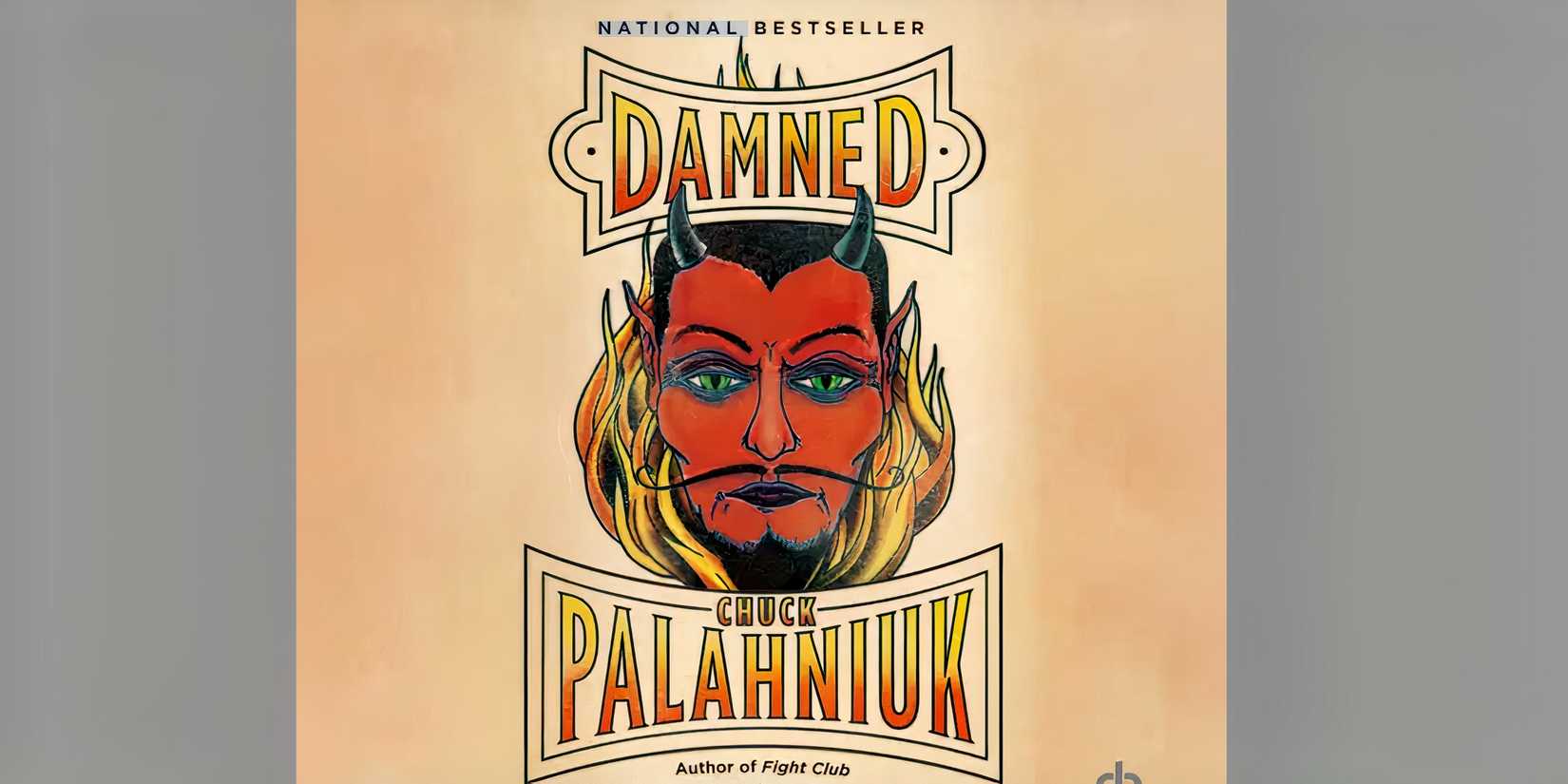
This is a bit of a cheat, but these two books can not be separated because Damned ends with a cliffhanger, and Doomed picks up right where the action left off. This (collective) story is such a refreshing, different way to look at the coming-of-age trope. It’s The Breakfast Club in Hell. But, like, literal Hell. Palahniuk raises so many gripping points in these books, it’s hard to keep track of them all, but a few that really stick with the reader are: a) when you die, you lose, and essentially are viewed as a loser by the living, b) nerds and jocks can work together, and c) if there is a Hell, yes, it’s going to suck, but it’s not necessarily the worst place to make friends.
Damned begins with the main character, Madison “Maddy” Spencer, a privileged but cleverly sardonic and down-to-earth 13-year-old, who realizes she has died, and is in a place that resembles the DMV more than the classical depictions of Hell. In a hilarious send-up of annoying professions, Maddy is given a job as a telemarketer (where she must call homes at dinnertime). Maddy then links up with a motley crew of deviant teens, each representing a cliché character from a high school movie. Eventually, Maddy uncovers the fact that her placement in Hell was apparently a clerical error, and she decides to confront Satan himself to rectify the situation… That’s where the book ends. Doomed sees Maddy back in the mortal realm after missing her curfew back to Hell on Halloween (when the dead are allowed to roam the earth)…only now Maddy is trapped there, as a ghost. So, she begins to haunt her celebrity parents…who have misinterpreted the telemarketer call they previously received from Maddy — who falsely claimed she was in Heaven. This has led her parents to devise a, now popular, subversive self-help style religion, called Boorism, that urges people to be revolting and narcissistic in order to see the Pearly Gates. Through a series of specter shenanigans, Maddy eventually detects her way into uncovering Satan’s master plan: to use this religion to send all of humanity to his domain. This book, a caustic look at how greed subverts basically every human intention, ends with another cliffhanger. Due to lower sales than Damned, the trilogy needed to complete this sprawling tale hasn’t been scribed yet, to the chagrin of fans. Hopefully, Chuck will finish Maddy’s story, because she presents one of his only genuinely likable main characters.
6 'Haunted' (2005)

What could be more meta-fun than a transgressive book about desperate writers, all telling their best stories? That’s the query posed by Mr. P. in this collection of short tales that superbly sit within the framework of a highly unusual and compelling narrative. Here Palahniuk dissects the innate desire for fame and success with a biting critique of the literary (and entertainment) world.
As mentioned, the concept of the overarching story is very clever, and the format tightly constructed. The basic scenario is that a group of aspiring writers have been assembled at a select “writers retreat,” housed in an old theater. Throughout the course of their stay there, the 17 participants tell tales, 23 in total; each one garnering the storyteller a nickname. While all the short works penned by the authors are riveting in their own unique ways, there are a few that really stand out. First is “Swan Song,” by The Earl of Slander, a highly self-aware, meta story about a grumpy journalist who kills a former child star and frames him for having child porn, all so he can break the “sensational” scandal himself. Another winner is “Exodus," by Director Denial, about a woman trying to “save” a bunch of anatomically correct training dolls accidentally sent to a police station. Finally, the most talked about (revered and reviled) tale is titled “Guts,” and it’s one helluva yarn. The story follows a group of teens who experiment with alternative/deviant forms of sexual gratification — and the author, the malnourished-looking Saint Gut-Free, has quite the tango with a pool’s water intake system. When Palahniuk was giving readings of this chapter, listeners apparently fainted after hearing the ultra-graphic details. Anyway, the writers’ stay becomes harrowing when they believe that they are trapped there, with dwindling essential supplies…but this leads to their shared belief that the one person who “survives” this scenario is going to be granted the best book deal/movie option. Written at a time when reality TV was at its height, the message here — that being an artist of any sort was no longer enough to cut it and that what one really needed to achieve success was an exploitative tale of their own trauma — is expressly made.
5 'Rant' (2007)

Rant, at its core, is a tremendously interesting look at how myths and urban legends come to be. It’s set up as a biography that’s told from different people’s perspectives — often which were contradictory. The book is very layered, as it starts off in a (albeit odd) reality of sorts, but then veers off into the surreal territory of a dystopian future.
Rant is the oral history of a man, Buster "Rant" Casey, who posthumously achieves legend status. Various people (56 in total) who have encountered him take stabs at their own chapters of Rant’s life. Initially, they talk about his childhood, growing up in a regular town. As a kid, Rant allegedly played pranks that went horribly awry, but he socially redeemed himself by discovering a treasure of sorts that then helped economically rejuvenate his town. Things begin to fall off the reality rails when Rant moves to a town where people are segregated into day folk and night folk, and he starts up a movement named “Party Crashing,” where drivers intentionally slam into other cars for points. Things get weirder when Rant reputedly infects himself with a variety of animal toxins and develops a strain of rabies that leads to the deterioration of a large segment of society. Taking things to an even stranger place, Rant eventually dies in a car crash, but his body seems to evaporate into thin air, and it’s speculated that he traveled back in time…and fathered himself. Summarizing this story in this manner seems as insane as the book itself, but the way that Palahniuk delivers the increasingly mythical events of Rant’s life is spellbinding. Ultimately, it’s never fully made clear if the legend of Rant is purely a decades-long game of telephone gone wrong, or the true story of a time-jumping icon.
4 'Survivor' (1999)

As with most of Palahniuk’s books, the author holds a lens up to a specific facet of society and vividly illustrates how messed up it is. Survivor is an amazingly prescient look at the cult of celebrity, and how the most unlikely of candidates can rise to fame — and this was scribed in the 90s, long before Tik Tok was even a thing. Written in reverse format, where the tale begins at the end and counts backwards in time, this is one of the more innovative books of the 90s.
The story starts on a hijacked plane that’s about to run out of gas. Tender Branson, the (unsympathetic) protagonist (typical for Palahniuk), realizes that he’s about to meet his maker, so he dictates his unorthodox story into the black box, for prosperity, as it were. So, reverting back to regular, sequential time for the sake of understanding the plot, Tender began his life in a doomsday cult, where almost everyone eventually killed themselves, except for Tender and a few others. Hence, he’s a survivor. As an adult, Tender takes a job as a home caretaker for a rich couple. Due to a misprint in the newspaper, a suicide hotline number actually appears as Tender’s — who gladly takes the calls…but instead of providing words of encouragement, he explicitly informs the distraught callers on how to off themselves. Real nice guy. Then, it’s revealed that Tender’s twin brother, Adam, is on an unholy mission to murder all the surviving cult members, so Tender hides out in New York. Things then get much, much weirder, as Tender is discovered, as the now sole survivor, and thrust into the public eye. He soon rises to national fame as a neo-religious, self-help guru. Taking a page from certain Evangelical preachers, Tender changes his entire image and becomes completely focused on reaching the heights of capitalism. Tender’s eventual, faux love interest is Fertility Hollis, a psychic…who happens to be the sister of one of Tender’s suicide hotline victims… Things come crashing down for Tender when he’s mistaken for his murderous twin, and so, this brings action to the plane that Tender has indeed hijacked. The whole book is a satirical look at how fame inevitably changes people (for the worse), how spirituality for the sake of profit is as false and delusory as it sounds, how capitalism is an immensely restrictive cult of its own, and how the media simply adores trauma.
3 'Choke' (2001)

Famously, there have only been two film adaptations (so far) of Chuck Palahniuk books (for good reason, since the plots are so whackadoo), and Choke is one of them. While the storyline of this book is pretty extreme, it’s just such a good tale that it was able to fluidly transcend mediums. Some of the themes tackled here could come across as a bit “icky,” but make no mistake, this book is wildly entertaining from page one until the last.
Victor Mancini is a former med student; a sex addict with halitosis and a very peculiar job. He works at a colonial-era re-enactment “living museum,” but this gig doesn’t provide him with enough pecuniary assets (he has to pay for his mom's pricy senior care medical facility). So, he does the only logical thing a person can do: pretends to be choking in fancy restaurants, lets people “save” him, stays connected with them, and then accepts nice chunks of cash from them. The reasoning behind this is a very sociologically intriguing one; when a person saves another, they become elevated to “angel” status in their own minds, and thus feel compelled to look out for that individual afterward. Victor also has a non-typical relationship with his mother (now in severe mental decline), which one can infer is the reason for his sexual compulsions. Victor eventually meets Dr. Marshall, a “physician” at the hospital that Victor’s mom is at, and a quirky romance blossoms. The twist in this one is very slick and definitely unexpected (which translates quite nicely to film), and is ironically satisfying. Overall, Choke is one of Chuck’s more reality-based novels (even though Victor’s mother asserts that Victor is the child of God), but its scathing humor, highly detailed scenarios (the medical facts in this are mind-blowing), and quirky motifs make it an out-of-this-world read.
2 'Fight Club' (1996)

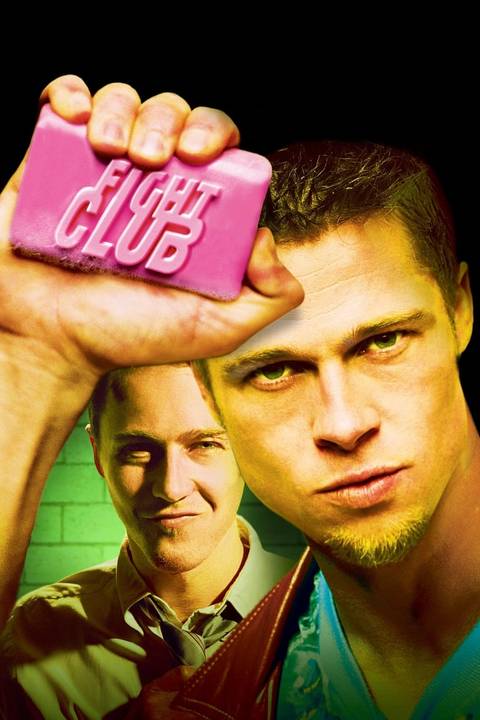
Maybe not everyone has read this book, but just about everybody on the planet is familiar with the movie Fight Club. This, of course, is a testament to Palahniuk’s work, since the plot is held very much intact in the film, and some of the dialogue is taken verbatim from the book. Cinematic success aside, this novel is probably the most inventive and darkly humorous account of mental illness ever penned.
Mr. Palahniuk chose not to give his protagonist a name in this classic mind-bender, and the working theory is that he did this to give him a generic, “every” person quality — this symbolizes how mundane work and the culture of consumerism in America can easily erode and erase someone’s true identity. So, the narrator does indeed work a mind-numbing job for a car company (in the “recall” sector), and suffers from debilitating insomnia. He somehow finds solace in attending support groups, latching on to the pain of the people actually afflicted with terminal conditions (he longs to feel something). Here, he eventually meets a charming woman named Marla, who quips things like, “I want to have your abortion.” The narrator also “meets” a man who lives off the grid, Tyler Durden, and who eschews all aspects of a capitalism-based society (even though he is an entrepreneur in his own right, as he makes and sells soap…made from purloined fat from liposuction clinics). Tyler and the narrator, while seemingly total opposites, bond and start the notorious fight club that gives the book its name. This testosterone-fueled underground activity eventually metastasizes into a national movement called Project Mayhem. While still covert, the pugilist network progresses from inflicting violence solely on each other to committing anarchy-based activities — with deeper implications regarding the fragility of America’s foundations and institutions. In case you somehow haven’t seen the film, there’s a huge twist regarding Tyler’s true identity, with a very clever, very strange resolution. The book has a different ultimate ending than the film, but it’s just as cool and hauntingly memorable.
1 'Invisible Monsters' (1999)

Reading through this list, it was probably a reasonable assumption to guess that Fight Club would be number one. It’s a close second, but Invisible Monsters narrowly beats it out because this boisterously insane book boasts an even more unexpected twist. A jaw-on-the-floor revelation that will have you thinking about its cerebral implications for a long time after initially digesting the words. It’s a non-linear story, with action flashing back and forward, left and right, yet when all the story elements are viewed as a whole, it’s a beautifully integrated jigsaw puzzle of disruptive thought.
Shannon McFarland is a fashion model with seemingly everything going for her. She’s young, beautiful, touring the world, and making oodles of cash. But…something…is lacking. And then, one day, out of the blue…she’s shot in the face with a shotgun. She survives, but only now, she’s horribly disfigured and rendered mute. Career, over. Life…just beginning? While in the hospital, Shannon meets a fabulously fashionable transgender woman named Brandy Alexander. Brandy gives Shannon the sage advice that she can now reinvent herself, and become anything she wants. So, Shannon wears elaborate veils; no longer the center of attention, but rather an invisible…monster, blending into the backdrop, skulking in the shadows. The story then takes on a distorted road trip comedy tone, as Shannon, Brandy, and Manus Kelley, an ex-cop and Shannon’s unfaithful ex-fiancé, join forces. They romp around the country, clandestinely stealing prescription pills while viewing open houses. As the tale weaves forward, the secrets of the main characters’ true identities, and horrific acts that happened to them and ones they themselves perpetrated, bleed out. The reveals are all shocking, but the aforementioned final twist is one for the ages. This book revels in profound themes of familial trauma, the facade of societal validation and looks-based affection, the fluidity of gender, and ultimately, the inspiring act of earnest self-acceptance.
Fight Club
- Release Date
- October 15, 1999
- Runtime
- 139 minutes
- Director
- David Fincher
- Writers
- Chuck Palahniuk, Jim Uhls
KioskNews shows a cleaned-up reading view extracted from the publisher’s page — the original always lives on their site, not ours.