Why Ambedkar said democracy needs a conscience, not just a Constitution
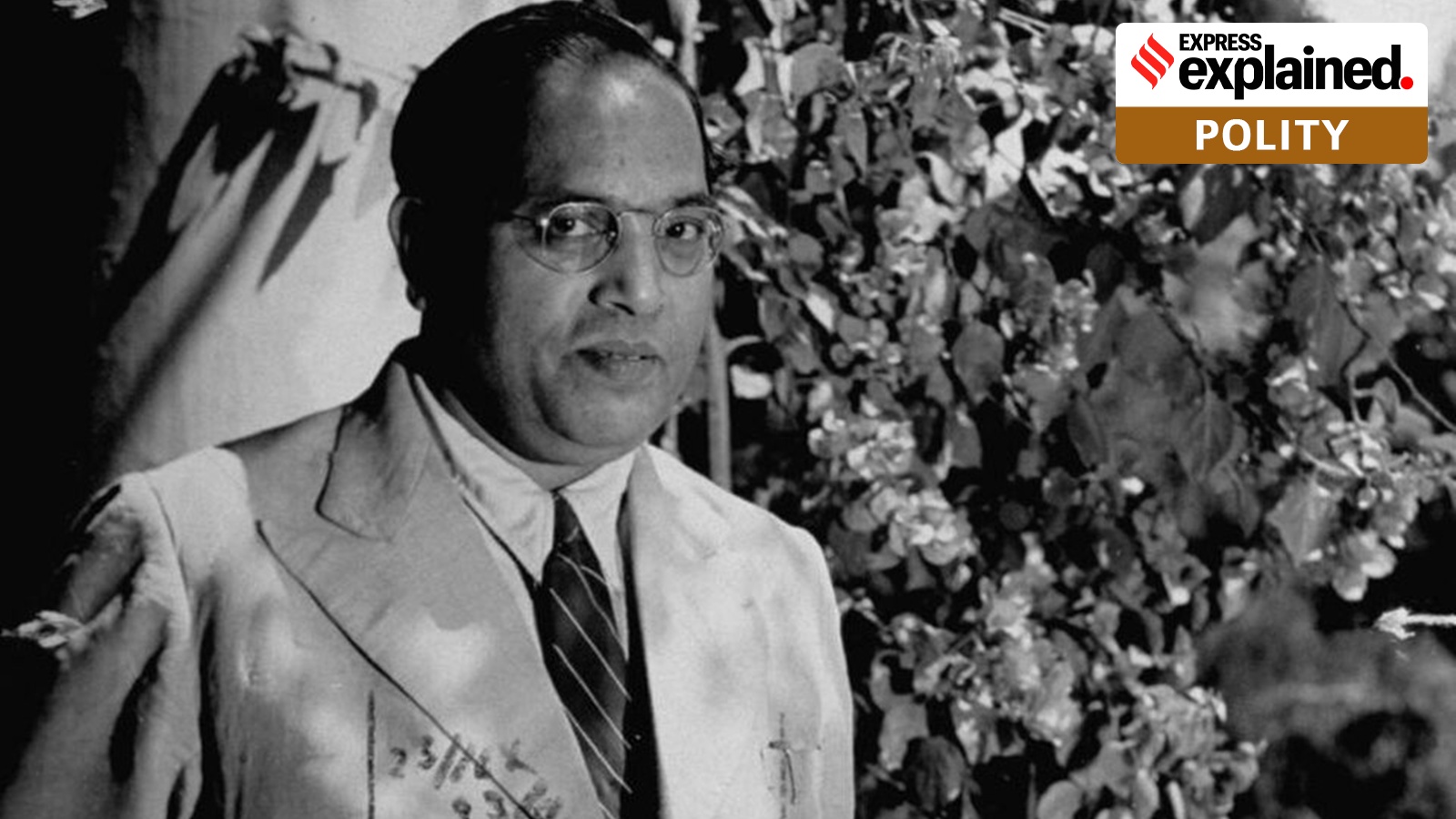
The idea of conscience is quite ancient. Often, however, its essence has been evoked either in the realm of individual guilt for evil acts or, like in English theologian John Henry Newman’s conception of conscience, as the voice of God in the soul. Very few scholars have worked to associate conscience with the effective working of democracy. In the Indian context, no one laboured more relentlessly to disseminate this vision than Dr. B. R. Ambedkar.
For Dr. Ambedkar, the idea of conscience is so intimately associated with democracy that he regarded public conscience as an important prerequisite for its effective functioning. Public conscience, he observed, means conscience which becomes agitated at every wrong, no matter who is the sufferer, and it means that everybody — whether he suffers that particular wrong or not — is prepared to act against it.
This vision is a redefinition of conscience itself: from a faculty that registers one’s own guilt to a capacity that is moved by righteous indignation at injustice done to others. It has wider implications: it calls upon privileged people and Western nations to stop evading responsibility for climate reparative justice and for historic redress of injustices faced by marginalised castes in India.
Whose law to uphold
The gap between legislative intent and effective social outcome is one of the persistent problems in the sociology of law. A legislature may draft impeccable legislation, but far from taking root, it remains a mere pious pronouncement. Dr. Ambedkar attributes this gap to the absence of social conscience. In a speech titled “Ranade, Gandhi and Jinnah”, delivered at the Deccan Sabha of Poona at the Gokhale Memorial Hall on January 18, 1943, he noted that rights enshrined in statutes or constitutions are ultimately protected not by law, but by the social and moral conscience of the society in which they operate.
He declared: “If social conscience is such that it is prepared to recognise the rights which law chooses to enact, rights will be safe and secure. But if the fundamental rights are opposed by the community, no Law, no Parliament, no Judiciary can guarantee them in the real sense of the word. What is the use of the fundamental rights to the Negroes in America, to the Jews in Germany and to the Untouchables in India? As [British philosopher Edmund] Burke said, there is no method found for punishing the multitude. Law can punish a single solitary recalcitrant criminal. It can never operate against a whole body of people who are determined to defy it.”
What, then, is the remedy? Dr. Ambedkar noted that, “Social conscience—to use the language of Coleridge [Samuel Taylor Coleridge, the poet] —that calm incorruptible legislator of the soul, without whom all other powers would ‘meet in mere oppugnancy’ —is the only safeguard of all rights, fundamental or non-fundamental.”
Fraternity and the caste system
Story continues below this ad
Why did Dr. Ambedkar stress that conscience must be social or public instead of individualistic or theological? Because in the Indian context, he observed an alarming deficit of social conscience, which he attributes to a deeper malady embedded in India’s highly stratified social order: the caste system.
One of its essential features, he argued, is the absence of fraternity. How can people “agitate at every wrong, no matter who is the sufferer”, when the society is not only fragmented into thousands of castes but also arranged in a structure of graded inequality, where all the terms of association are determined by “an ascending scale of reverence and descending scale of contempt”? There can be no genuine democracy where fraternity is absent.
If absence of conscience, owing to the lack of fraternity, stands as one of Dr. Ambedkar’s principal diagnoses of Indian society, what was his solution? Differing from English philosopher John Stuart Mill that fraternity is a natural sentiment, Dr. Ambedkar argued that fraternity is a hard-won prize that needs to be rigorously cultivated through multiple channels of social action.
The fundamental condition for the growth of fraternity, he argued, is not preaching that we are children of God or the realisation that one’s life is dependent upon others. The condition lies in sharing in the vital processes of life: in the joys and sorrows of birth, death, marriage and food. Those who participate in these come to feel as brothers. This “common cycle of participation” cannot be created in a society without active socialisation.
Fraternity and religion
Story continues below this ad
Of all the avenues, Dr. Ambedkar believed that religion can act as a potent channel to disseminate fraternity, provided it is propagated as a working ethic. Agreeing with the English poet William Blake that religion is politics and politics is brotherhood, Dr. Ambedkar invoked the idea of religion as a working ethic, where the metaphysical and theological realms are shed to reorganise religion as an agent of active socialisation and social change.
For him, Buddhism is a force of transformation that fulfils the role of this working ethic through active preaching of Buddhist core ideas such as Pradnya (understanding as against superstition and supernaturalism), Karuna (love) and Maitri (fraternity or fellowship), and by creating an environment where different sections can gather at the Vihara and community places to eat, dine, marry, share problems and thrive by overcoming difficulties.
When moral precepts become the governing principle of an individual’s moral compass, through the active and disciplined cultivation of the mind, their violation ceases to be a mere legal infraction and becomes nothing less than a sacrilege. Such deeply rooted conscience, in turn, compels the individual to rise in righteous agitation at the sight of injustice, regardless of who the sufferer may be.
Dr. Pavana Vikramaditya Sairam Salvadi is a dentist and independent researcher.
KioskNews shows a cleaned-up reading view extracted from the publisher’s page — the original always lives on their site, not ours.