5 Reasons It's Hard To Watch Dances With Wolves Today

Shawn S. Lealos is an entertainment writer who is a voting member of the Oklahoma Film Critics Circle. He has written for Screen Rant, CBR, ComicBook, The Direct, The Sportster, Chud, 411mania, Renegade Cinema, Yahoo Movies, and many more.
Shawn has a bachelor's degree in professional writing and a minor in film studies from the University of Oklahoma. He also has won numerous awards, including several Columbia Gold Circle Awards and an SPJ honor.
He also wrote Dollar Deal: The Story of the Stephen King Dollar Baby Filmmakers, the first official book about the Dollar Baby film program. Shawn is also currently writing his first fiction novel under a pen name, based in the fantasy genre.
To learn more, visit his website at shawnlealos.net.
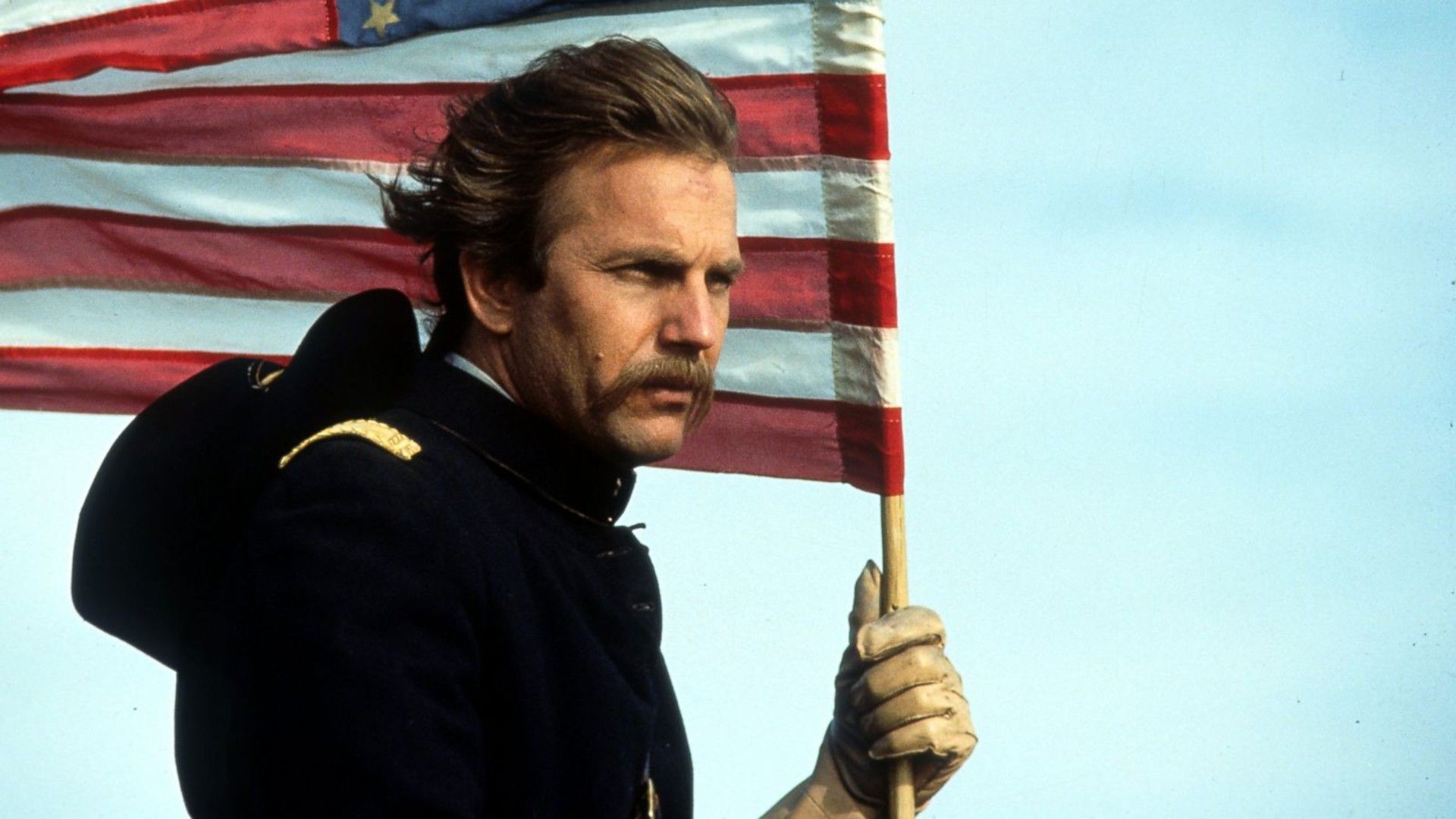
Dances With Wolves is one of the most successful Westerns of the modern era, and it is one of the movies that made Kevin Costner an A-list Hollywood star. The movie won Best Picture and Best Director at the Oscars, the first Western honored with the highest award in 60 years. However, the movie doesn't hold up as well today as it once did, although it still remains a masterpiece.
The movie was a box office success, and it established Costner, who raised the money to ensure the movie could get made, made his name as a successful director as well as an actor. The movie earned $424 million on a $22 million budget. Dances With Wolves was also a highly innovative movie, using actual Lakota-language dialogue and Indigenous performers to ensure its authenticity.
While Dances With Wolves was a success, remains known as a masterpiece, and is a great movie, not everything holds up as well today. There are prominent complaints from the Native American community and there are also counterarguments to these complaints. While these problems make the movie hard to watch today, they don't entirely eliminate the enjoyment factor.
5 The 3-Hour-Plus Runtime Feels Even Longer Today

It seems that more and more movies are long, with complaints that there should be intermissions when the runtime reaches the three-hour mark. In some cases, such as the MCU's Avengers: Endgame, the runtime seems to fly by because it is almost all non-stop action. In the case of Dances With Wolves, it is almost all drama, with a deliberately slow pace that is unusual for modern-day movies.
Dances With Wolves is a 181-minute movie, which is the same length as Avengers: Endgame. Even more than that, the director's cut is 234 minutes, which is just under four hours of runtime. At least one review called it a three-hour film that was plodding, and that makes it a very hard movie to sit through in today's movie world. There is the argument that the slow pace is part of the story, although the four-hour version is almost too much.
4 Kevin Costner's Lieutenant Dunbar Narration Is Too Much Voice-Over

One thing that Kevin Costner focused on in Dances With Wolves was the voice-over narration. In a movie that runs three to four hours, depending on the version, the amount of voice-over can make it seem like an even longer experience. While this hurts the enjoyment factor of watching the movie, it is also a genuine storytelling weakness in the script. The term show-don't-tell is in all writing advice, and this movie tells a lot more than it shows.
The voice-over is explained as the writing that Costner's Lt. John Dunbar records in his journal. The problem is that the narration sounds very stilted, and it almost sounds like Costner is bored when he is reading these lines. Another problem is that the narration often has nothing to do with what is happening on screen, making it seem even more out of place. Removing the narration hurts the story, but scenes showing what he is saying would have worked better.
3 The Villainous Union Soldiers Are Drawn As Broad Caricatures

There was a huge complaint in classical Westerns that the Native Americans were often drawn as broad caricatures of savages and villains, and none of that was true to the actual facts. While that was an honest complaint, and a big reason classic Westerns are hard to watch today, Dances With Wolves made the same mistake, but on the other side of the battlefield. Here, it is the Union soldiers who are drawn as comical villains.
The Union soldiers who reoccupy Fort Sedgwick are often shown as sadistic and cruel men, with no redeeming qualities. The movie goes to great lengths to show how barbaric the soldiers are compared to the more peaceful Native American tribes. The film goes as far as having them shoot Dunbar's horse out from under him and then use his wolf companion as target practice, shooting it over and over. The movie inverts the villains but uses the same stereotypes.
2 The White Savior Framing Has Aged Like Milk

One of the worst things that Westerns have done since the start of cinema is using the white savior trope. This is the one thing that makes the movie so hard to watch today, despite all the hard work that Costner put into romanticizing the Native Americans in the tale. While the soldiers are villains and the Indigenous people are often victims, Dances With Wolves still relies too heavily on the idea of the white savior.
Costner's Dunbar is positioned as the hero and effective savior of the Lakota, placing the white character on a pedestal. This was the old trope that the white man had to save the Native Americans from extinction, where the truth was much more nuanced. This is an argument that continues to this day, with Dances With Wolves one of the more studied examples of this harmful trope.
1 Too Many Historical Liberties With Lakota Story

Kevin Costner took great liberties to make the movie as inclusive as possible, going as far as using Lakota-language dialogue and casting Native American actors like Graham Greene, Rodney A. Grant, Wes Studi, and more. There were problems with the Lakota story. Dances With Wolves is based on Michael Blake's novel, but Blake used the Comanche, and the script changed it to the Lakota without changing any of the tribe's history from the book.
The powerful Lakota are shown as victims of the bloodthirsty Pawnee, but that reverses the actual historical balance of power. The Pawnee were generally peaceful toward white settlers. This caused members of the Pawnee Nation to criticize historical inaccuracies. The Lakota language, while done with good intent, was also not accurate, making Dances With Wolves a good movie but one that doesn't hold up well concerning its accuracy.
KioskNews shows a cleaned-up reading view extracted from the publisher’s page — the original always lives on their site, not ours.