Sled dogs have stubby legs for a reason
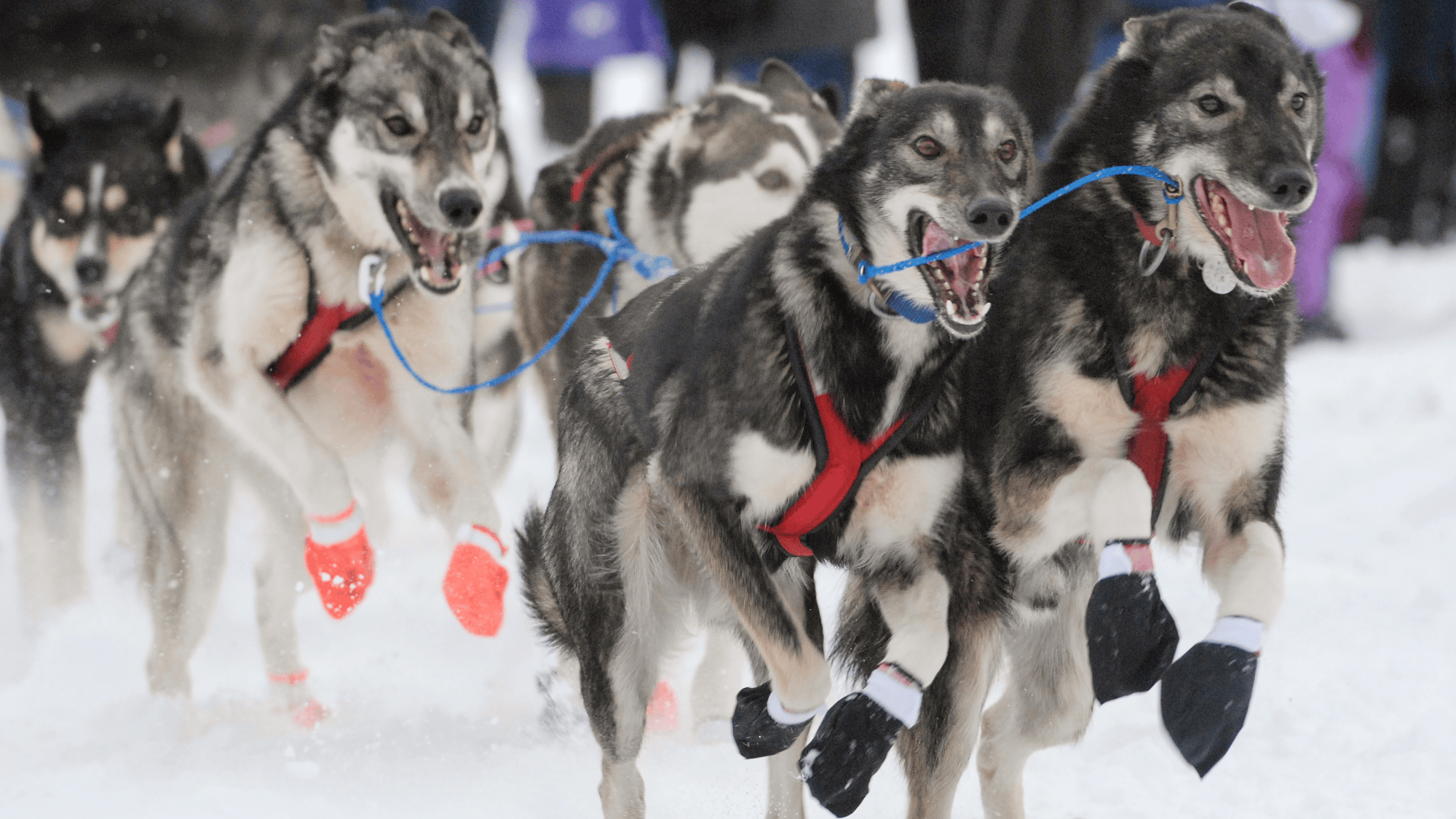
They’re some of Earth’s most powerful athletes, traversing thousands of miles of rough terrain in sub-zero temperatures, through blinding snow, and biting winds. Sled dogs have been helping humans travel across the planet’s coldest regions for centuries, hauling supplies, people, and equipment across the snow and ice. In the process, this important role that goes above and beyond simply being “man’s best friend” could have a visible impact on their evolution.
Sled dogs may have evolved shorter legs to help them pull loads more efficiently. Currently working sled dogs and those that lived about 2,000 years ago have six percent shorter leg bones than similar species, according to a study published today in the journal iScience. These findings could help biologists trace the origins of sled dogs and understand more about how dog-powered transportation spread over the past 9,000 years.
“Sled dogs have played an indispensable role in communities in the Arctic,” Mitya Kletzerman, a study co-author and an archeologist at the University of Haifa in Israel, said in a statement. “Without dogs, people couldn’t move as efficiently to hunt, relocate as conditions changed, or travel between communities to exchange knowledge and share new ideas. Understanding how the practice evolved could give us new insights into how people adapted to life in the Arctic.”
As of now, our earliest archeological evidence associated with dog sledding comes from 9,000-year-old sled parts and dog remains uncovered in 2017 on Zhokhov Island (present-day Russia). Sledding equipment like this is rarely found in the archaeological record, so it has remained difficult to pinpoint when and where the practice first emerged or spread.
Earlier studies have shown that work associated with humans can leave traces in an animal’s skeleton. Reindeer used for racing, carrying loads, and pulling have limb bone differences compared to those that do not pull. Kletzerman and her team were curious if sled dogs have also developed particular skeletal traits that have helped them adapt to all of the physical demands of pulling a sled.
In the study, the team developed a biomechanical model to help them understand how a dog’s body handles the work of pulling a sled. The model showed that one effective way to pull a sled loaded with material is for a dog to lower its center of gravity. This increases the canine’s ability to generate pulling force.
“When people or animals pull a load, it tends to tip them backward. A lower or more forward position of the center of mass counteracts this effect, allowing greater pulling force,” Kletzerman explained.
They then tested whether modern sled dogs have skeletal proportions that can lower their center of mass. They analyzed bones in 60 different modern canids, including sled dogs, wolves, spitzes, and mongrels. They then compared the lengths of five leg bones. Three in the forelegs (the humerus, radius, and ulna) and two in the hind legs (femur and tibia).
After accounting for overall skeletal size, they found that sled dogs have relatively shorter radius, ulna, and tibia bones than their non-sled pulling counterparts. These bones measured about six percent shorter on average.
“It’s unclear how this trait developed, but selective pressure may have preserved it, because it gave sled dogs an advantage over other dogs,” Kletzerman said.
To see if this characteristic already existed in ancient dogs, the team analyzed 82 ancient dog bones and three skeletons. The three skeletons were from ritually buried dogs uncovered from three archaeological sites associated with ancestral Inuit populations in present-day Chukotka, Russia, and date to 2,000 to 500 years ago.
Nearly 89 percent of the bones were consistent with the modern sled-dog pattern of shorter leg bones, as were all three ritually buried dogs. According to the team, this suggests that the skeletal pattern may be an effective way to identify that canine remains belonged to a sled dog, even when archaeological remains are incomplete or do not have any direct evidence of sled equipment.
“Dogs have been working alongside humans for thousands of years, but we’re only beginning to understand how that partnership shaped them,” Kletzerman concluded.
KioskNews shows a cleaned-up reading view extracted from the publisher’s page — the original always lives on their site, not ours.