‘How will people eat?’: Construction curbs leave Gurugram workers facing a bleak Diwali
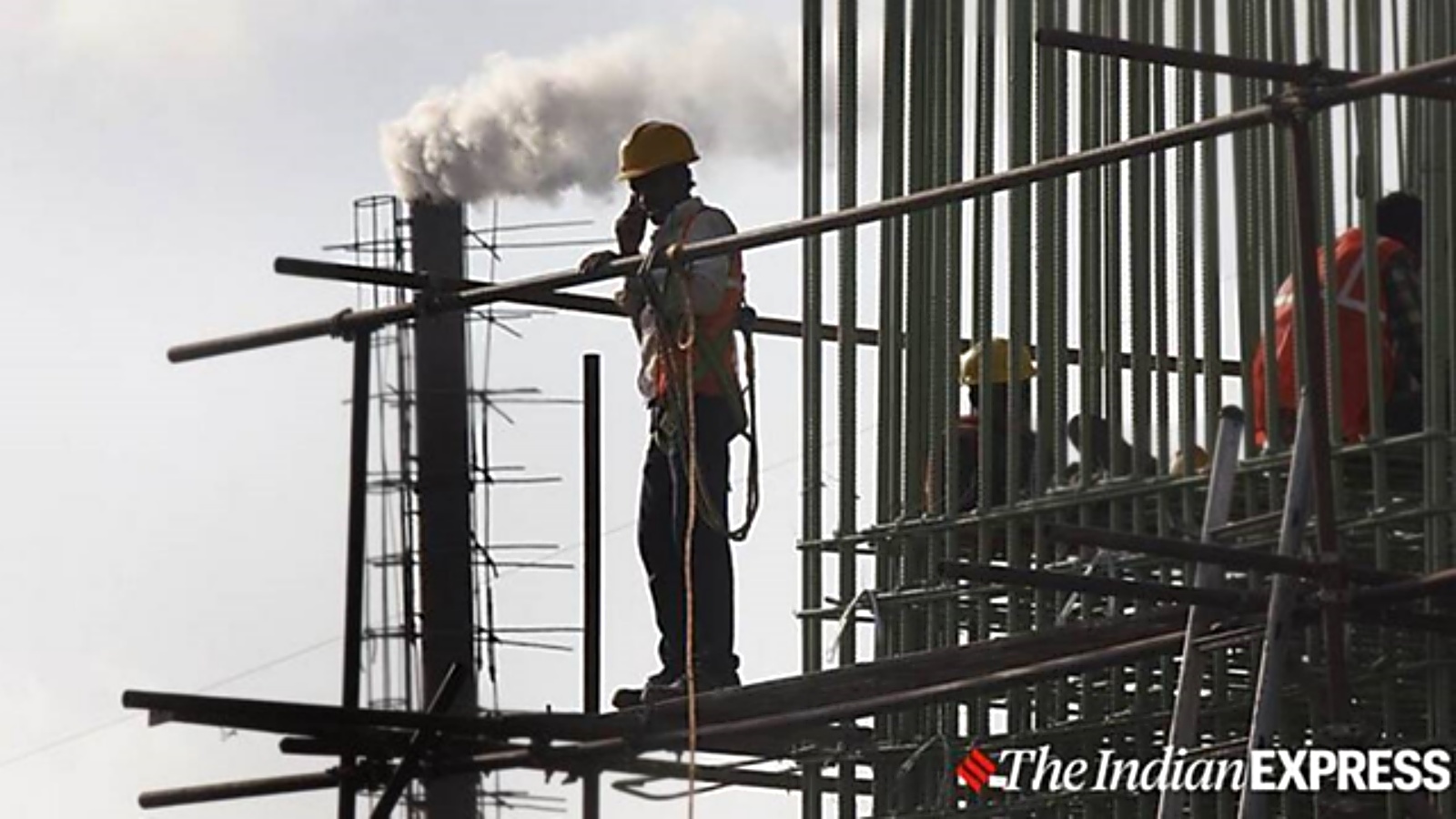
For 55-year-old Virender Kumar, winter in the National Capital Region (NCR) brings more than toxic air and smog. It also means days without work, no wages and the struggle to make ends meet.
With dust-generating construction activities halted across Delhi-NCR since November 5 under the Commission for Air Quality Management in National Capital Region and Adjoining Areas’ (CAQM) 15-day restrictions, Kumar, a daily-wage earner and small labour contractor working across Gurugram and Manesar, has found himself without work just ahead of Diwali.
“Labourers have no work, their livelihood is gone,” he said. “The question now is how will people eat? It has become a black Diwali.”
Kumar estimates that 60-70% of construction labourers in the Gurugram-Manesar belt are currently without work. “They are giving no work. They just tell the workers: go home to your villages, or stay inside your jhuggis,” Kumar said.
Many labourers are awaiting wages that remain unpaid for work completed before the restrictions came into force. Kumar claimed that it has been over a month and he is yet to be paid Rs 25,000 from a college construction project in Farrukhnagar.
“The owner keeps telling us to come back tomorrow,” he said. “When workers approach the labour department, there is no hearing. They simply tell us to go to the High Court or Chandigarh.”
Kumar also questioned whether the restrictions were addressing other major sources of dust pollution. “While construction sites have shut down, passing vehicles continue to kick up dust from unpaved roads. The government sprays water once in the middle of the road at noon, leaving the edges dry. By evening, when traffic peaks, dust blows everywhere,” he said.
Story continues below this ad
For developers, however, the restrictions have become an annual disruption that can be planned around.
Several builders in Gurugram said they have stopped dust-generating activities such as excavation, brickwork, plastering and RCC casting, while shifting workers to indoor jobs such as electrical work, plumbing, tiling and false ceiling installation.
Rajan Yadav, Director at Roots Developers, said, “The ban affects dust-generating work, so activities like excavation, RCC casting, brickwork and plastering slow down on our sites. But it isn’t a complete stop for the project… We see this as a short pause in particular activities, not a halt.”
Developers are also using the period to service heavy machinery – including cranes, piling rigs, and batching plants – and regulate material deliveries. While orders for ready-mix concrete have been frozen, incoming consignments of steel and cement are being stored.
Story continues below this ad
Some said they are providing accommodation and food to retain their core workforce and plan to introduce additional shifts once restrictions are lifted.
Santosh Agarwal, Executive Director and CFO at Alpha Corp Development Limited, said the disruption could be managed through advance planning. He called for a balanced approach that protects public health without bringing economic activity to a halt, pointing to Gurugram’s sustained real estate demand.
Developers like Mohit Kalia, senior vice president at HCBS Developments, and Amit Modi, director at County Group, noted that structured site practices, dust-suppression systems, and better waste management must become standard industry operations. According to industry insiders, bodies such as CREDAI and NAREDCO are also pushing for differentiated restrictions that would allow work at sites using advanced dust-control measures and technologies such as precast slabs and steel structures.
However, such discussions offer little comfort to informal labourers who depend on daily work.
Story continues below this ad
“Diwali has arrived, and labourers have to be paid, but no money is being released by construction sites,” he said. “People are just waiting while contractors say ‘come tomorrow, come day after tomorrow.’ If a man doesn’t get paid, how is he even supposed to go home?”
KioskNews shows a cleaned-up reading view extracted from the publisher’s page — the original always lives on their site, not ours.