Mahmood’s ‘Reform-lite’ migrant crackdown was nonsense, top economist claims

Shabana Mahmood’s immigration clampdown has been condemned by a top economist as a Reform-lite policy which has left the home secretary “completely tied up in knots” due to her subsequent climbdown.
The £10 billion cost-saving figure used by the home secretary to promote the targeting of foreign care workers in line with the sweeping changes has also been called “nonsense” by Jonathan Portes, a former chief economist at the Cabinet Office, who claimed the savings would be less than £600m.
Under Ms Mahmood’s proposed immigration rules, the qualifying period for migrants to seek permanent settlement would rise from the current five to 10 years, and potentially to 15 for care workers
But the plans have faced signficant opposition from campaigners, as well as dozens of Labour MPs, with Ms Mahmood widely expected to make changes – including making care workers exempt – when she makes her final decision in a statement to the Commons on Monday afternoon.
As part of Ms Mahmood’s case earlier this year, she highlighted a £10bn lifetime cost calculated by the Home Office for 196,000 care workers and their dependents looking to apply for indefinite leave to remain over the next five years.
However, Mr Portes, who was chief economist at the Cabinet Office from 2008 to 2011, told The Independent the figure was “misleading” and “nonsense” as it did not consider that migrants would still seek permanent settlement 10 years later – and still being able to claim pensions and health support.

Instead, he said the true savings would be £575m – 6 per cent of the Home Office’s estimate. He said: “Mahmood wanted to justify this policy on the basis that it was going to save lots of money even though it was quite clear that that was never true.”
Ms Mahmood’s statement on Monday comes after fresh analysis appeared to further counter her initial proposal, showing migrants due to settle in the UK were set to make a net lifetime contribution of around £115 billion through the taxes they pay. The Institute for Public Policy Research (IPPR) figures included skilled workers as well as health and care workers.
Mr Portes, who is now professor of economics and public policy at King’s College London, claimed Ms Mahmood’s plan had backfired, with her expected changes likely to end up targeting the migrants who generate the most money for the public purse.
He said: “The government never had a convincing rationale for this policy except to a Reform-lite version of anti-immigration policies, and hence once they started to try and justify it on grounds of economics and cost the whole thing just collapses into complete incoherence.
“They're now implementing a sort of version of the policy, but it no longer has any rationale, either an economic rationale or a political rationale, because I think they've realised that trying to copy Reform is a losing game.”
He added: “It’s just bad, they’ve completely tied themselves up in knots on this.”
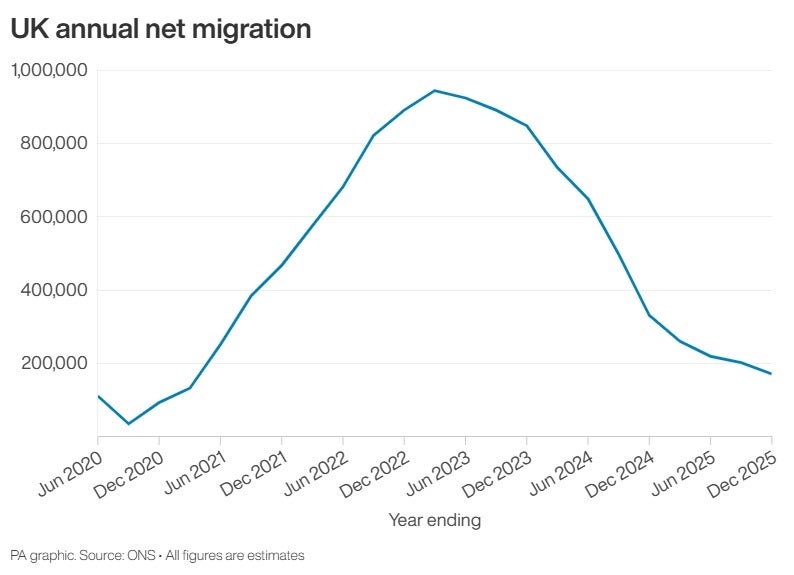
The IPPR has said that a change in policy to exempt care workers would be a “significant compromise”. Marley Morris, associate director for migration at the thinktank, also told The Independent that too-harsh government reforms on migration could deter high paid workers from coming to the UK.
He said: “Estimates suggest that on average each skilled worker contributes hundreds of thousands of pounds to the public finances over their lifetime, so even deterring a small number of them could have an outsized impact."
Earlier this year, Andy Burnham hinted he would ensure foreign care workers would be exempt from the rules as he praised the care given to his father. He told the Mirror: “I do want to make sure we get fairness in the rules in relation to people who came here in good faith, and made a commitment, I will make sure that we do that.”
A consultation on Ms Mahmood’s proposal received more than 200,000 responses.
Speaking on BBC Radio 4’s Today programme on Monday morning, former Home Office minister Mike Tapp said: "I very much hope that those who are genuinely working in health and social care for five years are exempt from that retrospective extension to the time they need to be here before they apply for settlement.
"We've all known someone in our family or friends who has been cared for by these people, so that would be the right thing to do."
KioskNews shows a cleaned-up reading view extracted from the publisher’s page — the original always lives on their site, not ours.