10 Best Boxing Movies To Watch If You Love The Greatest, Ranked

Senior Music Editor at Screen Rant, Sarah's love of sound and story drive the beat. A globetrotting brand whisperer and award-winning journalist, she’s built cross-cultural narratives around the world—but music has always been her true north. She launched DJ Mag North America, successfully introducing the iconic UK brand to the U.S. market. Previously, she carved a space for EDM inside the pages of VIBE, blending electronic and hip-hop culture long before it was trendy.
Muhammad Ali could win a fight before throwing a punch. Opponents had to contend with his footwork, his mouth, and the unnerving confidence of a man who seemed to know the outcome. Often, he did. Yet the self-proclaimed greatest became a polarizing public figure, risking his career rather than compromise his convictions.
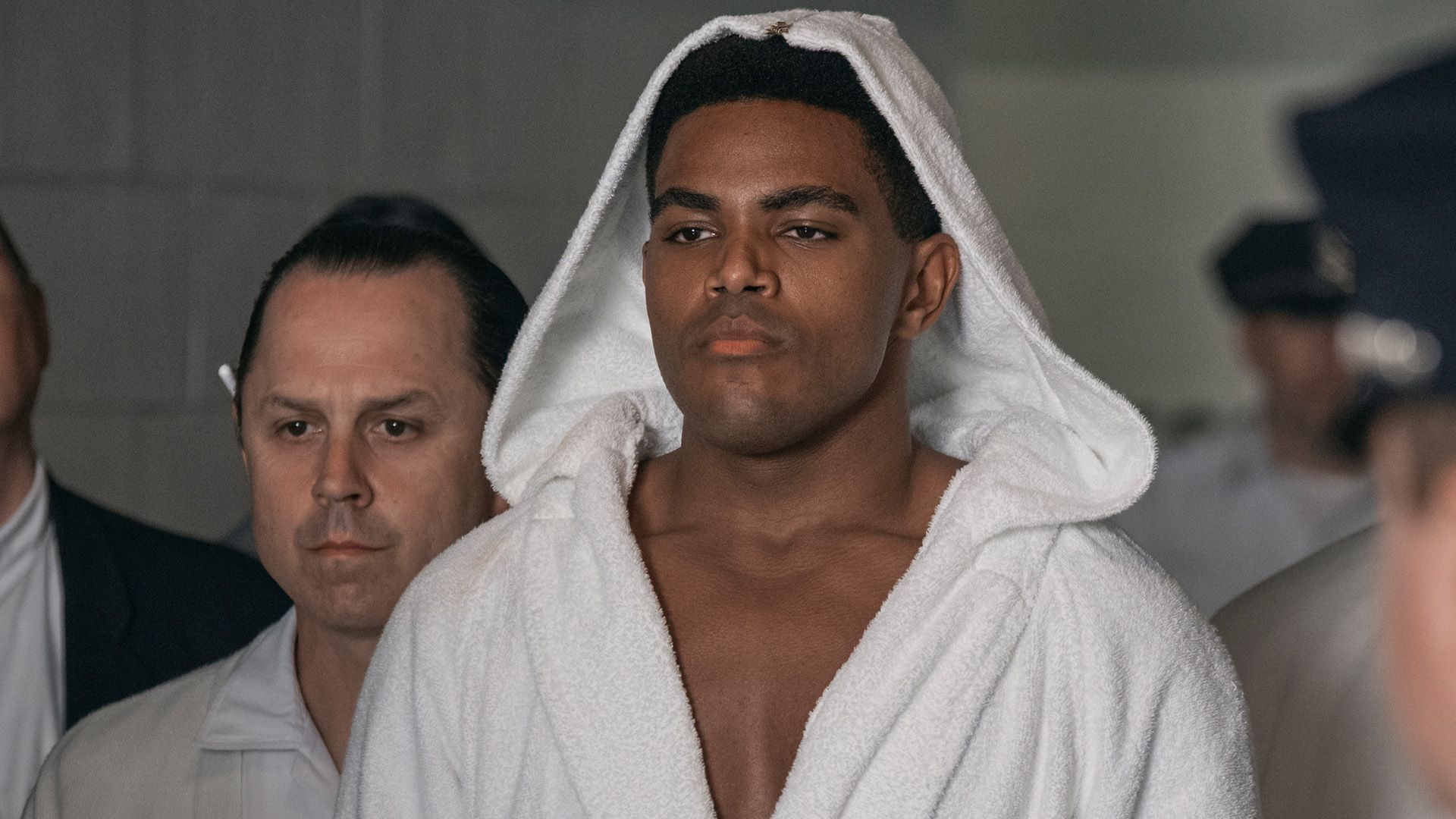
Prime Video's The Greatest, starring Jaalen Best, brings that complicated life to television. The authorized series explores the relationships and personal consequences behind Ali's victories. For viewers who finish the show wanting more, boxing cinema offers rich stories about people who discover that the toughest fight is often waiting outside the ring.
Some follow real champions. Others invent fighters whose struggles feel familiar, even when their records do not. Rocky and Creed offer underdogs worth cheering for, while Raging Bull makes rooting for its protagonist considerably harder. Even Million Dollar Baby, one of Clint Eastwood's best films of the last 30 years, has more on its mind than the final score.
These 10 films are ranked by their filmmaking, performances, lasting influence, and relevance to the themes of The Greatest. A great sports movie needs more than a convincing final bout. The best ones understand the person who has to climb into the ring, and what remains of that person when the crowd goes home.
10 The Greatest (1977)

There is an irresistible novelty to watching Muhammad Ali play Muhammad Ali. Released in 1977 and based on his autobiography, The Greatest follows the champion from his early career as Cassius Clay through his conversion to Islam, opposition to the Vietnam War, and historic return to heavyweight glory. Nobody could accuse the casting department of getting the leading man wrong.
Ali's charisma survives the awkward dramatic beats, although a great boxer playing himself does not automatically make a great actor. Director Tom Gries delivers a conventional biography of a thoroughly unconventional man. That limitation puts it last, yet it remains fascinating alongside the new series: here is Ali trying to tell his own story while he is still living it.
9 The Hurricane (1999)

Denzel Washington received an Academy Award nomination for his portrayal of Rubin "Hurricane" Carter, the middleweight boxer whose career was derailed by a murder conviction. Norman Jewison's The Hurricane spends more time on Carter's imprisonment and struggle for freedom than on his actual fights, making it an unconventional addition to a boxing list. Its punches, however, still land hard.
The connection to Ali is compelling. Both were prominent Black athletes shaped by racial tensions, although their circumstances differed. Washington brings anger and dignity to a screenplay that simplifies disputed aspects of Carter's case. For fans of The Greatest, it broadens the conversation beyond athletic achievement to the consequences of becoming a public figure in a divided country.
8 Cinderella Man (2005)
James J. Braddock was hardly anyone's idea of a future heavyweight champion during the Great Depression. Injuries and poverty had pushed him toward the docks when an unlikely comeback turned him into a national sensation. Ron Howard tells the story with an old-fashioned Hollywood conviction that makes audiences forget they already know the outcome.
Russell Crowe gives Braddock bruised decency, while Paul Giamatti brings grit as manager Joe Gould. Cinderella Man is more traditional than the films ranked above it, and its inspirational machinery is occasionally visible. Nevertheless, the boxing is forceful. Its portrait of a fighter providing for his family contrasts with Ali, whose public battles were fought on a different stage.
7 The Fighter (2010)


Some boxing movies feature an opponent easier to handle than the fighter's family. David O. Russell's The Fighter follows Micky Ward (Mark Wahlberg), a Massachusetts boxer building a career while his half brother and trainer, Dicky Eklund (Christian Bale), struggles with addiction. Their family is loving, suffocating, and occasionally impossible to watch without wanting to intervene.
Bale and Melissa Leo won Oscars, but the film's real achievement is making Micky's independence feel as thrilling as any title bout. Its humor gives the material breathing room. Ali also had advisers convinced they knew what was best for him. The Fighter understands how hard it is to own a career when your family believes it owns a piece.

Choose the movie with the higher Rotten Tomatoes score.
6 Creed (2015)

Ryan Coogler faced an unenviable assignment: bring Rocky into a new era without making the original hero look like a museum exhibit. He gave the spotlight to Adonis Johnson (Michael B. Jordan), Apollo Creed's son, who wants a boxing identity independent of his father's reputation. Sylvester Stallone's aging Rocky becomes the trainer rather than the attraction.
The fight choreography feels immediate, and Stallone delivers one of his most affecting performances. There's a direct link to the Prime Video series: Jordan's production company, Outlier Society, helped bring The Greatest to television. Creed ranks below the more accomplished films here, but its understanding of how athletes inherit and resist expectations makes it rewarding after spending time with Ali.
5 Million Dollar Baby (2004)

Clint Eastwood's Million Dollar Baby begins with familiar sporting ingredients: a stubborn trainer and a determined outsider everyone underestimates. Hilary Swank plays Maggie Fitzgerald, a waitress desperate to box professionally, while Eastwood is Frankie Dunn, the reluctant coach who eventually agrees to teach her. Their prickly relationship gradually becomes the film's emotional center.
What follows is darker than the usual underdog story. That turn earned debate, along with Best Picture and acting Oscars for Swank and Morgan Freeman. Among Clint Eastwood's greatest movies outside the Western genre, it's one of the most affecting. It ranks fifth because Ali's story takes a different emotional path, although few boxing dramas are better acted.
4 Ali (2001)

Will Smith had a difficult assignment in Michael Mann's Ali: persuade audiences to accept another actor inhabiting one of the 20th century's most recognizable personalities. He commits completely, reproducing Ali's physical swagger while finding the uncertainty beneath it. Smith received his first Best Actor Oscar nomination, and the performance remains one of the strongest arguments for his dramatic range.
Mann concentrates on the decade between Ali's first heavyweight title and his 1974 victory over George Foreman, covering events dramatized in The Greatest. The film shows how sporting achievement and political conviction became inseparable. The series has more room for relationships; Mann's film has a muscular visual style and Smith's transformation. They offer different routes into the same complicated life.
3 Raging Bull (1980)
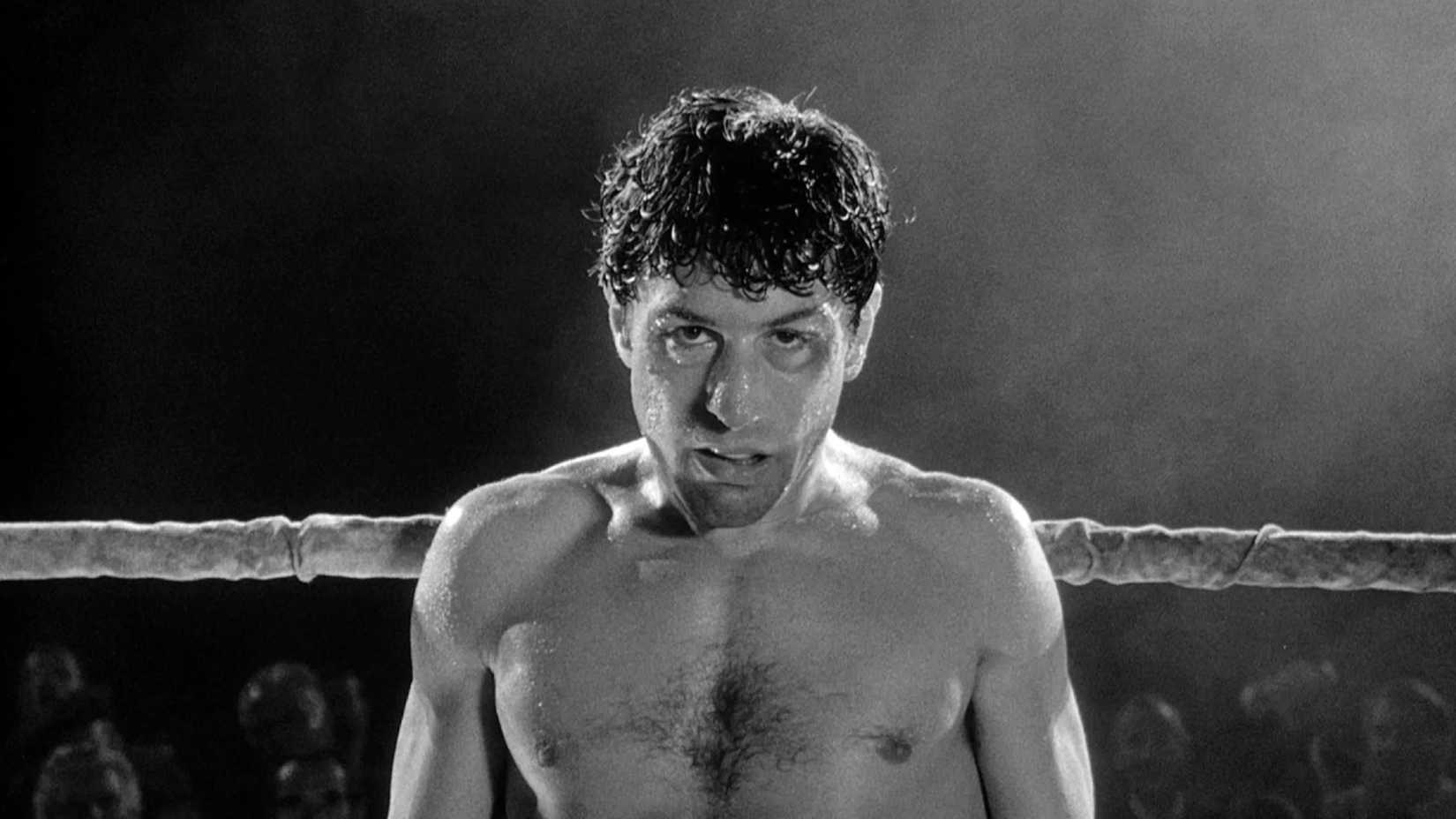
Some people admire Jake LaMotta as a boxer; others would cross the street to avoid him. Martin Scorsese's Raging Bull has little interest in reconciling those opinions. Robert De Niro plays LaMotta as a man whose aggression brings success in the ring and ruins nearly everything outside it. The performance won De Niro his second Oscar, deservedly so.
Scorsese's black-and-white photography makes the fights brutal, almost dreamlike spectacles. Yet the scenes that linger are confrontations in cramped apartments. LaMotta's story is the inverse of Ali's: a boxer unable to communicate what is happening inside him, however loudly he shouts. On filmmaking alone, Raging Bull could take first place. The two films ahead connect more directly to The Greatest.
2 Rocky (1976)

50 years after its release, Rocky remains astonishingly good at making a small victory feel enormous. Sylvester Stallone wrote and starred in the story of Rocky Balboa, a Philadelphia club fighter handed an unlikely shot at heavyweight champion Apollo Creed. The setup is almost a fable, but the film understands the ordinary indignities of being underestimated.
John G. Avildsen's film won Best Picture, influencing nearly every boxing drama that followed. Rocky's relationship with Adrian (Talia Shire) matters as much as training. The ending makes a point most imitators missed: earning respect can matter more than winning on the scorecards. Rocky is the definitive fictional boxing underdog, but first place belongs to Ali himself.
Question 1 of 3
1 When We Were Kings (1996)

No actor has ever reproduced Muhammad Ali quite like Muhammad Ali. Leon Gast's Oscar-winning documentary When We Were Kings takes viewers to Zaire in 1974 for the "Rumble in the Jungle" against George Foreman. The footage reveals a fighter who can command a crowd with a grin, needle his opponent, and make a political statement without waiting for permission.
Amid 1996 movies that still feel untouchable, When We Were Kings stands apart. Gast captures the event's historical significance and the personalities gathered around it. The music gives the occasion a cultural charge, while the boxing remains thrilling even when its outcome is familiar. It's a documentary with a thriller's momentum, powered by Ali himself.
When We Were Kings earns first place because it offers what a dramatization, however accomplished, cannot: the real Ali in all his magnetism and contradictions. Watch it after The Greatest and the astonishing part is how little exaggeration the series needed. Ali really was that much larger than life.

- Release Date
- October 25, 1996
- Runtime
- 89 minutes
- Director
- Leon Gast
- Producers
- David Sonenberg
KioskNews shows a cleaned-up reading view extracted from the publisher’s page — the original always lives on their site, not ours.