Iraqi security forces deploy in Iran-backed militia stronghold
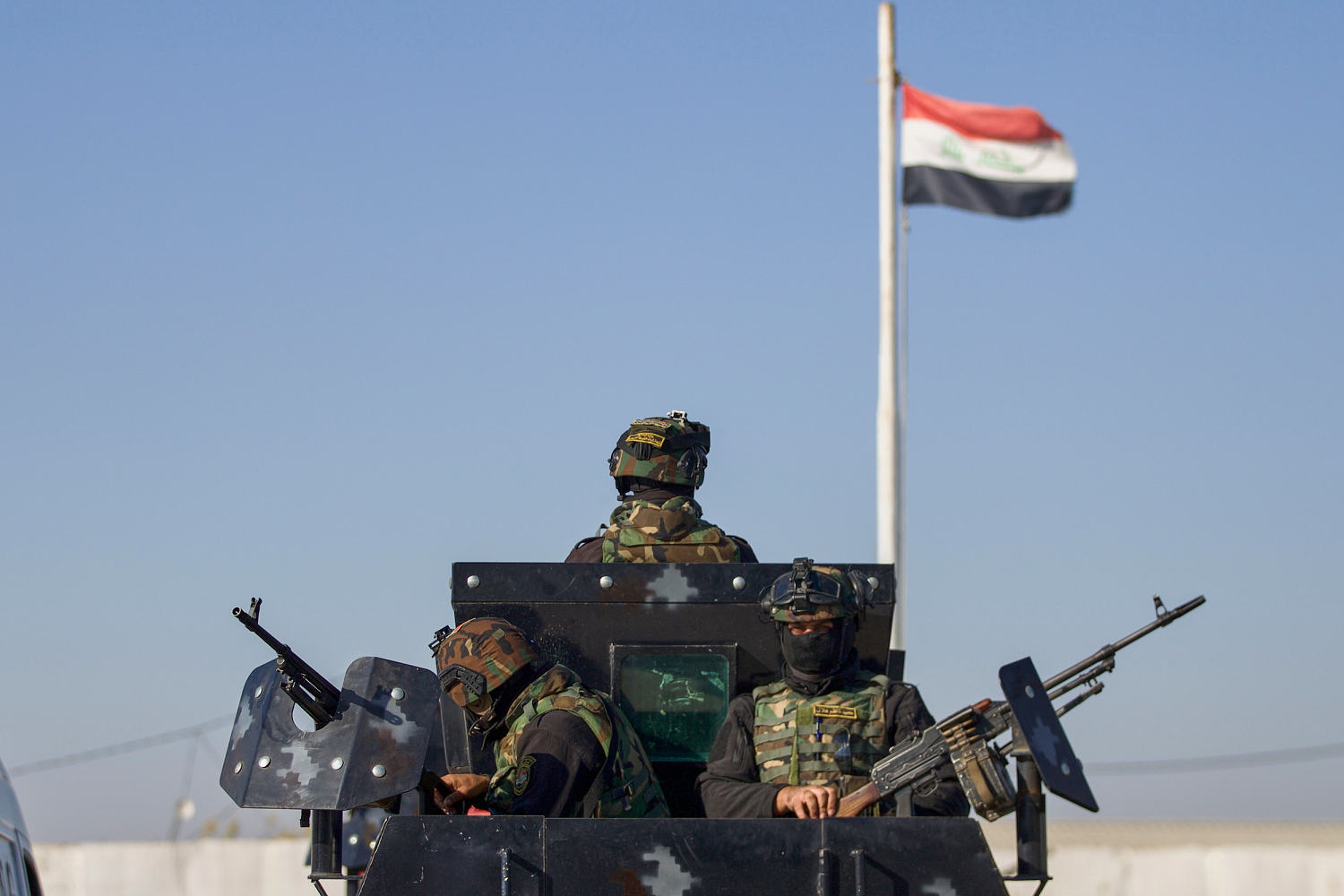
JURF AL-SAKHAR, Iraq — Iraqi security forces deployed in Jurf al-Sakhar, a stronghold of the Kataib Hezbollah armed group, on Friday under a deal that seeks to limit the reach of Iran’s most powerful Shi’ite militia ally in the country without provoking a confrontation.
Prime Minister Ali al-Zaidi this week ordered security forces to move against the heavily armed Kataib Hezbollah, which officials accused of running an oil smuggling network siphoning state-owned oil worth hundreds of millions of dollars in Jurf al-Sakhar.
The hardline Kataib Hezbollah (Battalions of the Party of God), branded a terrorist group by the United States, has rejected the smuggling accusations, which have led to arrests that prompted fears of an armed response. The group is among those that have claimed attacks on US forces in Gulf states since the start of the US-Israeli war on Iran.
A convoy of vehicles flying Iraqi flags headed into Jurf al-Sakhar on Friday and soldiers took up positions in the center after senior security officials told a press conference that government forces would protect the town.
Members of the Kataib Hezbollah group stood near their group’s flags.
“From Jurf al-Sakhar, we begin asserting state authority across all of Iraq, confronting corruption and weapons beyond state control,” Zaidi told government troops who entered the town, speaking from a military operations center in Baghdad.
“Our decision is firm: No weapons outside state authority, no weapons but Iraq‘s, no decisions but Iraq‘s, and no flag shall fly higher than the Iraqi flag.”
Under the arrangement, brokered by Shi’ite politicians, Kataib members were expected to withdraw to other parts of Iraq, a major oil producer and ally of both the US and Iran.
“God willing, things will be safe and secure with the presence of the security forces,” said resident Mohamed Ali.
Senior Iranian representative visited Baghdad, sources say
The deal will include the opening of a security headquarters in Jurf al-Sakhar on Saturday to oversee the handover. Iraq‘s energy police have begun securing an oil pipeline in Jurf al-Sakhar, the state news agency reported.
“Today is a historic moment in which the Iraqi Armed Forces prove that they are the nation’s shield, safety valve, and the guardian ensuring security stability for the Iraqi people,” Sabah al-Numan, spokesperson for the commander-in-chief of the Iraqi armed forces, told the press conference.
Reflecting the sensitivity of the situation, Iraqi Shi’ite political figures said Esmail Qaani, commander of Iran’s Revolutionary Guards’ Quds Force, arrived in Baghdad on Monday to help defuse tensions with Kataib Hezbollah.
So far, nine senior security and oil officials have been dismissed following an investigation focused on Jurf al-Sakhar in Babil province, about 50 km (30 miles) south of Baghdad.
Any direct confrontation with Iran’s heavily armed militia allies in Iraq could be risky.
After one of Zaidi’s predecessors ordered a similar crackdown on those armed groups five years ago, the prime minister’s Baghdad home was hit in a drone strike that authorities described at the time as an assassination attempt.
Refusal to disarm
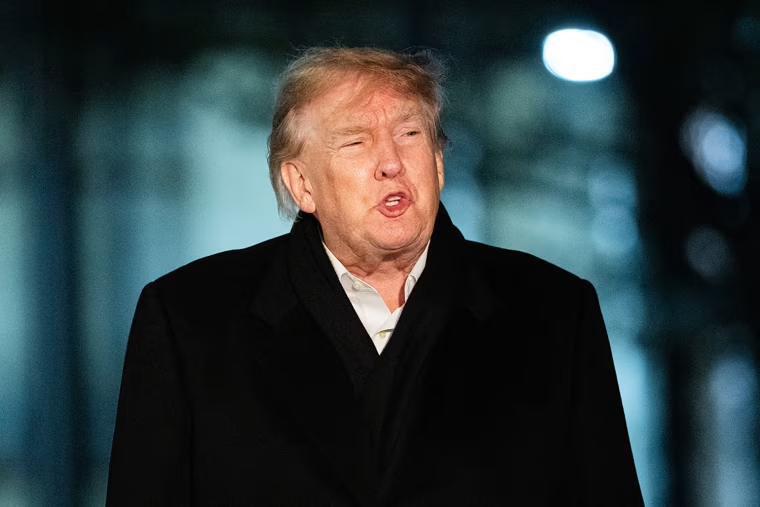
US President Donald Trump has pressured Zaidi to disarm the militias that have struck US troops and facilities in Saudi Arabia and the United Arab Emirates in solidarity with Tehran since the US and Israel launched attacks on Iran in February.
Kataib Hezbollah and other militias, all of whom report directly to Iran’s Revolutionary Guards, have refused to hand over their weapons to the state.
Founded in the aftermath of the 2003 US-led invasion of Iraq, Kataib is among the most influential members of the Islamic Resistance in Iraq, the umbrella group of hardline Shi’ite armed organisations supported by Iran.
Kataib Hezbollah quickly developed a reputation for deadly attacks against military and diplomatic targets during the US-led counterinsurgency war and sectarian conflict of the 2000s, using snipers, rockets, mortars and roadside bombs.
Wide Iranian sway in Iraq
Since the 2003 US-led invasion toppled Iran’s arch-enemy, longtime Sunni leader Saddam Hussein, Tehran has steadily expanded its influence in Iraq through close ties with heavily armed Shi’ite militias and political parties.
Iraqi security officials say the militias’ arsenals include assault rifles, machineguns, anti-tank guided missiles, mortars, precision-guided rockets, armed drones and some short-range ballistic and cruise missile capabilities.
Kataib has its own political party, called Huquq, or Rights, with five lawmakers. An Iraqi official report said the group also generates cash through businesses such as construction, housing, trade, tourism and currency exchange, though Kataib denies this and says it is dedicated to security.
Pro-Iranian militias, including Kataib, enjoy a semi-official status in Iraq, which critics say encourages them to act with impunity. A shadowy group with no announced leadership structure, Kataib Hezbollah has thousands of hardened fighters.
It forms several battalions in Iraq‘s Popular Mobilization Forces (PMF), a grouping of armed factions set up in 2014 to fight Islamic State and subsequently recognized as an official security force.
Fighters receive state salaries and Kataib Hezbollah members, including some designated as terrorists by the US, hold senior positions in the PMF. While it is technically under the command of Iraq‘s prime minister as part of the PMF, the group often operates outside the chain of command.
KioskNews shows a cleaned-up reading view extracted from the publisher’s page — the original always lives on their site, not ours.