The 10 Most Hopeless Movies of All Time, Ranked

Jeremy has more than 2800 published articles on Collider to his name, and has been writing for the site since February 2022. He's an omnivore when it comes to his movie-watching diet, so will gladly watch and write about almost anything, from old Godzilla films to gangster flicks to samurai movies to classic musicals to the French New Wave to the MCU... well, maybe not the Disney+ shows.
His favorite directors include Martin Scorsese, Sergio Leone, Akira Kurosawa, Quentin Tarantino, Werner Herzog, John Woo, Bob Fosse, Fritz Lang, Guillermo del Toro, and Yoji Yamada. He's also very proud of the fact that he's seen every single Nicolas Cage movie released before 2022, even though doing so often felt like a tremendous waste of time. He's plagued by the question of whether or not The Room is genuinely terrible or some kind of accidental masterpiece, and has been for more than 12 years (and a similar number of viewings).
When he's not writing lists - and the occasional feature article - for Collider, he also likes to upload film reviews to his Letterboxd profile (username: Jeremy Urquhart) and Instagram account.
He has achieved his 2025 goal of reading all 13,467 novels written by Stephen King, and plans to spend the next year or two getting through the author's 82,756 short stories and 105,433 novellas.
Sign in to your Collider account
Well, a hopeless movie is one without hope, because of course it is. It’s obvious. How do you even introduce a bunch of hopeless movies? There isn't really anything by way of terms that need defining, nor caveats, other than admitting that there aren’t going to be a ton of movies below, and that does mean plenty of upsetting, hope-free, and depressing films will not be mentioned.
Whenever you're looking at some kind of emotion stirred up by a film, or set of films, there’s going to be subjectivity involved, because what might upset one person enough to cause them to lose sleep – or even some sanity – might not do the same for someone else. So, this is a rundown of the most hopeless movies ever made in the eyes of one person, but that person definitely isn't entirely alone when it comes to feeling like these films are downers.
10 'Ran' (1985)
There is a real beauty throughout Ran that might somewhat reduce how despairing it is, or at least the visuals work to distract a little from the misery and tragedy of the narrative here. Then again, on a visual front, it does also look nightmarish at times, particularly when showcasing some kind of battle sequence, and there is a fair bit of conflict eventually, since Ran is about a succession-related family dispute that snowballs into an all-out war.
It’s perhaps the grandest of Akira Kurosawa’s films, which is saying a lot, and it sees him going all-out and making something incredibly Shakespearean, drawing from King Lear to a (seeming) greater extent than he drew from Hamlet for The Bad Sleep Well, albeit not quite to the same extent he put a spin on Macbeth in Throne of Blood. Still, the nature of Macbeth/Throne of Blood makes it so that it’s hard to feel too bad for the central character, while in Ran, even with plenty of the characters being flawed to some extent, it still stings to see what happens to most of them by the end.
9 'The Deer Hunter' (1978)

The Deer Hunter is a movie about the Vietnam War and how it impacted the lives of several U.S. men who went there to fight. There is something to be said about it being focused just on one side, and then there are other things about The Deer Hunter and where it goes (or doesn’t go) that can be critiqued, but for what it is, and for what it does focus on, it’s absolutely/effortlessly devastating.
It’s a long movie on top of being a distressing one, yet The Deer Hunter stands out for using its lengthy runtime very purposefully, because you see life before and after combat for the main characters, and then some time spent on what they do in Vietnam in between, too. Much of it’s like a psychological drama playing out with the runtime of an epic, and it all ends up hitting extremely hard, especially by the time you reach the end of it all.
8 'Blonde' (2022)

Based on a book that might well be even darker, Blonde (2022) was controversial because of what it had to say about Marilyn Monroe and her short and tragic life. Approached as a biographical movie, you can see why it caused alarm, but the source material and movie alike aren’t really trying to do a straightforward biopic sort of thing, instead using some events from Monroe’s life (or purported to be) to look at broader issues within the film industry.
She is made into a tragic figure here to a greater extent than she might’ve been in real life, and yes, she was in real life, but Blonde (2022) pushes things further into almost horror territory at times, with the approach being odd by, again, the standards of biographical and/or historical movies. It’s also long on top of being extremely confronting, with little held back, and so much of the story told here still feels uncomfortably relevant to this day.
7 'Killers of the Flower Moon' (2023)

Martin Scorsese is not a filmmaker who’s ever really shied away from dark subject matter, because even his comparative crowd-pleasers like The Wolf of Wall Street and The Departed are pretty intense at times, to say the least. When he did Hugo, which was a family movie, it felt a good deal more mature than most family films, and so him making something heavy, just from the premise… it’s inevitable that things will feel hopeless.
It’s about a bleak chapter in American history, and a historical film not about organized crime in the expected way, but instead about a distressing crime that was organized/arranged on a massive scale.
Enter Killers of the Flower Moon, which is his most recent effort, at the time of writing, and maybe his bleakest to date, outdoing films like The Irishman, Casino, and Taxi Driver when it comes to sheer misery. It’s about a bleak chapter in American history, and a historical film not about organized crime in the expected way, but instead about a distressing crime that was organized/arranged on a massive scale, and for a horrifyingly drawn-out period of time. Speaking of drawing out time, Killers of the Flower Moon is almost 3.5 hours long, so you do really feel the enormity and drawn-out nature of the crimes committed.
6 'Harakiri' (1962)

If a samurai movie can be included as something within the martial arts genre, then yes, Harakiri is technically one of the best martial arts movies of all time, but if you go in expecting a ton of action and fighting, you might be disappointed. Instead, this is more of a drama, and something of a mystery film, owing to its structure, with it being about a man who wants to take his own life, but first, he wants to tell a samurai clan why he wishes to do that.
Things build toward some brief bursts of action, in both the flashbacks and the film’s present, albeit they're infrequent and also not really supposed to be fun. Nothing about Harakiri is very fun, and it’s really the ultimate deconstruction of the whole samurai genre (or a takedown of the samurai mythos), in the end. It does all that excellently for sure, but it does have to be stressed that it’s quite a difficult watch for much of its runtime.
5 'All That Jazz' (1979)

If Harakiri is about as hopeless-feeling as samurai movies get, then All That Jazz is about as despairing as musicals can ever be. There is Dancer in the Dark, of course, which is an incredibly heavy-going film, and honestly a bit much at times, but it does end with some catharsis… more bitter than sweet for sure, but there is a small victory to be found at the very end, in a way.
On the other hand, All That Jazz is about a man working himself to death, and it was done by Bob Fosse as a semi-autobiographical movie, and then he ultimately succumbed to similar health problems that his stand-in character grappled with in this film. All That Jazz does have energy and style, enough to stop it from being an absolute slog to get through, but it is ultimately a very cynical and sobering viewing experience.
4 'Requiem for a Dream' (2000)

Like Blonde, Requiem for a Dream was based on a rather confronting and compelling book, this time being about a collection of people who have to deal with addiction in various ways. Nothing really goes well, to say the least, and that’s the case for a good many movies that look at this kind of challenging subject matter, but Requiem for a Dream really goes the extra mile to feel hopeless.
It’s almost a bit much just how intense it all is, but if you look at Requiem for a Dream as a worst-case scenario type of thing, in terms of what addiction could potentially do, then it works. Trainspotting is more balanced, nuanced, and probably realistic, yet it’s this film that stands out for feeling like the most harrowing, and its reputation for being one of the most challenging films (that’s also somewhat popular/well-known) is very well-earned.
3 'Hereditary' (2018)

Hereditary might be a family drama first and a horror movie second, but it’s so intense as a family drama about trauma, death, and grief that the drama stuff also feels horrific, in a way. And there is a sense of it being more of a psychological horror movie for a good chunk of its runtime versus a purely supernatural one, and it gets a ton of mileage out of all the uncertainty that comes with not knowing whether something’s more internal or genuinely/externally happening.
It’s all feel-bad stuff, and though there might be more gruesome horror movies out there (so they might be more disturbing from a certain point of view), few horror movies are as upsetting as Hereditary. And it’s all very visceral, unapologetically sad, and risk-taking, even by the standards of the horror genre, where you kind of enter into something expecting at least a few things – or scenes – along those lines.
2 'Grave of the Fireflies' (1988)

Like a couple of already mentioned movies (namely, Ran and The Deer Hunter), Grave of the Fireflies is a war film, though this one has very little focus on those involved in combat of any kind. Instead, it’s about two children trying to survive in the final stages of the Second World War, in the lead-up to Japan’s surrender, amidst a great deal of devastation and loss.
It’s brutal stuff emotionally, with the fact that it’s animated doing very little to stop Grave of the Fireflies from feeling authentic and just a real empty sort of sad. But you probably know that ahead of time, given the reputation this movie has for being one of the hardest-to-watch war movies ever made (a reputation that is extremely well-earned, it has to be stressed).
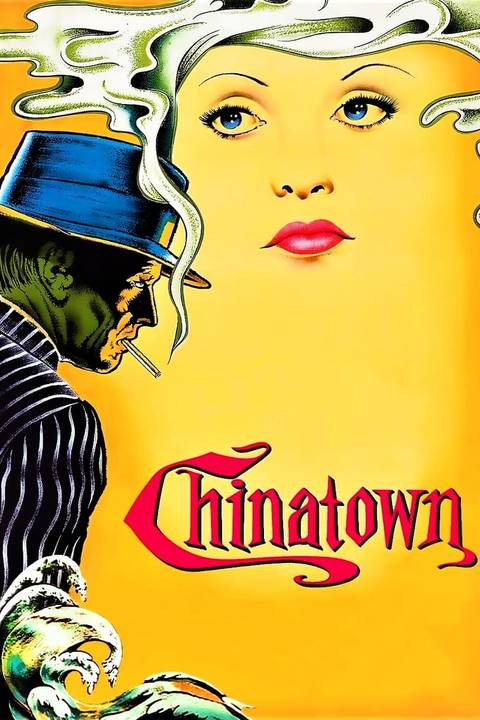
1 'Chinatown' (1974)

It feels a bit like Chinatown took a look at all the other bleak film noir or neo-noir movies out there, said “Hold my beer,” and then went ahead and successfully had a go at out-bleaking the lot of them. The premise might not sound too out there, since it’s about a private eye investigating a case that leads to something far-reaching and deeply troubling, but it’s where things go along the way that makes the difference.
Or, more accurately, what matters is the extent to which Chinatown decides to get dark and cynical, with there being almost no hope or levity found in this film, outside maybe getting some warmth out of things visually because it’s a sunny and rather vibrant movie. Emotionally and narratively, though, it really is about as intensely hopeless as cinema gets.
Chinatown
- Release Date
- June 20, 1974
- Runtime
- 130 minutes
- Director
- Roman Polanski
- Writers
- Robert Towne
KioskNews shows a cleaned-up reading view extracted from the publisher’s page — the original always lives on their site, not ours.