6 Forgotten Movie Trilogies Where Every Movie Is 10/10, No Notes

Sign in to your Collider account
Plenty of trilogies run on a single continuous storyline that carries through from start to finish. Then there are the trios that keep looping back to the same central theme, location, or human struggle from entirely different angles. That second group hits differently because each entry works as a standalone piece while still retroactively reshaping how every character decision feels.
In fact, these six selections show just how far that thematic approach can stretch. The entries range from awkward Swedish salesmen trying to hawk plastic vampire teeth to a massive nine-and-a-half-hour epic about surviving war with your soul intact. Every single title here earns its keep without needing the surrounding films to lean on. Plot twist, together they hit harder.
6 'The Living' (2000–2014)

Roy Andersson’s The Living trilogy includes Songs from the Second Floor, You, the Living, and A Pigeon Sat on a Branch Reflecting on Existence. The trilogy has no continuing plot. Instead, it keeps returning to ordinary people facing humiliation, grief, and the daily effort to carry on.
In Songs, Kalle (Lars Nordh) burns down his failing business for insurance money, then tries selling wooden crosses at a trade fair. You gives a teacher breaking down in class while a military band plays. Pigeon follows Sam (Nils Westblom) and Jonathan (Holger Andersson), two salesmen who cannot sell their vampire teeth. Laughter quickly turns into discomfort as the camera holds on them after another failed pitch. Every carefully staged scene makes embarrassment feel painfully human. That's the real genius here, because the trilogy forces viewers to pay closer attention to people having a terrible day.
5 'Proletariat' (1986–1990)

The Proletariat trilogy was never planned as a three-part project from the start. Instead, these three films gradually came together to form a raw portrait of working people trying to secure some tenderness and control over their lives. Shadows in Paradise pairs garbage collector Nikander (Matti Pellonpää) with supermarket cashier Ilona (Kati Outinen). Their romance keeps running into disappointments and awkward practical problems.
In Ariel, Taisto’s (Turo Pajala) father gives him a Cadillac, then kills himself. Taisto is robbed, jailed, escapes, and tries to leave Finland with Irmeli (Susanna Haavisto) and her son. The Match Factory Girl follows Iris (Kati Outinen) from a factory line to a home where her parents ignore her. After a date treats her as disposable, she buys rat poison. That turn is brutal, inspiring a protective feeling for Iris even as she commits terrible acts. Still, the signature deadpan humor never makes her humiliation the joke.
4 'Bill Douglas' (1972–1978)

Labeling Bill Douglas’s trilogy as merely bleak leaves out the heart of the story. My Childhood follows eight-year-old Jamie (Stephen Archibald) in a Scottish mining village, with his mother institutionalized and his father absent. His brother Tommy (Hughie Restorick) is one of the few people who shares his daily life.
In My Ain Folk, Jamie is sent to live with his paternal grandmother. His grandfather gives him affection, and losing him leaves Jamie with little comfort at home. My Way Home takes Jamie through foster care, a homeless shelter, and the RAF. In Egypt, he meets Robert (Joseph Blatchley), whose friendship gives him kindness without asking him to earn it first. Stephen Archibald lets viewers watch Jamie grow without making him a symbol of suffering. It feels infuriating that kindness took so long to find him. Yet the moment it does, the gratitude is overwhelming.
COLLIDERInteractive
Ballot sealed
Movies/Academy Awards/Best Picture
Collider · Best Picture
Which Oscar Best Picture
Is Your Perfect Movie?
Five winners · ten questions · one envelope
Five Oscar Best Picture winners. Five completely different visions of what cinema can be and what it can do to you. One of them is the film made for the way your mind works, and ten questions will work out which. The nominees
2020Parasite
2023Everything Everywhere All at Once
2024Oppenheimer
2015Birdman
2008No Country for Old Men
Reel01 / 10
Question 01 of 10TONE
01 What kind of film experience are you really after? The best movies do not just entertain. They leave something behind.
Keys 1 to 5 or A to E · Enter to advance
Reel02 / 10
Question 02 of 10THEME
02 Which idea grabs you most in a film? Great films are driven by a central obsession. What is yours?
Keys 1 to 5 or A to E · Enter to advance
Reel03 / 10
Question 03 of 10STRUCTURE
03 How do you like your story told? Form is content. The way a story is shaped changes what it means.
Keys 1 to 5 or A to E · Enter to advance
Reel04 / 10
Question 04 of 10VILLAIN
04 What makes a truly great antagonist? The opposition defines the protagonist. What kind of opposition fascinates you?
Keys 1 to 5 or A to E · Enter to advance
Reel05 / 10
Question 05 of 10ENDING
05 What do you want from a film's ending? The final note is the one that lingers. What do you want it to sound like?
Keys 1 to 5 or A to E · Enter to advance
Reel06 / 10
Question 06 of 10WORLD
06 Which setting pulls you in most? Where a film takes place shapes everything: mood, stakes, what is even possible.
Keys 1 to 5 or A to E · Enter to advance
Reel07 / 10
Question 07 of 10CRAFT
07 What cinematic craft impresses you most? Every great film has a signature, the element that makes it unmistakable.
Keys 1 to 5 or A to E · Enter to advance
Reel08 / 10
Question 08 of 10PROTAGONIST
08 What kind of main character do you root for? The protagonist is the lens. Who you follow says something about you.
Keys 1 to 5 or A to E · Enter to advance
Reel09 / 10
Question 09 of 10PACE
09 How do you feel about a film that takes its time? Pace is a choice. Some films sprint. Others let tension accumulate slowly, deliberately.
Keys 1 to 5 or A to E · Enter to advance
Reel10 / 10
Question 10 of 10AFTERMATH
10 What do you want to feel walking out of the cinema? The best films leave a mark. What kind of mark do you want?
Keys 1 to 5 or A to E · Enter to advance
The envelope, pleaseAnd the Oscar goes to
★ Best Picture, 2020 Parasite Bong Joon-ho, 2019 A film that hides its true intentions until the moment it is ready to reveal them.
You are drawn to films that operate on several levels at once, that begin in one genre and quietly, brilliantly migrate into another. Bong Joon-ho's Parasite is a film about class, desire and the architecture of inequality that manages to be darkly funny, deeply suspenseful and genuinely shocking across a single extraordinary running time. Your instinct is for cinema that rewards close attention and punishes assumptions, right up to its devastating final image. From the Collider file
- The first film not in the English language to win Best Picture, in the Academy's 92-year history to that point.
- It took four Oscars in one night: Picture, Director, Original Screenplay and International Feature.
- It won the Palme d'Or at Cannes in 2019 by a unanimous jury vote, the first Korean film to do so.
- The Park family's modernist house was not a location. It was built from scratch on an outdoor lot.
Reads between the lines Loves a reveal Attention to detail
★ Best Picture, 2023 Everything Everywhere All at Once Daniel Kwan and Daniel Scheinert, 2022 A film that refuses to choose between being entertaining and being meaningful.
You want it all, and this one gives you all of it. The Daniels' Everything Everywhere All at Once is among the most maximalist films ever made: action comedy, multiverse science fiction, family drama, existential crisis, and an emotional core that sneaks up on you in the middle of the chaos. You respond to ambition. Being overwhelmed is the design, not the side effect, because the feeling of being crushed by infinite possibility is exactly what the film is about. From the Collider file
- Seven Oscars, including three acting wins for Michelle Yeoh, Ke Huy Quan and Jamie Lee Curtis.
- Michelle Yeoh became the first Asian woman to win Best Actress.
- The visual effects were handled by a team of fewer than ten people, most of them self-taught.
- Ke Huy Quan had all but left acting for two decades before this role brought him back.
Wants everything Big swings Soft center
★ Best Picture, 2024 Oppenheimer Christopher Nolan, 2023 A film about the gap between what we can do and what we should do.
You are drawn to cinema on a grand scale, films that treat history not as a backdrop but as a force, then place their characters inside that force and watch what happens. Christopher Nolan's Oppenheimer sits inside one of the most consequential moments in human history and refuses to look away from it. You want your films to feel important without being self-important, earning their ambition through craft and the gravity of the subject. This one is enormous, complicated, and offers no easy comfort. From the Collider file
- Seven Oscars, including Nolan's first wins for directing and for Best Picture.
- Cillian Murphy and Robert Downey Jr. both took their first Academy Awards for it.
- Kodak engineered a black-and-white 65mm stock that did not previously exist so Nolan could shoot those sequences on IMAX.
- A three-hour, R-rated drama about theoretical physics that passed 950 million dollars worldwide.
Thinks in decades Scale and weight No easy comfort
★ Best Picture, 2015 Birdman Alejandro G. Iñárritu, 2014 A film doing something that probably should not be possible.
You are drawn to films that foreground their own construction, where the how of the filmmaking becomes part of the what it is about. Alejandro G. Iñárritu's Birdman, stitched to appear as one continuous take, is cinema examining itself through the cracked mirror of a fading actor's ego. You respond to formal daring. Michael Keaton's performance and Emmanuel Lubezki's restless camera make something unlike anything else: a film about creativity, relevance, self-destruction and never quite knowing whether your work means anything at all. From the Collider file
- Four Oscars, among them Best Picture and Best Director for Iñárritu.
- Emmanuel Lubezki's win here was the middle of three consecutive cinematography Oscars, after Gravity and before The Revenant.
- Antonio Sánchez's improvised drum score was ruled ineligible for the score category, which caused a minor uproar.
- The long-take illusion was built from a handful of extended shots joined by hidden cuts.
Formally daring Camera as character Ego and art
★ Best Picture, 2008 No Country for Old Men Joel and Ethan Coen, 2007 A film that treats dread as a form of meaning.
You are drawn to cinema that trusts silence, refuses to explain itself, and lets unease do the talking. The Coen Brothers' No Country for Old Men is about the arrival of a new kind of evil: implacable, arbitrary, and indifferent to the moral frameworks we use to make sense of things. It is one of the most tightly controlled films ever made, and that control is the source of the terror. You want your films to haunt you rather than comfort you, and you have no interest in a resolution that would be a lie. From the Collider file
- Four Oscars: Picture, Director, Adapted Screenplay, and Supporting Actor for Javier Bardem.
- Adapted from Cormac McCarthy's 2005 novel, with much of his dialogue carried over intact.
- Carter Burwell's score runs about sixteen minutes and is nearly inaudible by design.
- Roger Deakins was nominated twice that year, for this and The Assassination of Jesse James, and won for neither.
Trusts silence Dread over answers No tidy endings
Ballot tally · your top three
1
2
3
Copied to your clipboard
Ballot counted byCOLLIDERCollider.com · The Awards Desk
3 'Koker' (1987–1994)

Where Is the Friend’s House? gives Ahmad (Babak Ahmadpour) a simple, urgent problem. He has his classmate’s notebook, and the boy may be punished if Ahmad does not return it. Ahmad walks from village to village, asking for help. You are rooted for him the entire time. The notebook matters because he understands what the punishment will mean to his friend.
And Life Goes On sends a father and son through earthquake-damaged roads, searching for the child actors from the first film. Through the Olive Trees follows a crew making that second film, while actor Hossein (Hossein Rezai) keeps trying to court Tahereh (Tahereh Ladanian), who refuses him outside their scenes together. These aren’t plot sequels so much as films that keep revisiting a village and the people living there. It is amazing how much care goes into everything, from a massive natural disaster right down to two actors sitting in uncomfortable silence.
2 'BRD' (1979–1982)

Instead of a standard sequence of stories, BRD acts as a sharp portrait of female survival, showing three distinct bargains available to women in a society eager to prosper and forget. In The Marriage of Maria Braun, Maria (Hanna Schygulla) uses ambition and beauty to build security during the economic recovery after her husband disappears. Lola shifts the dynamic, following a cabaret singer-prostitute (Barbara Sukowa) who calculates every move, maneuvering around a corrupt contractor and a new building commissioner for money, property, and love. Sukowa’s confidence in the role is a total pleasure to watch.
Then Veronika Voss drops into complete obscurity, tracking a former Nazi-era film star (Rosel Zech) trapped by her need for help and dependent on a doctor, while sportswriter Robert Krohn (Hilmar Thate) looks into her decline. What stays with you is how differently these three films approach the exact same struggle. Maria negotiates, Lola calculates, and Veronika succumbs. Together, their choices expose the precise price tag postwar West Germany placed on getting ahead.
1 'The Human Condition' (1959–1961)
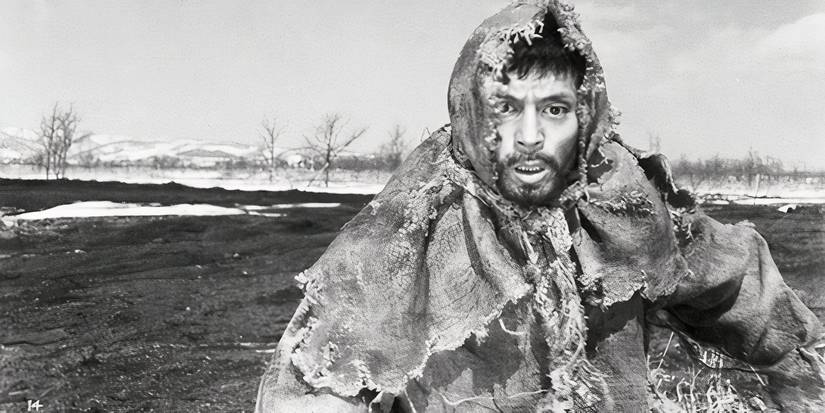
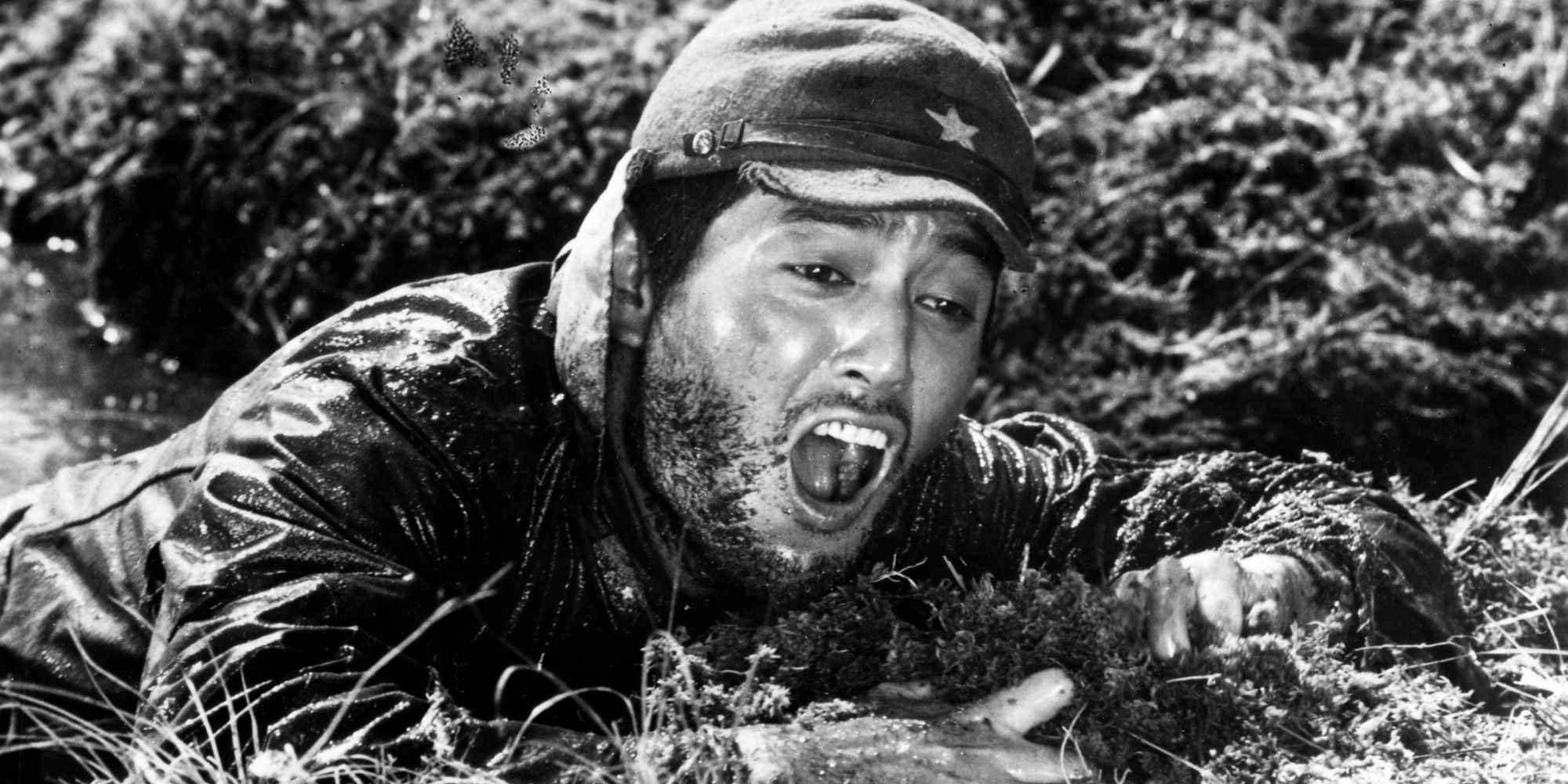
Across nine and a half grueling hours, this trilogy tracks a single man’s moral destruction as every attempt to act decently backfires. Kaji (Tatsuya Nakadai) starts in No Greater Love taking a job supervising forced Chinese labor in Manchuria to avoid conscription, trying to improve the workers’ conditions. That decency gets him beaten, costs him his exemption, and drags him directly into the Imperial Army. In Road to Eternity, the military's relentless demand for obedience costs him people he respects.
By A Soldier’s Prayer, he is left a prisoner walking through snow toward his wife Michiko (Michiyo Aratama) until he dies. The tragedy is that Kaji’s best intentions constantly end up hurting the people he wants to protect. Kaji is never presented as flawless, which only makes his downward spiral feel more agonizing. Truth is, the desperate hope for him to just make it home haunts you long after the credits roll. It hits like a brick.
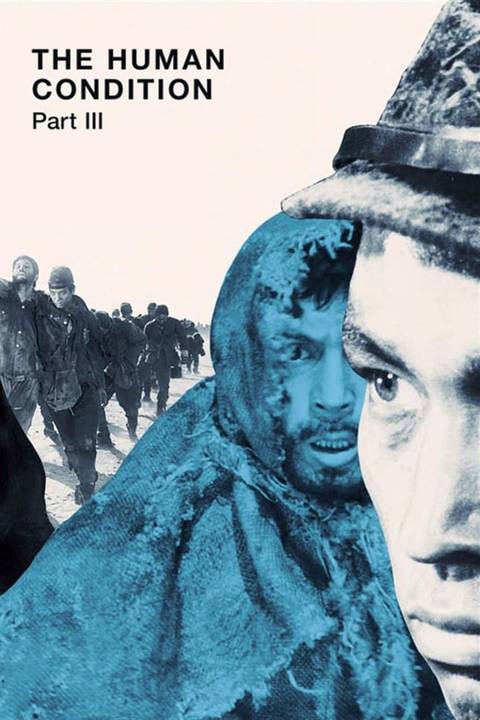
The Human Condition III: A Soldier’s Prayer
- Release Date
- January 28, 1961
- Runtime
- 190 minutes
- Director
- Masaki Kobayashi
- Writers
- Zenzō Matsuyama, Masaki Kobayashi, Koichi Inagaki
-

Tatsuya Nakadai
Kaji
-
Michiyo Aratama
Michiko
-
Tamao Nakamura
Hinannmin no Shôjo
-
Yūsuke Kawazu
Terada Nitôhei
KioskNews shows a cleaned-up reading view extracted from the publisher’s page — the original always lives on their site, not ours.