The 8 Greatest Cozy Mystery Books of All Time, Ranked


Luc Haasbroek is a writer and videographer from Durban, South Africa. He has been writing professionally about pop culture for eight years. Luc's areas of interest are broad: he's just as passionate about psychology and history as he is about movies and TV. He's especially drawn to the places where these topics overlap.
Luc is also an avid producer of video essays and looks forward to expanding his writing career. When not writing, he can be found hiking, playing Dungeons & Dragons, hanging out with his cats, and doing deep dives on whatever topic happens to have captured his interest that week.
Murder mysteries don't necessarily need gruesome violence or deep moral darkness to be engaging — sometimes, we just want a relatively restrained plot and an immersive setting, often a seemingly peaceful community hiding secrets beneath the surface. Indeed, some of the best mysteries in literature are often the quietest, warmest ones.
With that in mind, this list ranks some of the coziest mystery books ever, the ones where the questions come accompanied by a strangely fuzzy feeling. From ingenious Golden Age classics to charming contemporary whodunits, these incredible and bizarrely endearing books are best enjoyed with a blanket and a hot cup of tea.
8 'The Quiche of Death' (1992)

"Agatha Raisin had never been able to resist a challenge." This one centers on Agatha Raisin, a successful but abrasive PR executive who retires early and relocates from London to the picturesque Cotswolds village of Carsely. Hoping to establish herself within the community, Agatha enters a local baking competition with a store-bought quiche. However, her attempt at deception takes a disastrous turn when the competition's judge dies after eating her entry, leaving Agatha determined to investigate.
It's an unorthodox setup for a mystery, but one that author M.C. Beaton handles with charm and style, encasing it all in a delightful small-village setting. Plus, much of the novel's appeal comes from the protagonist herself, who is refreshingly different from your stock detective character. Agatha is vain, impatient, frequently dishonest, and often spectacularly rude, yet her insecurities and determination make her surprisingly sympathetic.
7 'The No. 1 Ladies’ Detective Agency' (1998)

"Every man has a map in his heart of his own country and that the heart will never allow you to forget this map." Set in Botswana, The No. 1 Ladies' Detective Agency follows private detective Precious Ramotswe. Armed with common sense, an excellent understanding of human behavior, and an unwavering belief in doing what's right, Mma Ramotswe takes on a variety of cases involving missing people and suspicious spouses.
Her investigations gradually reveal the complicated lives of the people around her, making for a colorful ensemble portrait. Rather than relying on shocking revelations or gruesome crimes, the book finds intrigue in ordinary human behavior. Indeed, it's a gentle mystery built on everyday dilemmas and relationship messiness. This recipe resonated: The No. 1 Ladies' Detective Agency has sold more than 20 million copies worldwide and has been adapted for both stage and screen.
6 'The Thursday Murder Club' (2020)

"There's a time and a place for a fake murder, and that time and place is Thursday morning at eleven o'clock." The Thursday Murder Club is the defining book by English writer and TV presenter Richard Osman, whom some will know from the show Pointless and the podcast The Rest is Entertainment. Set in the luxurious Coopers Chase retirement village in England, the novel follows four residents who meet every week to investigate unsolved murders.
The group includes Elizabeth, a mysterious former intelligence operative; Joyce, a retired nurse; Ibrahim, a psychiatrist; and Ron, a former trade union leader. Each of them has distinctive talents and traits, creating a delightful group dynamic filled with teasing and disagreements (and the occasional flash of tenderness). Overall, Osman does a good job of balancing entertaining plot machinations and touching observations.
5 'The Cat Who Could Read Backwards' (1966)
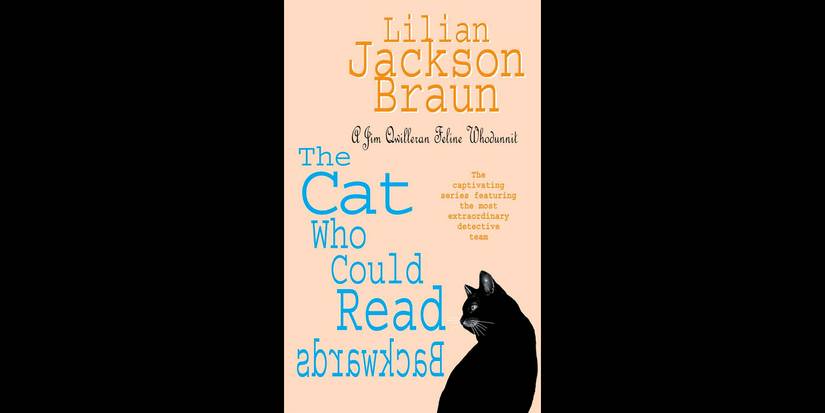
"Qwilleran was a newspaperman, and newspapermen are naturally curious." The main character here is Jim Qwilleran, a veteran journalist who accepts a position as an art critic despite knowing relatively little about the subject. His new assignment brings him into contact with an eccentric collection of ambitious painters and wealthy collectors. He also meets Koko, an unusually intelligent Siamese cat whose strange behavior appears connected to a series of suspicious events.
When murder disrupts the local art scene, Qwilleran begins investigating, with Koko providing some unexpected assistance. From there, The Cat Who Could Read Backwards serves up a fun mix of traditional detective thrills and lighthearted feline antics. The cat steals practically every scene without ever feeling overly cartoonish or supernatural. On top of that, the book is also entertaining as a heightened snapshot of the 1960s art scene.
4 'Vinyl Resting Place' (2022)

"Music was the one thing that had always made sense to me." In Vinyl Resting Place, Juni Jessup returns to her hometown of Cedar River, Texas, to help her sisters open a record store and coffee shop. Unfortunately, their grand opening takes a disastrous turn when a dead body is discovered inside the shop's supply closet. To make matters worse, the victim is a woman connected to Juni's complicated romantic past, and the circumstances surrounding her death quickly cast suspicion on members of the Jessup family.
True to its title, the book leans heavily into wordplay and upbeat pacing, never getting too dour or heavy. Family hijinks and sibling tensions are also at a premium here, with the characters constantly bantering and, occasionally, even being nice to each other. Ultimately, this one is a nostalgia-driven amateur detective book that doubles as a love letter to music and coffee.
3 'A Murder Is Announced' (1950)

"Little did they know that the advertisement would bring murder to their very doors." This gem was penned by genre architect Agatha Christie, and it ranks among the most ingenious Miss Marple mysteries. Set in the peaceful English village of Chipping Cleghorn, A Murder is Announced begins when a peculiar ad appears in the local newspaper, proclaiming that a murder will take place at Little Paddocks at a specific time.
At first, everyone assumes it's a joke... but then the lights go out, and a stranger appears carrying a gun. Soon, it's up to Marple to solve the puzzle. Her secret investigative weapons include knitting and an ear for village chatter. Aside from the likeable protagonist and juicy plot, Christie also incorporates some of the social changes affecting postwar Britain, giving the book an interesting historical dimension.
2 'The Secret History' (1992)
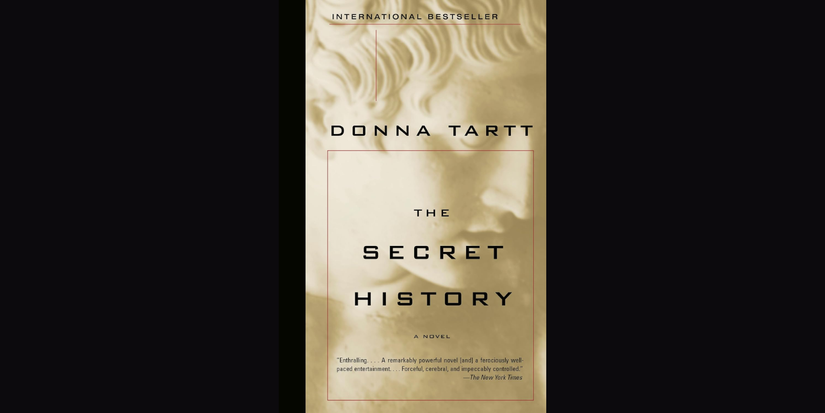
"Beauty is terror. Whatever we call beautiful, we quiver before it." This one might seem like a bit of an odd choice for "cozy," considering how much tension and moral decay there is in it, but the book is still a cornerstone of the dark academia subgenre, defined by fires crackling in common rooms while the mist and cold press in from outside. The Secret History takes place at an elite Vermont college, where protagonist Richard Papen becomes entangled with a group of classics students who partake in some disturbing activities.
Eventually, they commit a terrible crime and struggle to keep it secret, as the guilt and paranoia begin gnawing at their minds. Rather than playing out as a conventional whodunit, the book reveals the identity of a murder victim at the beginning. The key questions are how the crime occurred and why the perpetrators believed it was necessary.
1 'The Murder of Roger Ackroyd' (1926)

"The truth, however ugly in itself, is always curious and beautiful to seekers after it." Christie strikes again, hitting us with some of her finest narrative switcheroos ever. The Murder of Roger Ackroyd begins with the death of a wealthy widow, followed shortly afterward by the murder of a prominent businessman. The investigation attracts the attention of Hercule Poirot, who has recently retired to the village in hopes of enjoying a peaceful life.
Assisted by local physician Dr. James Sheppard (who also narrates), Poirot begins examining the victim's complicated relationships, discovering a tangled web of secrets and financial troubles. Although there is suspense, the book is true to the Golden Age tradition, avoiding graphic violence or psychological horror. The setting is cozy, too: a sleepy, gossipy English village complete with manor houses and afternoon teas.
KioskNews shows a cleaned-up reading view extracted from the publisher’s page — the original always lives on their site, not ours.