Meet Caden Terence Pohlkamp, a Texas teenager who built an aquatic robot to save fish
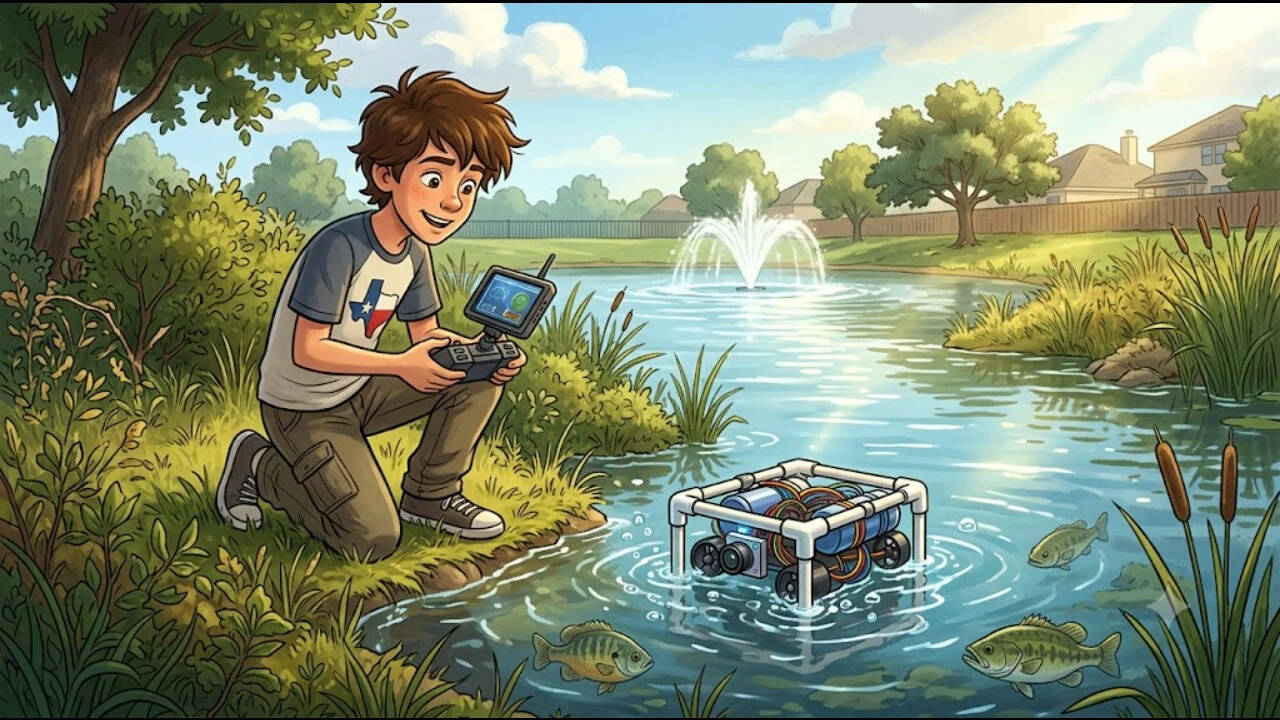

A Texas teenager has built an aquatic robot to help save fish. Caden Terence Pohlkamp, currently a middle school student, used robotics to study retention ponds and how well they support aquatic life.
In coastal Texas communities, retention ponds are important systems for managing stormwater and reducing flood risks. But these man-made reservoirs can also become habitats for fish and other aquatic creatures. Balancing their role in flood management with their ability to support wildlife is not always straightforward. Caden, who is a 7th-grader from Friendswood, decided to investigate the issue himself.According to the Society for Science, Caden wanted to find out if there was an “optimal way to design them to provide suitable habitats for the local marine life.” To do that, he engineered an aquatic remote-operated vehicle that could travel underwater and collect samples without disturbing the ponds.The project combined his interest in marine biology and robotics. Instead of manually entering the ponds or relying only on surface observations, Caden’s submersible data-gatherer let him collect water samples from the bottom of 12 ponds across his town.
This approach gave him comparable data across different retention ponds and helped him examine the conditions aquatic animals need to survive.
What Caden’s aquatic robot found in Texas ponds
After collecting samples, Caden analysed the water for factors that can affect aquatic life. His research focused on pH levels, turbidity (how cloudy the water is), and dissolved oxygen.The results showed that some design features made retention ponds more suitable for aquatic life.
The healthier ponds had between 15% and 30% non-grass vegetation along their edges and also contained fountains. These ponds recorded higher levels of dissolved oxygen, an important factor for fish and other aquatic organisms.Caden learned that plants and trees along the edges could provide habitat for fish and help prevent algae blooms. Excessive algae can remove oxygen from the water, creating more difficult conditions for aquatic life.
From an underwater rover to local environmental research
Caden did not stop after collecting and analysing the samples. He presented his findings to local officials, giving them information that could help identify retention ponds where changes might improve conditions for aquatic life.His project shows how a relatively small robotics experiment can help study an environmental issue in a local community. The aquatic robot allowed Caden to gather information from places that would have been difficult to study consistently without an underwater vehicle.The project also reflects the connection between infrastructure and wildlife in growing coastal communities. Retention ponds are built primarily for stormwater management, but their design can influence whether they also become useful habitats for fish and other organisms.For Caden, the experiment has also connected two interests that could shape his future. By combining robotics with marine biology, the 7th-grader has already begun exploring how technology can help us understand and protect aquatic ecosystems. His underwater rover may have started as a school project, but the data it collected gave him a practical way to study the ponds in his own community.
KioskNews shows a cleaned-up reading view extracted from the publisher’s page — the original always lives on their site, not ours.