Malaysia’s foreign policy establishment needs to understand Iran and its proxies — Phar Kim Beng
SEPTEMBER 22 — The possibility that Yemen could become Saudi Arabia’s “Vietnam” as reported in an Opinion Editorial in Newsweek may sound provocative.
Yet behind the analogy lies a strategic development that Malaysia and Asean cannot afford to misunderstand.
Iran has demonstrated that power in West Asia does not have to be exercised exclusively through conventional armies, aircraft or naval formations.
It can be dispersed, networked and exercised through armed movements possessing varying degrees of autonomy while benefiting from Iranian weapons, training, technology and strategic support.
The Houthis, or Ansar Allah, provide the most immediate example.
Their transformation from a Zaydi movement in northern Yemen into a formidable military organisation capable of deploying drones and ballistic missiles, striking Saudi infrastructure and disrupting maritime commerce is extraordinary.
This does not mean every Houthi decision is dictated by Tehran. Iran itself rejects the description of the Houthis as its proxy.
The relationship is more complicated. The Houthis possess their own leadership, political objectives and Yemeni roots.
That distinction is precisely why Malaysia needs greater expertise on Iran.
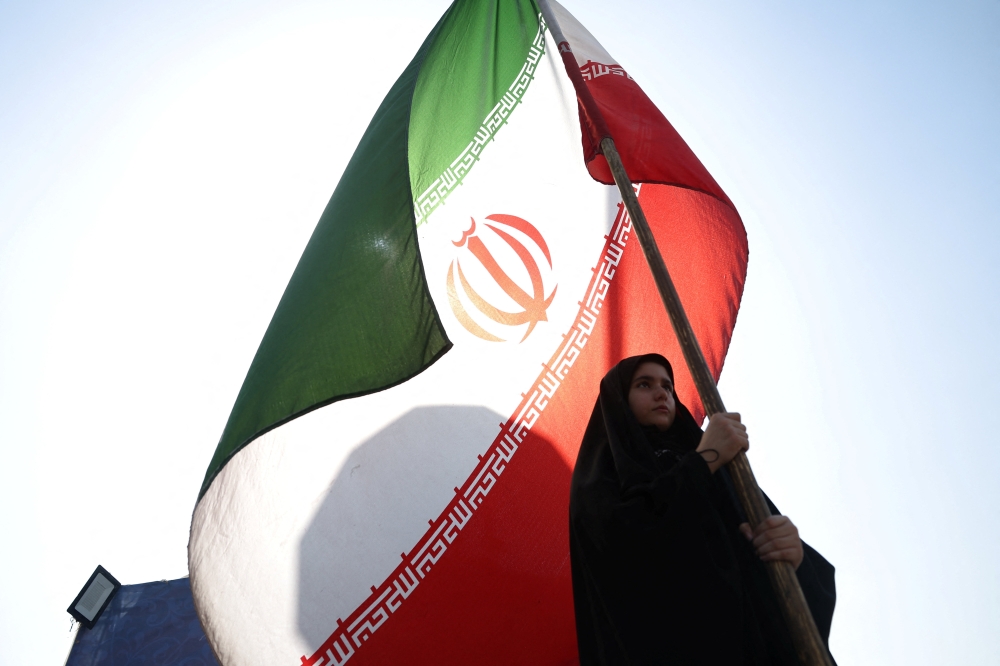
The author argues that Malaysia must deepen its understanding of Iran and its regional networks because their influence increasingly affects Asean’s maritime security, energy costs and economic resilience. — File pic
Foreign policy cannot be based on caricatures. Iran should not simply be understood as a revolutionary state confronting the United States, Israel and their partners.
Nor should every armed movement associated with Tehran automatically be treated as an Iranian puppet. Malaysia needs to understand the ecosystem.
Hezbollah in Lebanon, armed groups in Iraq and the Houthis in Yemen emerged from different histories and political circumstances. Their relationships with Tehran differ. Their interests are not necessarily identical.
Yet collectively they demonstrate something important about contemporary geopolitics: relatively inexpensive missiles, drones and decentralised military networks can impose enormous costs on substantially wealthier states.
Yemen demonstrates this vividly. The Bab el-Mandeb is one of the world’s most consequential maritime passages.
The Houthis have already demonstrated their ability to disrupt shipping through the Red Sea.
When instability around Bab el-Mandeb coincides with disruptions around the Strait of Hormuz, the implications become global. This matters directly to Asean.
South-east Asia remains deeply dependent on maritime commerce. Malaysia, Singapore, Indonesia, Thailand and Vietnam rely on predictable sea lanes connecting the Indian Ocean, West Asia, Europe and East Asia.
The Strait of Hormuz and Bab el-Mandeb may appear geographically distant from the Strait of Malacca. Economically, they are not.
Disruption in one maritime artery migrates rapidly into higher freight costs, insurance premiums, energy costs and eventually inflation thousands of kilometres away.
Malaysia therefore requires something more substantial than episodic diplomatic reporting about Iran.
The Ministry of Foreign Affairs, universities and strategic institutes should cultivate specialists capable of understanding Persian political thought, Iranian domestic politics, the Islamic Revolutionary Guard Corps, Gulf security, Yemen, Iraq and Lebanon. Language expertise matters too.
Countries cannot understand complicated strategic cultures entirely through English-language secondary sources.
Malaysia has historically developed considerable expertise on the Arab and Islamic worlds.
This intellectual infrastructure should increasingly be complemented by Persian studies and systematic research into Iran’s political, economic and strategic institutions.
The objective is neither to become pro-Iranian nor anti-Iranian. Malaysia should root for a stable Gulf Cooperation Council (GCC).
At any rate, Malaysia has to become analytically competent. Putrajaya must maintain good relations across multiple divides in West Asia.
Kuala Lumpur can communicate with Saudi Arabia and the Gulf countries while maintaining diplomatic relations with Iran.
This gives Malaysia diplomatic space that should not be underestimated.
But diplomatic flexibility must be supported by intellectual depth. The Houthis demonstrate why.
Saudi Arabia intervened militarily in Yemen in 2015 with overwhelming conventional superiority.
More than a decade later, the Houthis have not disappeared. Instead, their military capabilities and regional significance have increased.
There is a larger lesson. The international system is becoming increasingly polytropous.
It means sates spread their options across conventional forces, economic instruments, cyber capabilities, drones, proxies, partners and political movements.
Iran understood aspects of this transformation comparatively early. Malaysia and Asean need to understand it too.
Understanding Iran does not mean endorsing Tehran’s policies.
Attempting to comprehend the Houthis does not mean accepting attacks against Saudi Arabia, civilian infrastructure or international shipping.
Houthis's drone attacks against Mecca and Riyadh in September need to be condemned.
Diplomacy begins with understanding how another actor sees the strategic board.
This is no longer an esoteric Middle Eastern specialisation.
It concerns energy security, maritime security, inflation and Asean’s economic resilience. The lesson of Yemen is therefore larger than Yemen.
Malaysia cannot control these developments. But it can understand them much better.
In an increasingly turbulent international system, strategic understanding is itself a form of national power.
* Phar Kim Beng is Professor of Asean Studies at International Islamic University Malaysia (IIUM) and Director at the Institute of International and Asean Studies (IINTAS).
** This is the personal opinion of the writer or publication and does not necessarily represent the views of Malay Mail.
KioskNews shows a cleaned-up reading view extracted from the publisher’s page — the original always lives on their site, not ours.