AMD forecast eases AI spending fears as data-center sales surge
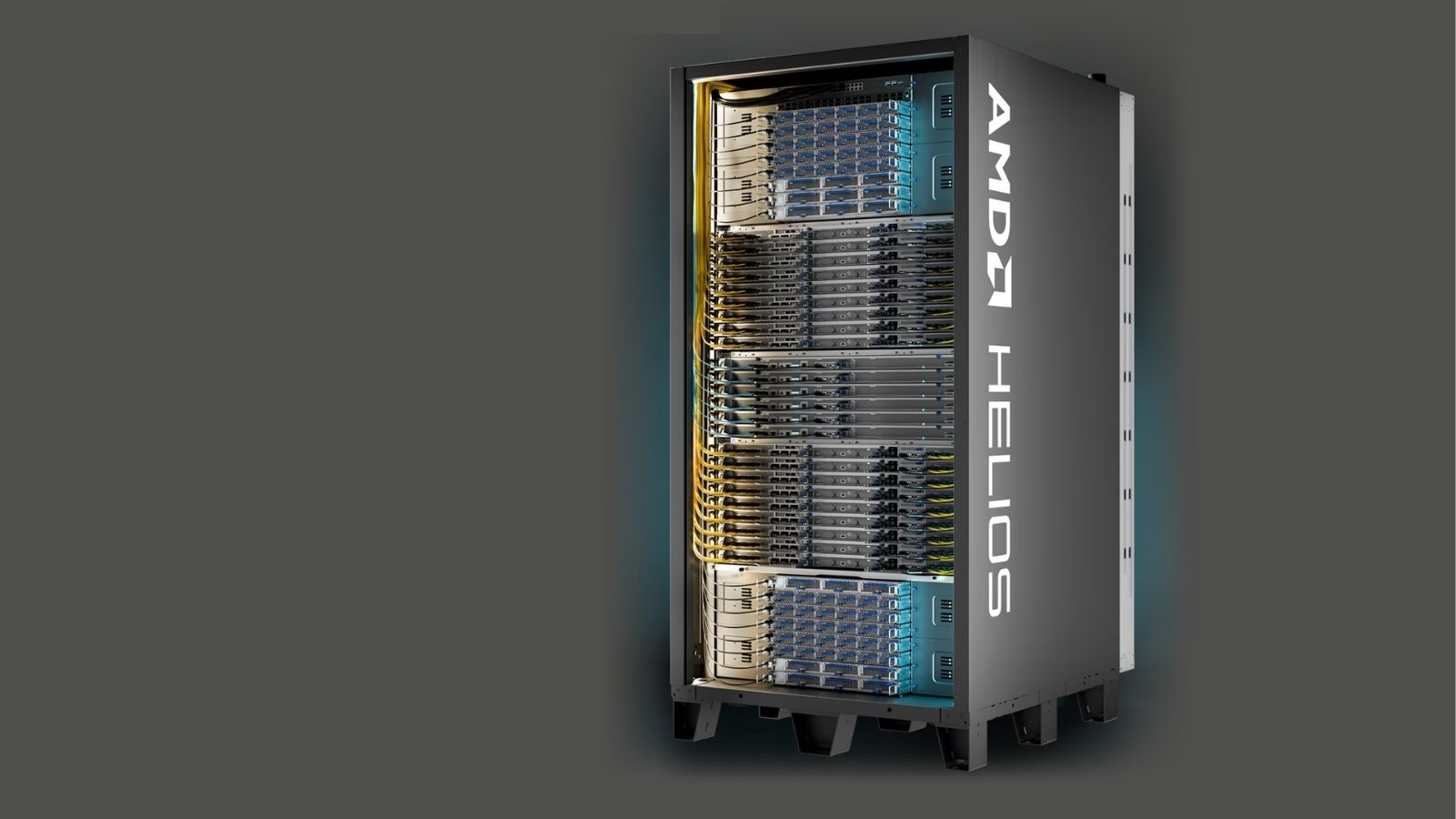
AMD forecast faster-than-expected 2027 growth as its data-center sales surge and its multibillion-dollar challenge to Nvidia gathers pace, sending its shares up 8% in extended trading.
The forecast and market-beating third-quarter results offered a strong counterpoint on Tuesday to mounting fears that the AI boom is losing steam and soothed investor concerns after rival Intel issued a weak outlook last week.
Intel’s shares rose 2%, Nvidia stock climbed over 1% and Broadcom also advanced 1.2%.
On a conference call with analysts, AMD CEO Lisa Su said the company expects overall revenue to rise more than 80% in 2027. Su’s forecast is higher than the 77% growth analysts estimate, according to LSEG data.
Su told analysts that 80% of sales next year will come from data-center chips that will “drive the majority of our revenue and earnings growth.”
“We see demand across the data-center business, across our CPU business, as well as our data-center AI business,” Su said. “And when you look at the rate and pace of that growth, we’ve been planning for it for the last several years.”
Data-center revenue jumped 97% to a record $8.55 billion in the third quarter, exceeding estimates of $8.20 billion.
Story continues below this ad
The company expects fourth-quarter revenue of about $17 billion, plus or minus 3%, above analysts’ average estimate of $16.23 billion, according to data compiled by LSEG.
AMD’s line of chips is positioned to benefit from the massive AI data-center buildout, portfolio manager at Gabelli Funds Hendi Susanto said.
“The stock’s resilience despite broader pressure on AI-related names suggests investors see AMD’s results as confirming its technology leadership and its strong position to keep gaining market share,” he added.
AMD is benefiting as a shift in AI workloads toward running models in real-world applications drives demand for its graphics processing units and central processors.
Story continues below this ad
“The AMD numbers provide a greatly needed boost both for AI infrastructure and even, to a smaller degree, the PC market,” chief analyst at TECHnalysis Research Bob O’Donnell said.
The company’s adjusted gross margin is expected to be about 55%, in line with estimates of 55.27% and down from 56% in the third quarter.
Ramping up AI rollouts
AMD has stepped up AI product rollouts, moving beyond standalone chips to compete with Nvidia’s rack-scale systems.
The company’s flagship Helios rack, combining its MI455X accelerator and new “Venice” server chips, is in production and set for a larger ramp-up in the fourth quarter. The initial systems are being tested at Meta.
Story continues below this ad
AMD’s third-quarter revenue rose 45% to $13.38 billion, beating estimates of $13.09 billion.
Adjusted profit came in at $2.09 per share, compared with estimates of $1.95.
The semiconductor industry is also grappling with a global memory shortage, leaving expensive high-bandwidth memory used in AI processors in scarce supply as manufacturers race to increase production.
Third-quarter sales in AMD’s client and gaming segment, home to its PC chips and console processors, fell 8% to $3.72 billion, missing estimates of $3.79 billion.
Story continues below this ad
AMD said it expects PC unit shipments to decline by a double-digit percentage next year, though Su said the company would “outperform the market.”
Last week, Intel forecast its chip revenue to decline in the mid-20% range for its fourth quarter and the slowdown would last into 2027.
KioskNews shows a cleaned-up reading view extracted from the publisher’s page — the original always lives on their site, not ours.