'India's self-reliance in critical technologies': PM Modi on Isro's NVS-03 success
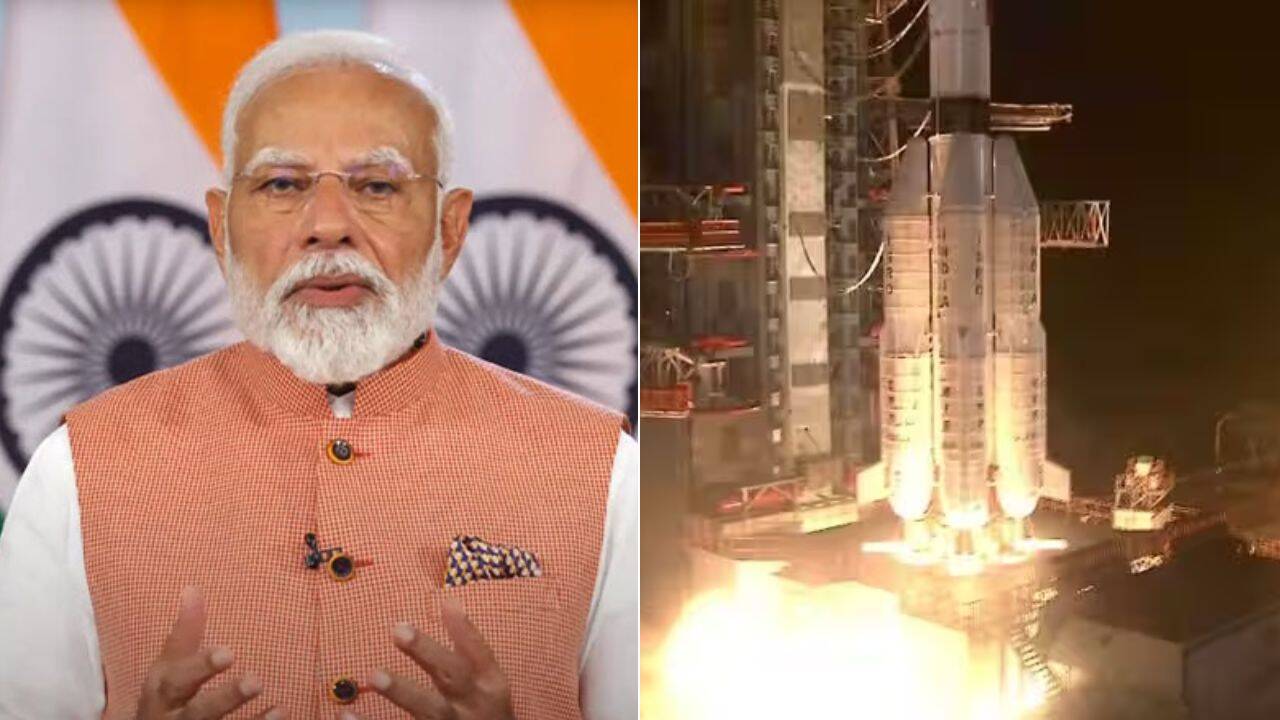

PM Modi hails ISRO after successful GSLV-F18 launch carrying NVS-03 navigation satellite
NEW DELHI: Prime Minister Narendra Modi on Saturday congratulated Indian Space Research Organisation (ISRO) scientists and engineers following the successful launch of the GSLV-F18 mission carrying the NVS-03 navigation satellite, saying the mission would strengthen India's indigenous satellite navigation system, NavIC.In a post on X, PM Modi said, "Congratulations to our scientists and engineers at ISRO on the successful launch of GSLV-F18 carrying NVS-03.Also read: Success launch of navigation sat NVS-03 with desi atomic clock will make NaVIC up & running, and give military strategic independenceThis mission marks an important step in strengthening NavIC, our indigenous satellite navigation system. Equipped with enhanced capabilities, NVS-03 will further our pursuit of self-reliance in critical technologies and support navigation services that benefit our people.The dedication and ingenuity of our space scientists continue to make our nation proud."
The successful launch is expected to strengthen India's strategic autonomy by helping restore the operational capabilities of NavIC, India's indigenous alternative to global navigation systems such as the US-operated GPS and Russia's GLONASS.The NVS-03 satellite carries an indigenously developed atomic clock, alongside imported atomic clocks, marking an important step towards reducing India's dependence on foreign technologies for satellite-based navigation.
Atomic clocks provide highly precise time signals that are essential for determining location, navigation and timing.NavIC, which was originally designed around a seven-satellite constellation, had been operating with only three active satellites, below the minimum requirement of four satellites for standalone positioning services. This had limited its use for critical applications, including military navigation, precision positioning and coordination of naval assets.An operational NavIC constellation is particularly important for India's armed forces, which require reliable Position, Navigation and Timing (PNT) signals for missile guidance, precision-guided weapons, troop movement, combat aircraft and naval operations.Dependence on foreign navigation networks can pose strategic vulnerabilities during conflicts, as access to such services could potentially be restricted or disrupted.
India experienced the limitations of relying on foreign satellite navigation systems during the 1999 Kargil war.With NVS-03, India aims to strengthen the availability of indigenous navigation services for both civilian and strategic applications. NavIC is designed to provide coverage across India and up to 1,500 km beyond its geographical boundaries.
The original NavIC constellation comprised seven satellites supported by a network of ground stations operating round the clock.
Three satellites were placed in geostationary orbit, while four were placed in inclined geosynchronous orbits.However, the constellation's operational strength declined over time as ageing satellites could not be replaced as planned. The launch of NVS-02 on January 29, 2025, also failed to deliver the intended results after a pyro valve signal loss in the engine prevented the satellite from reaching its designated orbit.The successful deployment of NVS-03 is expected to address some of these operational limitations and strengthen India's efforts to establish an independent satellite navigation capability.
KioskNews shows a cleaned-up reading view extracted from the publisher’s page — the original always lives on their site, not ours.