Has Catholic Church lost sight of a blessed vision?
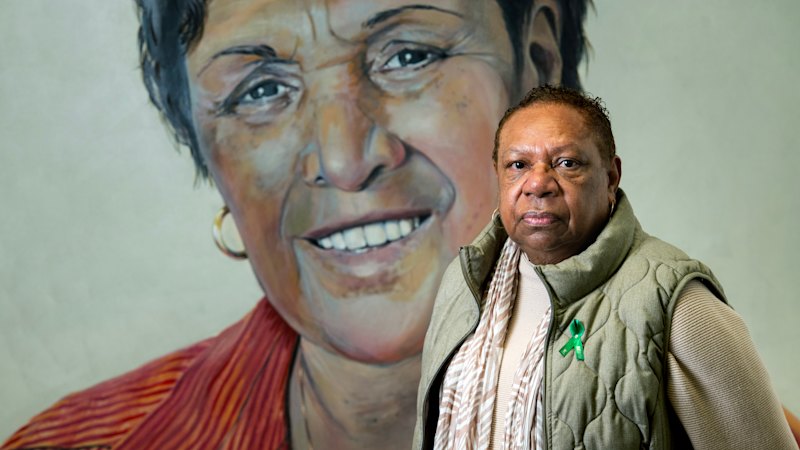
It is difficult to comprehend why the Catholic Archdiocese of Sydney, when presented with a way it can demonstrate God’s love in a very practical gesture of reconciliation, has declined (“How church ignored a worthy cry for help”, October 15). The church has been blessed in its presence in Redfern over many years; likewise, God has been at work through the Aboriginal Medical Service there, supported in no small way by the church itself. Where was that original vision lost sight of? The boffins scrutinising legal niceties and “financial security through future preservation of value” aren’t hard-hearted, and it seems a workaround could overcome their objections. Just do it. Margaret Johnston, Paddington
How utterly disgraceful and yet hardly surprising to read of the Catholic Church’s refusal to grant property ownership to the Aboriginal Medical Service at Redfern. The pastoral care element of these mammoth institutions has forever evaded their purported charitable aims at the expense of hoarding their treasure troves of money and empire building facilitated by their dubious tax-free status. Plus, it’s barely surprising to see George Pell’s name crop up in historic efforts to stonewall an obvious kindness to a much-needed and dedicated service doing the exact work of their espoused Christian ideals. These big church institutions are the absolute embodiment of “what would Jesus NOT do”. Rebecca Semple, Abbotsford
Is the statement that the Catholic Church “turning over the title deeds [of the Aboriginal Medical Service] would make little difference to the church’s current status” the oxymoron of the century? Cecily Chittick, Wyong
Jesus feeding thousands with five loaves and two fish was a miracle. It appears it requires another miracle for the Catholic Church to dispose of a small, unwanted, poorly maintained property. Grahame Marks, Manly
The Catholic Church isn’t responsible for modern Sydney property prices and historically was forced to buy out-of-the-way, unwanted land on which it continues to do remarkable and widely acknowledged charitable, medical and educational work for tens of thousands of people of every race, colour and creed, according to the commandment to “love your neighbour”. Peter Fleming, Northmead
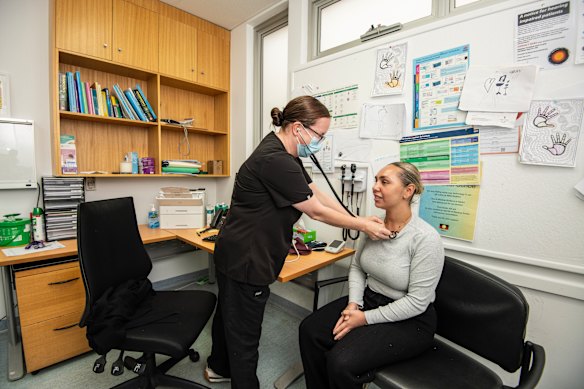
Biggest property owner and biggest tax dodger. Mean and heartless at the same time. And Jesus wept. What would he think? Keith Hartmann, Bowral
I bet that if Pope Leo had any say in it, he’d be making sure the Catholic Church gifts that vital little Redfern building Bevan Shields wrote about to the Aboriginal Medical Service. Alas, Sydney’s local Catholic captains of property ownership appear to have no such belief in or instinct for such charity or helping the needy, despite their massive property holdings, described so well today. It often seems that Pope Leo is an impressive outlier in Catholicism, where cold, hard greed, grasping and scandal are more common. May he recover from his current brush with lung cancer and continue to lead and inspire. Susan Anthony, Cammeray
In anticipation of letters accusing the Catholic Church of “hoarding” property, it is worth noting that the church is far from unique in providing property to community organisations at nominal rent. The City of Sydney, Inner West Council and many other local councils routinely lease community buildings and land to not-for-profit organisations at reduced or peppercorn rents. The Aboriginal Medical Service is not being denied the use of the Redfern property. The building is occupied, serving the community, and is neither vacant, land-banked nor operated for profit. This dispute, as I read it, is not about access to the property but ownership. While the Aboriginal Medical Service may have compelling reasons for seeking a transfer, gifting the property would create a moral and political precedent. Governments, churches and other charitable landowners could reasonably be asked why similar treatment should not be extended to other worthy organisations providing community services. Perhaps the more important question is not who holds title to the property, but what charitable capital improvements the archdiocese executive could fund to support better health outcomes that would otherwise need to be funded or delivered by government. Michele Iacono, Rosebery
Control is everywhere
It isn’t just the Brethren who have controlling demands on their flock; some subsections of mainstream religions try it on as well (“Ex-members claim their church leader directed political push”, October 15). Accepting those who only behave or think like the church’s leader, only accepting “Christian” tradespeople or dealing with “Christian” businesses are found in some places. Of course, women are highly “respected”, so they don’t get a look-in when these controlling males take charge. The original Christian, Jesus, interacted with all sorts, some of them considered unsavoury by the people of his time. He didn’t make selections and only deal with “decent people”. Donald Hawes, Peel
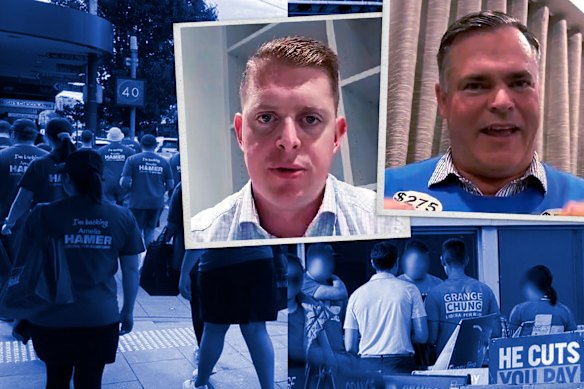
If the joint standing committee of parliament wants to get to the bottom of Plymouth Brethren involvement in the last federal election, then Peter Dutton, former leader of the Coalition, must be called to state what he knows about the Brethren push, which, as we all remember, backfired heavily on the Liberal Party in particular. Glenn Johnson, Leura
I’m reeling, after reading the latest article in the Herald about the Exclusive Brethren, that shares very important evidence from those who have experienced this so-called religion first hand. It seems so obvious that the Exclusive Brethren, led by men of extreme wealth, keeping power by coercive control, dictating every aspect of followers’ lives, is not a religion. The fact that they don’t vote but try to influence voting by others is a shameful indictment of the Coalition. All tax exemptions should be removed from this organisation that puts power before education and family values. Jane Lorimer, West Hobart (Tas)
Did I really read that Brethren members are not permitted to own pets? Goodness, I’m left feeling a bit giddy. What next? Peter Skrzynecki, Eastwood
Elderly fear a bad bill of health
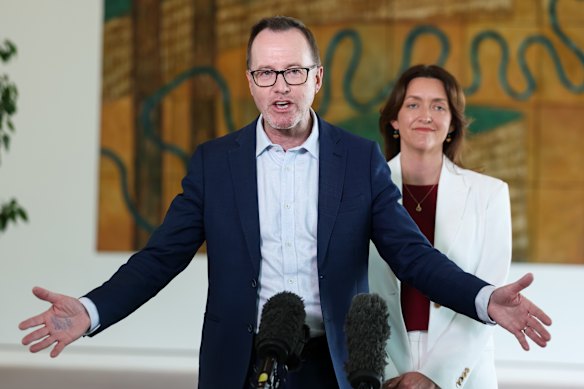
I am very pleased that the non-government senators have “teamed up to scrap a bill that would have dumped private health insurance rebates for people over 65” (“Rebates on private health sink in Senate”, October 15). However, moving a motion to discharge the Private Health Insurance Amendment Bill only blocks it for now. It should be voted down – scrapped entirely. Withdrawing the rebate for over-65s by arguing “intergenerational fairness” negates the decades I have been paying for my healthcare. My doctor tells me private health insurance is essential for women at two points in their lives – for maternity care and aged care. Elderly people, like me, end up monitoring every cent. Mr Shoebridge of the Greens and his fellow senators need to vote withdrawing the aged-care private health insurance rebate for over-65s down, rather than hedging their bets for other things they care about. Old age comes to us all. Catheryn Sale, Wollongong
The opposition by the Coalition, the Greens and One Nation parties to the government’s bill to remove the private health fund rebate for over-65s is astonishingly hypocritical. These three parties have berated the government for being big spenders but when the government wants to redirect the savings to aged care they oppose it! Sure, it’s going to negatively affect some people. However, it highlights that those opposing don’t understand the complex decisions governments have to make. This proposal should be praised as a more equitable spread of government spending. It’s very easy to be critical from opposition. Therese Schier, Casino
Rural health needs cash injection
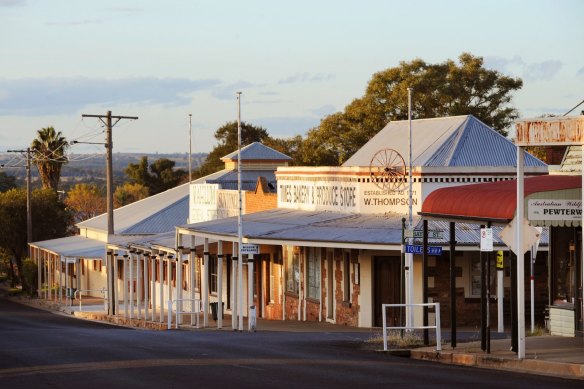
It comes as no surprise to read the damning statistics (“Rural health funding gap widens to $9.2 billion”, October 15). Of particular note is that, while the 7 million Australians who live in rural areas receive $1218 less per person than metropolitan residents, people living in smaller rural towns of less than 5000 receive $6600 less. Is it any wonder that rural health outcomes continue to worsen? I live in such a small rural town: Gulgong. For nearly two years, the town of 2600 was without a GP. People were travelling hundreds of kilometres to access the most basic of care with a GP. In the nearest town of Mudgee, 27 kilometres away, the two medical practices had closed their books due to the shortage of doctors. It is only because of a community-led funding campaign supported by major local industries that the region now has eight new doctors, including two doctors for Gulgong. The success of the Doctors 4 Mudgee Region campaign is evident. If the financial incentives are there doctors will come. But what do other small towns do that don’t have such incentives to offer? They go without. That missing $6600 per person is vital. There needs to be a national rural healthcare plan with federal and state governments working together to solve this problem. The Rural Doctors Association has been advocating for this for years. Inaction has led to a widening gap and the people of rural Australia deserve better. Access to healthcare is a human right. Sharelle Fellows, Gulgong
Be bolder, Labor
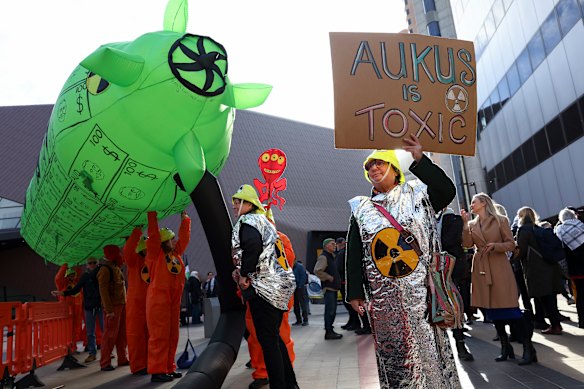
Shaun Carney has identified a sentiment that could resonate with some frustrated Labor voters: the government’s perceived timidity on adopting bolder policies (“We get one letdown after another”, October 15). Two issues spring to mind. AUKUS was a Morrison-era thought bubble that has burst spectacularly in all our faces. There has been zero transparency despite countless experts’ significant reservations. Apart from the criminal waste of money that could instead be spent both domestically and on cheaper, off-the-shelf submarines and drone technology, it increasingly links us as a vassal state to an unstable superpower. AUKUS will endanger, not protect us. And then there is the refusal to properly tax LNG exports as other countries do. That’s $17 billion annually on a 25 per cent tax. Labor may still be terrified of the Bill Shorten effect but, to paraphrase Shakespeare, there is indeed a tide in the affairs of men (and women), which, taken at the flood, leads on to fortune. Now is that time. Alison Stewart, Riverview
The Letters pages have been full of comment and criticism of Australia’s defence arrangements. As Defence posts on its website: “Australia’s alliance with the United States of America is our most important defence relationship. It is central to Australia’s strategic and security arrangements.” If any further evidence was required of the danger imposed by our loss of strategic independence, witness the arbitrary denial of access for Ukraine to Starshield (“‘Betrayed’: Ukraine leader denounces Trump for siding with Russia amid row with Musk”, smh.com.au, October 15). This reduces Ukraine’s air defence capacity and will increase civilian deaths and injury. Trump has always blamed Ukraine for being invaded, and now seeks to shift responsibility for the increase in oil prices from the US’ war of choice on Iran to Ukraine’s attacks on Russian refineries. The danger for Australia is that our ever-increasing reliance on US technology, especially at a time when “America First” dominates the political landscape, leaves us totally exposed to the same kinds of risks, should a US government disagree with our stance on a particular issue. Graham Cochrane, Balmain
Reality check for Shoebridge
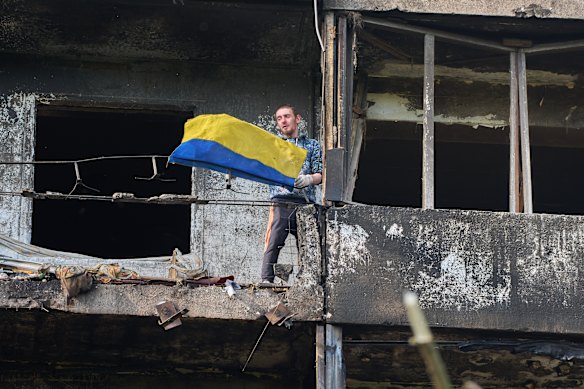
I am sure no Australians would begrudge sending Shoebridge and some of his fellow senators on a “study tour” to Kyiv. Spend a few days living among residents who face constant threats from Russian drones and freezing conditions due to power outages as part of their everyday life (“Shoebridge warns Ukrainian community on aid”, October 15). A reality check is needed for someone who is living in one of the safest countries in the world, and his stance in not supporting sending arms for Ukraine to defend itself is, by omission, supporting one of the cruellest and destructive leaders the world has known. John Leathart, Castlecrag
Same tax laws for all
For far too long, trusts have been a tax dodge available only to a small percentage of income earners (“Trust tax overhaul set to raise $40 billion”, October 15). All income should be subject to the same tax laws, regardless of how it is earned. The current situation is unfair and must be changed despite the whingeing of a vocal few who think they are somehow special. Ted Hemmens, Cromer
When I set up my small business, my accountant recommended a trust for the express purpose of minimising tax. But how is that fair? Everyone paying their fair share of tax is the price of living in a civil society. Name a better society than Australia. Reforming trusts is necessary reform. Mike Ritchie, Haberfield
Data centre receipts
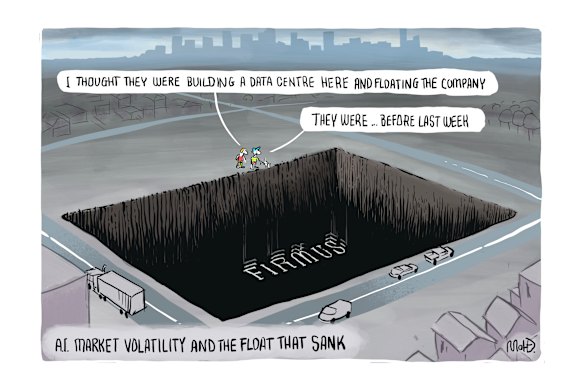
A correspondent (Letters, October 15) boldly suggests that the government should apply a resource rent tax to data centres. Not a bad idea, but it’s not going to happen. If miners can dig up and sell unimaginable quantities of iron ore offshore without a resources rent tax, it tells you all that you need to know about government appetite for such a tax. Joe Weller, Mittagong
Selective speed
Last year, in a press release spruiking that the new Metro would cut travel times from Bankstown to Central by six minutes, the premier said that the project was about “delivering faster, safer and more reliable public transport”. With some peak-hour journeys on the T4 line now extended by up to 14 minutes, it seems that “faster” public transport is a benefit to be applied selectively (“Longer trip times to be the price of extra services in rail shake-up”, October 15). Doug Walker, Baulkham Hills
Bowled over
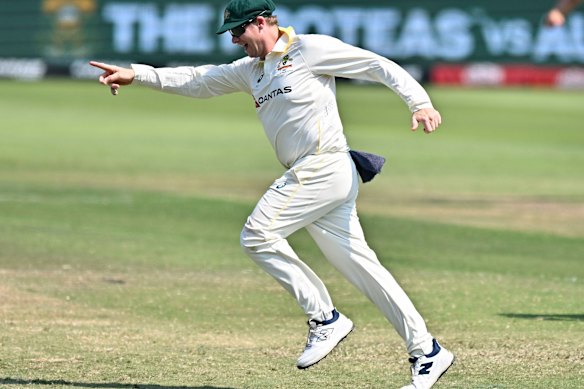
One thing that hasn’t been highlighted with Australia’s victory in the first Test in South Africa is the extensive bowling talent that runs through the side, (“Australia defy critics with ruthless win to lead series”, October 15). We all know the record-breaking achievements of the top four bowlers but you can also add in bowling all-rounders like Webster and Green. Even the part-timers, such as Maddinson, Head, Labuschagne and now Matt Renshaw, are very capable bowlers. The one that doesn’t seem to bowl these days is Steve Smith, who debuted in 2011 as a leg-spinning all-rounder. Even Alex Carey is capable of taking wickets with the ball in his hand. Just ask Jonny Bairstow! Chris Myers, Point Clare
I mostly agreed with Daniel Brettig’s gradings score for each of the 11 Australian cricketers after their win in the first Test in South Africa (“Australia player ratings: The perfect 10 who shone with bat and ball”, smh.com.au, October 13). But to give Steve Smith only 6 out of 10 when he changed the course of the match at least three times with his freakish catching is a pretty hard call. Bernie Bourke, Ourimbah
- To submit a letter to the Sydney Morning Herald, email letters@smh.com.au. Click here for tips on how to submit letters.
- The Opinion newsletter is a weekly wrap of views that will challenge, champion and inform. Sign up here.
KioskNews shows a cleaned-up reading view extracted from the publisher’s page — the original always lives on their site, not ours.