Vehicles major cause of pollution, it’s a free-for-all in Delhi, says Supreme Court
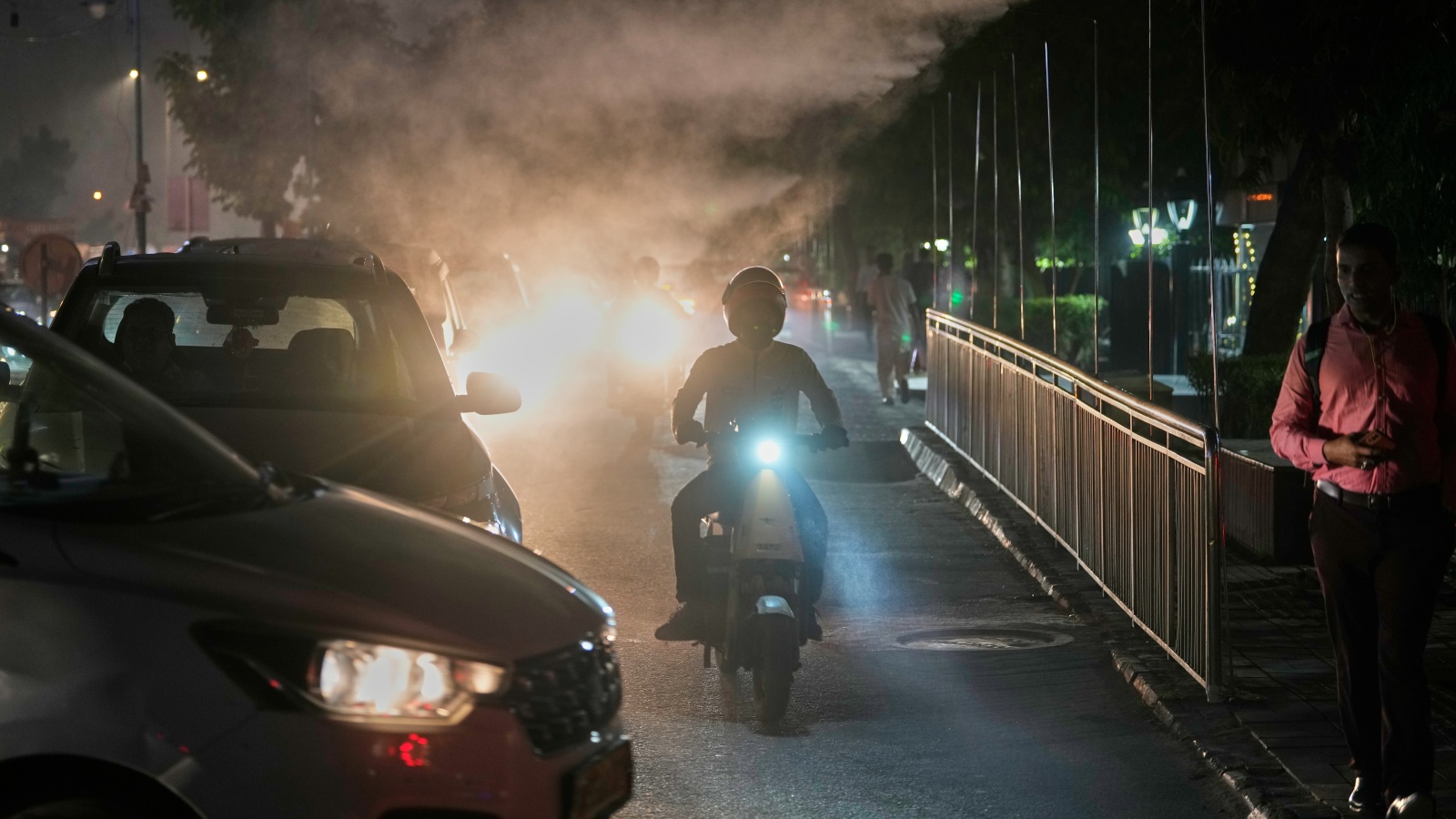
Saying that vehicular pollution is a major contributor to the deteriorating air quality in Delhi-NCR, the Supreme Court on Friday asked why it is taking place despite all the measures put in place by the government so far. It expressed concern over the “bumper-to-bumper traffic” in the Capital, noting that it’s a “free-for-all”.
To address the other issue of stubble burning, the court said farmers should be provided economic incentives and practical alternatives. It said crop residue (parali) can be procured by procurement agencies, and the rates notified beforehand.
The bench, comprising Chief Justice of India Surya Kant and Justices Joymalya Bagchi and V Mohana, was hearing a suo motu case examining the regulatory framework governing air pollution. “I hope you all are enjoying the weather in Delhi,” the CJI said as soon as the bench took up the matter.
“A major cause of the pollution is vehicular pollution. Look at the roads in Delhi, look at the roads connecting Delhi to the NCR… the kind of bumper-to-bumper traffic… that’s the major cause,” the CJI said. “People may have their own justification, because if they have to go out, they don’t have public transport system which can facilitate them. Unfortunately, we are lacking in that,” he said.
Briefed about the immediate, intermediate and long-term measures being taken to check air pollution, the CJI said: “Despite all these measures, why is vehicular pollution taking place? It is only because of the overflowing of the vehicles itself, irrespective of the quality of fuel you use, whether it’s petrol or diesel based…”
Senior Advocate Aparajitha Singh, the amicus curiae in the matter, said Delhi has the maximum number of vehicles.
“In Delhi, it’s a free-for-all,” the CJI said. Pointing out that vehicles registered in other states come to the Capital, he said: “You cannot, on mere entry, monitor what kind of fuel is being used, what is the condition of that vehicle. So, you don’t have any mechanism. Maybe they come only for two hours, but whatever damage is done is done.”
Story continues below this ad
“We have made multifarious efforts to control these polluting vehicles. Pollution certificates are now geo-tagged. Without pollution certificates, fuel is not being given,” Additional Solicitor General Aishwarya Bhati, appearing for the Commission of Air Quality Management (CAQM), said.
Senior Advocate Sanjiv Sen, appearing for the Municipal Corporation of Delhi (MCD), said “it’s just this one month that this problem occurs”.
But the CJI didn’t agree. “Rest of the year also, it is not that you have less vehicles,” he said.
When Sen quipped that “Diwali gifts have to be stopped” to control the number of vehicles on the road, the CJI said: “People need to realise what (was) our original culture, what was our original custom… why should we not revert back to that.”
Story continues below this ad
The bench said the poor people are the real sufferers. “It is those who can afford, and those who are making it part of their social and status symbol…who are creating (pollution),” the CJI said. He said that solutions like curbing vehicles or infrastructure works were “tried and failed” methods.
Referring to steps taken under the Graded Response Action Plan (GRAP), Bhati said: “I wouldn’t say that there has been a complete failure of these measures. They have allowed pollution levels to remain in some sustainable (limits)”.
“Our point is it (AQI level) is already touching 400,” the CJI said.
“Every human activity will cause pollution….so how much to stop? And Delhi invites this talent, people… from across the country. Then festive times add on to it. Then little bit of stubble burning that flows in this direction, there also the winds play a bigger role,” Bhati said.
Story continues below this ad
She cited long-term measures including mass rapid transportation, and efforts to bring in clean and renewable energy.
“What about these elite class vehicles? Bigger vehicles, high-end cars, commercial vehicles, all these operate in this zone,” the CJI said.
“Directions are already there. In this winter season, apart from BS-VI vehicles, entry is not being permitted,” Bhati responded.
Amicus Singh said that as per the CAQM status report, “on November 5, the contribution of stubble burning is 14 per cent. Stubble burning is one of the problems. Because Delhi is already polluted and with stubble burning, it tips over. So the entire focus on stubble burning is a little problematic.”
Story continues below this ad
The CJI said the burning period was almost over. “Stubble burning in any case is reducing,” he said. Adding that it may fluctuate for a few days, he said: “Maybe, it is slightly higher on November 8, then with the passage of time… Because these are the days when the farmers will go for sowing wheat crop normally in place of paddy.”
“There was a suggestion that with regard to the stubble, and the potential commercial usage…that some policy would be formulated by the ministry concerned to acquire the stubble at a particular rate from the farmers,” Justice Bagchi said.
Bhati said significant measures have already been taken as policy interventions.
The CJI said crop residue can be procured by procurement agencies, and the rates notified in advance. “Sometimes we make harsh statements, sometimes mild statements… kind of an education among farmers is required. That they will understand the economics of stubble. Once they understand the economics of stubble…when they find that it is incentivised or is beneficial for them, they will retain, they will not burn,” he said.
KioskNews shows a cleaned-up reading view extracted from the publisher’s page — the original always lives on their site, not ours.