Thai FM slams Hun Manet for saying one thing, doing another over border dispute
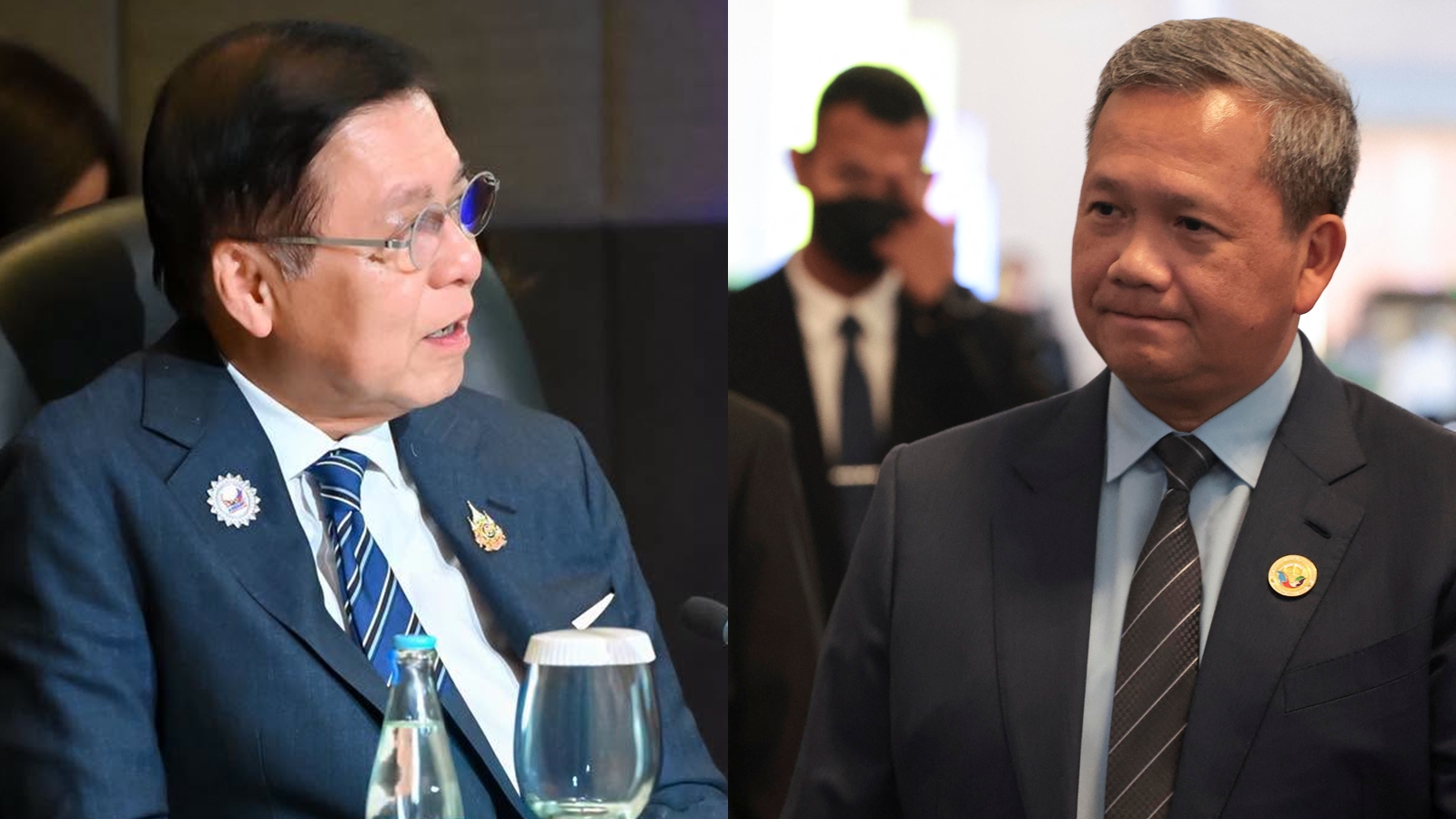
Thailand’s Foreign Minister Sihasak Phuangketkeow has accused Cambodian Prime Minister Hun Manet of saying one thing and doing another after raising the Thai-Cambodian border dispute at the Francophonie Summit in Phnom Penh, arguing that the move undermined recent efforts to rebuild trust between the two countries.
Sihasak, who also serves as deputy prime minister, said on Sunday (15 November) that he could not understand why Hun Manet had used Cambodia’s role as host of the International Organisation of La Francophonie (OIF) Summit to bring a bilateral dispute before an international gathering.
He said the two countries had recently discussed confidence-building measures during the second meeting of their conciliation commission under the 1982 United Nations Convention on the Law of the Sea (UNCLOS) in The Hague, Netherlands.
According to Sihasak, Cambodia had pushed for measures to improve mutual trust, which Thailand supported as a way to create a more positive atmosphere, not only for the UNCLOS process but also for bilateral relations more broadly.
However, he said Cambodia’s decision to raise the dispute at the OIF Summit directly contradicted those discussions.
Sihasak argued that the summit was intended to promote constructive dialogue and international cooperation, rather than serve as a platform for bilateral disagreements unrelated to other participants.
He said Hun Manet had devoted more time to discussing the Thai-Cambodian conflict than to outlining the future direction of ASEAN cooperation.
The minister also suggested that Cambodia’s remarks had made other summit participants uncomfortable and diverted attention from the meeting’s main objectives.
“If relations are to move forward, we must work together to build trust, not stir up people’s emotions,” Sihasak said.
He called on Cambodia to honour the understandings reached during recent discussions rather than “say one thing and do another”.
Sihasak said one of the confidence-building measures discussed was avoiding the internationalisation of bilateral disputes and refraining from actions that could further worsen tensions.
He maintained that Thailand had followed this approach by avoiding raising the dispute at international meetings unless necessary, while Cambodia had acted contrary to what had been discussed.
The foreign minister said Thailand was therefore obliged to respond after Cambodia raised the issue.
He referred to Prime Minister Anutin Charnvirakul’s response on Facebook and his remarks at the ASEAN Summit, including Cambodia’s reference to 20,000 displaced people.
Sihasak said Thailand’s position was that the 20,000 people referred to by Cambodia were on Thai territory and that Cambodia should take responsibility for the situation.
He stressed that Thailand had sought to avoid disrupting the atmosphere of international meetings.
Macron’s mediation offer
Asked about French President Emmanuel Macron’s willingness to help resolve the dispute, Sihasak said France, like China, had expressed a desire to facilitate dialogue between Thailand and Cambodia.
However, he emphasised that any mediation effort would depend on both countries being ready to engage.
He said France’s willingness to provide a venue and facilitate discussions reflected good intentions, but outside assistance alone could not guarantee progress.
“Ultimately, the two sides must first be able to talk to each other and reach an understanding,” Sihasak said.
He added that whether such efforts succeeded would depend on the readiness of both Thailand and Cambodia to move forward together.
KioskNews shows a cleaned-up reading view extracted from the publisher’s page — the original always lives on their site, not ours.