Wikipedia, The Last Best Place on the Internet, gets its own encyclopedia
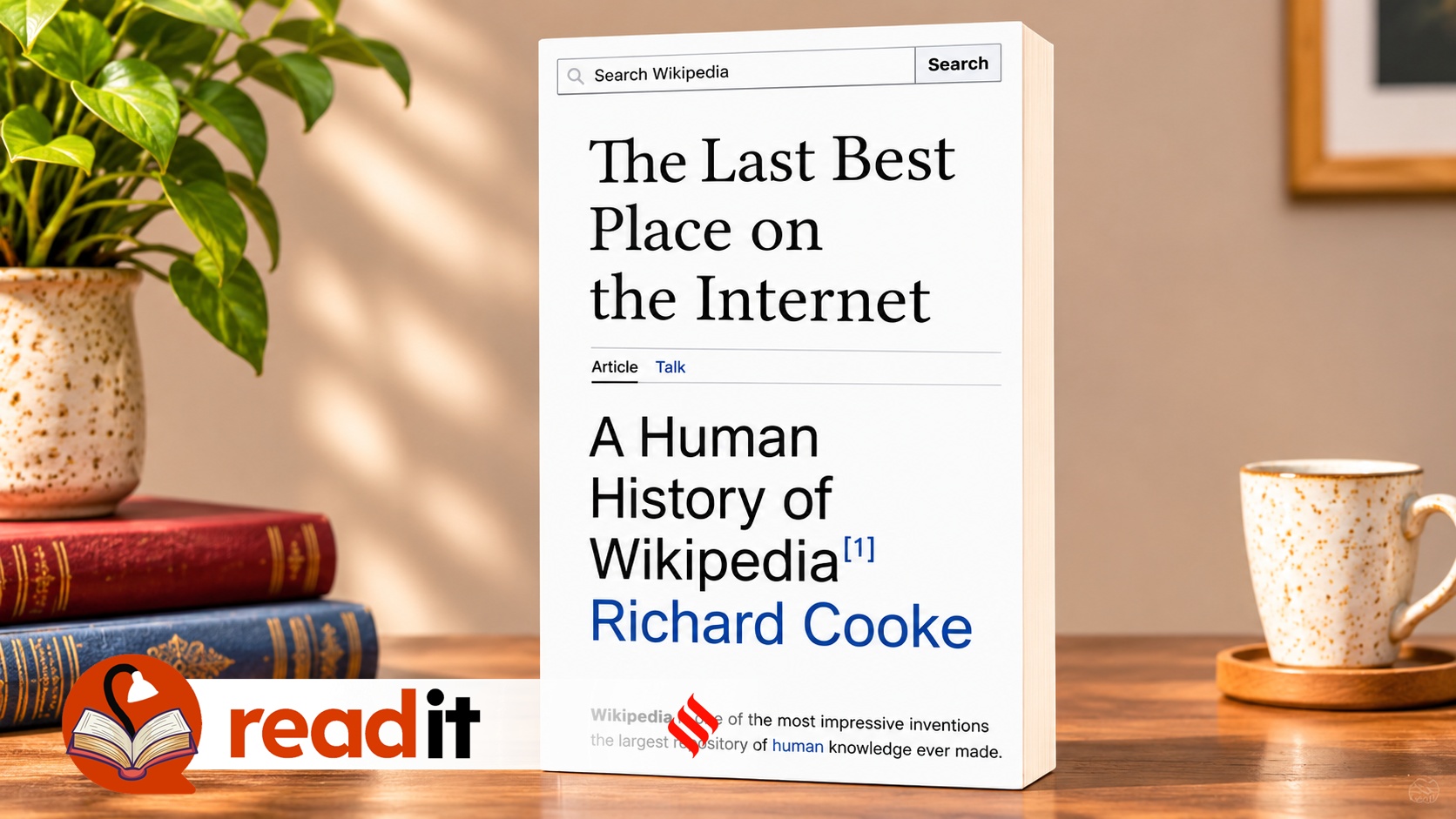
Not too long ago, before ChatGPT became a part of our lexicon, there was another free source of information that everyone online has consulted at some time or another. It was not always the most accurate, but it let you get the bare bones of an unfamiliar subject and was the starting point for many a research project.
We are talking, of course, about Wikipedia, the digital encyclopedia that altered the course of ‘research on the Internet,’ if not changed it altogether.
In his latest book, The Last Best Place on the Internet: A Human History of Wikipedia, award-winning journalist and author Richard Cooke delves into the past, present, and possible future of the Internet’s most popular encyclopaedia.
Cooke explores Wikipedia’s origins, highlighting how it differs from traditional encyclopedias. While traditional encyclopedias came from a handful of experts and editors who decided what was worth keeping and what was worth removing, Wikipedia was a completely different concept, as literally anyone could add, subtract, or edit information. In simple terms, it was an encyclopedic democracy – an encyclopaedia for the people, by the people. Of course, scholars and academics looked down on the very idea because it lacked a traditional hierarchy or fact-checking process. But it went on to become one of the most popular and go-to sources of information for millions of people on the Internet.
Cooke’s book takes us through the journey of Wikipedia. He has divided it into five main parts: “Collective memories and abandoned cathedrals,” in which he looks at what Wikipedia is; “Patterns and links”, which cover where Wikipedia came from; “The last best place on the Internet,” which looks at why Wikipedia works, despite all the criticism it faces; “A sprawling hellscape,” which details its struggles; and finally, “The last encyclopedia,” which looks at the future of the encyclopedia.
Nu(pedia) begins with Jimmy and Larry
Cooke begins with the story of how the platform came about. Before Wikipedia, there was Nupedia, created by Jimmy Wales and Larry Sanger and written by experts through a very thorough review process. As its growth was slow, Sanger introduced the idea of Wikipedia, opening the platform to collaboration and edits by anyone. Readers get a close look at the relationship between the two founders, their battle to claim Wikipedia as their own, and their eventual fallout.
According to Cooke, the democratisation of contribution and collaboration was not the only reason why Wikipedia became a success. There were several other reasons too. The platform initially gave in to the “worse is better” principle, meaning that early Wikipedia entries, which were not perfect or complete, prompted readers to intervene, edit, and improve them. Intriguingly, Cooke highlights how Wikipedia entries and edits were fun rather than work for its contributors, who were, of course, called Wikipedians:
Story continues below this ad
“It’s a misconception people work for free,” Wales told the site Hacker Noon in 2018. “They have fun for free.” A 2011 survey of more than five thousand Wikipedia contributors listed “It’s fun” as one of the primary reasons they edited the site. This is why the meta side of Wikipedia—the Talk pages, the essay commentaries, the policies—is suffused with nerdy jokes. We’re so used to equating seriousness with importance that this jars at first: It’s hard to square the encapsulation of all human knowledge with a policy called “Don’t be a dick” (since revised to “Don’t be a jerk”).”
The book also covers the war between “inclusionists and deletionists” and how the tension between those who want to keep it all and those who want to maintain strict standards keeps things balanced. Speedy edits, polarised views leading to better, more refined versions, hyperlinks within entries, and the use of popular search engines to bring masses to Wikipedia all played their roles in making Wikipedia work.
Of course, it was not all smooth sailing. Wikipedia had more than its share of struggles, and Cooke gives us a glimpse of them. Wikipedia’s editors are mostly concentrated in the USA and Europe. They are mostly men (about 87 per cent to 90 per cent), making it difficult for marginalised communities to contribute. Women even face hostility and harassment on discussion pages. As Wikipedia is a written platform, many facts from cultures with non-literate or oral historians are forced to stay on the margins. Top this with false narratives, hoaxes, information-feeding agendas, paid PR, and now AI, which is a threat to the core concept of Wikipedia and how it works, and the people’s encyclopaedia’s future does not seem too bright. Will it survive? Cooke gives us enough to chew on to reach our own conclusions.
Accessible, fun, packed with info
The Last Best Place on the Internet is a very accessible read – the writing is very lively, with plenty of humour, making it an engrossing, fun read. You do not need to be a techie to understand the language or the concepts mentioned in the book. Cooke packs the book with interesting facts, so much so that it sometimes gets almost too informative (a little like its subject!), which can feel a little heavy. Breaking the narrative into sections helps: right before you feel overwhelmed, you land on the next segment. At 320 pages, this book is dense with facts, but not heavy to carry or read.
Story continues below this ad
Anyone curious about Wikipedia and wanting to know the story of one of the Internet’s most important and popular parts should pick it up. It is accessible and easy to read, and although a trifle tough in places, it teaches one a fair bit, just like Wikipedia. Richard Cooke’s book is the perfect encyclopedia about the people’s encyclopedia.
The Last Best Place on the Internet: A Human History of Wikipedia
Richard Cooke
320 pages
Hachette India
Rs 750
KioskNews shows a cleaned-up reading view extracted from the publisher’s page — the original always lives on their site, not ours.