Tencent profit dips as sixfold increase in AI infrastructure spending sacrifices margin
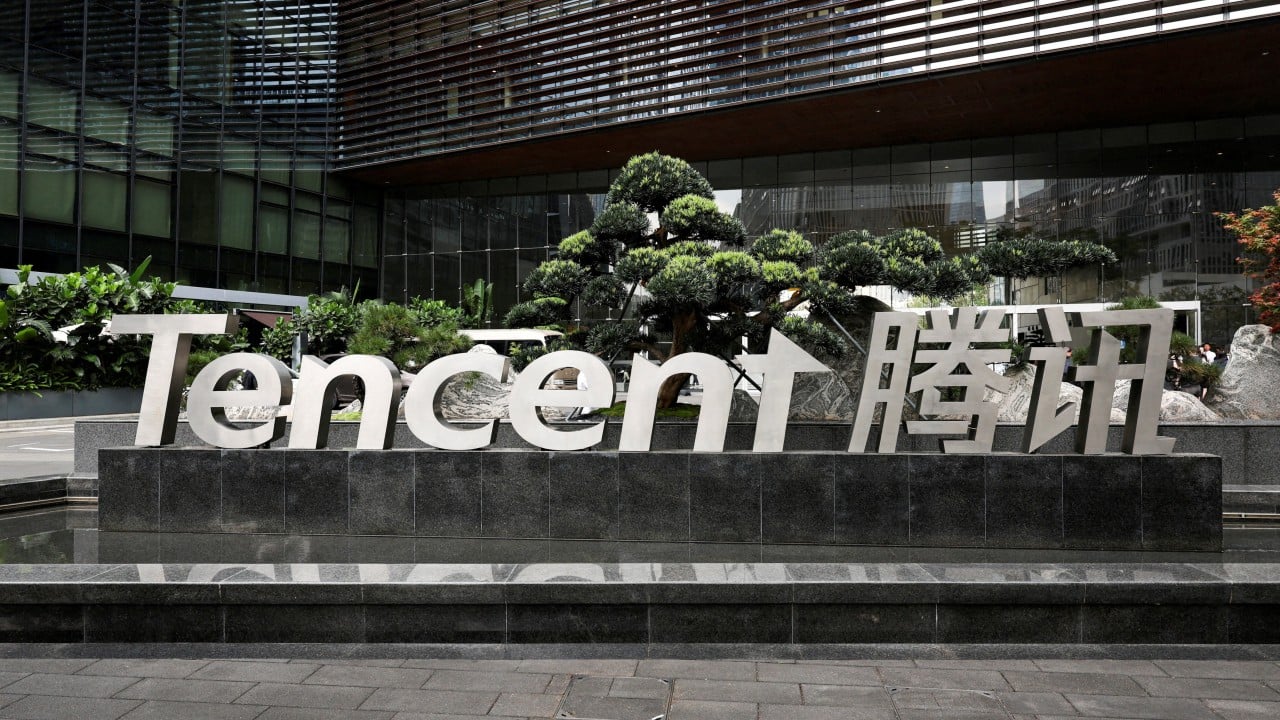
Tencent Holdings ramped up capital spending more than sixfold in the third quarter to above US$12 billion, weighing on profit and free cash flow as the Chinese tech giant poured money into computing power to catch up in the country’s cutthroat artificial intelligence race.
Adjusted net income for the three months ended September 30 fell 6 per cent year on year to 66.5 billion yuan (US$10 billion), matching the consensus estimate of analysts polled by Bloomberg. Revenue rose 8 per cent to 207.3 billion yuan, missing market expectations of 210.5 billion yuan.
Tencent’s capital expenditure reached 81.4 billion yuan, up 527 per cent from a year earlier and 54 per cent from the second quarter. The infrastructure outlay pushed the company into a negative free cash flow of 69.1 billion yuan.
Excluding compute procurement payments for AI initiatives, free cash flow would have been a positive 16.9 billion yuan, the Shenzhen-based company said on Wednesday.
“Our recent significant achievements across models and applications have accelerated Tencent’s evolution for the new AI era,” co-founder and CEO Pony Ma Huateng said in a statement.
The results underscore how Tencent, which operates the world’s largest video game business by revenue and China’s ubiquitous WeChat super app, is sacrificing near-term margins to defend its turf amid fierce domestic AI rivalry and mounting investor scrutiny over returns on spending.
A bright spot from that investment was its cloud business. Revenue from its fintech and business services division climbed 9 per cent to 63.7 billion yuan, driven by a 35 per cent surge in cloud computing revenue as it ramped up compute supply in the quarter.
Marketing services revenue, encompassing Tencent’s fast-growing online advertising business, rose 19 per cent to 43 billion yuan on the back of AI-powered ad-targeting upgrades.
Video game sales, traditionally the Shenzhen-based company’s largest revenue pillar, increased 11 per cent domestically to 47.6 billion yuan but dropped 9 per cent internationally to 18.9 billion yuan against a high base.
Tencent has stepped up the release of foundation models and agentic AI tools, including WorkBuddy, to capture enterprise and developer adoption, both at home and abroad.
“We believe WorkBuddy has grown to become the largest AI application in China, measured by total daily large language model token consumption by users,” Ma said.
Meanwhile, WeChat, known as Weixin on the mainland, recorded 1.45 billion monthly active users as of September. Tencent said it expanded the beta testing of Xiaowei, an AI assistant built into the super app, in the past quarter.
On Monday, the firm rolled out Hy4 Flash, a lightweight model with 224 billion parameters priced at 7 US cents per million input tokens.
Billed as Tencent’s most cost-effective Hy model to date, the flash variant arrived less than two weeks after the debut of its flagship Hy4 model, which the company ranked among the world’s top-tier open-weight releases.
“Hy4 has achieved China state-of-the-art AI model status, and Hy4 flash brings down [inference costs] to deliver cost performance for real-world use cases,” Ma said.
The earnings release follows a stark internal warning from senior executives last week at an event marking Tencent’s 28th anniversary. Management told employees that the AI wave represented a matter of “survival and death”, cautioning that the company risked disruption if it failed to adapt proactively.
“With intense domestic competition and the extremely difficult monetisation of AI, we need more than ever to bring our leading position and insights into our core business,” executives said in speech excerpts made public on Monday, adding that the company would swiftly reorganise to dismantle internal silos.
“The wave is already charging right at us.”
Management added that half of the workforce should focus on building AI-native businesses and exploring new growth frontiers, while the remaining 50 per cent should defend core operations and drive efficiency.
Tencent’s Hong Kong-listed shares fell 0.85 per cent to HK$372.80 on Wednesday ahead of the earnings release.
KioskNews shows a cleaned-up reading view extracted from the publisher’s page — the original always lives on their site, not ours.