Hasina eyes return to Bangladesh: Can Dhaka deny her a passport?
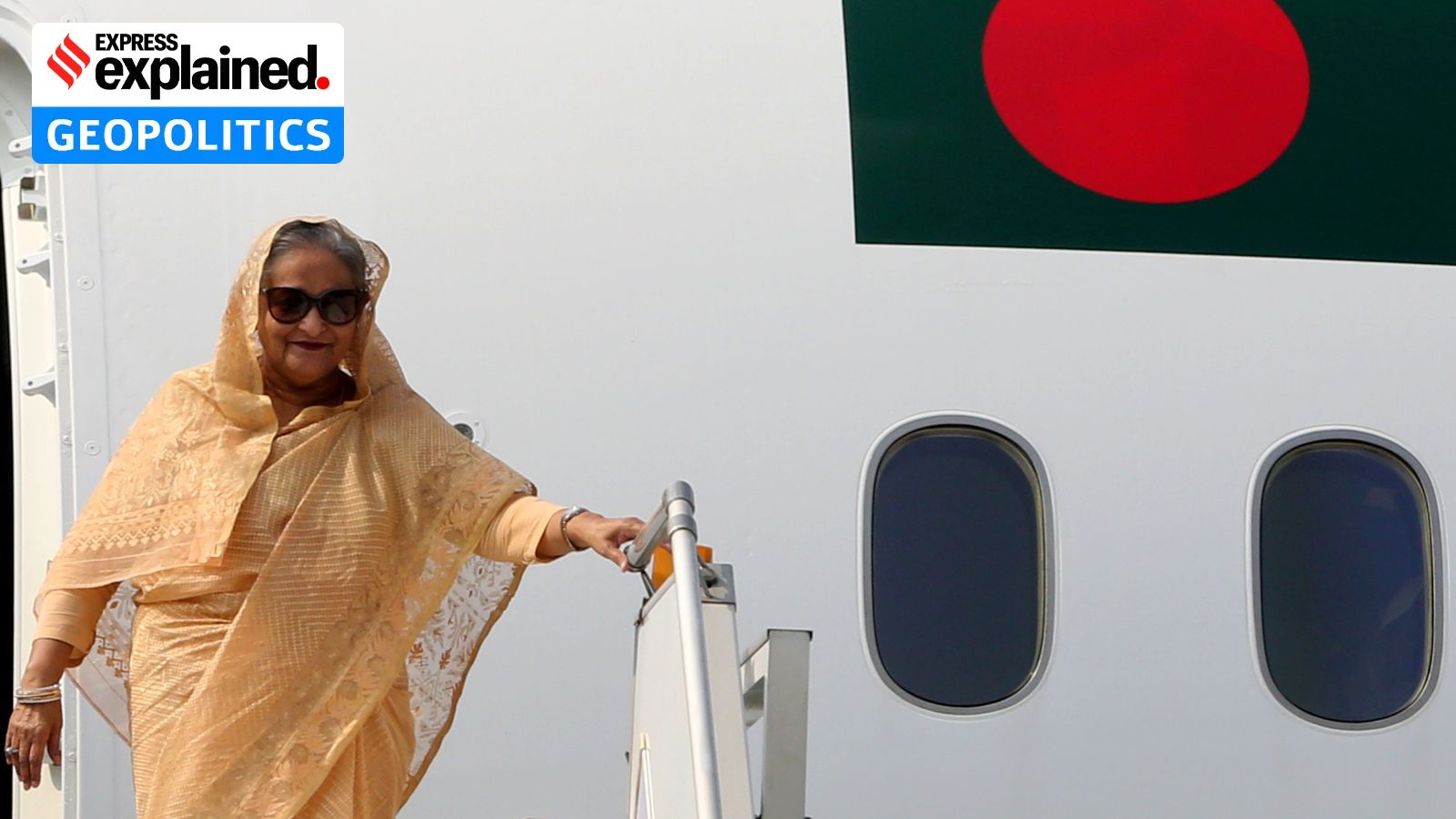
Former Bangladesh prime minister Sheikh Hasina, who faces a death sentence in her country following her ouster and flight to India in August 2024, is eyeing a return to Dhaka on December 16.
She announced the symbolic date — Bangladesh’s Victory Day, marking the end of the 1971 Liberation War — more than three months after first expressing her wish to return, asking Prime Minister Tarique Rahman’s government to arrange an aircraft to bring her back from Delhi.
Bangladesh, too, wants Hasina back, viewing her as a “convicted” criminal. Yet, her stated wish to return has set off a storm. This is because Rahman’s Bangladesh Nationalist Party (BNP) government wants her extradited, rather than being allowed to return as a normal citizen.
The key question, therefore, is what legal process would govern her return.
The background
After Hasina’s fall, Bangladeshi authorities reportedly revoked her diplomatic passport on August 22, 2024, and locked her National Identity Card (NID) on February 16, 2025. Bangladesh also sought her extradition from India in December 2024.
On November 9 this year, the London-based law firm Matrix Chambers, on behalf of Hasina, emailed the Bangladesh High Commission in New Delhi requesting a new passport and NID for her. The email cited Hasina’s Bangladeshi nationality, the country’s laws and its obligations under international human rights instruments.
The request triggered a flurry of statements from Bangladeshi ministers and officials, Hasina and the Indian government. Sample the following:
Bangladesh’s statements
“Bangladesh will not issue a passport to any terrorist; there is no provision for such an action. Bangladesh will seek the return of Sheikh Hasina through an acceptable prisoner exchange process.”
— Humaiun Kobir, Bangladesh’s State Minister for Foreign Affairs, November 9
“Should we treat her like an ordinary commercial traveller and tell her to come and visit her in-laws’ residence…. She has fled after killing people. One who has fled, how would she come? How would a terrorist come? There’s an extradition treaty. Handover would be sought through the treaty.”
— Kobir, November 10
“She has been sentenced to death by the ICT for crimes against humanity. Existing passport laws do not allow a passport to be issued to a convicted fugitive. If she wishes to return to Bangladesh, she must do so under the extradition treaty.”
— Md. Aminul Islam, Chief Prosecutor, International Crimes Tribunal, November 11
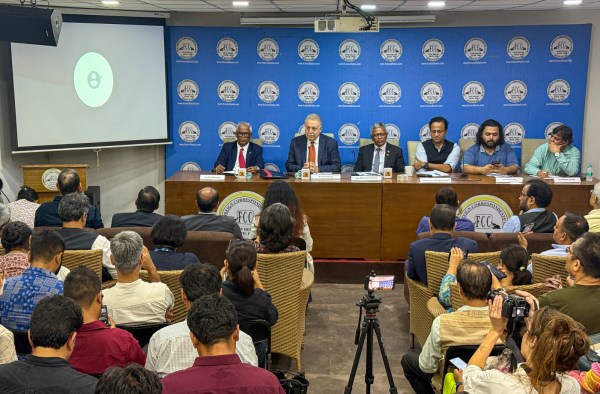 A virtual audio address by former Bangladesh PM Sheikh Hasina in New Delhi on August 5, 2026. (Praveen Khanna)
The responses from Hasina and India
“Why would I ask another country to extradite me when I have already decided to return voluntarily?”
— Sheikh Hasina, November 16
“Extradition of former Prime Minister of Bangladesh Sheikh Hasina is a legal matter and it will be dealt with accordingly… Obviously, for the travel of people, you need a travel document.”
— Randhir Jaiswal, Spokesperson, India’s Ministry of External Affairs, November 10
From these statements, it is clear that two distinct issues are being raised:
First, whether Bangladesh must issue a passport and NID to one of its nationals abroad; and second, the extradition request for Hasina that Bangladesh submitted to India.
The issue of her application for a passport and NID is a question of Bangladesh’s own laws and its international obligations towards its national. Extradition, on the other hand, is a mechanism to compel the return of a person who resists it. Where the person wishes to return voluntarily, the mechanism has no work to do.
The two issues should, therefore, be viewed separately.
Right to return under international instruments
Several international conventions, which Bangladesh is also party to, refer explicitly to a person’s right to return to their own country.
- Universal Declaration of Human Rights (UDHR): Article 15 recognises the right to a nationality and bars its arbitrary deprivation. Article 13(2) recognises the right to leave and return to one’s country. UDHR is not a legally binding instrument but sets important standards.
- International Covenant on Civil and Political Rights (ICCPR): Bangladesh acceded to the Covenant in 2000. It puts no general bar on deprivation of nationality, but Article 12(4) protects against arbitrary deprivation of the right to enter “one’s own country”. The UN Human Rights Committee’s General Comment No. 27 (note that ‘general comments’ of the committee are not binding but recommendatory in nature) reads this as broader than formal nationality, so cancelling a passport cannot extinguish a national’s right to return. Articles 2(1) and 26 require non-discrimination and equality before the law.
- International Convention on the Elimination of All Forms of Racial Discrimination (ICERD): Bangladesh is a party to this convention. Article 5(d)(i) requires equality before the law in the right to nationality. Article 1(3) preserves State competence over nationality, provided there is no discrimination against any particular nationality.
- 1961 Convention on the Reduction of Statelessness: Bangladesh is not a party but Article 8 (no deprivation causing statelessness with narrow exceptions and procedural safeguards) is a useful benchmark. Bangladesh’s ICCPR and ICERD obligations apply independently.
The State is ordinarily expected to issue, renew or replace travel documents for its nationals abroad and to readmit them. This is reflected in the International Civil Aviation Organisation’s (ICAO) Annex 9, Article 5(d) of the Vienna Convention on Consular Relations, 1963 , and the UN Human Rights Committee’s General Comment No. 27, which treats refusal of a passport to a national abroad as an impediment to the right to leave. Withdrawal is, therefore, not impermissible in itself, but must rest on a legitimate ground and be reasoned, proportionate and reviewable.
Bangladesh’s own laws control exit, not entry
Bangladesh’s current legal argument to deny Hasina a passport seems to rest on Articles 6 and 7 of the Bangladesh Passport Order, 1973. The ICT Chief Prosecutor said “existing passport laws do not allow a passport to be issued to a convicted fugitive”, and that “crimes against humanity fall squarely under the definition of moral turpitude”.
This argument, however, raises questions. This is because Bangladesh’s “convicted criminal” passport restriction provisions are designed to control departure from Bangladesh, not entry into it.
Article 3 of the Bangladesh Passport Order, 1973, provides that “no person shall depart or attempt to depart from Bangladesh unless he holds a valid passport”.
Article 6(1)(e) is expressly about a person evading appearance in pending proceedings or subject to “an order prohibiting the departure from Bangladesh”.
Every such ground is an exit-control rationale. To use an exit-control statute to block a return inverts the purpose of the provision.
So why the insistence on extradition?
Extradition presupposes that a person will not return willingly; it is the machinery a State uses when it must compel a return.
Where the person has decided to return of her own volition, there is nothing to extradite. Hasina has publicly stated that she will return voluntarily and surrender before court.
The insistence on the extradition route is, on the evidence, a delaying tactic. It may be inferred that the Bangladesh government does not, in fact, wish her to return at this moment.
The observable conduct supports that reading: Bangladesh has refused the one document that would enable her to travel, while insisting on extradition, which is a legal process that is by its nature complicated.
Contradictory arguments
Bangladesh’s own officials are not consistent on the document question. The State Minister for Foreign Affairs says no passport or travel pass is needed and none will be issued; a foreign ministry official quoted by Bangladesh media says the Mission “will be able to issue” a one-way travel pass once India completes its legal process. If a travel document can be issued to effect her return through extradition, there is no legal obstacle to issuing the same document now. The insistence on sequencing it after extradition, rather than before, is a choice, not a necessity.
No impediment from India
India has created no impediment to the voluntary return of Hasina. The only issue blocking the return is the lack of a travel document. That document can be issued only by Bangladesh, because she is a Bangladeshi national.
So, to sum up:
- The passport and NID question is between Bangladesh and its national; extradition is a separate legal matter
- A willing returnee does not require extradition
- Passport restriction provisions in Bangladesh law are exit-control measures; they were not designed to prevent a national from returning home.
- A national reserves the right to return to their own country. This cannot be framed as a procedural step to be processed through a treaty.
Beyond a legal issue
So, legally speaking, the issue is largely straightforward. Politically, however, things are more complicated.
Supporters of Hasina’s banned Awami League and BNP members recently clashed in and around the League’s bastion of Gopalganj. Multiple crude bomb explosions and arson attacks took place in Dhaka on Friday. Police blamed supporters of the Awami League for a spate of similar incidents earlier this month, according to bdnews24.
This contestation on the streets has emerged after two years of Awami League workers being targeted since August 2024, when Hasina’s exile began. Many of her aides, ministers and political leaders are also living in India, Europe and the US.
Many in Bangladesh point out that Hasina has not accepted the mistakes made during her tenure, including the violent crackdown on protesters in July-August 2024 that killed hundreds, before she was forced to flee.
This lack of public contrition has hardened the BNP-led government and people’s antagonistic attitude towards her.
At the same time, the large-scale targeting of the Awami League workers, leaders and supporters by the interim government-led by Prof Muhammad Yunus, and later the BNP government, has not created space for reconciliation.
The blame game and the cycle of revenge continues, and that shapes the debate between Hasina and the Rahman government over her return.
KioskNews shows a cleaned-up reading view extracted from the publisher’s page — the original always lives on their site, not ours.