One month into the NFL season, referees are the biggest story
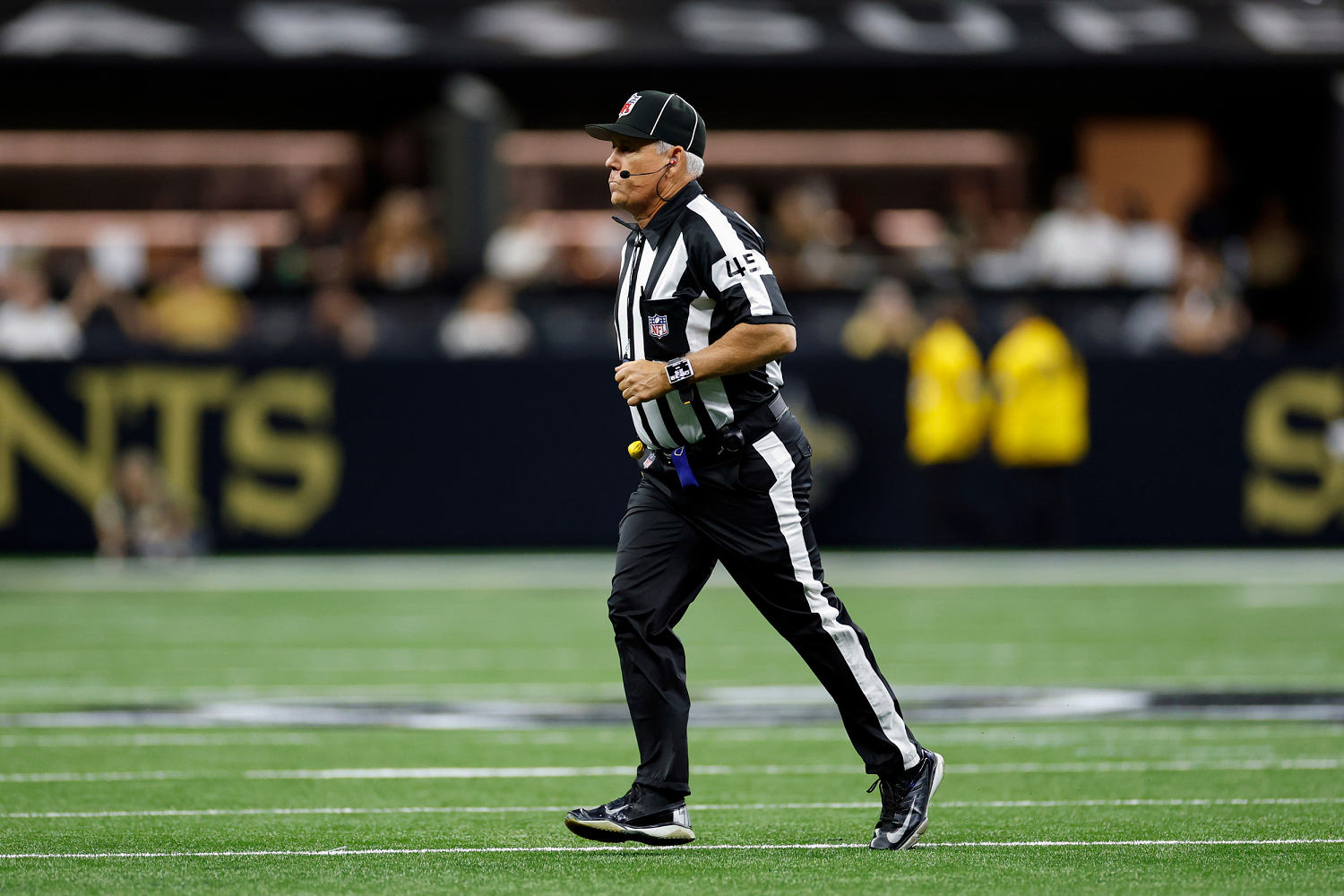
When New England Patriots coach Mike Vrabel cursed out an official last week for a defensive holding penalty he described as a “terrible ... effing call,” it was hardly the first time he’d complained to that level.
“I’ve said that 87 times since I’ve been a head coach,” Vrabel said. “It was nothing derogatory.”
It earned Vrabel an unsportsmanlike conduct penalty all the same and led him to call the official “a little sensitive.”
Tension between officials and those who must abide by their rules has existed since sports began and is so commonplace as to go mostly unremarked. But five weeks into the new NFL season, that’s no longer the case. Rare public suspensions, numerous flags and rescinded fines have made those who set and enforce the rules as much of a discussion topic as the league’s more visible stars.
Games have averaged 15 penalties, the third-highest leaguewide average through Week 4 since the 1970 merger, according to research by NBC Sports. The number of total fouls called per game, 16.86, is down from the 17.44 that were called at the same point of last season, according to a league spokesman. That still is higher than the number of fouls called through Week 4 in 2024 (15.52), 2023 (15.34) and 2022 (14.38).
Penalties are only one reason officials are in the spotlight.
The NFL this week took the rare public step of announcing suspensions of two officials after line judge Jeff Seeman was shown on camera cursing multiple times toward Arizona tight end Trey McBride, leading to a two-game suspension. Referee Adrian Hill also was suspended, for one game, for his contentious reaction to Minnesota’s Eric Wilson after accidental contact knocked Hill to the ground. The NFL said the instances reflected “unprofessional conduct,” while the union that represents NFL officials vowed to challenge the discipline, calling it “excessive and inconsistent with past precedent.”
Coaches including Minnesota’s Kevin O’Connell and Arizona’s Mike LaFleur complimented the work of Seeman and Hill.
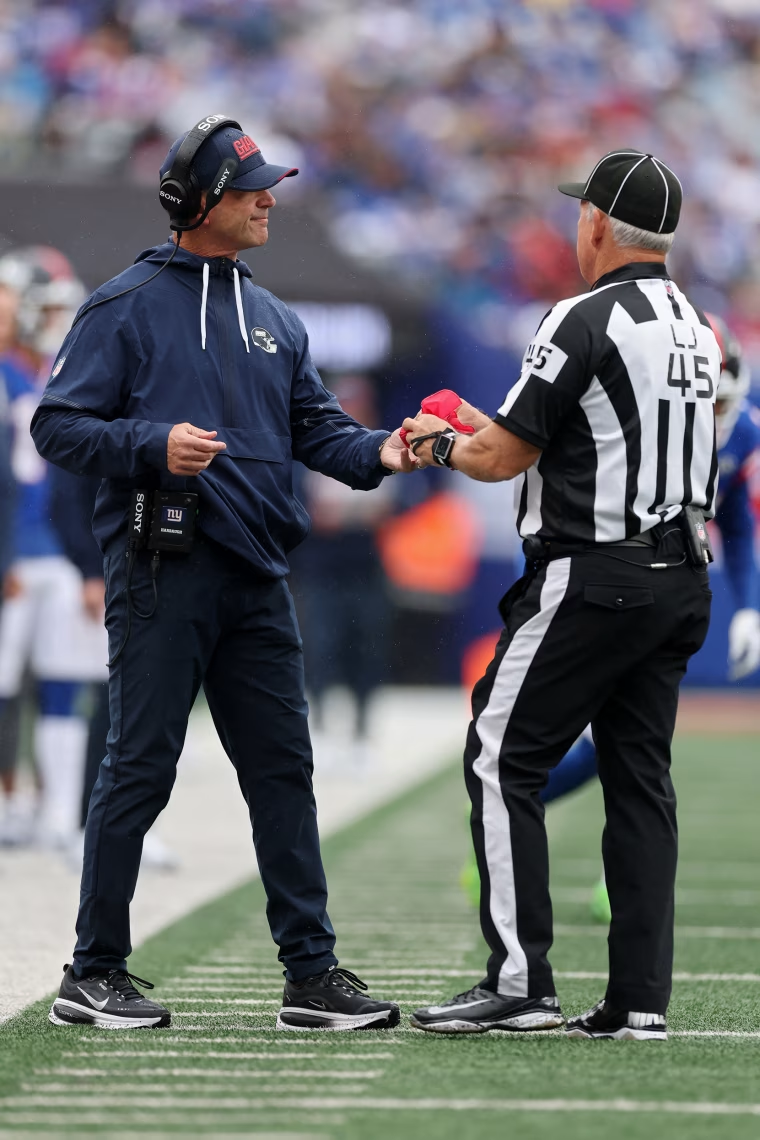
“There’s a lot of verbal back-and-forth, or really one-way traffic, from the coaches, players to the officials, but we’ve always told the officials you cannot respond in kind,” former NFL referee Dean Blandino said this week.
Though the union disagreed with the level of punishment handed down, it did acknowledge that such verbal back-and-forth was not necessarily an outlier. In a statement, the referees’ union said it wanted to meet with the players’ union “to address on-field conduct and the growing levels of confrontation between players and officials.”
“It’s about time,” Super Bowl-winning former coach Bruce Arians said this week about the discipline. “You know, there’s finally some accountability in that department.”
The NFL does not exempt officials from accountability. It just rarely publicizes it. Referees’ performances are judged using internal grades for which high performers are rewarded with high-profile postseason assignments, while consistently low scorers can lose their jobs.
A new and more visible accountability measure exists, as well. As part of a new, seven-year collective bargaining agreement between the league and its referees that was established in May, the NFL has created a “bench” of referees who can step in for in-game switches.
“They’re going to start working this weekend,” Blandino said. “So if you have an underperforming official on a crew, that official will sit down and you’ll have a bench official that will come in like that backup, that No. 2, that will come in and work for them.”
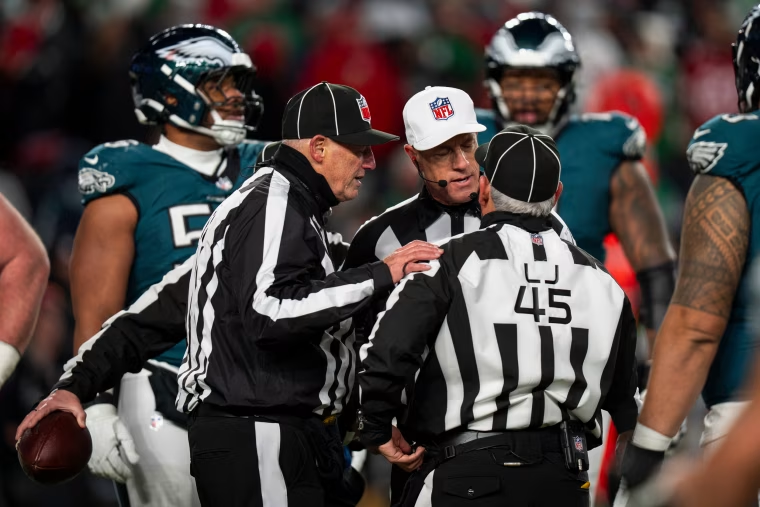
The NFL this week also walked back fines — ranging from $8,847 to $14,926 — it had issued multiple players for celebrations the league initially said showed them imitating chugging a beer, which it deemed an offensive demonstration. In one case, San Francisco’s Kyle Juszczyk said he was imitating drinking from a juice box, a play on his last name’s pronunciation and his “Juice” nickname.
“Even if it was beer, I don’t think that should be a problem with all the beer endorsements that we have in the NFL,” Juszczyk told reporters after the fine was issued. “We have everything. So even if it was beer, which it wasn’t, I still felt like it wasn’t an infraction.”
Confusion about what celebrations are allowed and which are not led the league and its players union this week to issue a joint statement clarifying the line that should not be crossed. Violations include gestures that are sexual or depict smoking, violence and using drugs, gang-related signs or weapons.
“Conversely, recent celebrations imitating drinking a beverage will not be considered violations or result in discipline,” the joint statement read. It added that “individual and team celebrations are part of the game.”
So, too, this season is the focus on the flags and the officials who throw them.
KioskNews shows a cleaned-up reading view extracted from the publisher’s page — the original always lives on their site, not ours.