Listener Mailbag: Behind the Podcast - Sponsored Content
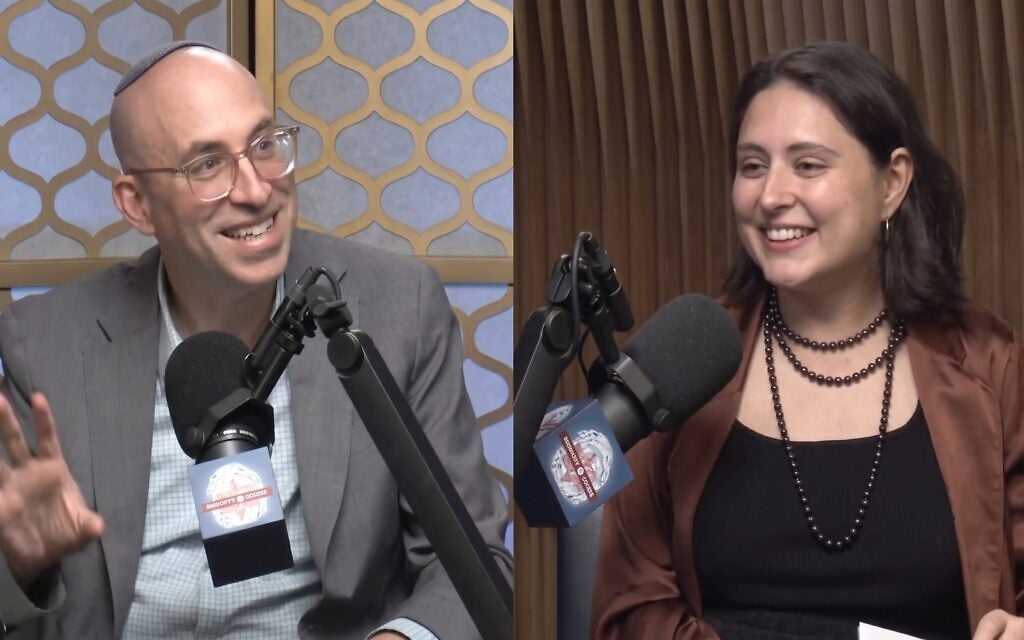
Why is the show called Identity/Crisis? How do you handle post-October 7 ruptures across the Jewish community? What’s your bagel order?
For this special listener mailbag episode, Yehuda Kurtzer takes a seat on the other side of the conversation as colleague Annie Beyer-Chafets guest hosts. They tackle questions submitted by listeners and Yehuda reflects on nearly 300 episodes. He shares what he’s learned along the way and what continues to give him hope about Jewish life. It’s an inside look at the questions, values, and commitments that shape Identity/Crisis.
You can now sponsor an episode of Identity/Crisis. Click HERE to learn more.
A full transcript of this episode is available below.
Listen to this episode wherever you get your podcasts.


Here’s more from the Shalom Hartman Institute this week:
Learn more about the Wellspring Gap-Year Network!
Listener Mailbag: Behind the Podcast
Note: This is a lightly edited transcript of a conversation, please excuse any errors.
Yehuda: Hi, everyone. Welcome to Identity/Crisis, a show from the Shalom Hartman Institute, creating better conversations about the essential issues facing Jewish life. I’m Yehuda Kurtzer. We’re recording on October 19th, 2026.
So I do love hosting this podcast. I love coming up with ideas together with my colleagues. I love the interviews. I love writing the monologues. It’s a lot of work, but I’ve heard from a lot of you that it has a big impact on your life and on your conversations, and that’s very meaningful to me.
I also find that I’m in a parasocial relationship with a lot of you, including as of this morning, where I saw someone I hadn’t seen in about two years, and he’s like, “Well, I know what’s going on in your life. Let me tell you about what’s going on in mine.”
But just as much as I like hosting a podcast and sometimes listening to podcasts, I love being a guest on a podcast. And today we thought that, based on user feedback and based on your questions, that we would turn the mic around, and I’d have an opportunity to share a little bit more, a little bit of like behind the music of Identity/Crisis, a little bit of responding to some of your questions, and those of you who we’re responding to are sending you Identity/Crisis swag as promised, and the opportunity to respond to some of our most interesting and contentious episodes over the last couple of years.
And with that, I’m turning over to my host for today, my guest host, who is the host, Annie Beyer Chafets, our digital media manager here at the Shalom Hartman Institute of North America, and a key player in the team that puts together Identity Crisis every week.
Annie, the mic is yours.
Annie: Great. Thanks so much for being here
Yehuda: Oh, thanks for having me.
Annie: It’s a very different perspective. I feel like maybe we should switch seats. I’m so excited to do this episode. I spend a lot of time thinking about how our audience is thinking, looking at the numbers, looking at the reviews, looking at the emails. So I’m excited to kind of extend that conversation out to you. I know you only get forwarded a small, a small part of it.
Yehuda: A small piece of it, yeah.
Annie: A bit. But before we get to the great questions that were sent in by everybody, and thank you all for submitting your questions, I’ve got some questions that I have for you that I wanna knock out at the top.
Yehuda: Rock and roll.
Annie: Okay. First question: Why is the show called Identity/Crisis?
Yehuda: Yeah, when we started the show, so this goes back now to spring of 2020. Folks may not know this, but we started the show a week before the lockdown. It was kind of an experiment of can we be in this space? Turned out to have been an incredibly prescient thing to do, because suddenly we found very quickly that folks during the lockdown, in that very scary period of time were looking for wisdom and content, and we were able to come into people’s homes and people’s lives in a totally different way.
So we played with a lot of titles. Dovid Zvi Kalman, who was the founding producer of the show, and I played with a lot of the different possibilities, and I really liked the words independently of identity and crisis because I felt like those were the things that American Jews talk about the most.
Annie: Identity and crisis.
Yehuda: Identity and crisis. I liked that it exists in a phrase in the world, and that’s why we actually keep the, the slash in the title. The slash does a lot of the work as it reminds people that you can be in an identity crisis, but you can also be toggling between those two topics that actually show up in so many of the things that we talk about here.
Annie: Totally.
In terms of what makes a great Identity/Crisis episode for you, whether we’re talking about identity or crisis, I know that you and I don’t always agree about this. In our quarterly meetings, I’ll always bring you a, a list of winners and losers, which for me is… has nothing to do with the content and is cold, hard—
Yehuda: Just performance
Annie: Just performance. But what for you really, when you walk out of an episode that you’re recording, makes you just go, “Wow, that was spectacular”?
Yehuda: Yeah, you know, it is the case that what I oftentimes consider to be a great episode, our listeners don’t. What shapes listener interest is oftentimes like topics that feel very newsy and electric. So we know that like when there’s a major crisis out there, war and so forth, people go looking for a different kind of content, and we get a boost.
And for our regular listeners, they may get very excited about those topics, but they’re there consistently for a kind of somewhat between a learning and an entertainment experience. And for me, the podcast that I appreciate the most are when I feel like I’m in a zone with a guest on an issue that I’m learning from.
And sometimes I even lose track of the fact that I’m on a podcast ’cause I feel like I’m in a deep conversation with someone. Those are the ones that feel very powerful, and that’s why sometimes the religion ones, which don’t do as well for us, Jewish holidays and things like that, I actually think are, are the deepest. Like, when do you get a firsthand, a front row seat into a deep theological conversation? And I try to make it not so arcane that the average person can’t learn from it.
But I think it’s vital for this show to balance between newsy things that may get us more numbers and deep things that are actually really important to the Jewish conversation.
Annie: You describe it in a very similar way that I would, when people ask, like, what makes a great episode. I always say how into the conversation Yehuda is and how interested you are in talking to that person about whatever it is that you’re talking about.
Yehuda: By the way, a lot of it also goes into writing the monologue, which is I can tell how excited am I about an episode by how smoothly the monologue gets written. When I feel like, “Oh, wow, I had something to say,” that’s usually a good indicator that I have something to say, this guest is, has a lot to say on this topic, and we’re gonna find a, a meeting point.
Annie: And it’s interesting because you’re there more to ask questions than you are there to insert your own opinion, or to give your own Torah, or to really get off your chest what it is that you need to get off your chest.
Like, what are the pieces of you, either personally or professionally, that you feel you’re putting away because you are there to create space as a host?
Yehuda: So I, I feel I’ve been more personally share-y on this show than I expected to be. I’ve done, I’ve done episodes with Stephanie. We’ve talked about our kids. Some of the monologues are very emotional for me and confessional, especially on, like, issues of my Jewishness and parenting choices and things like that.
It is true, though, that in the, the podcast is the only place in, in my teaching where I’m, I’m the lead in a very different way, where I’m trying to coax something out of a conversation as opposed to just being the scholar who is teaching on a particular topic. And sometimes people will say, and it’s very complimentary, “I didn’t want to hear your guest, I wanted to hear from you.”
But I don’t think that’s what this show is for. And I think I bring a lot of myself in the questions I ask, in the dialogue, and certainly in the monologue with my guests. And since I have so many other platforms in Jewish life to tell people what I’m thinking, I feel like I like the fact that this is the one where I can do something a little bit different.
Annie: Okay. Well, you described it being more intimate and personal than you were expecting. It’s been about seven years almost, 300 something episodes. What else has surprised you about the process of making a podcast?
Yehuda: I mean, I, I’m surprised by the success, truly. It’s not anything that we as an institute were really set up to do, and it’s not, it was not the style of anything else that I did otherwise. So that’s been a joy.
I think I would’ve expected that by now the whole thing would’ve gotten a lot easier. In some ways it is. I feel very comfortable doing it. But the planning of it continues to be a really complicated and rigorous piece of work, as you know. We don’t agree always on the Identity Crisis team, what’s gonna be a great episode, what people wanna listen to. Oftentimes, it’s the case that I find something extremely interesting and no one else on the team does, and then you all begrudgingly let me do that episode,
Annie: And then it’s great.
Yehuda: That’s true or you—or you tell me afterwards, like, “Fine, but nobody cared about that.” So I think that the fact that it continues to be a guess every week is a complicated part of this work that I didn’t, I didn’t fully understand.
Annie: Well, it’s definitely one of the most visible and democratic forms of education that we do at the Hartman Institute, I mean, we really don’t do Judaism 101 here.
Yehuda: No, and I don’t think this podcast is. I, I don’t, I don’t set the bar there. And, you know, we do get some feedback sometimes of like—
Annie: We got one right here.
Yehuda: Yeah. Why don’t you share the question, and we can talk about it a little bit more.
Annie: Great. Great. And I think that this is a great question because it’s something that I think about a lot. But this was from Rachel in Brooklyn who says, “I’m writing as a new and suddenly devoted listener to Identity/Crisis.” Love to hear that.
“I think there are small tweaks you could make to thinking through episodes to make them much more engaging and accessible to folks like me who are super interested but not deeply steeped in Jewish intellectual history. Maybe these omissions are intentional because the audience for the show is really folks who are already living inside that world of Jewish discourse, but I’d love to think it’s for me, too.”
Yehuda: Thank you for that, question. Also, thanks for being a listener. This is actually a more complicated question than it seems because I, I think we have, we have, like, two, two complementary problems in Jewish education and in Jewish public discourse.
One is we don’t have strong entry points, so someone who wants a neutral, dispassionate understanding of the basics in order to be able to develop more sophistication is very hard to find. You know, even online, most of the Jewish content 101 that you can find online is very ideological, and it’s produced by organizations that want you to conclude that Judaism has core commitments that are their own choices.
And the other thing that I think we lack, which I think our organization means to solve for, is we don’t have enough sophisticated Jewish dialogue and discourse on hard issues.
Now, the question kind of implies, like, in order to be able to do the sophisticated, I have to do the basic. And I understand the impulse of why somebody thinks that’s the case, but I would argue back that it isn’t, right? That actually most of our listeners are capable of and will benefit more from really high-level Jewish stuff. This should feel no less sophisticated than what you do in college and graduate school, right? And if we had to set the bar at an intro level, I think, I think it would stay there, actually. I would rather that the homework that they did was, “Oh, wow, you introduced something I’d never thought of before or a thinker I’d never heard of. Let me go look that person up and maybe read a thousand words on them,” as opposed to the other way around, which is introduce something and then when I actually have a, a more sophisticated political or theological question, well, now the show’s over.
And I think we do that in our teaching. I just came back from a weekend with 400 teens, and it was like we were teaching at a collegiate level to teens, and there were a few students who had a harder time keeping up, and I—we had to—you have to figure out in a classroom how to not set the bar high in ways that are unfair. You gotta translate your terms. You know, if I don’t do enough on this show of, like, when I talk about a thinker and saying just one sentence about that thinker, I could probably do more of that. So that’s unfair.
But I think setting the bar high is, is something that I’m actually hoping for the Jewish community more generally, and I’m, I’m trying to make this show a kind of, paragon of what that’s about.
Annie: Yeah. It’s a little bit like, in the Noa Kushner episode we just did of if you don’t believe in God, try it anyway. It’s like if you don’t know, if you don’t know what Yehuda’s talking about, listen anyway.
And listen, there are some of those episodes that are the most inaccessible I do love, and I apologize for loving them so much because like I get to geek out.
Annie: Like what?
Yehuda: Like I loved the episode with Seyla Benhabib, who is one of the most important thinkers in the world over the last 30 years about the philosophy of immigration and borders. And she’s like truly a major intellectual, and that’s the conversation I tried to have with her, and I think some of our listeners probably found it inaccessible because she’s not a news commentator on immigration and didn’t wanna have that conversation at that register.
But I was really hoping that people would be like, “Wow, how cool it is that Yehuda’s interviewing Seyla Benhabib,” and I understand why it didn’t do as well in the ratings as I would’ve liked.
Annie: Okay, this next question I love. It came in just down to the wire from Benjamin in Montreal. Thank you, Benjamin, for submitting this one. The old adage of two Jews, three opinions. I know that the Shalom Hartman Institute is dedicated to Jewish pluralism. How do you hold space for guests with whom you have very deep disagreements, particularly on matters of belief, practice, and faith? What are the greatest challenges you experience during these conversations, and how do you overcome them?
Yehuda: Yeah. So the institute is committed to pluralism, both as a philosophical commitment, you know, it’s based in beliefs that, like, there’s no such, there’s no such thing as a knowable absolute truth, and therefore, you should not try to spend your life searching for it. And as a practical tool, in order to build a world in which people don’t kill each other, we have to find ways to accommodate ourselves to difference.
So that’s a big part of what the work of the institute is, and it shows up in different ways in parts of our work. There are times when the institute is more explicitly ideological. We’re trying to push something in the world alongside a commitment to pluralism, and sometimes where we have spaces where there’s just, significant disagreement, like inside a Beit Midrash, inside a study hall, it should be a place where any viewpoint can be shared.
My goal in the conversations on these podcasts is to create, as in the tagline, the best version of a conversation. That means that sometimes people who hold very provocative opinions I disagree with, I don’t feel will generate a productive conversation.
Sometimes that is because I try to be extremely polite to my guests, and there are places where I don’t wanna go because I think the confrontation would make it not possible for me to be a host. That, like, I wanna enable people to say what they say, and I wanna challenge them in ways that would be productive, but sometimes on some of these subjects, I think the disagreement is unproductive.
And as a result, I know I sometimes hear it myself from listeners of like, “You’re not engaging with this person,” who I think is like, is a lightning rod on these issues. And I’m like, “I know they’re a lightning rod on these issues, and therefore, I’m not sure it’s actually a useful conversation.” The point is, I guess Identity.Crisis is not supposed to be a debate. Any time you talk about pluralism, you have to look at a body of work as opposed to any particular isolated moment
I felt like a good example of where we tried to do this was in the recent series on Israel where we had three different journalists. They’re all inside the Jewish conversation one way or the other, but they really do represent, when you push them on their own political point of view, they’re kind of all over the map. And I thought it was a good way to say, “Look, these episodes actually hold together as a unit.” And unfortunately sometimes what happens is that people will just isolate one episode and be like, “That’s really what Hartman thinks,” or, “That’s what Huda thinks.”
Annie: We get a lot of questions and requests for content and episodes about Jewish communities outside of Israel and outside of America. Janine from London wrote in to say, “Yes, the USA, and yes, Israel, but the diaspora includes so many more places with lots to contribute to our story.” Why is the show so America-focused? Is it a feature or a bug? Is it an intention or a bias?
Yehuda: Yeah. So here, I’ll confess. I am really an American. I am a fourth-generation American on all sides. I care a lot about the relationship between American Jews and Israel. That divide has actually organized my life. I don’t mean my professional life, my life. I lived as a kid in Israel for a number of years. My father was a diplomat working on the Israeli-Palestinian peace process, so it was always felt in between. I spent every summer between 10th grade, high school, and well after college in Israel, working and volunteering, and lived in Israel between high school and college, and then got this job where I can be in both places.
So I’m very, very invested in that. I feel at home in both places. These are the stories that I feel both connected to and most equipped to talk about. I know that we leave a lot on the table about European and Latin American and Australian and Eastern… I mean, like, there’s const—there’s so many of these Jewish stories, and I’m not sure, I’m not sure I would feel equipped to be an effective interlocutor- with people on the inside of those stories, and I don’t wanna be a tour guide. Right?
So trying to… It’s not a, it’s not like we can’t do more of those shows about outside of America, but I’d have to figure out how to be wise enough in engaging with those issues that I’m not just asking people about their own experiences, ’cause I don’t do that in any of our episodes. And so, that’s just a little bit about, about who I am.
I think we are overdue to do some serious Europe content, given how significant the the story of European Jewish life is changing. But maybe that requires me, like, moving there for a few months to be in the conversation, to be able to speak as authentically and personally on those issues as the way I speak about America and Israel.
Annie: Where would you wanna start?
Yehuda: Probably in either in the UK or in Germany. I am fascinated by the story of the rise of the right in Germany. Find it kind of mind-blowing. And I’ve spent more time in the last couple of years with, with Jews in, in England and the UK, and understanding the ways that some of the questions that we’re navigating here as American Jews are showing up similarly there. Not the same, but similarly.
We already have to manage that all the time when we do America episodes and Canadian episodes because they have, like, not exactly the same version of a lot of large social trends, and you have to be correct on those. and it would just require a different level of, kind of research and engagement on my part.
Annie: Right. This is a tricky one. Richard from Bryn Mawr sent it in. We’re three years out from October 7, and we did a lot of content in the last three years about October 7, and a lot of the content that we developed in the weeks and months immediately following October 7, it’s hard not to look back on it with, with hindsight.
Here’s what, what Richard wrote in. “In the light of the past three years, with the fragmenting of North American Jewry,” inclusive of Canada, “around Israeli political and military actions, how do you view that immediate post-October 7 moment now? Was it the last gasp before diaspora Jewish opinion splintered, or an overture to a renewed discovery of Jewish peoplehood and common cause and concerns?” Which is, I think, the position that you took in the moment of really feeling, empowered by the unity
Yehuda: So first I wanna say, the very experience of living through dramatic historical conditions, you know, we go into responsive mode, but it’s worth us naming how extraordinary it is to live through moments like that.
You can always interrogate those choices afterwards, but you would also have to put yourself back into the very experience of living through history. And so it should make us view those moments, and when we have records of how we thought in those moments, let’s use them as time capsules, as opposed to, like, a description of what we now think.
I actually, post-October 7th, did two things. I spoke, I did speak a lot about the opportunity for capitalizing on this surge feeling. But there was a reverse side of that, which I was very open about, which was this is also the moment to acknowledge the severity of the rupture underserving those Jews when we focus on the rupture? And I guess the reverse is also true. Where are we focusing so much on those who are staying in that we don’t take seriously the magnitude of this rupture?
As a Zionist institution, I felt we were tested to figure out what it meant to stand with the Jewish people in that moment. As a pluralistic institution, I felt we were tested on how to make sure that those commitments don’t create so tight of a inside community that it ruptures families, ruptures communities, and leaves people on the outside. So that would be the way to kind of study. Where would we over-index? Where do we under-index?
Annie: We are seeing that at least in our circles that that surge has not really been a surge, but a sustainable influx. Any, any thoughts on what it is that we’ve done, not just on the show, but as an institute, what you’re thinking about in terms of how to, to your point about not over-indexing on the rupture, but to really ensure that the benefit of this horrible tragedy, if it’s people, you know, re-engaging with Jewish life in a really rigorous, important way, what are the ways that you’re thinking about trying to capture that and keep that and hold that attention?
Yehuda: I think a few things have happened in this very difficult period of time, one of which is, like, things I held to be true are either, have been either proven not true or now feel like they require me to interrogate those things. And that’s true about the liberal project of the West, and it’s true about pluralism, and it’s true about allyship and Israel’s place in the world, and Israel’s consistency with my own Jewish values.
Like, these are now in play. Every organization is recognizing that when everyone’s in flux, you make a play. If you stand for something, make a play. And it’s actually become more competitive in some ways, and that’s complicated on the professional side of this work.
So the fact that, like, we like shook up the snow globe and things are settling and everyone’s looking for, for order is a sign of something, and it’s an opportunity for something, and it’s true. We have seen this everywhere. We see it in the growth of our, of the demand for our work with young people. The young people who come to us don’t want talking points. They want adults who are willing to talk to them in a serious register without certainty, but who invite them into that conversation in a, in a more serious way.
Can I just share an anecdote from this weekend
Annie: Of course. I wish you would. I’m dying to hear about it. I’m so sad I missed it.
Yehuda: I did an ask me anything with the teens on Shabbat afternoon. It was opt-in, so I had like 30 kids in a, in a room on the side, and you never know what’s you’re, you’re gonna get in these kind of questions, and the questions were so sophisticated and deep.
But one of them in particular kind of took my breath away. One of the students said, this is I think a 16 or 17-year-old in high school, and said, “You know, every week when the conversation at our Shabbat table turns dark,” already my heart broke a little bit, and she said, “That means we either are talking about AI or antisemitism.” Those were one of the two conversation topics in the dark.
She said, “When historians study this period 30 years from now, 40 years from now, what are the connections they’re gonna draw between those two phenomena?” I was like, “I need to lie down and close my eyes and think for a while.” I tried to give an answer about liberalism changing relationship to human nature, conspiracy theories. But my answer was definitely not as good as the question.
So, to me, that was evidence of like, my mind is open I—these things are hard, and my mind is open. I think that that’s been true on our program side, and I think it’s been part of the pursuit of something out of these podcasts, and it’s true not just for us, but For Heaven’s Sake.
Sometimes we know of listeners on For Heaven’s Sake who are like, “I’m only here for Yossi.” Right? We know that. Or, “I’m only here for Donniel.” But if you’re there, you’re there for multiple viewpoints that are in dialogue with each other, and I, I think we’re, we’re underplaying how deep that is, in terms of this kind of moment right now.
Annie: One of the things that I, that I do here when I’m not working on Identity Crisis is I make the, like, ads for the teen fellowship, and so I, at most of the Shabbaton, I didn’t go to this one, but I go and I interview the teens. And the answers to the questions, I’m like, I couldn’t have written a script that would’ve been that. They’re just really internalizing such deep… They’re all talking about the learning and the Torah and the davening and the richness of the text. Like, nobody’s like, “It’s a fun place to meet friend-” Yeah. Like, it’s really, they’re so into it, and it’s so inspiring because it’s- Yeah,
Yehuda: It’s the same raise the bar theory. Give them something at a high bar, and they will try to clear it. And if you just lower the bar, they’ll definitely clear it and have a great time, and I, I don’t devalue that that’s, like, an important part of the ecosystem of what we give to young people. But we have a lane, and our lane is about raising that bar.
Annie: And they wanna be in that lane, and it’s amazing.
So most of what we get in our inbox are not actually questions, they’re suggestions. Suggestions for episodes, I’ll read off a couple and, mostly as framing to a question. I don’t expect you to answer any of these right now.
But one question we got in was, “Why is there not a more serious examination and pushback against the clear rise of Christian nationalism?” That was from Nina in Mississippi. Thank you, Nina. Steven from Massachusetts requested an episode on Jewish kids in public schools, in, in attempt to answer the question, do I need to, send my kids to Jewish day school if I want them to grow up to be serious Jews?
A lot of requests to do more stories of Jews on the periphery of Jewish life, interfaith families, Jewish-adjacent folks. Specifically, one request to explore the relationship between synagogues and their non-Jewish staff, which I thought was fascinating. All of this to say there are an endless number of things that you could cover on this show that fall into the category of both identity and crisis.
What are the ones that you’re most eager to get to? And what do you sort of wish the community was paying more attention to?
Yehuda: I think the education piece is a ripe idea for a series about, you know, how parents are thinking about school choice right now, for their children, those who have the luxury of school choice. Which is both a financial question, but it’s also a geography question, right? Where you actually have multiple options to make those choices.
I think I’m more, a little bit more interested on the side of the kids and their experience, just learning a lot from teens about the experiences of being in school these days, and how they are coding or not their own Jewish identities.
That feels really, really, really ripe. We’ve talked for a while about money in Jewish life and the places where it’s explicitly talked about, like in mega philanthropy. We did that amazing show a few months ago with Ilana Horwitz on poverty, and how the narrative of the Jewish community around money doesn’t match up to the lived experience of so many people. I think there’s much more to do in that space.
Look, if it was up to me, I would do more episodes on Talmud. But I don’t know how well that would play in the periphery of Jewish life. But actually finding a way to do a little bit more Jewish ideas that are not fully tethered to the news is something that, that I’m thinking a lot about.
Annie: What do you think gets in the way of that? Like, what’s the moment for you where you’re like, “What I planned to talk about this week was X, but I have to talk about Y”?
Yehuda: Yeah. I mean, sometimes it’s, as you said, it’s the news. It’s like, this event happened and it would be crazy for us not to cover it. ometimes it’s just, it’s just, like, I’m my, my own problem, that I’m like, “Oh, I really would like to talk to this person. I know they’re not on the docket. But let’s just have them. Let’s reach out to them.”
And then, like, the urgency of scheduling sometimes makes it such that you can’t do like, “Let me think about this for five, six weeks. Work on an angle of something. ‘Cause it’s like, you know, we gotta get the show recorded in time to be able to be edited and produced and shaped and released. So, you know, we’ve done it successfully a few times where we kind of got ahead of the scheduling, and then we were able to do some bigger projects like we did the Rabbi series a couple years ago which was such beautiful work on the—especially on the editing side, ’cause it got multiple voices in the same episode. But those projects take a very different kind of work to achieve.
Annie: Yeah. That was something that I didn’t really understand until I—
Yehuda: Until you heard it.
Annie: And then I, I mean, I was like, I was like cutting a reel together or something for, like, promoting it, and I was sitting and listening to those interviews at my desk and just sobbing. I was just like, “This is so beautiful.”
Yehuda: Yeah, that was deep work.
Annie: Yeah. Amazing stuff. Okay. Got some rapid-fire questions to close us out.
Yehuda: I’m ready, go.
If you could have anyone dead or alive on the show, who would it be?
Yehuda: Jesus.
Annie: Jesus.
Yehuda: Yeah, I think probably Jesus and Mel Brooks. Those are my dead and alives.
Annie: What’s the overlap?
Yehuda: Well, the question is just whether Jesus had a sense of humor, which is hard to… It’s very hard to tell from the Gospels
Annie: I feel like for sure he had to have, no?
Yehuda: I’ll tell you the one place where maybe he had a sense of humor in the Gospels, is, there’s a bunch of cases where the disciples ask really stupid questions. And this is a way of ancient writing, which is you have the disciples ask dumb questions so that the teacher says something very obvious, and then they’re all like, “Oh my God, that’s incredible.” Happens in the Talmud too all the time with teachers and students.
So I would like to imagine that Jesus rolled his eyes at his disciples. Like, we’re of course, it’s because then God can roll in in the Kingdom of Heaven, right? Like that kind of thing. So if that’s true, and Jesus was like—
Annie: So the image of Jesus that you’ve conjured in your own head where he’s rolling his eyes, that’s the version that you think has a sense of humor?
Yehuda: That would be great. That would be, like, an amazing podcast guest.
Annie: Okay, great. And Mel Brooks?
Yehuda: I mean, who’s funnier than Mel Brooks?
Annie: Funny feels like a very important quality here
Yehuda: Yeah. Yeah, I mean, I, I think some of the best interviews are people who are, like, a little bit on the balcony of their own work.
And, and humor is a, is, is one of those tools of, like, if you can see the limits of how serious you actually are, or you can have a critical eye on your own stuff, it’s, it’s like humility and humor, I think, land in the same place.
Annie: Same root word.
Yehuda: That’s right. Oh, maybe.
Annie: What’s the single most important piece of American Jewish media or Torah, as we like to call it here?
Yehuda: Ever?
Annie: Ever. Song, book, movie, article. Aliens land tomorrow, and they’re like, “What is this thing a Jew?” And you’ve got, like, 15 minutes to sort of set up a PowerPoint.
Yehuda: Oh, man. I wanna say—so stupid to say the Talmud, ’cause it doesn’t really count as, like, American Jewish. But maybe Sefaria, maybe access to Sefaria with, like, a five-minute explanation that this is, like, we figured out how to use technology to take all of our famous old Jewish books and make them, like, accessible. But by the way, they weren’t really meant to be accessible. Right.
Annie: I don’t know that you can give a database as an answer.
Yehuda: It’s not an answer?
Annie: It’s like, “What’s your favorite word?” “The dictionary.”
Yehuda: Yeah. Apple Music.
Annie: You really loopholed my question. That was impressive.
Yehuda: I’m sorry about that. Okay, a couple of important things. Probably one of the Miami Boys Choir songs. Which are making a comeback. You know that, like, scottish lady on Instagram?
Annie: Oh, yeah.
Yehuda: I find those songs to be both amazing, hilarious, and also so inside. Like a, it’s like a discourse within a discourse within a discourse. And it’s also basically Christian rock. So I think that that’s great.
Annie: It’s a fine line.
Yehuda: Yeah. “Like, we need you, we need your tefillah.” That’s like, that’s really important. Maybe a Chaim Potok novel, like The Chosen. I go to that one a lot. You know, a book that helps to describe basically assimilation as it was happening.
That’s what’s so interesting about those books, is that they’re in the middle of that story. They don’t talk a—they’re not explicitly talking about assimilation, but it’s happening. And so some sort of window into that, I think, is great.
Annie: Next question: What do you read, watch, listen to that has nothing to do with work, that helps you unwind, veg out, et cetera? What’s your junk food?
Yehuda: Well, we do watch a lot of TV, and I, you know, like every normal person, I like murder. And I like books about serial killers, actually.
Annie: Oh, really?
Yehuda: Yeah. Did you ever read The Monster of Venice?
Annie: No.
Yehuda: You don’t read—
Annie: I don’t read serial killer books. I have to say, my husband works in film and TV, and he’s on a, on a show right now. It’s new. It hasn’t come out yet, and he was explaining the premise to his mom, and he was saying, “It’s about a woman who murders her husband.” She goes, “Oh, that’s my favorite genre.” I’m like, “Oh, really?” For some people…
Yehuda: I guess so. Yeah. Yeah.
Annie: Okay, what’s one thing you’ll admit to not being very good at even though you’ve tried?
Yehuda: I tried to take guitar lessons. I feel like I should’ve been good at that. I do feel like I have a musical sensibility.
Annie: Yeah, you love music.
Yehuda: I do.
Annie: When was that?
Yehuda: As recently as last summer. Like, I had a little bit of time. And I started taking lessons, and I think I really just didn’t do the homework, and I just want… I, I kinda wanted to just sit down and just be good at it.
Annie: Sure, sure.
Yehuda: I think, like, maybe I’ve lost the discipline to, like, learn something new. And I’m not a great parallel parker, which is a great thing for my wife and I because she’s—
Annie: She’s great?
Yehuda: She’s a legendary parallel parker, but she’s not the best driver. So I have—
Annie: Do you switch?
Yehuda: Yes. Oh. I feel like I have, like, 98% of that function. And she has that 2%, but together it’s like we’re one perfect driver.
Annie: Someone’s a specialist, someone’s a generalist. You need it. What’s a secret skill that you have that you are good at that people might not know?
Yehuda: I don’t have any secret skills.
Annie: No secret skills? You’re doing very well in our office fantasy football league.
Yehuda: Well, that’s not a skill, because I’ve been in sports fantasy leagues for many years, and I think I just never had the first overall pick. So that’s pretty exciting. Do I have any secret skills? Turns out podcasting. That was something I wasn’t aware of.
Oh, you know what? I’m a good bowler.
Annie: Are you?
Yehuda: Fun fact, I was a two-time intramural champion in the Barnard Bowling League with Columbia Barnard at Columbia University. We had—it was a team sport. I put together our team, and we won back-to-back championships, and that was junior year and senior year, and the best part of it was that there was a team that had been composed as a freshman year, and they went to the finals every single year and lost, so we beat them two years in a row. They went four straight years of college to the finals only to get defeated.
Annie: Wow What do you bowl these days?
Yehuda: I haven’t bowled in ages, but at the time in college I was, like, between 150 and 180. That was pretty good for somebody who had no idea what I was doing.
Annie: The Binghamton Student Union has a fantastic free bowling alley, so—
Yehuda: Oh, wow.
Annie: Might be something that you have to.
Yehuda: Oh, we’re going up for a parents’ weekend. We should go do that.
Annie: You should. I spent a lot of time in that bowling alley in college, and I regret not spending more time, ’cause you’re just never gonna have access to a free bowling alley again.
You’re also a very good cook. I do feel like some people know that, but maybe not everybody knows that.
Yehuda: Yeah, I don’t know objectively if I’m a good cook, but I like it, and I have a lot of opinions about it. And it’s, it’s a very, it’s very important to me, actually, in kind of a deep way because, I feel it’s the only thing I do in my life that offers immediate gratification. It’s not like building an institution or education where there’s, like, this long arc of stuff. I provide something. People enjoy it immediately, and then it’s over. It’s tactile, so, like, when I come home from work, I don’t wanna talk. Right? I sometimes don’t wanna read. I wanna, like, use my hands and smell things.
And, you know, like, I like getting new toys in the kitchen. It’s just a source of tremendous joy and, and that’s why, like, we did a few food podcasts over the years. And it’s hard in an audio medium but it was incredibly meaningful to me when I did those shows, especially the one this summer with the legendary Adeena Sussman, where the video, I think, probably conveys more of what we were doing. But the whole experience was amazing.
Annie: You still can’t taste it. I mean, even like with People of the Cook was we… It was very, very sensory and multimedia, but it’s hard when you haven’t…
I kinda thought when I first started working here and people would talk about you as a cook, that it was a bit, ’cause I didn’t understand where you found the time. And like, I remember at our summer programming two or three summers ago that you were, like, hosting a Shabbat dinner at your house, and everybody was like, “Oh, Yehuda’s an amazing cook. He’s gonna cook everything himself from scratch.” I’m like, “Yehuda’s teaching a lecture right now. There’s no way in three hours he’s gonna have…” And I showed up, and it was, like, three different meats, and you’d made all the sauces from scratch. I was like, “Where did you find the time to do this?”
Yehuda: So, the secret skill is that I’m extremely fast in the kitchen. And it makes my mother crazy. She comes to my house, and she’s like, “Nothing is cooked yet,” and it’s like Shabbat’s in two hours. I’m like, “Shabbat’s in two hours.” Right? Like, we have all the time in the world.
Annie: Wow. That is amazing.
Who is your favorite person to talk to in a non-podcast setting?
Yehuda: Stefanie.
Annie: Okay, that was easy.
Yehuda: That’s a legit answer.
We also have, our, my family’s WhatsApp group is a place of a lot of laughing. It’s with my cousins, with my brothers and their families, and my nephews and nieces. A place of a lot of laughing, but also, like, a lot of people who are doing really interesting work in peace building and in other sectors. So when it actually gets serious, it’s also a, a magnificent place to talk.
Annie: Well, you have had a lot of those people on the show.
Yehuda: I think many of our family members have been on the show.
Annie: Yeah. No, it’s a good, it’s a good—
Yehuda: Sally is dying to be on the show
Annie: I was very blown away actually by all three of your children at, at Sally’s bat mitzvah, what she, what she had to say and then what your boys, your boys’ speech was very touching.
Yehuda: The boys’ speech was almost the stupidest thing I’ve ever heard in my life.
They, on Friday, they were writing their speeches before the bar mitzvah, and I was sitting on the main floor, and I heard them crying of laughter downstairs. And I went down there, I was like, “What is going on?” And they could not… They were l- one of them was literally lying on the floor in tears, and I saw what they were writing, and all they had written was letters back and forth by two brothers during the Civil War.
It had nothing to do with the bar mitzvah, but they thought they were actually gonna get up and write, deliver these letters. And I was like, I was like, “Boys, this is your sister’s bat mitzvah.” Very important. And they actually gave normal and really good speeches, but—
Annie: I thought they spoke very eloquently. It was very touching.
What’s your bagel order?
Yehuda: Okay. So, scallion or chive cream cheese, obviously with a thinly sliced Nova. And ideally also like a schmear of whitefish salad. All on, wait for it, this is why I did it last, a pumpernickel bagel.
Annie: Pumpernickel bagel?
Yehuda: I know, shocking, right? I’ve never—I, this is a new thing ’cause I was always—you know, for the last, whatever, 20 years, like a normal person, I would just have said everything bagel. ‘Cause it’s got—literally has everything.
Annie: Best bagel, objectively.
Yehuda: But I actually think the pumpernickel is better. It’s got so much going on, and it’s like, it’s just—
Annie: But do you need all that going on when you’ve also got the whitefish and the lox?
Yehuda: Once you’re gonna eat a bagel like that, it’s, it’s more on more. This is like I am a, I am becoming an older Ashkenazi man.
Annie: When you start loving pumpernickel?
Yehuda: Correct. There’s a few things like that. In general, the whole appetizing thing. I was like, that’s… I, I worked for a long time with, like, what’s my favorite ethnic cuisine? It’s Ashkenazi Jewish
Annie: Ashkenazi Jewish, not Israeli food
Yehuda: The thing I like to cook the most is Israeli food. That’s my favorite to cook, but new Israeli actually. Where everything has pistachio in it, and, like, there’s new things, new fusions. I love that. I love eating in Israel for that reason. But, like, at the end of the day, the comfort food is gonna be like at Barney Greengrass. So nothing I can do about that.
Annie: I guess that’s just what happens. It is. I like to think I’m not biased as an Israeli, that I think Israeli food is the best, that it’s just an objective opinion, but…
Yehuda: Yes, Israeli food is definitely better if you like having a vegetable that’s not pickled.
Annie: Sure. Sure. I was gonna say no slice of tomato on that bagel.
Yehuda: This is a very important hot take. Tomato ruins bagels, because it changes the texture of the cream cheese. You don’t want that.
Annie: Mm-hmm. Favorite Jewish holiday?
Yehuda: So hard. It changes depending on what time of year we’re in, because I really do love the Jewish holidays.
Annie: Is it whatever’s next?
Yehuda: I think my top two are Passover and Yom Kippur.
Annie: Wow. Dark ones?
Yehuda: Well, Passover’s not dark. Passover’s just, the theater of it is so great, and the activities and the Seder is just… I can’t get enough of that, and I, I really like the challenge of Pesach cooking. I think it’s kind of awesome. Also matzah, underrated, delicious food.
And Yom Kippur, I, again, I think is just one of the most misunderstood holidays. It’s like a holiday of redemption, and I love the music and the singing and, you know, being locked in a room with a bunch of people and, like, trying to get to the finish line. I just think it’s great.
Annie: Favorite American holiday?
Yehuda: Thanksgiving.
Annie: What about Christmas? You also love Christmas.
Yehuda: I do like Christmas, actually. I don’t celebrate Christmas. But I like being in America when Christmas is happening. Mm-hmm. I like the way that Jews helped make Christmas in America as a holiday of a little bit less Christian particularism and a little bit more about love and family and all these great things that made it possible for Jews to be a part of it. I, you know, I like, I like warm drinks on cold nights. Yeah. You know?
Annie: Hot take.
Yehuda: Yeah. I like, I don’t know. There’s just… I think the iconography is beautiful, and the stories are beautiful, and—
Annie: Do you do Jewish Christmas? Do you go to the movies and get Chinese food?
Yehuda: No, not really. We… Sometimes we have, but it’s not, it’s not, it’s not obligatory in our home. We just chill out.
Annie: Nice.
Yehuda: We’re with each other, and that’s enough, you know?
Annie: I love Christmas. I think it’s actually a very, very Jewy holiday, as someone who celebrates both.
Yehuda: I think so too.
Annie: All right, final question. What is your favorite Jewish value, and how does it manifest in your life?
Yehuda: Yeah, this one I did think about. I think my—well, I think my favorite Jewish value is probably “this and not that.” I think Jewish tradition tells us all the time it’s this and not that. It’s like the Book of Leviticus is like, you gotta draw lines and separate between the things that you should do and the things that you shouldn’t do.
Annie: Discernment.
Yehuda: Keeping, keeping kosher… It’s not just discernment. That’s a mental thing. It’s actually active choices. We eat this, and we don’t eat that. I find that to be like a very, very big underspoken part of what things like keeping kosher and keeping Shabbat are all about, where we’re not told by our tradition to be ascetic. We don’t really believe in that. We’re not told… What anti-Semites thought about Shabbat was that Jews were lazy. It’s not that, you know. How you make life choices is guided by a certain set of overarching values and commitments.
Part of being, part of being a human actually is being willing to say no at various times. And Judaism tells you, “Here are the places you’re supposed to say no to this and not that.”
And I find it incredible as part of educating our children because it becomes much easier to say, “This, not that,” in secular spaces, once children have already learned that like, “No, no, we don’t eat that. That’s something we don’t eat.” We don’t judge that other people eat that. But we don’t.
And so that, I think that’s like a, that’s like a way of being in the world. Sometimes your explanations are completely rational, and sometimes they’re not, and sometimes they’re rooted in a loyalty to something bigger than yourself, so I’m gonna go with that.
Annie: Wow, good answer.
Yehuda: Great answer, right. Thank you.
Annie: Yeah, an unusual one. Yeah. Not tikkun olam.
Yehuda: Not tikkun olam.
Annie: Okay, listen, it’s been a treat, but is there anything that you wanted me to ask you that I didn’t ask you?
Yehuda: No. I, I’m gonna be frustrated by my answer on American Jewish culture.
Annie: Yeah, that’ll be the one.
Yehuda: That’s gonna be the one, but no, it’s, it was, it was great to be on this side of the discussion today.
KioskNews shows a cleaned-up reading view extracted from the publisher’s page — the original always lives on their site, not ours.