5 Best Thriller Book Trilogies of All Time, Ranked


Sign in to your Collider account
Thrillers are built around urgency, which makes stretching one story across three books surprisingly difficult. The first novel in a thriller trilogy can survive on a great mystery, but the second and third have to maintain that momentum, and that is the hard part. A lot of trilogies make the mistake of regurgitating the same conflict with slightly higher stakes, without taking the story in any meaningful new direction.
The best ones do the opposite, though. They don’t entirely abandon what pulled the readers in at first, but they find new ways to make each installment feel necessary rather than repetitive. These five thriller trilogies pull off that balancing act better than almost anyone, which is why they are widely considered the best of all time.
5 The ‘Silo’ Trilogy (2011–2013)

Hugh Howey’s Silo trilogy begins with Wool inside a massive underground bunker where thousands of people have spent generations believing the world outside is uninhabitable. Life inside the silo is governed by strict rules, and anyone who publicly asks to leave gets exactly what they asked for, except they can never return. The story centers on Juliette Nichols, an engineer from the lowest levels who is pulled into the silo’s leadership after a series of suspicious events. Her curiosity leads her to start examining how this society actually works. The deeper she gets, though, the more obvious it becomes that the people holding power might be far more dangerous than whatever is waiting outside.
The smartest thing Howey does is refuse to make the next book another version of the same mystery. Shift jumps backward and tells the story of how the silos were actually created to let the readers in on the horrifying logic behind this system that seemed impossible to understand in Wool. Dust then brings those perspectives together, all through the eyes of Juliette, whose character is just as compelling as the overall story. The Silo trilogy is perfectly paced and structured, which makes it an addictive read. By the final installment, readers are desperate to understand this complicated world. Very few thriller trilogies expand their mystery this dramatically, and that is a testament to Silo’s brilliant writing.
4 The Bill Hodges Trilogy (2014–2016)

Stephen King’s Bill Hodges trilogy opens with Mr. Mercedes, which is hands down one of the most grounded crime stories of the author’s career. It follows the titular character, a retired man who receives a letter from Brady Hartsfield, the man responsible for driving a stolen Mercedes into a crowd of people waiting for a job fair. The unsolved case had haunted Hodges before retirement, and Brady deliberately pulls him back into it. The first book unfolds like a tense cat-and-mouse game as the two men become dangerously fixated on each other. Along the way, Hodges forms an unlikely partnership with Jerome Robinson and Holly Gibney, who quickly become just as important to the story. Then King does something much more interesting than giving Brady another scheme. Finders Keepers shifts attention to Morris Bellamy, an obsessive reader who murders reclusive novelist John Rothstein and steals notebooks containing unpublished work.
Decades later, teenager Pete Saubers discovers the hidden manuscripts, which puts him directly in Bellamy’s path once the killer is released from prison. Hodges, Holly, and Jerome eventually enter that story, but the book works almost like its own literary thriller about a completely new plot. End of Watch finally brings Brady back, but King refuses to return to the purely realistic rules of Mr. Mercedes. This time around, the antagonist has developed abilities that push the trilogy into supernatural territory. That genre shift should feel ridiculous, but somehow it works because by this point the trilogy is no longer held together by one kind of mystery, but rather, the pure range of stories it has to offer. No other thriller trilogy has changed gears this way, but then again, King has never been one to follow the crowd.
Collider Exclusive · Action Franchise Quiz What Action Series Would You Thrive In? Wick · Fast · Mission · Die Hard
Four franchises. Four completely different ideas of what a hero is: the assassin with a code, the family that never leaves anyone behind, the man who does his own stunts, and the guy who simply refuses to die. Only one of them runs on your particular brand of trouble. Eight questions will tell you which one you would survive.
🐕Wick
🏁Fast
🧨Mission
🎄Die Hard
01
How does a room know you've walked into it? Every action hero arrives differently. Some of them arrive before they arrive.
02
It turns physical. What does your fighting actually look like? Choreography is character. Yours says something about you.
03
Who is standing beside you when it starts? Some franchises are built on a team. Others are built on one person walking in alone.
04
It has gone badly wrong. What keeps you upright? Act two exists to find out what you're actually made of.
05
There's a vehicle. What are you driving, and how? No action franchise has ever survived without a car chase. This one is yours.
06
How do you feel about the people giving the orders? There is always an institution. There is rarely a good one.
07
Underneath all of it, what are you actually doing this for? The stunts are the reason people come. This is the reason they stay.
08
When the credits roll, what do people say about you? Every franchise is really an argument about what makes someone worth watching.
Casting Has Been Completed Your Franchise Is…
Four action series. One of them is built around exactly the way you handle pressure, people, and a room that has just gone very quiet. Here is where you would survive the trilogy, and probably headline it.
John Wick
You are precision with a grudge. You don't posture, you don't escalate, and you don't warn anybody twice. That is exactly why the people who know you are so careful never to be the reason you start.
- The Wick films run on discipline: an underworld with actual etiquette, a hero who honours every rule of it, and a world that unravels the instant someone breaks one against him.
- You share that quality. You are extraordinarily reasonable right up to the line, and then completely immovable past it.
- Focus, commitment and sheer will. You'd be the one carrying grief through three sequels and turning it into technique rather than noise.
- People wouldn't call you dangerous. They'd say your name quietly and let that do the work.
Fast & Furious
You understand the thing the whole franchise is secretly about: the cars are spectacular, but the crew is the point. You collect people, you keep them, and you'd drive through a building for any one of them.
- This series went from street racing to orbit without ever changing its actual subject, because loyalty scales and plot doesn't have to.
- You have the same instinct. You build a family out of whoever turns up, and then you defend it past the point of reason.
- You'd thrive here because the franchise rewards exactly your strengths: warmth, nerve, an absolute refusal to leave anyone behind, and a relaxed relationship with physics.
- The mission can wait. The barbecue cannot.
Mission: Impossible
You over-prepare and then take the dangerous part yourself anyway. It looks like control, but it's really responsibility. You have never worked out how to ask somebody else to carry the risk.
- This is the franchise of the plan that collapses on schedule: the team, the mask, the rooftop, and the one person sprinting flat out because sprinting is all that's left.
- You share that refusal to accept an outcome. Told the odds, you treat them as an administrative error.
- You'd thrive here because these films reward competence and loyalty in equal measure. The mission matters, but nobody on the team gets left on the wrong side of a door.
- Some people delegate the cliff. You have never once been that person.
Die Hard
You are not the most trained person in the building, the best equipped, or the one anybody would have picked. You are simply the one still standing at the end, which turns out to be the only qualification that matters.
- Die Hard invented the modern action hero by making him mortal: outgunned, out-planned, bleeding, and extremely funny about it.
- You share that stubbornness. Adversity doesn't make you noble, it makes you sarcastic, and then it makes you unstoppable.
- You'd thrive here because these films reward improvisation and nerve over preparation, and you've never had the luxury of preparing anyway.
- You didn't want any of this. You just declined to be the person who let it happen.
3 The Millennium Trilogy (2005–2007)
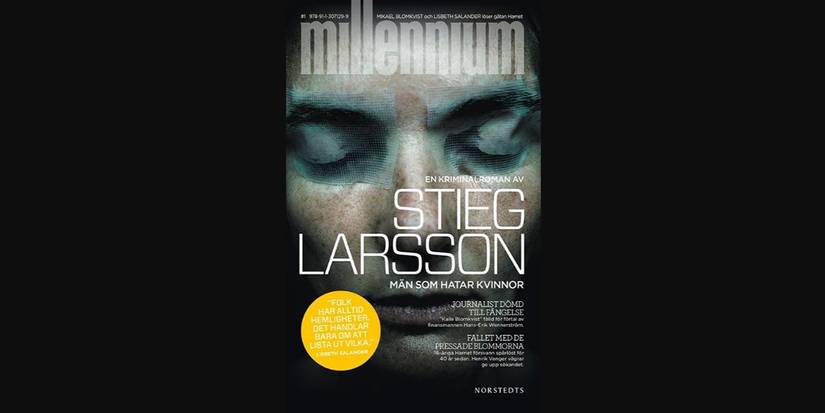
The Millennium Trilogy works because it features one of modern crime fiction’s most compelling partnerships. The trilogy opens with The Girl with the Dragon Tattoo, when disgraced journalist Mikael Blomkvist is hired by wealthy industrialist Henrik Vanger to investigate the decades-old disappearance of his niece Harriet. The case takes Blomkvist deep into the history of the Vanger family, but the story really comes alive once he begins working with the brilliant hacker, Lisbeth Salander, who has very little patience for anyone who underestimates her. Together, they uncover a mystery far darker than anyone could have expected.
That’s not the most interesting part, though, because the next two books in the series put Lisbeth herself at the center of the mystery. In The Girl Who Played with Fire, she becomes the prime suspect in a triple murder connected to an investigation into trafficking, which forced Blomkvist to dig into the parts of her past she has spent years keeping hidden. The Girl Who Kicked the Hornets’ Nest then carries those revelations directly into a fight against people inside the Swedish establishment who have spent years protecting themselves by controlling what happened to her. The constant escalation in Larsson’s three books sounds overwhelming, but unfolds perfectly. The trilogy keeps getting larger without ever losing the personality that made the first book so difficult to put down.
2 The Cartel Trilogy (2005–2019)

Don Winslow’s Cartel Trilogy feels less like a crime saga and more like watching an impending disaster unfold across three books. The Power of the Dog introduces DEA agent Art Keller and Adán Barrera, the heir to a powerful Mexican drug empire. The story begins with Keller attempting to bring down the Barrera organization, but quickly turns into a decades-long obsession that pulls in priests, hitmen, politicians, journalists, and people on both sides of the border. Winslow never limits the story to one investigation because every move against the cartels creates consequences somewhere else. By the time Keller thinks he understands the war he is fighting, the people, alliances, and institutions around him have already changed.
The Cartel pushes that conflict even further as Barrera returns to power and Mexico’s drug war becomes more violent and fragmented. Winslow uses this story to follow journalists, civilians, soldiers, and rival traffickers caught inside the same machinery. Then The Border brings the trilogy into its final stage, with Keller reaching the highest levels of the DEA only to discover that destroying one kingpin has created dozens of new problems. The scale at which all of this unfolds is truly impressive. Winslow keeps expanding the story without losing the personal rivalry that started everything, so Keller’s obsession with Barrera remains the thread that keeps the trilogy grounded in a dynamic that the readers just can’t look away from.
1 The Hannibal Lecter Trilogy (1981–1999)
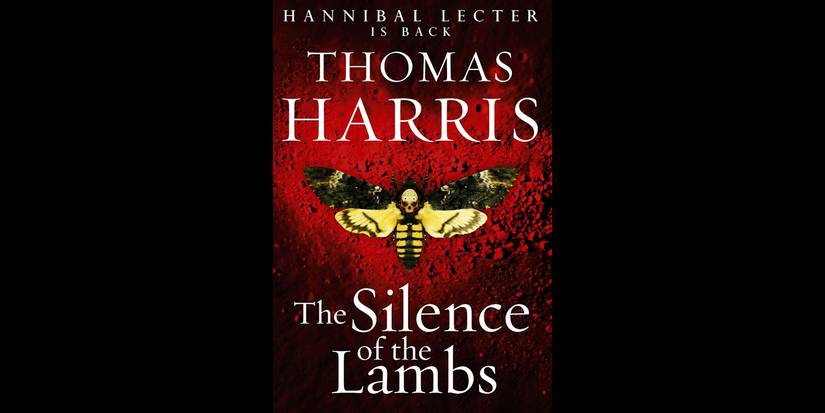
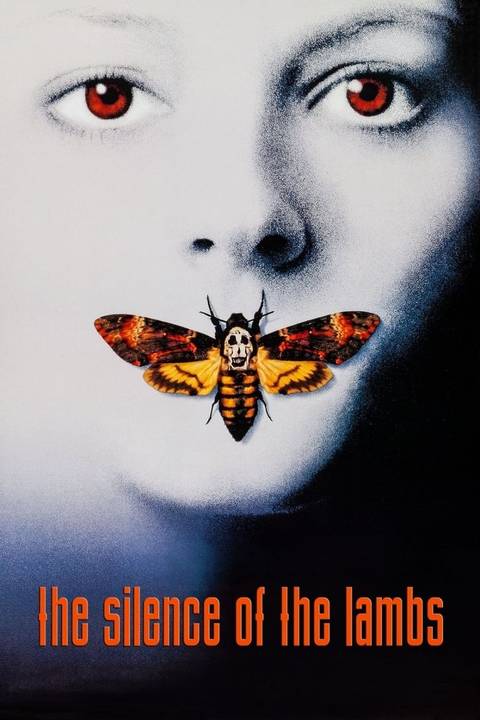
Thomas Harris’s original Hannibal Lecter trilogy is still in a league of its own. The story begins in Red Dragon, with former FBI profiler Will Graham being pulled out of retirement to hunt Francis Dolarhyde, a killer targeting entire families. Lecter is already imprisoned at this point, but Graham reluctantly turns to him for insight because nobody understands violent minds quite like he does. That puts Lecter mostly at the edges of the first story, yet every appearance makes it clear that he is far more dangerous than the man currently being hunted. Then, The Silence of the Lambs gives him a much larger role when FBI trainee Clarice Starling is sent to interview him while investigators search for serial killer Buffalo Bill. Their conversations become the heart of the book, with Lecter trading clues for increasingly personal information about Clarice.
Harris makes those exchanges feel like interrogations going in both directions, because Clarice may be trying to understand a killer, but Lecter is studying her just as closely. Then Hannibal completely changes the balance again. Seven years after his escape, Lecter is living freely under a new identity while Clarice has become an established FBI agent. Mason Verger, one of Lecter’s surviving victims, is also searching for him, which turns the final book into a hunt where almost everyone wants something different from the same man. What makes the trilogy so satisfying is the way Lecter’s role keeps evolving from one book to the next. That doesn’t mean Harris is reinventing his familiar serial killer, but changing how close the reader is allowed to get to him.
- Release Date
- February 14, 1991
- Runtime
- 119 minutes
- Director
- Jonathan Demme
- Writers
- Ted Tally, Thomas Harris
- Producers
- Edward Saxon, Kenneth Utt
KioskNews shows a cleaned-up reading view extracted from the publisher’s page — the original always lives on their site, not ours.