‘We can’t ride this storm’: the English farmers facing uncertainty after sustainability funding runs dry

On Tuesday morning, farmer Peter Hatley logged on to his computer at 10am. England’s 2026 sustainable farming incentive (SFI) was opening for applicants and, after three bad harvests, the money would be a lifeline.
But Hatley, who runs a 240-hectare family farm in Cambridgeshire, was faced with repeated error messages. He called the government’s helpline, which he says acknowledged there were problems with the scheme, but says by the time the problem was fixed, the money had gone.
“We tried our utmost. We were fully prepared; everything was checked and triple-checked and through no fault of our own we were denied this opportunity. I’m shell-shocked,” he says.
By 4pm on Tuesday, just six hours after it launched, the SFI had run out of money after a rush some compared with “the scramble for Oasis tickets”.
SFI is part of a package of payments that replaced the EU’s common agricultural policy, paying farmers to look after nature, soil and other public goods, rather than simply for farming and owning land. Figures suggest that up to 10,000 farmers with funding agreements that will expire in March 2027 either chose not to apply or could not apply.
Historically, Hatley says his farm could weather a level of uncertainty with confidence that, if he had one bad harvest, the next would probably be good. But in the face of the rapidly changing climate, this is no longer a given.
“In 2024 we had extreme rain, in 2025 a lack of rain caused depressed yields and then this year, I mean, it’s 25C at the end of September. We’re at breaking point. We can’t ride this storm,” he says.
Farmers across the country are reporting a devastating outlook, with crop-destroying heat and drought, and soaring fertiliser costs tied to the war in Iran piling pressure on what has already been a challenging few years.
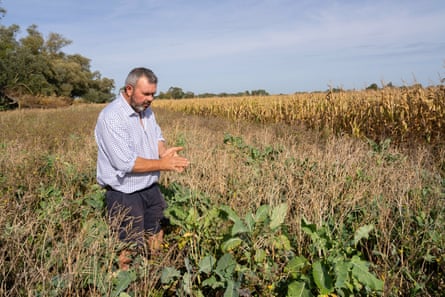
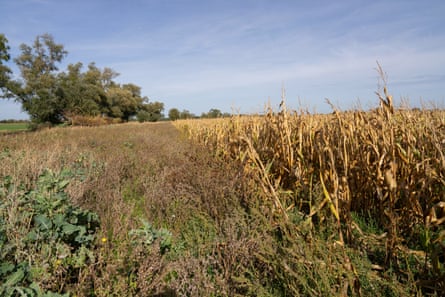
Hatley has spent years slowly diversifying his farm and creating space for nature but says without the SFI funding he has no choice but to reverse this.
“I will undo all the hard work over the last 20 years and move to a mono crop with maize. It’s not a threat, it’s what I will do for my family. It will break our hearts but my children come first. I’m just thankful my father is not here to see it,” he says.
“The skylarks, the lapwings, they’ll go. I’ll have to put more cows on my grass so the bugs and the dragonflies will suffer. If I said this to anybody else, it would sound like blackmail, but it’s not; it’s a business fact. How do I explain to the bank manager that I can’t afford to pay my mortgage this month because I put wood pigeons and birds of prey first?”
Martin Lines, chief executive of the Nature Friendly Farming Network, said the speed at which the funding ran out showed the “desperation” many farmers were experiencing.
Mat Cole, an uplands farmer in the south of England, could not log in to the scheme as it launched because he was busy at market day. But as soon as he could, he rushed home and by noon was ready to apply. After spending a few hours preparing his application, he submitted it at 3.50pm, only to be greeted by an error message.
“I then understood they had run out of money,” he said. “I thought I probably had a week or so to apply.”
after newsletter promotion
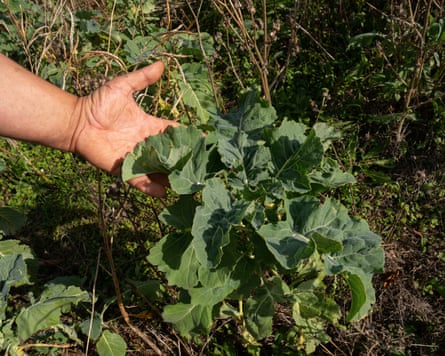
Like Peter, he has been left in an uncertain situation, not knowing if he can continue with the environmental improvements he has been making on his farm.
“We’ve engaged with these schemes to try and improve our environment. We’ve used the money to improve hedgerows, grasslands and water quality. To have the drawbridges pulled up like that, it’s just shambolic,” he says.
The last few years have presented farmers with a number of financial challenges, on top of dealing with a changing climate. Brexit meant losing access to the basic payment scheme (BPS) through the common agricultural policy; the BPS is being phased out, however, and replaced by a complex system of funds for environmental management, which seem much more likely to run out or be unexpectedly wound up for the year. This comes as basic costs for fuel and inputs are also soaring, thanks to global conflict.
The National Farmers’ Union is calling on the government to commit now to the 2027 SFI scheme.
“For food-producing businesses already questioning whether they can survive the year ahead, this clarity is critical,” said Robyn Munt, the union’s vice-president.
A Defra spokesperson said: “This year we ensured small farms and those new to SFI were prioritised – with an exclusive first window in the summer.
“In anticipation of high demand in the second window, ministers decided to allocate an additional £20m to the fund, on top of the £50m announced by the prime minister in August, so that we could fund as many agreements as possible. We have therefore allocated a total of £310m to new agreements under both windows.”
KioskNews shows a cleaned-up reading view extracted from the publisher’s page — the original always lives on their site, not ours.