The sal and the beetle: Why Madhya Pradesh is cutting 1.4 lakh trees to save the forest
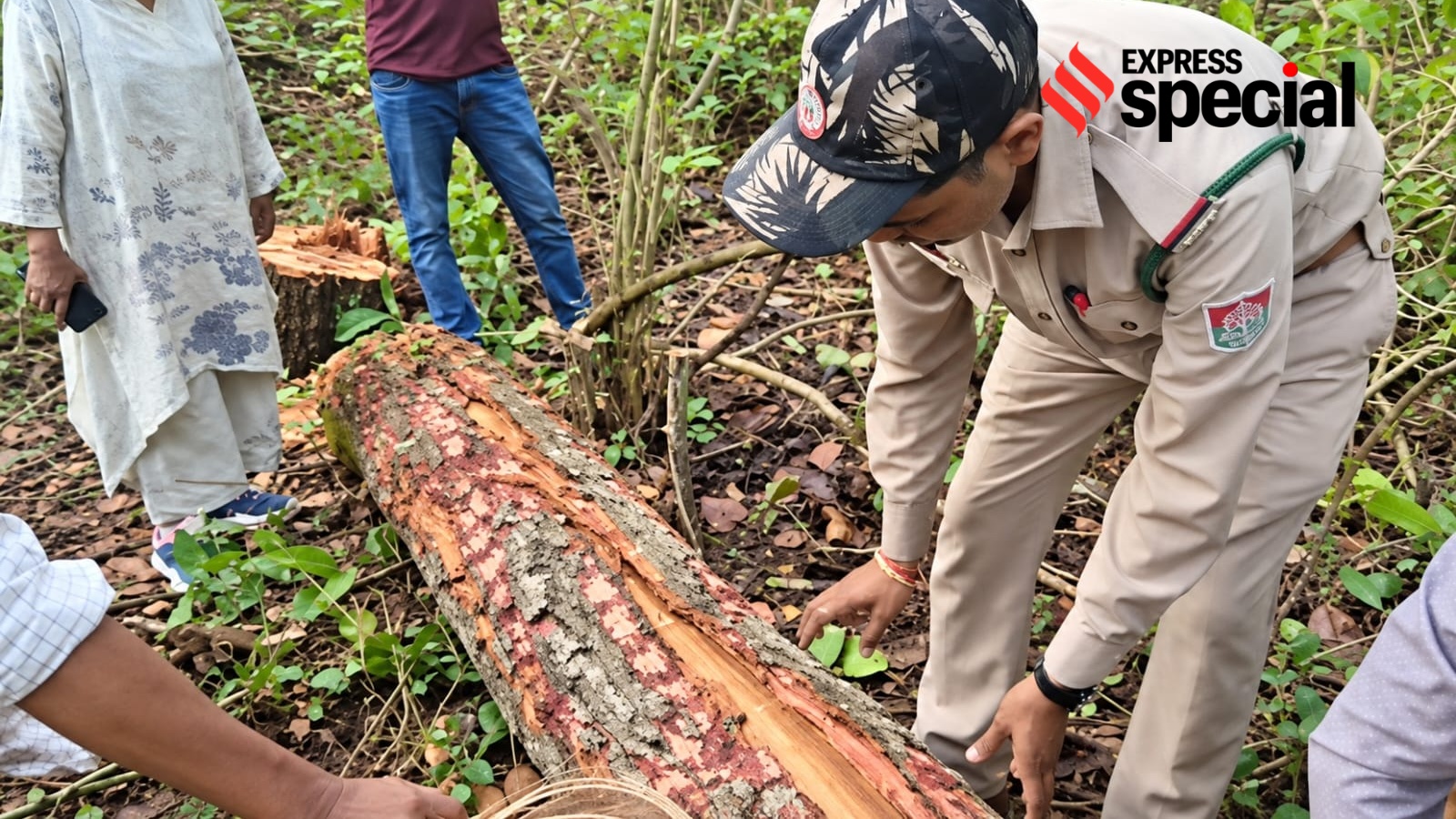
At first light, the most noticeable sound in the sal forests off the Dindori-Mandla road in Madhya Pradesh these days is of feet on dry leaves.
Villagers fan out toward trees that were felled and stripped of bark three days earlier, its sap drawn out. And there it lies, exposed on the trunks, their culprit – the sal heartwood borer, a longhorn beetle that has been a bane for these trees for over a century.
The villagers pick them by hand, drop them into bags or jars, and later turn them into necklaces – the beetle’s long feelers aiding the braiding process. The necklaces are not for any ornamental reason but to make it convenient for the villagers to carry them to eight collection centres in the district.
Each beetle is worth Rs 2. So far, this season, 19,25,118 of them have been collected, generating a bill of Rs 38.5 lakh for the state’s forest department.
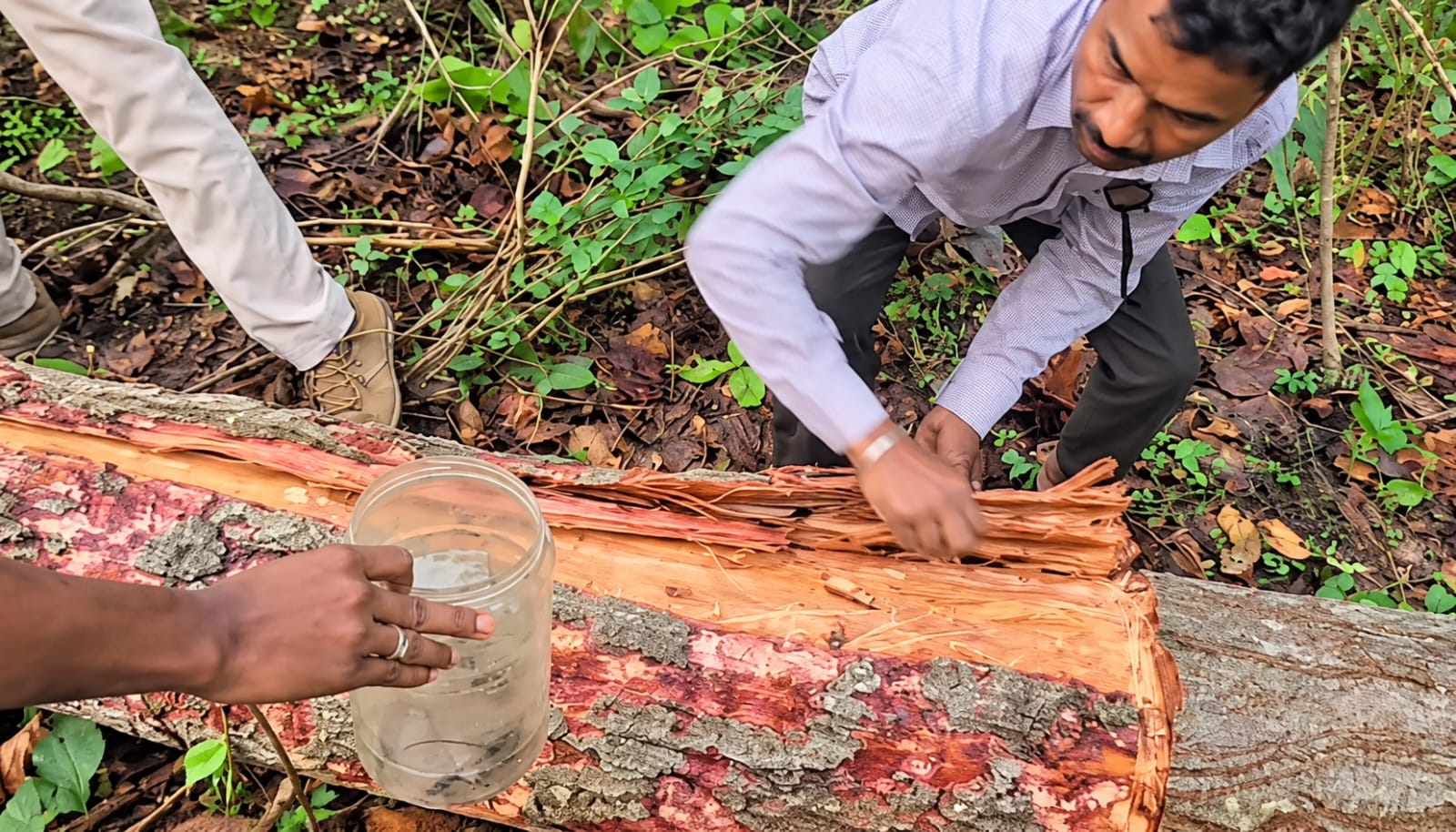 Sal timber has historically been prized for construction and for railway sleepers because of its strength and resistance to decay. (Express photo)
Hoplocerambyx spinicornis, commonly known as the sal heartwood borer, is a destructive pest first recorded as a threat to the trees in 1897. Now, it is at the centre of one of the largest sal-tree felling operations in Dindori in recent years following a major infestation. A couple of weeks ago, Centre approved the felling of 1.47 lakh infected sal trees.
Sal, or Shorea robusta, is among the dominant tree species of central India’s dry deciduous forests, forming the backbone of tracts that run across Madhya Pradesh, Chhattisgarh, Odisha, Jharkhand and parts of Uttar Pradesh. Its canopy makes up much of the habitat inside tiger reserves, such as Kanha and Pench.
Sal timber has historically been prized for construction and for railway sleepers because of its strength and resistance to decay. The tree continues to support a range of non-timber produce on which forest-dwelling and tribal communities depend — sal seed, pressed for oil and used in cooking and in the soap and confectionery industries; sal leaves, stitched into plates and bowls sold across local markets; and resin tapped from the trunk, used as dhoop in religious offerings.
Story continues below this ad
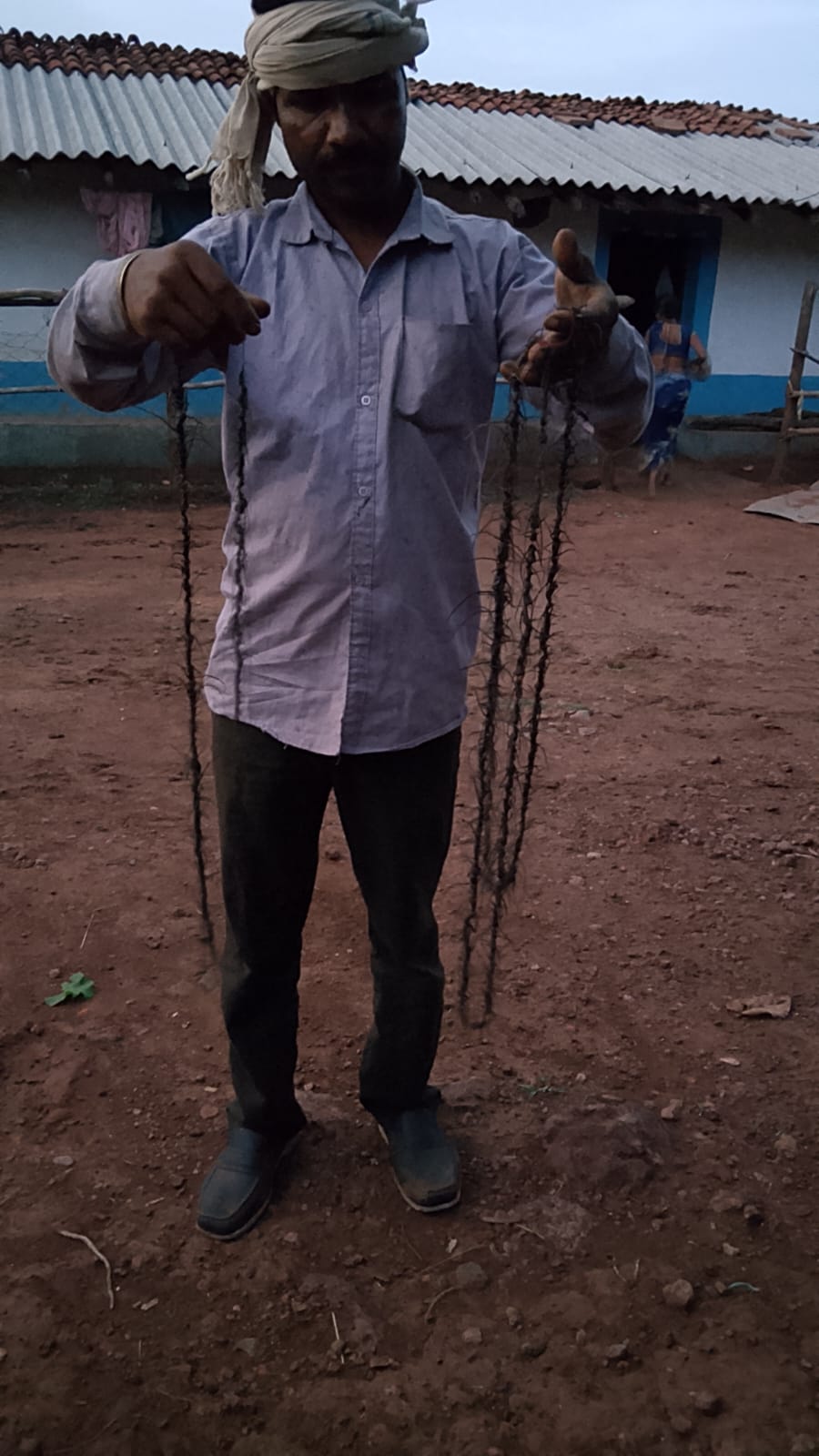 The necklaces are not for any ornamental reason but to make it convenient for the villagers to carry them to eight collection centres in the district. (Express photo)
In much of central India, sal groves also carry cultural and religious significance for tribal communities.
It is this combination of ecological weight and economic dependence that gives a sal-borer epidemic consequences beyond the forest department’s felling ledger.
Over 21 epidemics recorded so far
The insect does not attack indiscriminately: it tends to target weaker, less vigorous trees, though it becomes capable of killing sal of varying ages once a tree’s girth exceeds 20 cm. Mortality is largely concentrated among trees between 91 and 150 cm in girth, and the highest losses recorded is in the 121-150 cm range — precisely the mature, canopy-forming trees that anchor a sal forest’s structure and constitute the greatest share of its timber and non-timber yield.
More than 21 sal-borer epidemics have been documented across India to date. MP and neighbouring Chhattisgarh experienced a major outbreak between 1997 and 2000, during which roughly 3 lakh hectares of sal forest were affected out of the region’s 16.84 lakh hectare cover.
Story continues below this ad
Mandla — the district adjoining Dindori, and part of the same forest landscape now under felling orders — was the worst-hit at the time, with around 8 lakh trees damaged.
Dindori Divisional Forest Officer Ashok Solanki said, “We are dealing with a substantial number of affected trees.”
Working in tandem
The trapping and the felling are two distinct interventions running in tandem. The insect-collection campaign, carried out through what the department calls trap trees, is organised to pull adult borers out of the population before they can lay eggs and multiply. The felling of already-infected standing trees is a separate, larger sanitation operation, aimed at removing wood that is beyond saving and could otherwise seed further infestation.
Dindori SDO Forest Surendra Jatav explained the method in detail. “When the rains start, we start the trapping operation,” he said. Selected trees are felled and debarked to draw the insect out. “It comes and feeds on the sap and becomes exposed at night,” Jatav said.
Story continues below this ad
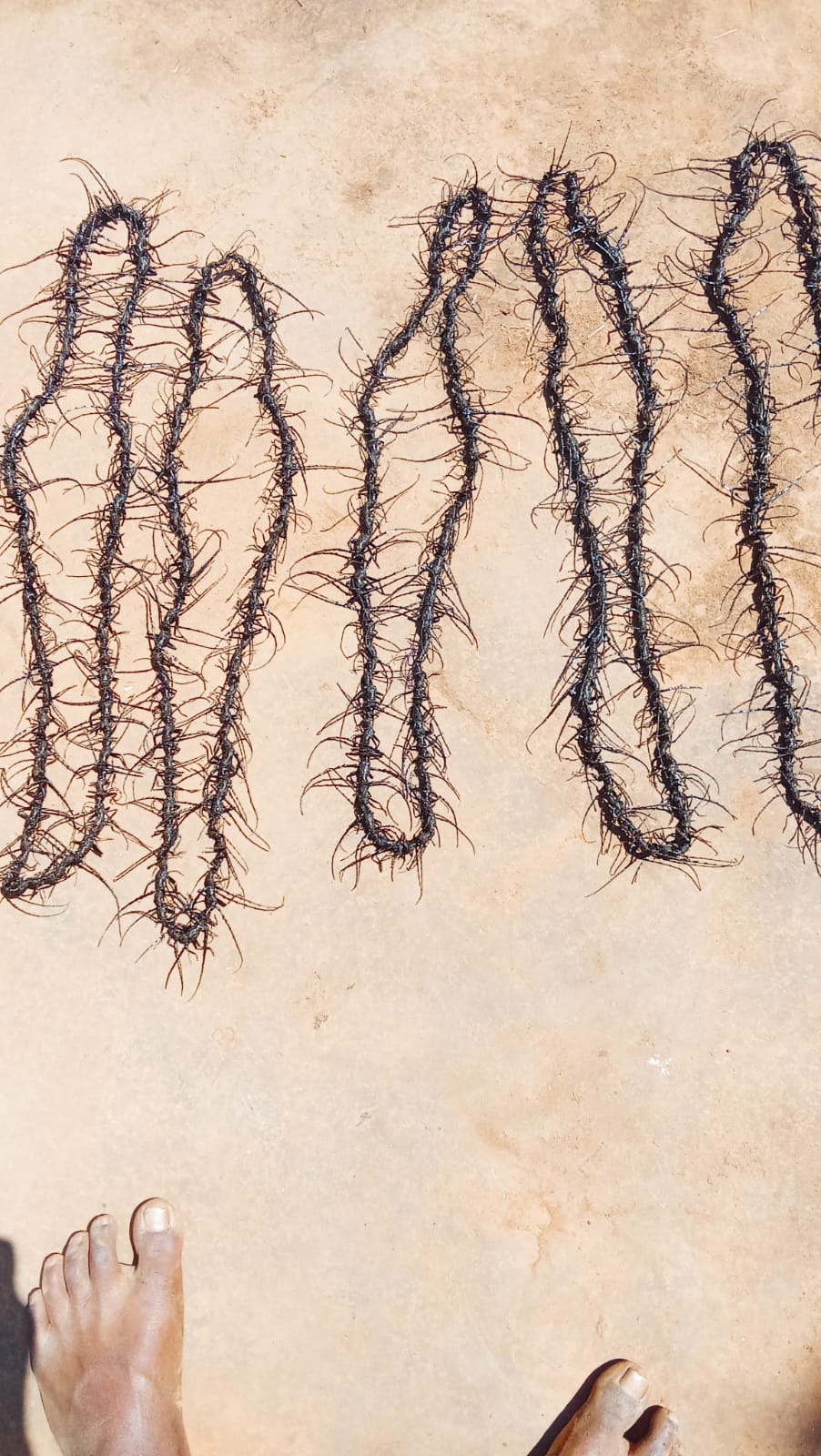 Each beetle is worth Rs 2. So far, this season, 19,25,118 of them have been collected, generating a bill of Rs 38.5 lakh for the state’s forest department. (Express photo)
The trees are left for three days before villagers return to collect the insects that have surfaced. “When they come out after sunrise, around 5-6 in the morning, we go and catch them by hand and put them in a bag,” he said.
The felling of infected standing trees, Jatav said, is being carried out manually with axes, through an agency, with villagers doing the actual cutting. The operation is expected to take around four months. The felled wood goes to the timber market, said Jatav.
The scale of the current outbreak, according to Jatav, is unusual but not without precedent. “It is an epidemic-type cycle. It repeats every 30 years,” he said, describing how infestation levels can swing sharply from one year to the next. “Last year it was very low; this year it has become very high,” he said.
Unusually high rainfall a factor
Story continues below this ad
Dr Uday Homkar, Senior Research Officer and in-charge of the Conservation Division at the State Forest Research Institute (SFRI), Jabalpur, has tracked sal borer outbreaks in MP for more than a decade. He pointed to weather as one contributing factor behind this year’s spike. He said that unusually high rainfall in the Dindori-Mandla region last year had helped create conditions favourable to the insect.
According to Homkar, the first and most decisive step in controlling an outbreak is catching it early. “As soon as the infection develops, it has to be detected,” he said. “We practise this detection.”
Once a tree is confirmed infected, removing it becomes necessary to prevent the infestation from spreading to its neighbours. But, he cautioned, control should not begin only when large numbers of trees were already affected — preventive trapping needs to continue year-round.
Homkar said researchers have also studied whether biological control — introducing natural predators of the borer instead of relying primarily on felling and trapping — could offer a more sustainable path. “Large-scale rearing and release have been studied, but their side-effects have not been studied enough.”
KioskNews shows a cleaned-up reading view extracted from the publisher’s page — the original always lives on their site, not ours.