John Ivison: Carney throws the NDP a lifeline with his new labour bill
There are signs of life in the NDP. The party’s support has crept up on cat’s paws since the last election, reaching double digits in some national polls in recent weeks.
Sign In or Create an Account
On Monday, the Liberals threw New Democrats another lifeline, in the form of Bill C-39, the government’s omnibus Building Canada Strong Act.
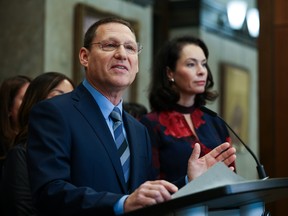
New(ish) NDP Leader Avi Lewis looked like a man recalled to life as he held a press conference on Parliament Hill on Tuesday, flanked by a number of Canadian union leaders. It was just like old times for the NDP, which was shut out of Ontario in the last election, losing seats in union-heavy towns such as Hamilton, Windsor and London.
Lewis has taken the party further left than many of its traditional supporters feel comfortable with, taking hardline positions against Zionism, fossil fuel development and free enterprise.

Columnist Jesse Kline keeps you up to date with what’s happening in Israel and the effects of antisemitism on life here in Canada. Friday mornings.
By signing up you consent to receive the above newsletter from Postmedia Network Inc.
A welcome email is on its way. If you don't see it, please check your junk folder.
The next issue of Channel Israel will soon be in your inbox.
We encountered an issue signing you up. Please try again
But on Bill C-39, he is on solid ground for progressives.
“I understand there’s a little Carney-mania going on in the world,” Lewis told reporters. “People are very enamoured of the prime minister internationally and here in Canada. (But) we’re trusting this man with massive changes that will accelerate projects at the cost of Indigenous rights, at the cost of the environment, and at the cost of protections for workers, including the fundamental right to strike.”
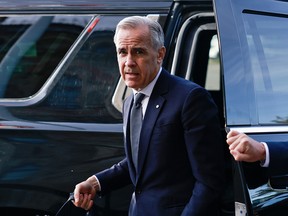
Prime Minister Mark Carney described C-39 as “the most consequential economic legislation” of this session.
It will give Canada “the tools it needs to build more, better and more efficiently,” said Transport Minister Steve MacKinnon.
It is split into three parts and amends at least 17 existing acts.
Part one concerns regulatory changes that “modernize, simplify and reduce duplication” in the approvals process, and “provide certainty to those deploying capital, while maintaining strong environmental protections.” The goal is to provide proposed projects with one impact assessment that takes one year.
Part two concerns integrating transportation routes and making airports, ports and railyards more efficient.
Part three is the most controversial and provides new rules around the right to strike. The government argues that it “raises the threshold” on its ability to end strikes using Section 107 of the Canada Labour Code, the federal back-to-work legislation.
In the most intractable disputes, the new bill directs the minister to appoint a special mediator, who is obliged to submit a public report to the minister if no agreement can be reached between the two sides. The minister can then direct the Canada Industrial Relations Board to order binding arbitration, if the strike is deemed to be having an adverse national impact. The minister is the sole arbiter of what constitutes the “national interest.”
The Liberals have introduced these measures in the full knowledge that they will be controversial with progressives, including inside their own party.
The Conservatives have been silent on the substance of the bill thus far, in the full knowledge that many, perhaps most, of their supporters back measures to simplify the approvals process and reduce days lost to strikes.
Only the NDP is united — all five of their MPs.
The parliamentary caucus stood behind Lewis as he spoke about the bill and the associated measure of privatizing operations at Canada’s largest airports. At the Canada Investment Summit last week in Toronto, Carney said the government will pursue an Australia-style leased-operator model, under which Ottawa would retain ownership of the underlying land. While not included in C-39, there were provisions in the new legislation that flow from privatization, such as stronger protections for workers when contracts for services like de-icing are flipped between providers.
Lewis was also joined at his press conference by executives from the Canadian Labour Congress (CLC), Unifor and the International Association of Machinists and Aerospace Workers.
Lily Chang, the CLC’s secretary-treasurer, said privatization will result in higher fees or fewer services, pointing to the experience in Australia where Sydney airport cut 40 per cent of its workers after post-sale worker-protection statutes expired.
“Canada needs investment. But in the middle of a trade war, handing over profitable public infrastructure is exactly the wrong move,” she said. On the C-39 labour provisions, she said they will not create stability or labour peace. “They risk doing the exact opposite,” she said.
Lewis has spent the first six months of his leadership fighting the most debilitating political wasting syndrome: irrelevancy. Through no particular resourcefulness on his part, he is now the leader of the resistance.
“No one voted for (airport privatization). The government can’t even explain why we need to do it,” Lewis told reporters. “The realities of privatization are always the same: a handful of investors get rich, and workers and travellers pay the price.”
He offered the example of Highway 407 in Ontario, which was sold for $3 billion in 1999 and is now estimated to be worth $40 billion, after Ontario drivers have paid $28 billion in tolls.
“The NDP is here to say that you don’t make Canada stronger by attacking the workers who build it each and every day, and you don’t save Canada by selling it off piece by piece,” Lewis said.
As someone who has been arguing for years about the need to remove barriers that stop the private sector from investing in Canada, I am firmly with the government on this one. By one calculation, Canada was third behind only Belgium and France in terms of annual average work stoppages due to labour disputes.
Affluence is not guaranteed but stagnation need not be either.
Yet, Lewis is tapping into bubbling discontent among progressives. “The prime minister should explain why the climate guy from a few years ago has turned into Mr. Oil and Gas,” he said.
He pointed to the “massive expansion” in cabinet power inherent in C-39 that will allow ministers to suspend environmental and labour regulations, citing “the national interest,” which is not clearly defined anywhere.
“For people still willing to go along, this is a big gamble,” he said.
Employment Minister Patty Hajdu told reporters on Monday that the new rules provide “additional transparency.”
“The minister will have to show his or her work, clearly outlining why the need for arbitration or dispute mechanisms is necessary,” she said. “There are no changes that we are proposing that weaken the right to strike.”
But the honeyed words are at odds with the facts.
The prime minister has been clear that C-39 is, in part, designed to cut down on the number of disruptive labour disputes impacting ports, railways and airlines. Nearly five million union members across Canada may not appreciate that effort.
National Post
Join the Conversation
This website uses cookies to personalize your content (including ads), and allows us to analyze our traffic. Read more about cookies here. By continuing to use our site, you agree to our Terms of Use and Privacy Policy.
KioskNews shows a cleaned-up reading view extracted from the publisher’s page — the original always lives on their site, not ours.