3 Parties, 3 Wounds: Bhagwant Mann Turns Punjab's Past Into Poll Weapon
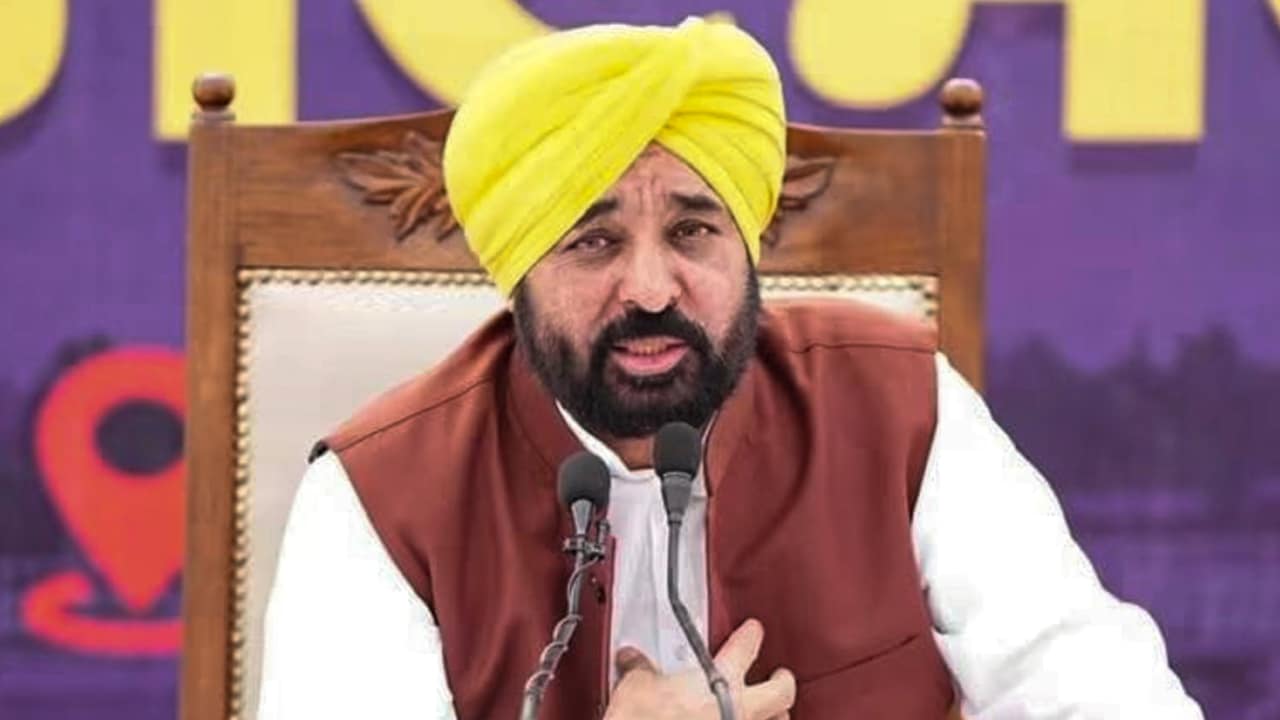
Punjab Chief Minister Bhagwant Mann appears to have shifted his political campaign into top gear as the state moves closer to the 2027 Assembly elections. After initially focusing on presenting the Aam Aadmi Party (AAP) government's report card and highlighting its achievements in governance, employment, education, healthcare and welfare, he is increasingly taking the offensive against opposition parties by invoking some of Punjab's most emotionally charged and politically sensitive issues.
In a sharp escalation of his political attack, Mann has sought to put all three major opposition parties - the Congress, Shiromani Akali Dal (SAD) and BJP - on the defensive, accusing them of having a questionable record on issues that continue to shape Punjab's political discourse.
His latest political messaging suggests that AAP is no longer content with merely asking voters to assess its government's performance. Instead, it wants the electorate to compare its record with that of the parties that ruled Punjab and the Centre before it.
The strategy is significant because Mann is choosing issues that go beyond conventional political arguments over roads, schools, hospitals, electricity and jobs. He is bringing back painful chapters of Punjab's recent history and attempting to turn them into a political accountability test for the opposition.
3 Parties, 3 Painful chapters
Mann's latest attack follows a political line in which he has assigned a specific historical and political liability to each of his principal rivals.
Targeting the Congress, Mann has invoked the 1984 anti-Sikh violence and Operation Bluestar, accusing the party of having inflicted deep wounds on Punjab. His campaign rhetoric seeks to remind the voters of the Congress government's role in the military operation at the Golden Temple and the violence that followed the assassination of then prime minister Indira Gandhi in 1984.
By bringing up these issues, Mann is attempting to put the Congress on the defensive at a time the party is trying to project itself as a credible alternative to AAP in Punjab. The Congress has been attacking the Mann government over law and order, drugs, unemployment and governance, but the chief minister appears determined to make the party answer for its historical legacy as well.
The Akali Dal, meanwhile, is facing Mann's renewed offensive over the 2015 sacrilege incidents and the subsequent police firing at Behbal Kalan and Kotkapura.
The sacrilege incidents remain one of the biggest political liabilities for the Badal-led Akali Dal. The party suffered a major electoral setback in the 2017 Assembly elections, with the controversy over the desecration of the Guru Granth Sahib and the police action against protesters becoming a major factor in the political backlash against the then SAD-BJP government.
Mann has repeatedly accused the Akali leadership of failing to deliver justice in these cases. By raising the issue during his campaign, he is attempting to remind voters of the events that contributed to the collapse of the Akalis' political dominance in the state.
The Akalis are also trying to turn the tables on AAP. In August 2026, Bathinda MP Harsimrat Kaur Badal questioned the Mann government over its failure to deliver justice despite repeated promises. She also challenged AAP over the hundreds of sacrilege incidents reported in subsequent years.
This indicates that sacrilege is unlikely to remain a one-sided political weapon in the run-up to the elections. The Akalis are attempting to shift the debate towards the Mann government's own record, while AAP continues to hold the previous SAD-BJP regime accountable.
The BJP is facing a different but equally sensitive political attack from Mann - the deaths of farmers during the year-long agitation against the three now-repealed farm laws.
Mann has repeatedly questioned how the BJP can seek votes in Punjab after more than 700 farmers lost their lives during the agitation. In his latest messaging, the figure of 750 farmers has been invoked to underline the anger that continues to exist among sections of Punjab's farming community against the party.
The issue assumes greater political significance amid renewed speculation over a possible SAD-BJP alliance ahead of the 2027 elections. Mann has sought to use the farm laws controversy to question the Akalis as well, arguing that a party which once opposed the BJP over the farm laws is now considering joining hands with it again for electoral gains.
In simpler words, Mann is attempting to turn the possible reunion of the two former allies into a political liability for both.
From Campaign To Confrontation
The change in Mann's campaign approach is particularly interesting when seen against the AAP's initial decision to make governance its principal electoral pitch.
On September 20, 2026, the AAP formally launched its campaign for the 2027 elections from Ludhiana, with Mann releasing the party's election pamphlet and pitching the government's four-year performance as its biggest electoral asset. The party subsequently began a statewide door-to-door outreach campaign from Dhuri, taking its report card directly to households.
The emphasis was on communicating the benefits of free electricity, Aam Aadmi Clinics, government school reforms, free education, pensions, free ration and financial assistance for women under the Maavan-Dheeyan Satkar Yojana.
Mann also highlighted the government's employment record, claiming that around 71,000 government jobs had been provided on merit. The AAP's argument was that people should judge the government on the basis of the benefits they had received rather than the political allegations being levelled by the opposition.
But as the election battle gathers momentum, the campaign is increasingly acquiring a confrontational character.
Mann is now combining the government's development narrative with an aggressive political attack on the opposition's past. This suggests that AAP wants to fight the election on two fronts: what it claims to have delivered during its tenure and what it alleges the previous governments did to Punjab.
Rather than allowing the Congress, SAD and BJP to dictate the political narrative around unemployment, drugs, law and order and governance, the AAP is trying to shift the conversation towards the historical baggage of its rivals.
Opposition's Counter
The strategy, however, is not without political risks for the AAP.
The sacrilege issue, in particular, can cut both ways. While the Badals remain under pressure over the incidents of 2015 and the Behbal Kalan firing, the Mann government is also being questioned over its own promise of delivering justice. The Congress has repeatedly accused AAP of failing to fulfil its assurance of taking action in the cases within 48 hours of coming to power.
Similarly, the BJP is expected to counter Mann's allegations by highlighting the Centre's decisions on the farm laws and their eventual repeal, while also raising questions about the AAP government's handling of Punjab's present-day challenges.
The Congress, too, is likely to counter the 1984 narrative by focusing on the Mann government's governance record and the performance of its own leadership.
For Mann, therefore, the challenge will be to ensure that the political debate does not remain confined to historical accusations but also allows AAP to defend its own four-and-a-half-year record.
The Bigger Political Message
With 2027 approaching, Mann's campaign is increasingly looking like an attempt to redefine the terms of the electoral contest. The AAP began by asking voters to evaluate its report card. It is now asking them to evaluate the opposition's historical record as well.
The underlying message is clear: Congress must answer for 1984, the Badals for sacrilege and Behbal Kalan, and the BJP for the deaths of farmers during the farm laws agitation.
Whether this strategy succeeds in translating emotional issues into votes is to be seen. But one thing is evident: Mann is preparing for a much more aggressive election campaign, one in which he intends to keep his opponents on the defensive rather than allowing them to corner his government exclusively over its performance.
For AAP, the battle is no longer just about showcasing what it has done in Punjab. It is increasingly about reminding voters why the three opposition parties should not be trusted with power again.
KioskNews shows a cleaned-up reading view extracted from the publisher’s page — the original always lives on their site, not ours.