Before Robert Pattinson, James Bonds ranked from Sean Connery to Daniel Craig
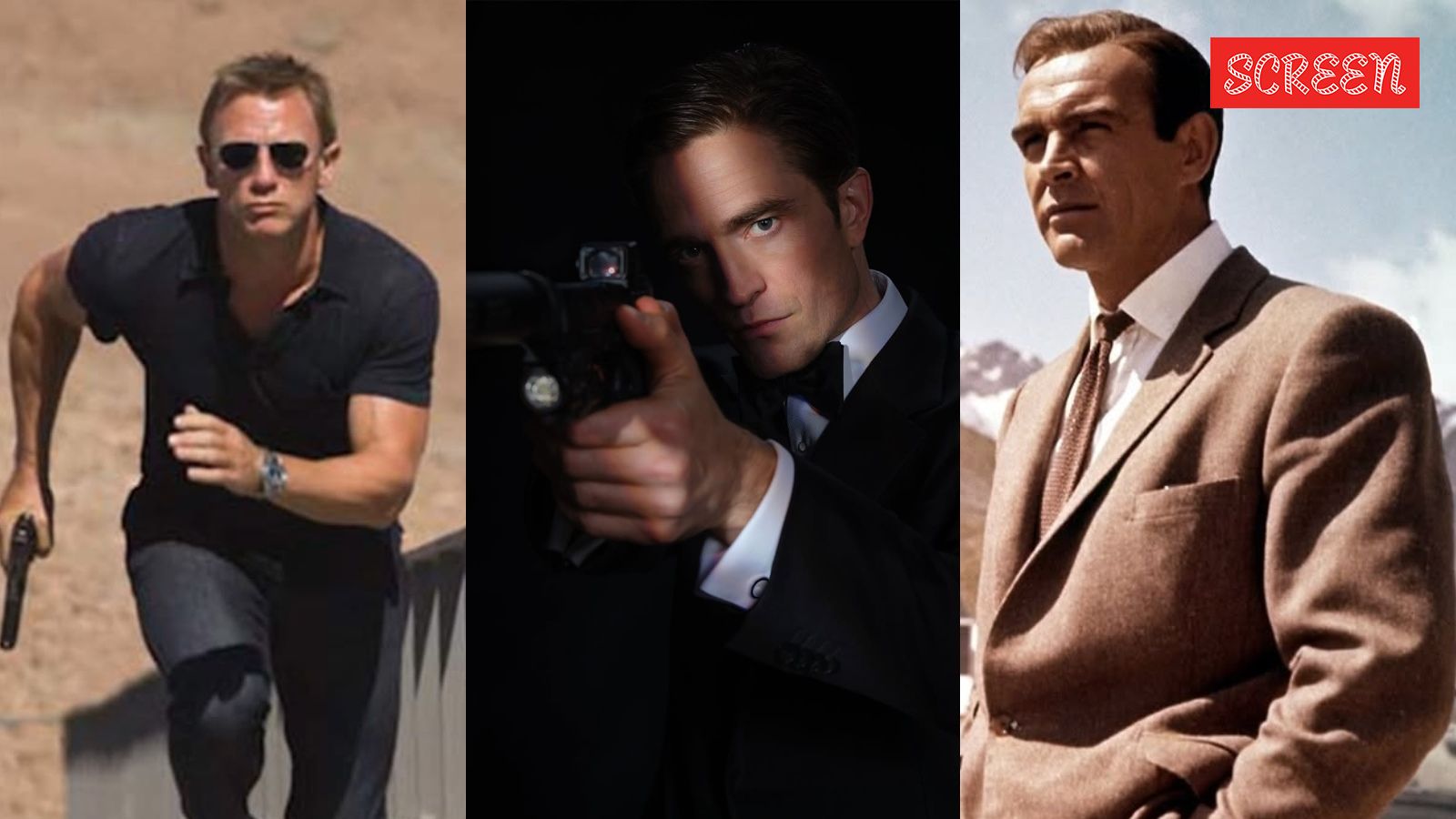
In Imtiaz Ali directorial Rockstar’s song “Kun Faya Kun”, Ranbir Kapoor looks up at the infinite sky, and Rahman’s vocals go: ‘Jab kahin pe kuch nahi, bhi nahi tha’ (When there existed nothing, nowhere). Well, I might have the answer to that. When there was nothing, there was Godzilla, followed by James Bond, two of the longest-running franchises in the history of cinema. Recently, Robert Pattinson’s casting has put the spotlight back on the British agent who has been in fashion since the 60s. Before we get to see what Pattinson brings to the character, I sat down to rank my favourite and not-so-favourite portrayals of Bond, James Bond (apologies in advance if this list offends you).
6. George Lazenby (1969)
Movie: On her Majesty’s Secret Service
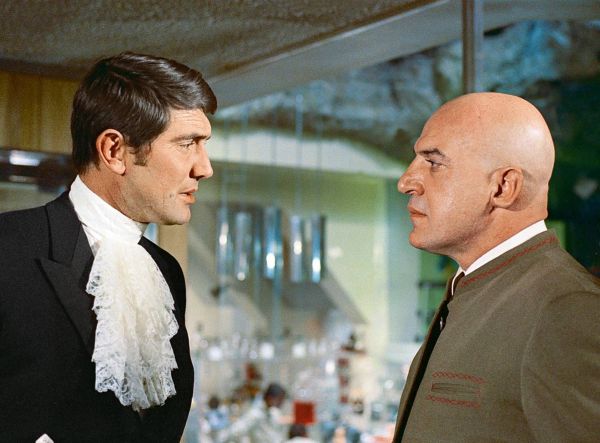 George Lazenby and Telly Savalas in a still from On Her Majesty’s Secret Service. (Photo: James Bond 007/Facebook)
George Lazenby couldn’t act, and it wouldn’t be unfair to say that was not his strongest suit. One can argue that he only had one film (On her Majesty’s Secret Service) to prove his prowess, but his performance falters even for a debut. Take the scene where 007 asks Moneypenny (Lois Maxwell) to write his resignation note. Even though Bond has most dialogues in this scene, it is Moneypenny who gets more screentime. I feel that it would have been done to take audiences’ mind off Lazenby’s clunky, monotonous dialogue delivery. Lazenby finds it hard to own Bond’s persona. Throughout the film, he seems awkward and out of place.
I would quote another scene to support my argument. Bond is getting married to the woman he dearly loves, Tracy (Diana Rigg). Guests are enjoying the festivities, Tracy is being told by her father to always obey her husband, and then there appears Bond; an awkward man with boyish charms (clearly not a compliment for any Bond actor), unsure of how to carry himself.
Bond and Tracy soon get married and drive off to their destination. En route, Tracy is assassinated. Bond jumps into the car, and Tracy’s body drops into his arms. This has to be the most emotionally devastating moment for James Bond, but Lazenby doesn’t let you take this emotion home. He just sits there, trying to act emotional. Composer John Barry’s score wants you to feel the character’s agony, but Lazenby is not interested in taking the baton off his hands. As a result, you end up feeling nothing because your hero seems to feel nothing.
5. Timothy Dalton (1987-1989)
Movies: The Living Daylights, License To Kill
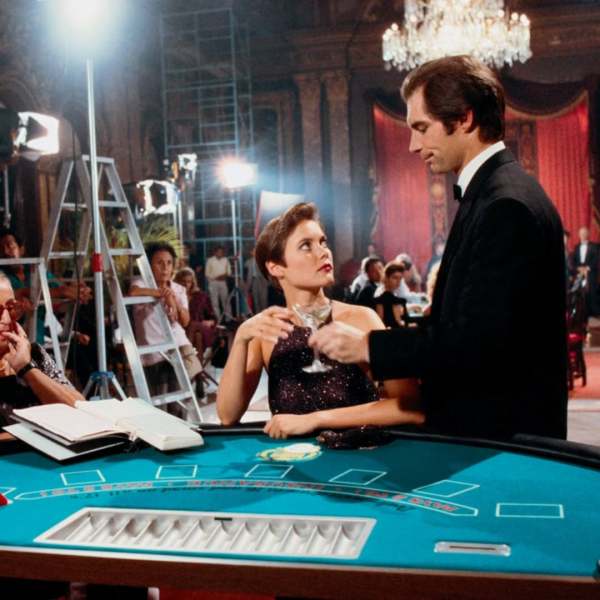 Timothy Dalton appeared in two Bond films. (Photo: James Bond 007/Facebook)
I have had a Bond theory for the longest time; any 007 is just a bad day away from being a perfect Bond villain. With Dalton’s Bond I’ve had a feeling that he was a good 007, but he would have been a better Bond villain. Dalton’s films also witnessed a tonal shift in how the character was presented. Unlike Moore’s Bond, he wasn’t interested in seeking out pleasure in life. Instead here was a darker Bond. In both the films Dalton acted in, there are scenes where his face was lit to add a sense of mysticism, and shrouding darkness around his character. In a scene from The Living Daylights, Bond gets a balloon with a message: Smiert Spionam (Russian for ‘Death to Spies’). Bond, who is usually in control, is seething with rage. With his fixated eyes and hardened face, he looks nothing less than a merciless killer. That’s why I’ve always felt that Dalton might have been a good Bond, but we lost on the possibility of him being a potent villain.
4. Pierce Brosnan (1995-2002)
Movies: GoldenEye, Tomorrow Never Dies, The World is Not Enough, Die Another Day
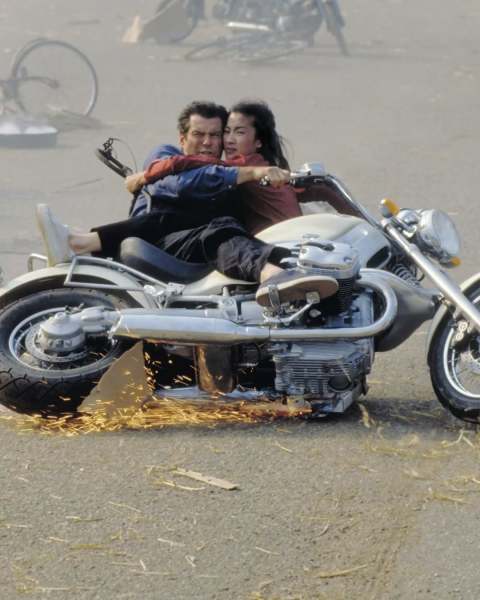 TV Show Remington Steele was partly responsible for Brosnan’s casting. (Photo: James bond 007/Facebook)
You like the Bond you grow up with. In a similar fashion, Pierce Brosnan was my first favourite Bond. Then with time, I came to realise his limitations as 007. Being a first, Sean Connery created a template for the character, which was further cemented by Roger Moore. Brosnan, on the other hand, served as an extension to both of these previous interpretations. Surely he had the looks, penchant for thrill, the style and suave needed for 007, but his portrayal seemed to further extend a line, instead of making one of his own.
Brosnan’s Bond arrived in a post Cold-War world, the times when makers had the pressure of repackaging the character to make it relevant to current times. Instead of incorporating global events and add more gravitas to the character, makers went for the easy way. They served a Bond whose resume was backed by two factors – his dialogues laced with double entendre, and his large reservoir of gadgets – a Mobile Phone which also functioned as a taser, a remote controlled BMW, and glasses which let Bond see through clothes and walls (which Abbas-Mustan also ‘borrowed’ for Baadshah). Brosnan’s Bond films were heavily invested in fancy gadgets, instead of carving out a distinctive voice for the character.
Story continues below this ad
3. Sean Connery (1962-1971, 1983)
Movies: Dr. No, From Russia with Love, Goldfinger, Thunderball, You Only Live Twice, Diamonds are Forever, Never Say Never Again
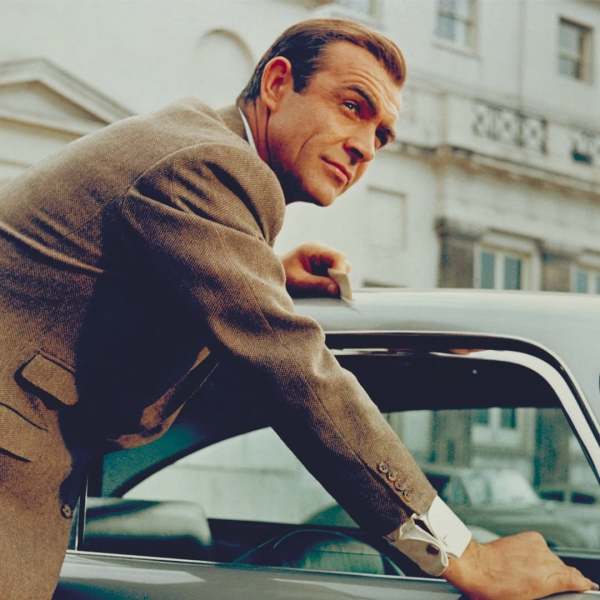 Ian Fleming was against the idea of Sean Connery’s casting. (Photo: James Bond 007/Facebook)
When asked to quote their favourite Sean Connery scene, most might point to his introductory scene. Bond is at a casino, playing baccarat with Sylvia Trench (Eunice Gayson). We don’t see him at first. Sylvia is playing against a pair of hands swiftly moving cards at the table. The fingers move briskly, with the baize offering no resistance. Sylvia compliments on his luck and asks his name. This is the exact moment when cinema history registered an iconic line: ‘Bond, James Bond’. Sean Connery, with his kempt hair, cigarette tucked between his lips, unblemished tough skin and wrinkle-free black tux had become the face for Ian Fleming’s imagination.
There is another scene from Dr. No which should get more citation that it does. 007 meets the evil Dr. No who plans on world domination. Ursula Andress’ Honey Ryder is also at the table. In the midst of making threats, Dr. No realises that ‘this is no place for a woman’. So he asks his henchmen to drag her away. At this, Bond jolts out of his seat with a wine bottle in hand, ready to strike it any minute. Dr. No mentions that it is a Dom Pérignon 55, and would be a pity to waste it. Upon this Bond carefully places back the bottle, wipes his hands and says: ‘I’d prefer the 53 myself’. This is what Sean Connery brought to the character; a man oozing machismo, confident in his skin and always in control of the situation.
Sean Connery’s Bond only stood out to me till I had little to zero political correctness. Once that realisation struck, Connery’s Bond started aging like milk to me. I wasn’t interested in seeing a hero shut down a woman just because ‘men are talking’. Connery’s Bond became a victim of its time and obviously patriarchy.
2. Roger Moore (1973-1985)
Movies: Live and Let Die, The Man with the Golden Gun, The Spy who Loved Me, Moonraker, For Your Eyes Only, Octopussy, A View to a Kill
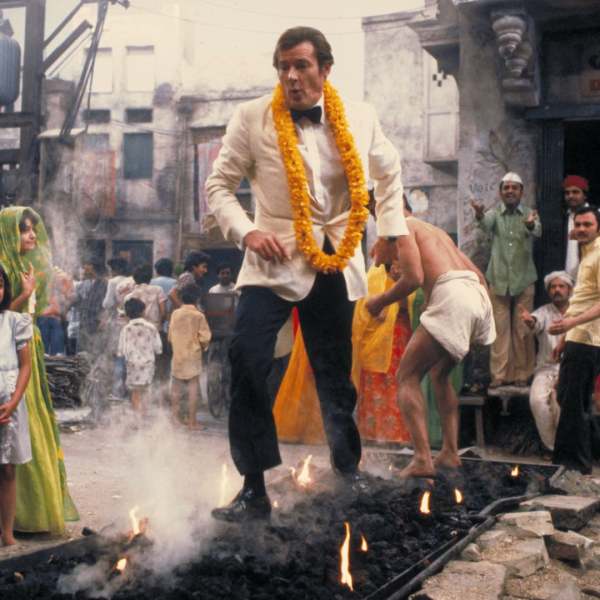 Roger Moore in a still from Octopussy. (Photo: James Bond 007/Facebook)
Roger Moore’s Bond films were fun, wild and campy, promising nothing more than that. My introduction to Roger Moore came through Octopussy (1983) after learning that a large portion of it was shot in Udaipur. After watching the film, two things bothered me — the stereotypical western gaze for India, and how Kabir Bedi’s Gobinda was able to crush dices to dirt with his bare hands. When Gobinda was trying to intimidate Roger Moore’s Bond, he didn’t flinch, didn’t strain his eyebrows, and just maintained his composure. This attitude (with a mix of dry humor) made Moore’s Bond different. He would do everything with so much ease, whether it be delivering catchy one-liners or electrocuting a henchman’s metallic jaw, that all of it looked effortless for him.
Story continues below this ad
1. Daniel Craig (2006-2021)
Movies: Casino Royale, Quantum of Solace, Skyfall, Spectre, No Time to Die
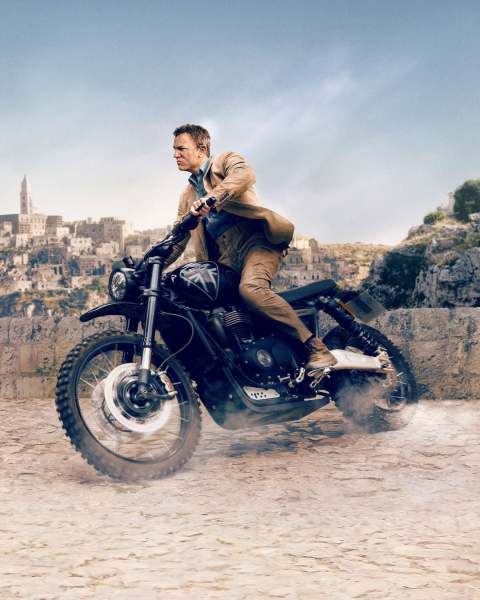 Craig became the only Bond to have received an arc. (Photo: James Bond 007/Facebook)
Just after Pattinson’s news came out, I received a call from a friend asking me to suggest a ‘solid, stand-out Bond film’. My answer: Skyfall. Since the 60s, nearly every decade has had their share of Bond films but if I was asked to rank my favourite out of them all, the answer would still be Sam Mendes directorial Skyfall. With time, I have found myself going back to scenes from this film, especially when Silva (Javier Bardem) meets James Bond (Daniel Craig). This scene stands out as a testament to what Craig brought to 007.
Bond is held captive, with his hands tied at back. A lift halts at his eye level. From a long shot, enters Silva (Javier Bardem). Writers Neal Purvis, Robert Wade and John Logan would have scribbled ‘Villain Closing in’ on their index card while summarising this scene. Silva narrates a little yet unnerving story about his grandma, an island and the starving rats who were trapped and eventually devoured each other. By the time he walks up to Bond, his story concludes and a threat is made – Bond and Silva are the last two starving rats on this island.
I could sense that like me, Bond too was intimidated by this story. His confidence has taken a slow hit. He contracts his eyes and tries to counter Silva, who pulls a chair and decides to shred into his psyche bit-by-bit. Silva brings up Bond’s over-reliance on alcohol, and pills and Bond responds: ‘Don’t forget my pathetic love of country’. Silva, like a menacing predator, closes in and hits where it’s going to hurt the most; he makes Bond question his reverence for M (Dame Judi Dench).
He later reveals how Bond failed at every evaluation, whether it was psychological or medical, and how he had always been unfit for the job, how he had been lied to all this time. It doesn’t take Silva much time to get into his head, and this is when you sense a sudden discomfort in Bond’s body language. Internally, he is trying his best to maintain the stoicism, the dry Bond humor, but his body seems to fail him. On paper, this scene belongs entirely to Javier Bardem but for me, Craig managed to achieve something which was left untapped by all the previous Bonds – this British assassin, this man with an arrogant smug could also be vulnerable. This hero who has a carefully constructed persona now finds all of it crashing down. At the end of this 6-minute scene, Bond’s idea of self has taken a major hit. Craig makes it clear with his blue distinctive eyes that an internal shift has taken place, and Silvia played a catalyst to it.
KioskNews shows a cleaned-up reading view extracted from the publisher’s page — the original always lives on their site, not ours.