Andrew Scott Gives a Career-Best Performance in This Powerful New Biopic
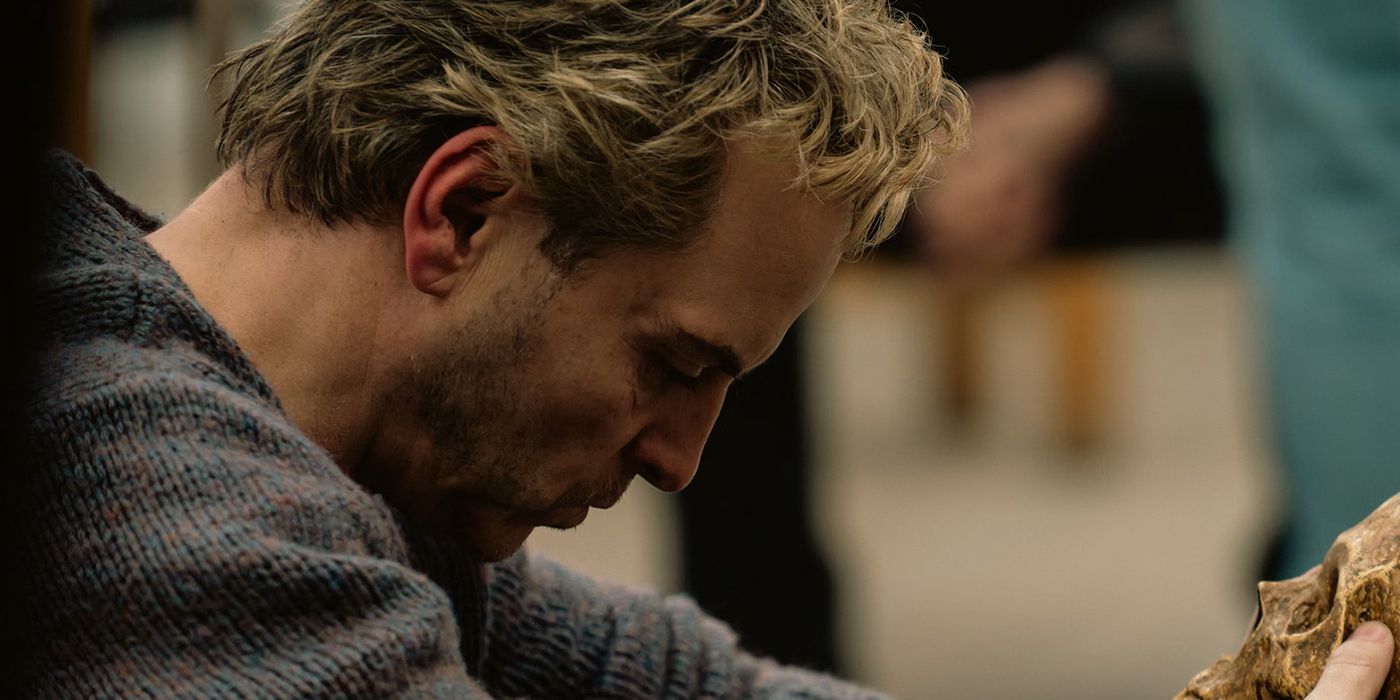
- Collider's Steve Weintraub talks with Andrew Scott, Billie Piper, and Stephen Beresford for Elsinore at TIFF 2026.
- Scott discusses his approach to Ian Charleson and Charleson's take on Hamlet.
- The trio talks about honoring and celebrating the lives of those lost to AIDS, bringing levity to a tragic true story, and their creative decisions throughout filmmaking.
In 1981, actor Ian Charleson starred in Chariots of Fire, which would be the first People’s Choice Award winner at the Toronto International Film Festival to take home the Oscar for Best Picture. Now, Andrew Scott (Pressure) has wowed audiences at TIFF 2026 with his portrayal of the Scottish actor in Simon Stone’s (The Woman in Cabin 10) moving drama Elsinore.
The movie chronicles Charleson’s desire to return from the silver screen to the stage, back to his theater roots. When the role of a lifetime opens up for Charleson, the part of Hamlet at London’s National Theatre, he leaps at it — but his dream is marked by an AIDS diagnosis. As he confronts this illness head-on, Charleson refuses to let anything take this opportunity away from him, and strives to deliver the performance of his lifetime. Elsinore also stars Oscar winner Olivia Colman (The Roses), Joe Locke (Heartstopper), Billie Piper (Doctor Who), and Johnny Flynn (Emma).
At the Collider Media Studio, presented by Campari and The Cayman Islands, our own Steve Weintraub spoke with Scott, Piper, and screenwriter Stephen Beresford (Tolkien). In this interview, they discuss choosing to honor the lives of those affected by AIDS through the celebration of life, with levity, and by focusing on Charleson’s vigor for life and live theater, and the amalgamation of history and creative freedom. Scott discusses his interpretation of Charleson and Hamlet, Piper shares how she prepared to play Patsy, and they detail Shakespeare’s iconic “To Be or Not to Be” speech in the film. Watch the full conversation in the video above, with a transcript provided below.
'Elsinore' Is a Love Letter to Ian Charleson, Theater, and the Meaning of Life
"If Hamlet asks, 'To be or not to be,' the answer is to be, as far as Ian Charleson is concerned."

COLLIDER: I really want to start with congratulations on the movie. Andrew, your performance is spectacular. The entire movie, I'm so happy you made it. I have so much to say, but before we get into that, we're going to have a few more fun questions before we get serious. I'm doing a supercut for everyone who's coming in, and it's a very simple question: Where do you like to sit in a movie theater?
STEPHEN BERESFORD: Front. Near the front, about three rows back, center. I like to be overwhelmed.
ANDREW SCOTT: I don't like to be overwhelmed. I like to be sort of mid, not too breaknecky. Like midway through, in the middle.
BILLIE PIPER: I'm the same as you, Stephen.
BERESFORD: We should date.
PIPER: We should. Three rows back. Middle.
BERESFORD: Perfect.
It's amazing some of the answers where people are very specific, like, “I need to be on an aisle, three-quarters of the way up,” or “I need to sit in the front row,” which I think is crazy. Three rows I can respect.
PIPER: But I'll take the front row if I have to, if I really want to see the film.
I don't know if I would for my first time.
PIPER: Yeah, I don't know. It's a lot.
I think it also depends on the size, like the way the theater’s laid out. If there's a lot of space. I'm going to shout out the Rodeo screening room in Beverly Hills — front row. Other theaters, not so much.
SCOTT: Because there's a big gap between you and the screen. That does make a difference.
PIPER: I saw Marty Supreme on the front row. Me and my son watched in the front row. We were a mess at the end because it's such a lot up close.
That's what I mean. The other thing we're doing is something like “Get to Know the People Behind Elsinore.” We're not going to ask all these questions, I promise, but I have 41 questions. What's something people always assume about you that's totally wrong?
BERESFORD: They assume I'm in my 50s, but in fact, I'm 23.
Totally. I see that 100%. If you could see any musician alive or dead in concert, who would you see?
BERESFORD: Oh, wow. I feel like I immediately know the answer to that.
SCOTT: I'd love to see Barbra Streisand.
At a certain point in her career or right now?
SCOTT: Probably very, very early, like when she was 20, because the voice was… I'm sure it's still amazing now, but she doesn't perform as much now.
She basically doesn't perform.
SCOTT: She doesn't perform really so much anymore. But yeah, that is the voice of a generation, or however you want to say.
What project scared you the most before saying yes?
PIPER: Probably my first play. My first professional play. It was a Christopher Hampton play. It was in the West End, so it was straight into the West End. Actually, no, we did a tour first. Then we went into the West End, and that was really frightening because I think there's always this crazy expectation the first time someone from the TV does live theater. So yeah, I was shell-shocked. I would have walked off. [Laughs] I used to think about that all the time. Totally understand that instinct.
SCOTT: Yeah, absolutely.
I was going to say, did you come close to Daniel Day-Lewis in Hamlet?
PIPER: I know, I was thinking that. Yeah, a lot of times I used to think about that.
BERESFORD: What was the play?
PIPER: Treats.

Jumping into why I get to talk to you guys today. A lot of people might not know what Elsinore is about, and most people will probably not have seen the movie when they're watching this interview, so how have you been describing it to people?
BERESFORD: We haven't really, but how would I describe it? It's a story about a man who does something incredible, who plays Hamlet just after a diagnosis with HIV/AIDS. But it's really a love letter — a love letter to the theater, but also to communities and families, friends — and it's really about what life is for. If Hamlet asks, “To be or not to be,” the answer is to be, as far as Ian Charleson is concerned. That's really what it is. It's about life.
One of the things about this is not only are you telling a really important story, but there's a responsibility to all the people that we lost to AIDS, and I'm just curious for all three of you if you could talk about that internal pressure you felt on yourself because you want to honor all these people and the importance of this story?
SCOTT: I think one of the things that's very important is to not fetishize the death of these people, but to celebrate their life. It's an illness that happened, and if there's any shame or stigma, I think that belongs ultimately with the governments who ignored the epidemic for so long. And so I think it's very important with the people, particularly with playing Ian, who was such a fun-loving, talented, crazy person who made this decision to play Hamlet, because he wanted, in the final months of his life, to be living rather than to be dying, and there's nothing more enlivening than being with a group of people, in front of a live audience. It's such a thrill, and it's so beautiful, and that's what he really wanted.
So, I think for so many people, not just with AIDS, but anybody with an illness, you want to be remembered for what your life was about rather than your demise. So, I think that's the thing that, in a film that obviously has a serious subject matter, what Stephen has written is so funny, and the theater community is so unsentimental and funny and fun-loving. That's the spirit that we encourage people to enter into the cinema with.
PIPER: Yeah, I think it's laughing in the face of adversity. I think that's something this film does so well. I was so drawn to it because of that. So, I think you've answered that question pretty well! [Laughs] I don't know if I can add to that, really. I didn't really feel concerned because the script was so solid. I just knew everyone involved would handle that very well.
How much did Stephen tell you to say that?
BERESFORD: [Laughs] One word from me and they do the opposite. I can assure you, I have no control there.
PIPER: I think everyone involved is very good at what they do. The script was so beautiful and so powerfully moving. So, I felt very sort of confident and relaxed going in, knowing that we were going to handle it as it should be handled.

Stephen, I've heard from people that certain films take 10 years and other films can come together super fast, so what was it like behind the scenes in terms of the writing of this?
BERESFORD: Once the idea was given to me. Somebody in fact suggested, quite literally, a film about Ian Charleson with Andrew. That's the thing that made it all make sense, actually — the idea of Andrew playing Ian. And then, these things are often quite shaky, especially on an independent film or a film that is about what might appear to be a less commercial subject matter, so it can go through many hands.
But for me, anyway, it always is about the actors. When I'm writing, that's all I'm thinking about is performances. It’s what I love, really. And so, once I made, I suppose, a connection, which I really did, between what goes on in a theater, which is everything we've been talking about, which is people just taking the piss and making jokes, and then going to the Royal Free Hospital and visiting the AIDS unit and just discovering that they do the exact same thing, and that those two things would really work well enough in a story, after that, it kind of all fell together, really. Plus, they're real people, so I was able to find so many people who were involved.
What was it like, in the terms of the writing, where you felt like, “I need this scene to be as accurate as possible,” and where you felt like you could take some liberties and amalgamate, if you will, characters?
BERESFORD: There is a bit of amalgamation because there always has to be, but not that much in this film. I think I always do, really. I think if you're a slave to the historical facts, you end up making a sort of Wikipedia cinema. It needs to come from the writer; it needs to come from you, and it needs to then come from performances. So, there are facts about his life that I obviously had to stick to and wanted to, but I've moved the timeline a little, things like that. But generally speaking, most of it is pretty close, actually, which is unusual for me.
Andrew Scott on Playing Ian Charleson in 'Elsinore'
He shares his interpretation of Ian's performance, and how it's unique to his own previous take on Shakespeare's play.

Andrew, in the film you can see they're watching on a video screen, and they can see the performance, but I don't know if there was any performance that’s recorded of Ian as Hamlet. Did you have any sort of audio or video to pull from in terms of any of his performances of Hamlet?
SCOTT: No, I'm very glad to say I didn't. Well, had there been video footage or even audio footage, I think for sure, of course, I would have looked at it and probably used it in some way, but in some ways I feel very freed up by the fact that there wasn't. I played the character myself, and I played it for a long time, and so I had a very specific idea.
I guess I have a pretty deep knowledge of the play and the character, but the challenge was to sort of unlearn that and try and imagine what it would have been like for somebody performing a play that is about impending death and grief, who is about to go through that journey themselves. And so, yeah, the big challenge of it was really just to relearn the play again, because it's a big old play.
You’ve played Hamlet before, as you just mentioned, but you are creating essentially three layers when you are doing this role. You're Andrew, obviously Ian, and then Hamlet, so talk a little bit about layering that and creating essentially versions on top of versions that you're acting.
SCOTT: I didn't really think about it too heavily, but I do know that that's the greatest play that's ever written. Having worked on it, I do feel like it's so funny. People forget that about Hamlet, that the character himself is really quick and funny, and Shakespeare himself was really, really funny. He was able to, I think, for the first time, really just write about things in a new psychological way.
I think Ian would have desperately wanted to get it right, and I think that's sometimes what happens when you meet a part at the right time. You have a really strong instinct about how the part should be played. And maybe other times when you're playing a play, you have a more general sense of how the part should be played, but I think he knew the subject matter.
BERESFORD: As you say, Andrew played Hamlet, and it was a very celebrated performance. I knew him when he was playing Hamlet, and I've said this before, that you go through the wringer so much. I saw how he looked after he played that show. What an Everest it is, and so imagining what it would be like to do that whilst you're also dying is unbelievable.
But because I've seen both, I feel I can be the authority on this, and I think there is a difference. It's different. It's not your Hamlet that you did; it's Ian’s.
SCOTT: No, no, no. That was very important to me.
BERESFORD: That's incredible to see because it's a whole new… All sorts of other colors and different things are being touched in that way. It's extraordinary.
Let me just be very clear on camera: Your performance in this is spectacular. I cannot say enough positive things about your work in this film. It’s fucking great.
SCOTT: Thank you so much. That’s so lovely to hear.
There's no getting around it. Billie, historically it's often friends, especially female friends, who cared for gay men during the AIDS crisis rather than family. Did you do any research into that history to inform how you got ready and your character?
PIPER: Yeah, I spoke to a lot of people who knew Ian, who knew Patsy — actors, friends. They just spoke so fondly of him, like all of them. That's the consensus, that he was just wonderful. Some were mixed on Patsy [laughs], which is great. That's why I wanted to play her. So, yeah, I got lots of useful insights.

You go through so much in this. How did the shooting schedule work out in terms of helping or hindering your work?
SCOTT: That's a great question. It didn't help. We were working in the confines of financial constraints and stuff like that. And obviously there was a physical demand; I had to lose a lot of weight, frankly.
I'm curious if you filmed the really thin stuff at the beginning. I'm so curious about how this worked out.
PIPER: Didn’t you have to shoot out of order?
SCOTT: Yeah. We kind of went all over the place, really, so I had to get myself in a place where it was difficult to go, because he was relatively healthy and then he was very, very unwell. The crew was incredible, and the producers were incredible about organizing that around me. I believe we started with me feeling a little bit healthier, and then I kind of just basically started to, well, eat less, and I was working very hard. That's how it worked.
PIPER: Our first day was the death scene on the bed.
SCOTT: Oh my gosh, that’s so true. I forgot. We started with our very last scene.
PIPER: We hadn't done any of the friendship stuff. Thankfully, we loved each other.
SCOTT: Exactly. But that's what I mean. It was so incredible to have Billie, who's so extraordinary in this movie. That's just such a good example, because actually, in some ways, it benefited us, I think. I remember you saying that.
PIPER: I remember you saying, “Do you think we ought to move it?” And I think we were like, “Actually, I think we should do it.” Because it would be really live, really raw, full of adrenaline.
SCOTT: And then we were able to do all the light stuff, which Billie is so expert at. Of course, it was a very devastating part for me to play, but I think the bits that really get me in the movie are when it's Billie’s face when she's just so full of love for him, and just so, so funny, and somebody who can be arch and show-bizzy, but just seeing the enormous heart. And if you were to compare the Hamlet stuff, Patsy was the Horatio to Hamlet.
PIPER: She really wanted him to do the play. Others were like, “Don't do it. It's insane.” She was like, “Do it, darling!” She knew.
BERESFORD: She was one of the few who had no qualms. It’s incredible.
PIPER: No, and a lot of people judged her for that. But she knew that's what he wanted and needed, and she supported it. And she'd often be there in the wings, waiting for him at the end of the performances and carrying him out.
'Elsinore' Reimagines One of Shakespeare's Most Famous Speeches
"It’s enduring because of its simplicity, I think."

The whole film is basically talking about: Is it quality of life or quantity of life? The fact is he had a time limit no matter what.
SCOTT: Exactly.
So it's a question of, do you want to live for maybe a year and a half, and just sort of live, or do you want to live and only make it a little while?
SCOTT: And we all have a time limit, no matter.
100%.
SCOTT: That's the thing. That was very near him, but that mirror’s there for us all. So I think that's why the film is about time. That's the way I think of the movie. It's about what we do with our time.
I'm so curious about filming that “To be or not to be,” because that is one of the most iconic lines in history. It's something that everybody knows. It's a scene that so many people have played. I'm just curious how you wanted that performance of you as Ian delivering that speech, and how you wanted Ian to be feeling in that moment. Can you talk about that?
SCOTT: Well, I remember when I played it myself, I remember something happens — Hamlet appears, and you start to speak, and everybody goes, “Here we go! This is the bit.” But actually, that speech, it was not written to be remembered. That speech was just another speech that has become very famous, and what he's trying to say is, “Okay, what I need to work out is, am I going to end this because it's so painful, or am I going to persevere?” It's a meditation on that.
All those little small words in it, and the balancing words, are the real key to that speech, I think. And so what do I do? Do I deal with the slings and arrows of outrageous fortune that we all do, these natural shocks that happen to every single human being, every single day? Do I endure them, or do I just end this, and then I will be at peace? It's actually a very beautiful, simple sort of speech.
BERESFORD: It’s classic for a reason, isn’t it?
SCOTT: Exactly. It’s enduring because of its simplicity, I think.
But I think because there's so much video and so many people have delivered that line in different ways, it's a question of how do you play it and how does Ian play it with the mortality that he's facing as he's saying these words?
SCOTT: Exactly. I remember when I was playing Hamlet myself, I used to rehearse, oddly, in the foyer of the National Theater — that's where I actually have learned a lot of my lines for plays — and on the very first day when I was just going in there with my little Hamlet book, there was a Hamlet exhibition, and there were six skulls mounted on the wall with headphones on them, with six of the most famous interpretations of Hamlet. This was the first day I was working. So it was John Gielgud and Richard Burton and Rory Kinnear. I can’t remember the other ones, but I was like, “Am I going to listen to all those people?” And of course I listened to every single one of them. [Laughs] It's extraordinary, the massive variation and interpretation. The old and the sort of really naturalistic, and all you can do, is you have to, even as intimidating as it is, you have to give it your own interpretation.
So, all I can do in some ways, in representing Ian, is to imaginatively go to what he might be feeling based on the extraordinary amount of research that Stephen did, and having spoken to his family, and my own instinct and my own sort of kinship that I genuinely feel with Ian, because, I don't know, I just feel like I have this feeling with him, if that's not too impertinent to say.
BERESFORD: Well, you've touched on something which I think is really so relevant about the whole film, and why I wrote it, and it’s that it's about the way that actors make something fresh. They mint it fresh every time. And even something that is as well known as “To be or not to be,” the fact that they're able to do that, that extraordinary gift, is one of the things that the film is about, in a way. And that's why, I think, it has such an incredible cast. It's because it's a film about that. It's a film about acting in a way.
Elsinore will open in select theaters on November 20 before a nationwide release over the Thanksgiving holiday.

- Release Date
- November 20, 2026
- Runtime
- 104 minutes
- Director
- Simon Stone
- Writers
- Stephen Beresford
- Producers
- Andrea Occhipinti, Andrew Scott, Carolyn Marks Blackwood, Gabrielle Tana, Mickey Liddell, Pete Shilaimon, Stefano Massenzi
KioskNews shows a cleaned-up reading view extracted from the publisher’s page — the original always lives on their site, not ours.