BUSINESS REFLECTION: Crossed Wires: The data centres are not the problem — it’s the tenants
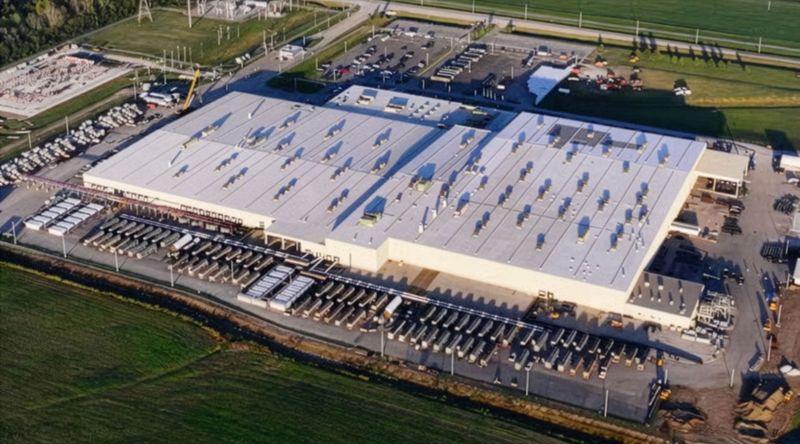
Forty out of 41 local ballot measures that sought to ban or constrain data-centre development were approved in the recent US midterm elections, according to Ballotpedia.
That’s a resounding verdict, but there is something that has been niggling at me about the data-centre resistance movement, which also played a role on the political side of the elections.
Before the advent of consumer AI (let’s call it 2023, a few months after the release of the first ChatGPT), there were more than 5,000 data centres in the world, and nearly 1,000 of those were “hyperscale”. Big, sprawling, energy-sucking industrial behemoths, owned by Amazon and Google and Microsoft and a swathe of lesser-known companies.
No one objected. If there were grumbles, they were rare, muted and definitely not front-page material. Data centres had been built for decades; they had been part of the background fabric of the internet since the beginning.
We rather liked our email and our website browsing and our social media and our clouds. These services needed data centres, and everyone accepted them, presuming they even thought about them at all. They certainly played no role in elections – not in the US nor anywhere else.
Not any more, clearly.
Just about everyone I know holds the same uniform view about data centres – they hate them, want them to just bug off. But when confronted with the question of why they never raised an objection to the many hyperscalers before AI, the certainty sputters. Water? Electricity usage? Noise? Land? They were all there in 2023 (they were even uglier back then – new water-cooling solutions and “bring-your-own-power” have significantly lowered the environmental impact).
Shouted down
There is an interesting and slightly disturbing video online. An even-tempered and earnest young man from SpaceXAI (now SpaceXSI) is gamely trying to present a case for a proposed data-centre project at a community meeting in Cochise, Arizona.
He is trying to explain the economic advantages that the proposed data centre would bring – including electricity bill reductions of up to 40%, lower property taxes, thousands of construction jobs and minimal industrial water consumption.
The crowd shouts him down as though he were the spawn of Satan. He does not react emotionally, continuing to try to make the case. But he has no chance of doing so – there are those in the audience who are simply not interested in a debate about the pros and cons.
So what has changed since the kinder, gentler days of data-centre public opinion pre-2023? I suggest that it is not the data centre that is being resisted. It is not even AI, whose servers have colonised the hyperscalers. It is the data centres’ owners and tenants, and the creeping feeling that a handful of companies (or their titular heads – Musk, Altman, Ellison, Karp et al) have too much power over us, and that if we have no way to stop their Leviathan-like hold on the future, then perhaps we can raise a puny protest. We can say – no, not here, go away, I don’t like you.
Why do I use the word puny? Because constraining or banning data centres will make very little difference to anything, other than making some people feel a bit better for having voted no.
Economic reality
There is a considerable distance between political outrage and economic reality. The AI infrastructure boom shows little sign of slowing. A recent SemiAnalysis investigation found that although local moratoriums ostensibly affected some 20 gigawatts of proposed capacity, only 1.5 GW was actually likely to be delayed. Roughly three-quarters of the capacity scheduled for completion in 2027 across America’s 20 largest data-centre states is already under construction, putting it largely beyond the reach of newly emboldened local politicians.
A November report from JP Morgan reached much the same conclusion – opposition may change where data centres are built, increase their costs or delay their completion, but is unlikely to derail the expansion itself. Developers can simply move to friendlier jurisdictions, where the promise of jobs, investment and tax revenues still carries considerable weight.
There is an added irony. The much-predicted AI bubble crash will supposedly be (at least partially) caused by an overbuild of data centres, mimicking the excessive internet-fuelled fibre build-out in the early 2000s (and subsequent crash). If there is a slowdown in data-centre building because of public opinion, it may inadvertently serve to reduce the chances of a similar bubble-pop, thereby protecting AI from trouble.
No matter – AI’s forward juggernaut will continue, and its applications will colonise just about everything we care about. We will still use it, we will still pay for it, and if the data centres are not here, they will be there, and the further “there” is, the more we will pay for it.
Politics and technology
The explosive mixture of politics and technology is not a new subject. It has a long history – automation and workers, nuclear technology and geopolitics, media and messaging, the internet and political manipulation. Now, as we move into 2027, the collision of the AI infrastructure industry, negative public opinion and an ascendant Democratic Party has sparked a new battle in this old war.
Here is the narrative. People have rightly become a little tetchy about what is happening in the techbro frat house. Not so much about the fabulous wealth of a select few (plenty of those throughout history), but much more because most of the raw power of this astonishing technology is now wielded by an opinionated, sometimes mercurial and childishly feuding cabal.
Traditional democratic political power also hands power to a few, but it is checked and balanced by a mesh of carefully constructed governance and the certainty of a periodic public vote, offering an opportunity for both redemption and renewal (some may dispute that, but these midterms make the case).
Democracies have always had this backstop, this comfort – we could sweep away the powerful when circumstance demanded it. But we cannot sweep away the AI cabal. And there is a creeping realisation that AI, strategically deployed, will soon (or already does) wield far more power than any politician or party, and outstrip any government’s ability to regulate it.
The recent Jensen Huang/Nvidia scandal does not change this, besides adding some grist to the mill – there will be increasing oversight over the industry, and the new Democratic Congress will have an anti-AI wind at its back.
Federal and state legislators will seek to put the brakes on AI in one form or another as they read the mood of their constituents. Data-centre constraints are one. Export controls are another. A move towards mandated government approvals on new frontier model releases may also be in the mix. But it will be temporary, because demand for AI will continue to accelerate.
The concentration of power in monopolistic hands was one of Adam Smith’s great concerns when he laid the intellectual foundations of modern capitalism in his seminal 1776 work, The Wealth of Nations. Smith was particularly concerned with monopolies protected by government privileges, trading charters and preferential legislation. But he never imagined this – the accretion of epoch-defining and accelerating technological power into the hands of a tiny unelected minority. That is arguably far more concerning for the future of society. DM
Steven Boykey Sidley is a visiting professor at the Centre for Graduate Studies at Rhodes University, a partner at Bridge Capital and a columnist-at-large at Daily Maverick, where he writes the weekly Crossed Wires column. His new book, Checkmate: How Shoprite Checkers rewrote the rules and won, is published by Jonathan Ball.
KioskNews shows a cleaned-up reading view extracted from the publisher’s page — the original always lives on their site, not ours.