Lebanese TV host puts 'Fauda' kippah on politician who wants to be ambassador to Israel
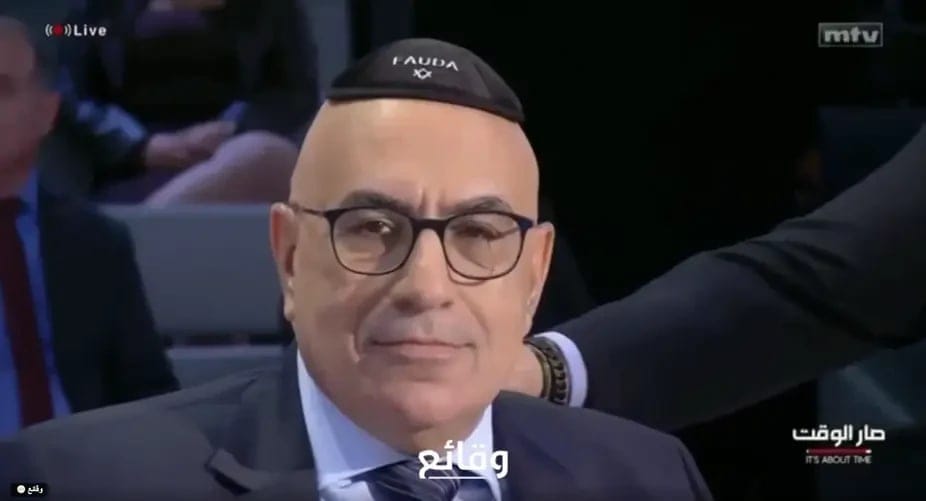
Charles Jabbour, a Lebanese media personality known for criticizing Hezbollah and supporting ties with Israel, laughed as a TV host placed an Israeli-themed kippah on his head.
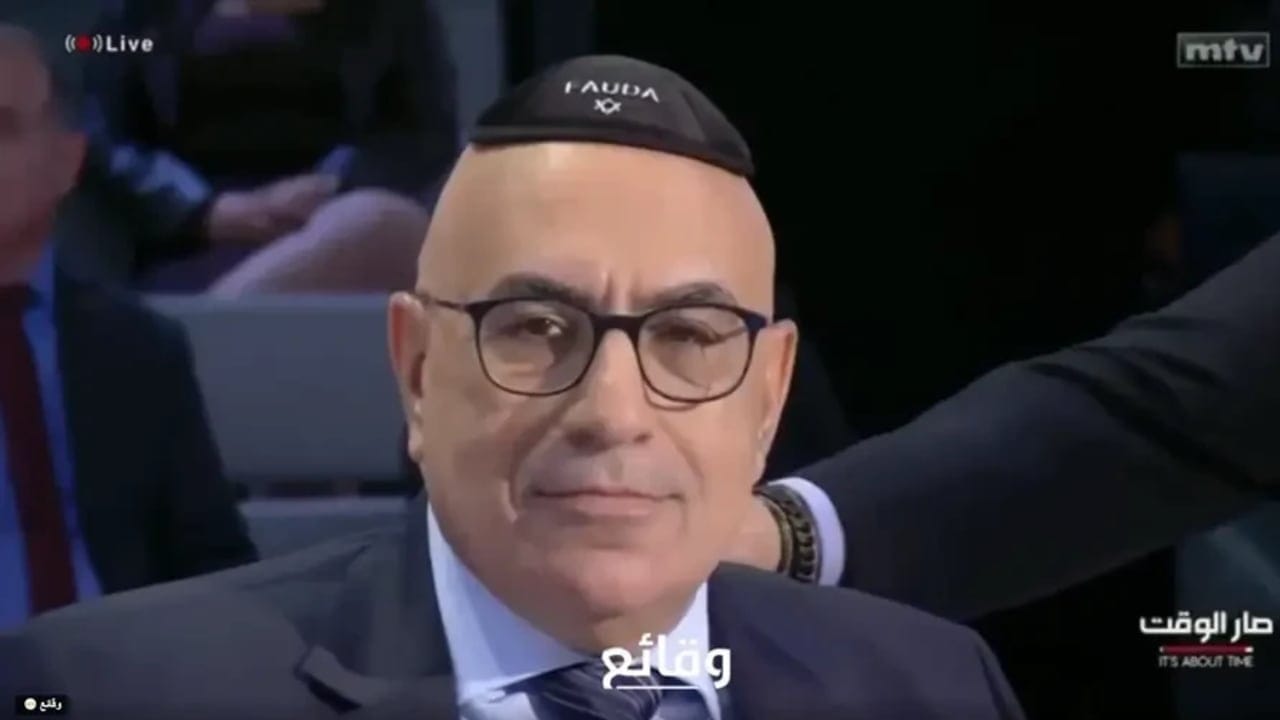
Lebanese TV host Marcel Ghanem placed a kippah on the head of Lebanese Christian media personality Charles Jabbour during a broadcast of MTV's current affairs program "It's About Time," on Thursday evening.
The kippah featured a Star of David and the word "Fauda," referencing the popular Israeli TV show.
Jabbour did not remove the kippah, saying that "it does not bother me at all."
Jabbour is known for his outspoken anti-Hezbollah stance and recently said that he would be happy to be Lebanon's first ambassador to Israel after Beirut and Jerusalem normalize relations, revealing he asked Lebanese President Joseph Aoun, also a Christian, to appoint him "when there is peace."
"I am not Israel's ambassador to Lebanon; I want to be Lebanon's ambassador to Tel Aviv," he said in an interview, adding that he contacted the Lebanese Foreign Ministry to ask whether he was eligible for the position.

He also said he began studying Hebrew so he would be ready to enter the role if the opportunity arose.
This is not the first time that a kippah has become a tool in Lebanese political debate. A few months ago, Hezbollah supporters circulated an AI-generated image showing Aoun wearing a kippah next to an Israeli flag in order to portray him as a traitor due to his support for contacting Israel, even indirectly.
This time, though, the kippah appeared on screen during prime-time TV, and the person wearing it laughed.
Pro-Israel views causing controversies within Lebanon
Jabbour's criticism of Hezbollah and advocacy of direct negotiations with Israel has caused controversy within Lebanon.
Lebanese media reported that he had been removed as head of the Lebanese Forces party's media apparatus. In a recent interview, Ghanem asked the leader of the Christian party, Samir Geagea, on air if he had "kicked" Jabbour out of his position, with the politician merely smiling and not responding.
Within pro-Hezbollah factions, he is even more denounced. Local outlet Beirut Time attacked him for offering his services on air "over the bodies of children and the blood of martyrs."
Lebanon has a boycott law against Israel, passed in 1955, which prohibits contact with Israelis. When Israeli journalist Barak Ravid was interviewed on Lebanon's LBCI, it caused public outrage and demands that the channel face legal prosecution.
KioskNews shows a cleaned-up reading view extracted from the publisher’s page — the original always lives on their site, not ours.