5 Anime War Arcs That Outshine Bleach's Thousand-Year Blood War

Umair is a contributor for the ScreenRant anime section. He has always been enthusiastic about pop culture. Whether it's anime, movies, TV shows, manga, manhwa, video games, or pop music, he is always tuned in.
From the classic Dragon Ball to the underrated Dororo, he has a broad knowledge of the most.
When he's not writing, you may find him editing on his favorite anime, movie, or pop star on his Instagram.
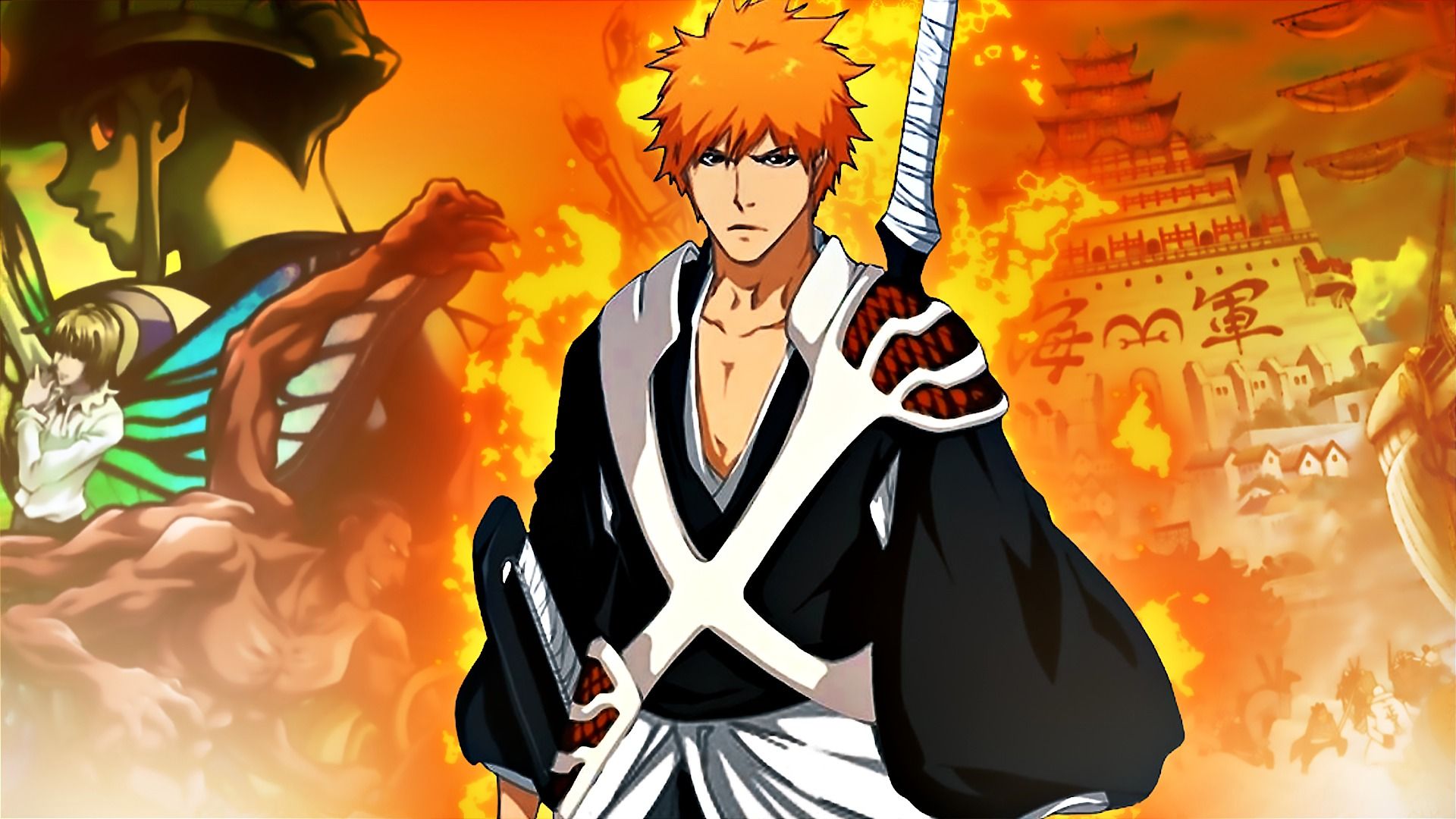
When Bleach returned after nearly a decade away with the Thousand-Year Blood War, it immediately took over the anime conversation. Yhwach and the Wandenreich didn't waste any time making their presence known, either. The first Quincy invasion turned the Soul Society into a disaster zone, with Bankai getting stolen, Captains getting crushed, and the Gotei 13 realizing far too late that this wasn't another Arrancar-style war. After all those years of waiting, Bleach came back with absolutely no interest in playing it safe.
Studio Pierrot also went all out with the adaptation. Bleach: Thousand-Year Blood War's fights look better than they ever did, old characters finally get some long-awaited moments, and the sheer amount of Bankai and Quincy abilities makes TYBW incredibly easy to get hyped about.
But hype isn't everything. Some anime have taken the idea of an all-out war much further than simply putting their strongest characters on opposite sides of a battlefield. The best war arcs make individual deaths matter, force characters to question what they are fighting for, and sometimes make the enemy's side surprisingly easy to understand. TYBW has plenty of those moments, but some of the arcs push anime warfare even further, whether through smarter tactics, stronger character writing, or stakes that hit much harder.
5 Attack on Titan Blurs The Line Between Hero And Villain Better Than Bleach Ever Could

Unlike Bleach's Quincy invasion, where the lines between Soul Reapers and Quincy are pretty clear, Attack on Titan makes the war much harder to look at that way. By the time the final saga begins, Paradis isn't waiting for Marley to make the next move. Eren has already gone across the ocean and is sitting inside Liberio, waiting for the right moment to strike.
That makes the Raid on Liberio surprisingly different from a lot of anime wars. The ODM gear, Thunder Spears, and Titan powers are obviously a huge part of the fun, but the fights never feel completely separate from the military operation happening around them. Eren's fight with the War Hammer Titan is a good example. Figuring out how its ability works matters just as much as having enough strength to beat it.
There is also no clean victory waiting at the end. Sasha's death during the escape turns a major win for Paradis into another loss, while Gabi's reaction shows the same cycle from Marley's side. Her decision to shoot Sasha isn't random either; she has just watched Paradis attack her home and kill people she knows. The same thing had already happened to Eren years earlier. That is why this war works so well. The battles are exciting, but the reasons behind them never disappear once the fighting starts. Every attack leaves somebody with another reason to fight back.
4 The Fourth Great Ninja War Gives Naruto: Shippuden A Sense Of Scale Bleach Desperately Needs

Naruto: Shippuden's Fourth Great Ninja War actually feels like a world war. After Obito declares war, the Five Great Shinobi Countries put their old grudges aside and create the Allied Shinobi Forces. Villages that spent generations fighting each other are suddenly sharing a battlefield, with medical teams, sensory units and different divisions working together.
The scale is also massive, especially once the fighting starts. Thousands of shinobi charge into battle under the same Allied Shinobi Forces banner, and then Madara shows up and reminds everyone that having an army doesn't mean much when one guy is that broken. His clash against the Fourth Division is still one of Naruto's biggest fights, from tearing through the shinobi with Taijutsu to dropping two meteors on them.
Bleach has plenty of huge battles during the Thousand-Year Blood War, but it often pulls the focus back to individual matchups between Captains and Sternritter. Naruto keeps returning to the fact that an entire army is involved. Different divisions are fighting different enemies, commanders are making decisions across the battlefield, and characters who normally wouldn't even stand on the same side are forced to work together.
Even with all the complaints about the Fourth Great Ninja War, its sheer scale is hard to deny. Madara, the Ten-Tails, Obito and the Allied Shinobi Forces make the conflict feel like something much bigger than another group of powerful characters settling their differences.
3 The Marineford War Permanently Changed The Entire Power Balance Of One Piece

One Piece's Marineford never feels like a war that exists just because the story needs a big final battle. The entire conflict is built around Ace's execution, with Whitebeard willing to send his entire crew into a fight against the Navy's Admirals, Warlords and thousands of Marines to get him back. There are no random teams thrown together just to fill the battlefield either. Almost everyone has a reason for being there, and plenty of them have their own plans once the fighting starts.
The strange part is how hard it is to pick a side. The Marines call themselves the ones protecting justice, yet the entire war is built around executing Ace because of who his father was. The pirates are supposed to be the villains, but Whitebeard's crew basically throws itself into hell to bring one of its own home. Then Doflamingo gets to stand in the middle of it all and point out that the winners get to decide what justice means.
The war actually changes things. Ace and Whitebeard die, Blackbeard takes advantage of the chaos, and the old balance of power starts falling apart. Shanks eventually arrives and stops the fighting, but by then Marineford has already done the damage.
Marineford never needs to keep raising the power level to make the war feel bigger. The reason the fighting hits so hard is that these characters have been around for so long, and Ace's execution is tied to so much of the story that came before it. When Ace and Whitebeard die, it doesn't just end a battle. It changes the entire balance of the One Piece world.
2 The Chimera Ant Arc Focuses On The Brutal Psychological Trauma Of War In Hunter x Hunter

Hunter x Hunter's The Chimera Ant arc is a completely different kind of war from Bleach's Thousand-Year Blood War. There isn't a huge army of Hunters marching into East Gorteau, either. Netero keeps the operation small because the Chimera Ant threat is already dangerous enough to cause a panic, and the group sent into the palace knows that even the Royal Guards could wipe out most Hunters without much trouble.
Togashi also spends a lot of time showing what the threat does to people before the main battle really gets going. Knov, one of the most experienced Hunters in the group, is so shaken by the Royal Guards' aura that he struggles to go back inside. That says plenty about how terrifying these characters are before they even start throwing punches.
Then the arc starts messing with the usual hero-and-monster setup. Meruem begins the story treating humans as disposable creatures, only to develop a strange sense of kindness through Komugi. Gon goes the other way. His obsession with finding Neferpitou after Kite's death pushes him into one of the ugliest moments of his character.
That contrast is what makes the Chimera Ant arc hit so hard. Bleach can give its characters another power-up and make the next fight even bigger. Hunter x Hunter is more interested in what war does to the people caught inside it, and sometimes the humans end up looking more frightening than the monsters.
1 The Coalition Invasion Proves Kingdom Is The Undisputed King Of Tactical Warfare

Kingdom's Coalition Invasion is what a great anime war arc looks like when the fighting isn't built around who has the better power-up. Riboku brings six states together against Qin, and for once, having a few insanely strong characters isn't enough to solve the problem. Qin is badly outnumbered, and the entire state is one bad decision away from being finished.
Kankoku Pass is where Kingdom really shows what it can do. The Great Generals aren't waiting for their next opponent to power up. Ousen is reading the battlefield, Moubu is smashing through anything in front of him, and Duke Hyou is making the kind of decisions that somehow only make sense because it is Duke Hyou. There is a constant push and pull between the different armies, and a victory in one part of the battlefield can create a problem somewhere else.
Then the fight reaches Sai, where Qin is desperate enough to put ordinary citizens on the walls. That part always sticks because the people defending the city aren't secretly stronger than everyone expected. They are just terrified and have nowhere else to go.
Thousand-Year Blood War has Bankai, Schrift abilities and some of the most biggest power-ups in Bleach history. Kingdom doesn't need any of that. The Coalition Invasion can make troop movements, political decisions and battlefield morale just as exciting as a major character fight. For a series about war, that is exactly what makes this arc so hard to beat.

- Release Date
- October 10, 2022
- Network
- TV Tokyo
- Showrunner
- Tite Kubo
- Directors
- Tomohisa Taguchi, Mitsutoshi Satô, Hikaru Murata, Hodaka Kuramoto
- Writers
- Tite Kubo
- Franchise(s)
- Bleach
KioskNews shows a cleaned-up reading view extracted from the publisher’s page — the original always lives on their site, not ours.