Israel, Greece, Cyprus reject Turkey-Libya maritime deal, agree to deepen defense ties
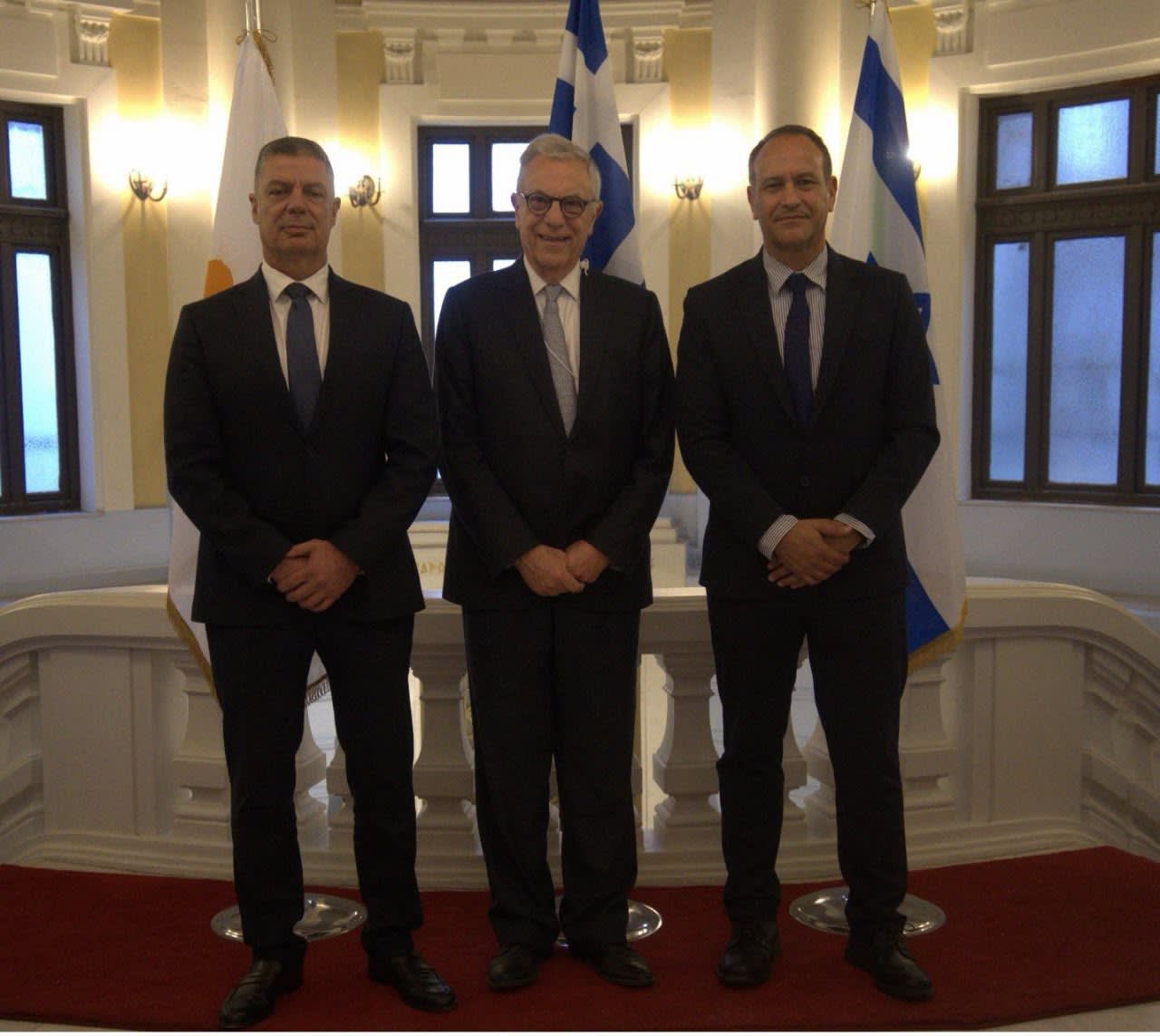
Senior defense officials from Israel, Greece and Cyprus met in Athens on Thursday and agreed to set up a joint working group for their defense industries, while declaring a recently ratified maritime agreement between Turkey and Libya legally void, the Israeli Defense Ministry said.
The trilateral meeting brought together the heads of defense policy from the three ministries, along with other senior officials, and focused on expanding military cooperation and on shared security challenges in the Eastern Mediterranean, according to a joint statement released by the ministry’s spokesperson.
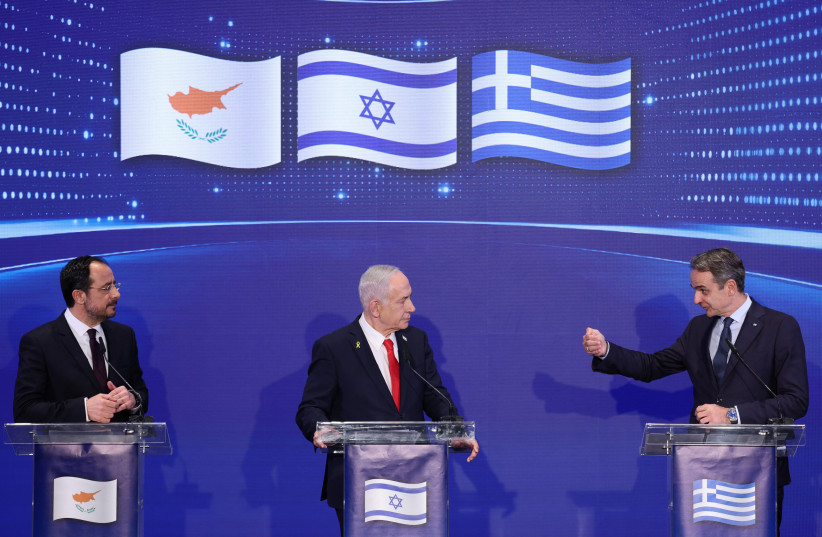
The three countries called defense cooperation a central pillar of their partnership, building on the joint declaration adopted when their leaders met in Jerusalem on December 22, 2025. They also reiterated the leaders’ invitation for other like-minded countries to join the framework.
The talks covered regional security assessments, defense-industrial cooperation and innovation, maritime security, including the protection of sea lanes and critical infrastructure, and disaster preparedness and civil protection.
The officials agreed to establish a trilateral defense-industrial working group to foster partnerships among their defense industries, explore joint development and production, and improve interoperability between their militaries, the statement said.
Rejecting the Turkey-Libya pact
The three ministries said the maritime memorandum between Turkey and Libya, which Libya’s House of Representatives ratified on October 20, infringes on the sovereign rights of third countries, ignores international norms on maritime jurisdiction, and cannot have any legal effect on other states.
They also voiced opposition to unilateral claims, coercion, threats of force and destabilizing military buildups, saying no country in the region should serve as a platform for actions that threaten regional security. The three reaffirmed their support for Cyprus’s sovereignty and territorial integrity in line with UN Security Council resolutions, and stressed adherence to the law of the sea as reflected in customary international law.
Energy and shared threats
The officials described energy cooperation as a pillar of regional stability and said they opposed attempts to obstruct it in violation of international law. They also stressed the importance of freedom of navigation and of protecting critical infrastructure and energy supply routes for Europe, the Eastern Mediterranean and the Middle East.
The sides pointed to shared threats including terrorism, the proliferation of advanced weapons and destabilizing activity by state and non-state actors across the region, and agreed to step up coordination against emerging threats.
The partnership, the statement said, is rooted in shared democratic values and complementary strategic interests and helps strengthen the links between Europe and the Middle East. The three ministries said cooperation, dialogue and respect for international law would allow the Eastern Mediterranean to become a region of “security, connectivity and sustainable prosperity.”
KioskNews shows a cleaned-up reading view extracted from the publisher’s page — the original always lives on their site, not ours.