Healey’s ‘risky’ budget slammed for failing to tackle worst decade for UK growth on record
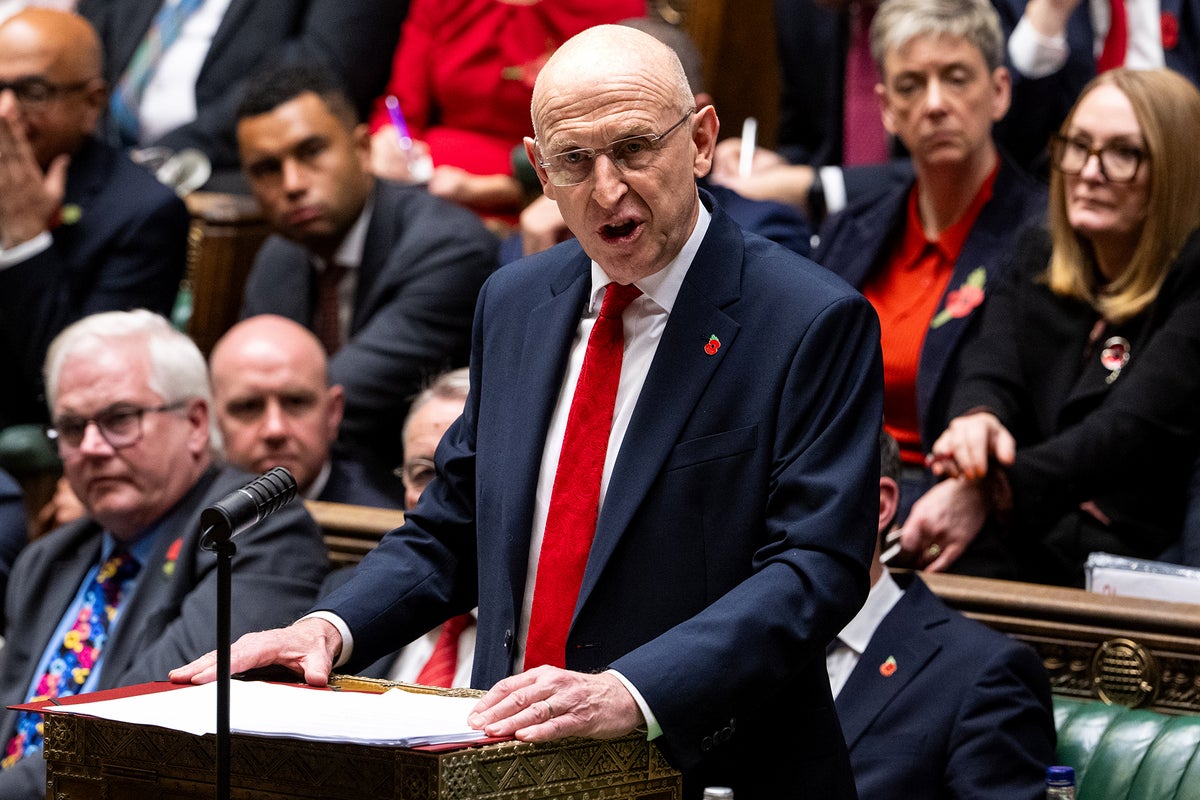
An influential think tank has criticised John Healey’s “risky” Budget for exposing Britain to further economic shocks and failing to tackle the “worst decade for growth” for household incomes on record.
The chancellor has been warned that the lower fiscal headroom left as a result of his first Budget could leave the country “more exposed to future bad news”, as government departments also face a real-terms value cuts to their spending.
In an exasperated tone, the IFS hit out at “temporary cost of living measures” being no substitute for “a strong economy” in a broadside against the approach taken by Andy Burnham since he became prime minister with a series of small measures on minor reductions to energy bills and capping the price of bus tickets to £2.
In its analysis of Mr Healey’s Budget, the Institute for Fiscal Studies (IFS) said there are “risks” to his approach, which also come amid dismal growth for household incomes.
IFS director Helen Miller said it was “reasonable” to allow headroom to fall to absorb higher borrowing costs, but added: “Higher borrowing will need to be paid for. A lower buffer leaves the Chancellor more exposed to future bad news. There are risks to this approach.”
Ms Miller said the chancellor will need to do more, amid “depressing” growth, and said: “It’s depressing. No amount of temporary cost of living packages will fix that. We need a stronger economy.”
She also criticised his “small, unhelpful fiddling with the tax system”, leaving it in a “mess” and calling his new Founders’ Relief “bonkers”.
“It is far more complex than it should be,” she said.
“And that is because, Budget after Budget, chancellors make seemingly small tweaks that lack principle and don’t systematically move us to a better place. This approach gives us more complexity and more instability. Both have real economic costs.”
The IFS also warned Mr Healey’s decision to leave government departmental statement largely unchanged means “means that the real-terms value of budgets has been cut” in the face of higher inflation.
“It effectively implies that some public services will see real-terms cuts in next year’s Spending Review,” Ms Miller said.
“Avoiding the cuts implied by both higher inflation and tight envelopes could plausibly require a top-up of £17 billion in 2030-21. That’s true even before thinking about the £11 billion needed to fund defence plans.”
KioskNews shows a cleaned-up reading view extracted from the publisher’s page — the original always lives on their site, not ours.