Mae Klong Dam boosts discharge as flood-hit provinces remain inundated
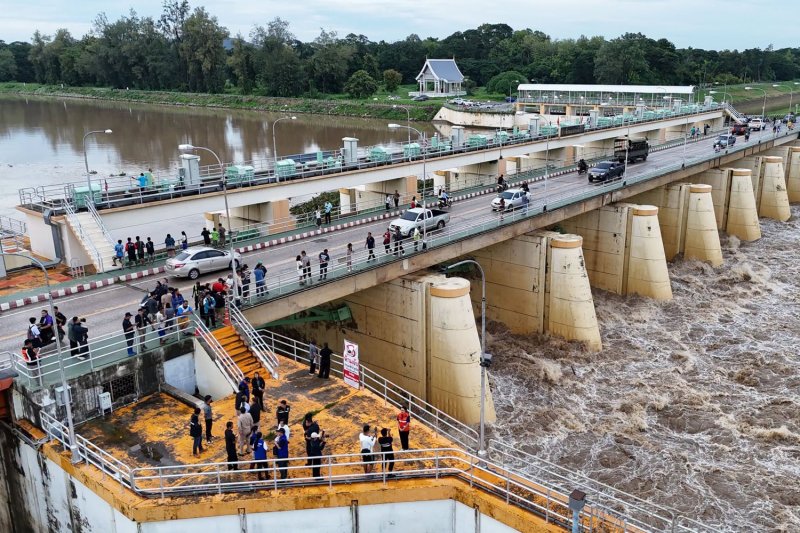
KANCHANABURI — Communities living downstream of the Mae Klong Dam face imminent flooding as the dam increases water discharges to prevent it from reaching capacity.
The dam’s operator, Regional Irrigation Office 13, said that the discharge rose from about 1,700 cubic metres per second at 8am on Tuesday to 1,800 at 11am, and was expected to reach 2,000 cubic metres per second in the afternoon.
“People living along the downstream river and in low-lying areas should move their belongings to higher ground for safety,” the office warned.
The discharge has already exceeded the critical level of 1,500 cubic metres per second, at which flood risks increase.
The Mae Klong Dam in Tha Maka district has been receiving increased inflows, largely from the Kwai Noi River into the Mae Klong River, following heavy rainfall in western Kanchanaburi. Downstream areas include parts of Kanchanaburi, Ratchaburi and Samut Songkhram provinces.
The dam has a reservoir storage capacity of 38.80 million cubic metres and a maximum water drainage (discharge) capacity of 3,100 cubic metres per second. It reached 96% of its full capacity on Monday night.
Kanchanaburi was among 12 provinces where floodwater levels continued to rise, while conditions improved in 16 others, according to the latest update issued by the Disaster Prevention and Mitigation Department on Monday night.
The department said on Tuesday that the other provinces at risk of flooding through Wednesday were Chai Nat, Sing Buri, Ang Thong, Ayutthaya, Chanthaburi, Prachin Buri, Sa Kaeo and Samut Sakhon.
Heavy rains have killed eight people in Thailand since mid-September, the government reported on Monday. September is the peak of Thailand's rainy season.
Some 1,267 businesses across 40 provinces have been affected by flooding, including 52 factories and 1,162 small and medium-sized enterprises (SMEs), according to Industry Minister Varawut Silpa-archa.
Nationwide, economic damage caused by the flooding was estimated at over US$320 million.
KioskNews shows a cleaned-up reading view extracted from the publisher’s page — the original always lives on their site, not ours.