Malaysia moves to calm Taiwan chip investors after China remarks freeze talks
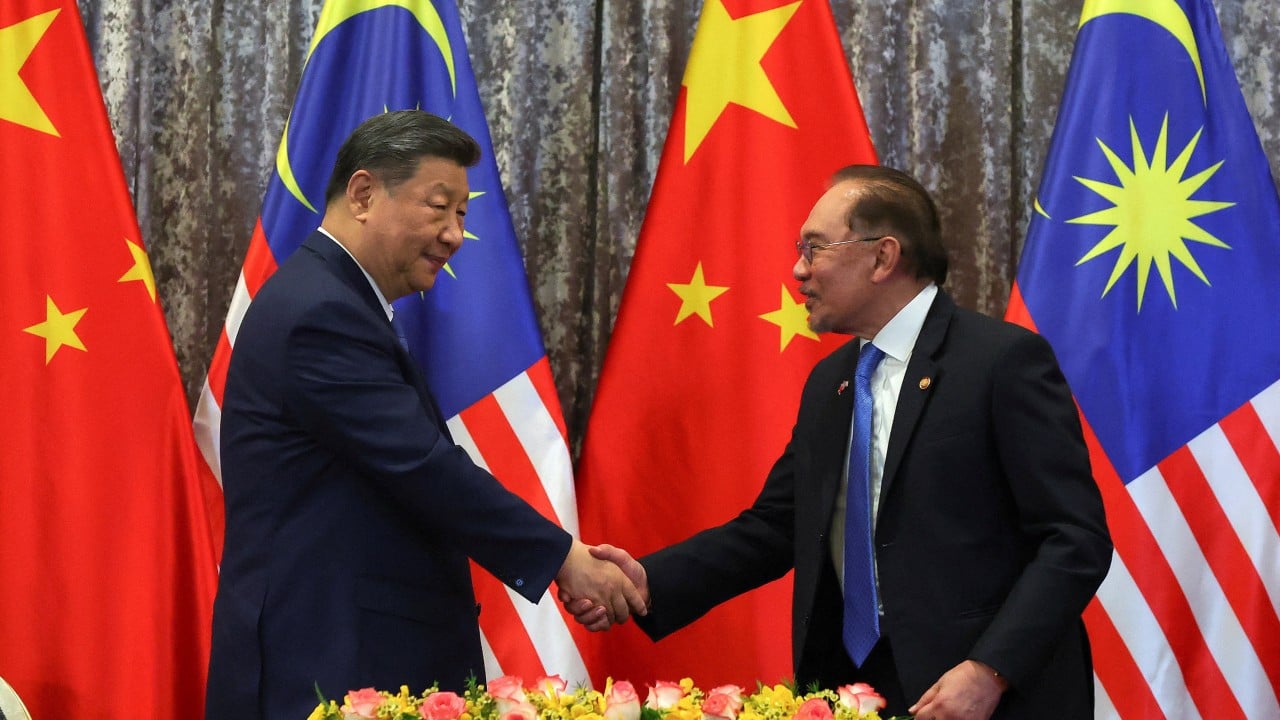
Malaysia is seeking to reassure Taiwanese investors that it remains a reliable destination for hi-tech manufacturing after Taipei suspended bilateral investment talks over Prime Minister Anwar Ibrahim’s remarks on China, raising concerns over the future of semiconductor investments in the Southeast Asian nation.
Taiwan confirmed on Tuesday that it had paused negotiations scheduled for late October. The move came after Anwar told Al Jazeera in an August interview that he saw the self-governed island “as part of China, period”, and likened Beijing’s possible use of force to Malaysia preventing one of its own states from seceding.
Malaysian Investment, Trade and Industry Minister Johari Abdul Ghani told This Week in Asia that Kuala Lumpur “values its long-standing economic and investment relationship with Taiwan”, particularly its contribution to his nation’s electronics and semiconductor industries.
“Malaysia’s position on the one-China policy remains consistent with our long-standing foreign policy since 1974,” he said, stressing Kuala Lumpur’s commitment to “constructive economic and trade relationships with all our partners, including Taiwan”.
“We welcome opportunities for constructive discussions through the appropriate channels,” Johari added, emphasising that Malaysia remained committed to providing a “stable, predictable and business-friendly environment” for Taiwanese firms.
In Taipei, foreign ministry spokesman Hsiao Kuang-wei told a news conference on Tuesday that the suspension was intended to protect the island’s sovereignty, economic security and investors, though Taipei remained in contact with Kuala Lumpur in hopes of reviving the talks.
“However, we continue to communicate with the Malaysian side,” he said, urging Kuala Lumpur to recognise their “close investment relationship and long-standing mutual trust”.
Nikkei Asia reported on Monday, citing Malaysian government sources, that the late-October talks had been shelved. A person familiar with Taiwan’s representative office in Malaysia told the publication that Anwar’s comments had sparked “pure anger” in Taipei, where officials felt Kuala Lumpur had made “little to no effort” to address their concerns.
Taipei condemned the remarks in August, accusing Anwar of having “openly justified China’s position on the use of force to annex Taiwan” and warning that the comments had severely damaged political trust.
Beijing, by contrast, welcomed Anwar’s stance. Chinese foreign ministry spokesman Lin Jian said on August 19 that Beijing “commends Prime Minister Anwar Ibrahim’s remarks”, reiterating that “China must and will achieve reunification. This will not be stopped.”
During Chinese President Xi Jinping’s state visit to Malaysia in April 2025, the two sides issued a joint statement reaffirming Malaysia’s one-China policy and describing Taiwan as “an inalienable territory of the People’s Republic of China”.
Anwar subsequently stressed that any cross-strait resolution should be peaceful, defending his comments as consistent with the one-China policy Malaysia adopted when establishing diplomatic ties with Beijing in 1974.
Beijing sees Taiwan as part of China to be reunited by force if necessary. Most countries, including the US and Malaysia, do not recognise Taiwan as an independent state, but Washington and its allies are opposed to any attempt to take the self-governed island by force.
Taiwan was Malaysia’s fourth-largest trading partner last year, accounting for 7.6 per cent of total trade, according to Malaysian government data. Major projects have continued to roll out, including a nearly US$200 million semiconductor packaging and testing plant opened in Penang in February by Taiwanese firm Chipbond.
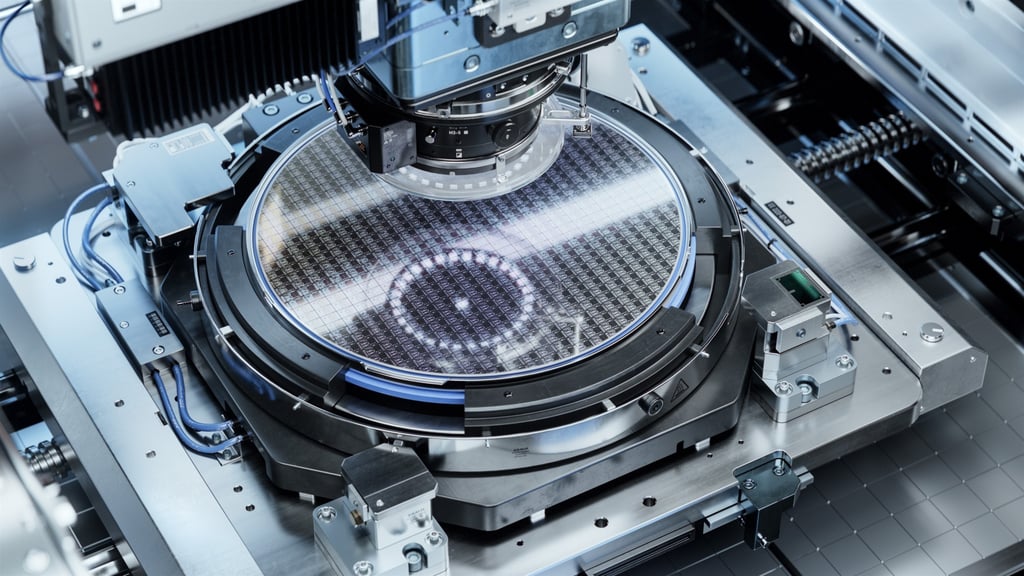
However, the freeze leaves unresolved Taiwan’s push to update a bilateral investment pact dating back to 1993. In May, Taipei’s representative to Malaysia, Lien Yu-Ping, noted that the outdated agreement lacked sufficient protections for intellectual property and technology transfers, warning that regional rivals like Vietnam and Indonesia were aggressively competing for Taiwanese capital.
Taiwanese business leaders still met Malaysian industry counterparts in Kuala Lumpur in September. Federation of Malaysian Manufacturers president Jacob Lee told Taiwan’s Central News Agency on Tuesday that while a broader economic cooperation meeting planned for late October had been postponed, day-to-day operations and existing investments were unaffected.
Trust deficit
Chong Ja Ian, an associate professor of political science at the National University of Singapore, said Anwar’s remarks went beyond earlier Malaysian formulations on Taiwan, which shifted from acknowledging Beijing’s position in 1974 to recognising Taiwan as Chinese territory in 2004.
“This gives a view that Malaysia is wavering and uncommitted, which could put Taiwanese and their investments in potential jeopardy,” Chong said.
“There is a greater premium on commitment and trust. Wavering could be seen as duplicitous,” he said. “What used to be acceptable as neutrality could now be taken as untrustworthy.”
Azmi Hassan, a senior fellow at the Nusantara Academy for Strategic Research, argued that Taipei had misread Anwar’s analogy regarding federal unity, though he conceded the fallout could hurt trade ties.
“It’s going to be detrimental. It’s going to have a negative impact on Malaysia,” Azmi said, but predicted that “things will settle down” within weeks and bilateral economic discussions would resume.
Lin Kai-min, honorary president of the Taiwan Chamber of Commerce in Malaysia, told Nikkei Asia that while existing investments were largely unaffected, potential investors could look elsewhere in the region.
“Malaysia remains an attractive place for Taiwanese investment, but we should not forget that investors have other choices in Southeast Asia,” Lin said.
KioskNews shows a cleaned-up reading view extracted from the publisher’s page — the original always lives on their site, not ours.