Opinion: Opinion | Shoot A Star, Become A Star: Why The Attack On Tiger Shroff Is Different
"Bahut puja kar li, ab upar ja ke karna (you have done enough puja, now do it up there)."
Almost thirty years ago, those were the words that greeted music baron Gulshan Kumar on the morning of August 12, 1997, along with a pistol aimed at his temple. He had just left after his customary morning Shiv mandir visit, only to have three shooters put 16 bullets into him. His crime? He had refused to pay the second instalment of Rs 10 crore "protection money" to the underworld, which had set its eyes on his empire of 45 companies and studios across Mumbai and Delhi (estimated to be worth Rs 350 crore). The killing set off a cycle of fear and suspicion in the Mumbai film industry, which had begun with an assault on producer-director Rajiv Rai in his Mumbai office on July 31 that year, not long after he turned down the demand of extortionists, and two calls to director Subhash Ghai reportedly demanding Rs 5 crore.
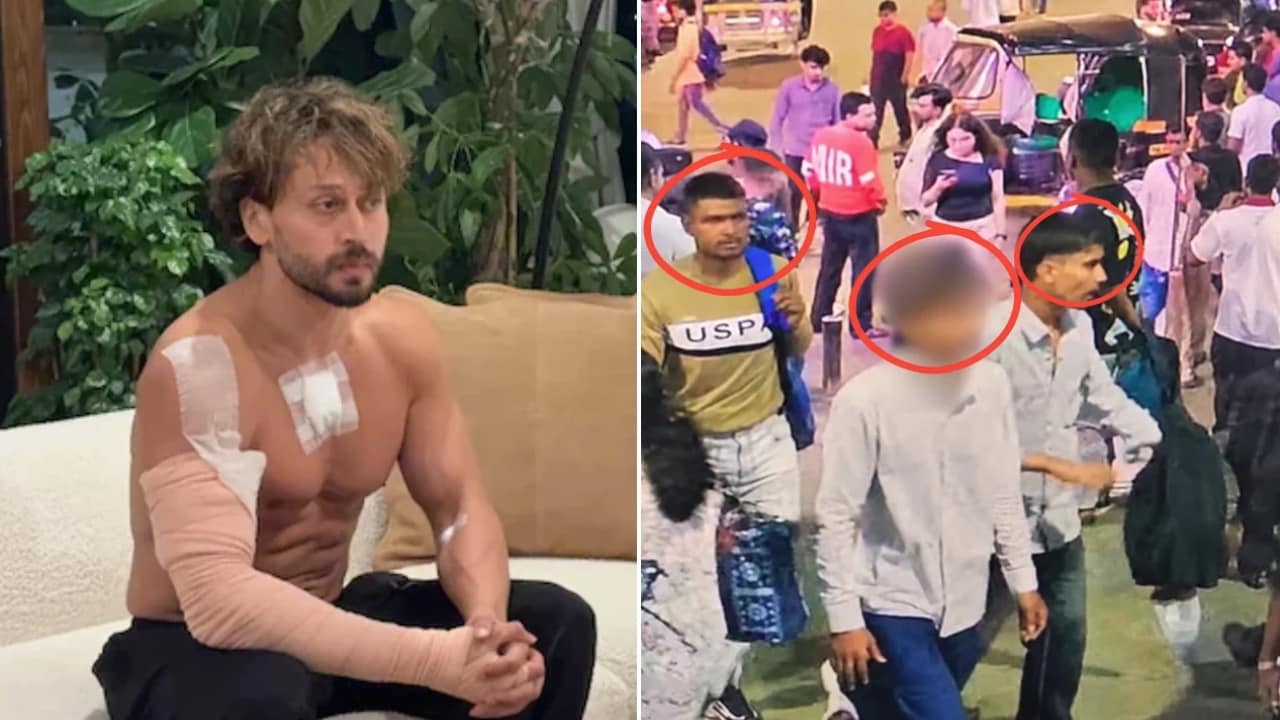
Three decades after that, the attack on actor Tiger Shroff yesterday from close range by two shooters, in crowded Juhu, has set off a similar cycle of urban paranoia. It comes months after unidentified gunmen fired five rounds at filmmaker Rohit Shetty's multi-storey home, Shetty Tower, in Juhu. Both attacks were claimed by gangs connected to Lawrence Bishnoi, currently in Sabarmati Central Jail in Ahmedabad, where he has been since 2023, when the Gujarat Anti-Terrorism Squad sought his transfer from Tihar Jail for drug smuggling.
The playbook of the attacks may be the same, using novice shooters in crowded areas, but the players are totally different. The gangs that operated in Mumbai of the '90s were the intimate enemy, offshoots of Dawood Ibrahim's network, which became toxic after the 1993 blasts. The gangs that are functioning now are almost invisible, run by a man in jail.
The difference is stark. Where once violence was part of the business conducted by gangs, it now appears to be a product of vanity, of brand-building, as director Ram Gopal Verma calls it. "And there is no better way to do so than to attack a celebrity," he adds.
Bishnoi issued his first public death threat against Salman Khan in 2018 for allegedly killing blackbucks, considered sacred to the Bishnoi community, while shooting Hum Saath Saath Hain in 1998. Bishnoi was seven years old then but vowed revenge, we are told. Following Sidhu Moosewala's death in 2022, Bishnoi warned Salman Khan again. In November 2023, he claimed responsibility for shooting at actor-singer Gippy Grewal's home due to his alleged association with Salman Khan. Grewal denied any friendship with Khan. In April 2024, Lawrence Bishnoi's brother Anmol took responsibility for shots fired at Salman's first-floor Galaxy Apartments flat at around 5 in the morning, calling it a 'first and final warning'. Salman's famous first-floor 'darshan' for fans has ceased, with the balcony and windows now covered with bulletproof glass since January 2025.
Again, in October 2024, his gang took responsibility for the killing of former Maharashtra Cabinet minister and the influential Mumbaikar Baba Siddique, again citing his closeness to Salman. In Tiger's case, too, Bishnoi's aide Anil Pandit claimed responsibility for the attack, saying the same thing would happen to anyone working with Salman.
The Mumbai film industry has a long association with the underworld, beginning with gold smuggler Haji Mastan, whose fascination with cinema was memorialised in fiction in Milan Luthria's Once Upon a Time in Mumbai (2010), where Ajay Devgn played a version of the don. The rise of Dawood Ibrahim, who was totally glamour-struck, spawned a new closeness between the industry and the mafia, with an estimated 40% of Hindi films financed by the underworld at one point. Several non-entities became producers: Hanif Kadawala and Samir Lakdawala, video pirates till Dawood's cash made them businessmen; Sudhakar Bokade, a former Air India cargo handler; Mukesh Duggal, a garments trader; and Dinesh Patel, a clothing store owner. Invitations to his parties and his cricket box in Sharjah gave many actors bragging rights.
The 1993 blasts changed all that, with the "bhai" becoming persona non grata, and Sanjay Dutt's inexplicable custody of an AK-47 delivered to him by Dawood's men, signalling the temporary end of his career. With Mumbai becoming a city where gangs operated by Dawood's former associates Chota Rajan (currently imprisoned in India serving multiple life sentences following his 2015 extradition from Bali), Chota Shakeel (currently said to be in Karachi and on India's wanted list for his role in the 1993 blasts) and Abu Salem (currently lodged in Nashik Central Jail, where he is serving concurrent life sentences). The split between Dawood Ibrahim and Chota Rajan became the subject of the iconic movie, Company (2002), written by Anurag Kashyap and directed by Ram Gopal Varma.
By 2005, though, the gang wars ended in a series of encounters engineered by Mumbai police officers, who quickly became the new heroes, spawning another round of movies such as Ab Tak Chhappan (2004), directed by Shimit Amin, and starring the late Nana Patekar as "encounter specialist" Daya Nayak.
Mahesh Bhatt is a survivor of the '90s. He recalls August 12, 1997, as the day when the "ground beneath our feet shook". Says he, "I was in Film City when the call came (about Gulshan Kumar being shot dead). I picked up the phone and called the Prime Minister, Mr IK Gujral. He was unusual in that he kept a line on which you could reach him directly, and he answered it himself. I told him what had happened, and the news had not even reached him yet."
It was a dark, dark age, he adds. "The underworld had sunk its tentacles deep into our industry. Rakesh Roshan was shot (outside his office in 2000). Ajit Dewani, Manisha Koirala's secretary, was shot dead (outside his office in 2001). There were countless others. When the phone rang and an unknown number flashed, your heart sank before you said hello. You had two choices: go to the police and live under their protection, or give in and pay. The objective then was money."
Now the objective is attention, he says. "Add the attention economy, the hunger for clicks, and the bullet becomes a press release, fired for the cameras and claimed on social media," he adds.
From all accounts, the unwanted attention has shaken Salman, who has told his family to be careful. His movements have been restricted and his protection fortified. His last theatrical release was the underwhelming Sikandar in March 2025. Maatrubhumi: May War Rest in Peace, formerly called 'Battle of Galwan', which was slated for release this year, underwent a reshoot of over 40% to avoid hurting relations with China.
But his work as the popular host of JioHotstar's Bigg Boss continues, as does his cultural presence, whether it was his X post "It's Done, Bro" being adopted by youngsters during the Jantar Mantar protests or the virality of his recent episode for Koffee with Karan on JioHotstar.
It must feel like a cruel throwback, though. In the 90s, he was often the target of extortion calls from Dawood Ibrahim's gang, with his codename being 'Pehelwan'. In 2001, he was questioned extensively by the Mumbai Police for being part of Chori Chori Chupke Chupke, co-starring Preity Zinta and Rani Mukerji, which was produced by diamond merchant Bharat Shah and allegedly financed by Chota Shakeel.
Nothing makes stardom look as fragile as the thought of a bullet with one's name on it.
KioskNews shows a cleaned-up reading view extracted from the publisher’s page — the original always lives on their site, not ours.