BritBox’s Masterpiece Detective Thriller Gets Major Season 3 Update From EP

Greer Riddell is a London-based film and television journalist writing about comedy, streaming and the evolving media industry in the UK and USA. She works at Collider, covering the latest in film, television and entertainment through interviews, features, reviews and industry coverage.
Her recent brand collaborations include HBO, Warner Bros., Netflix, Hulu, Sky, Disney+ and DC Studios. She has covered titles including Saturday Night Live UK, Rivals, Scrubs, Stuart Fails to Save the Universe, Ludwig, Supergirl and Stranger Things.
Her recent interviews include Florence Pugh, Mike Faist and Christopher Abbott for Netflix's East of Eden, Taika Waititi and Jenna Ortega for Klara and the Sun.
Editor's note: The below interview contains minor spoilers for Ludwig Season 2.
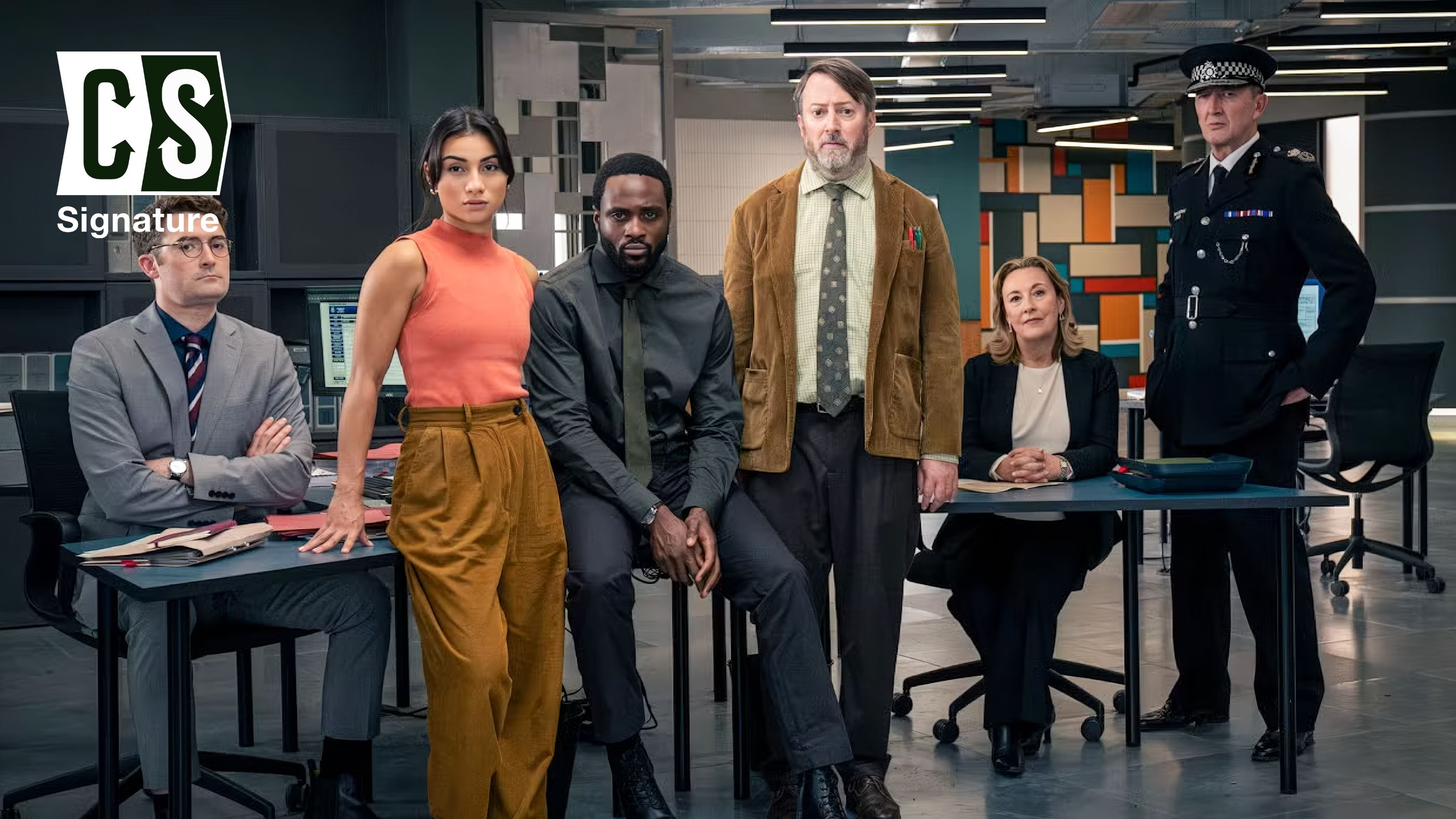
David Mitchell's breakout role as Mark Corrigan in Peep Show saw him play a neurotic overthinker who could turn even the most mundane interaction into an existential crisis. Now, in Ludwig, he takes on another socially awkward, semi-reclusive character, but John Taylor has a much more productive way of putting his obsession to use. Under the pseudonym Ludwig, John is an acclaimed puzzle setter whose methodical mind and extraordinary ability to recognize patterns also happen to make him excellent at solving murders.
That talent might have remained undiscovered if it weren't for his sister-in-law Lucy (Anna Maxwell Martin), who forces the reluctant John into impersonating his twin brother, a DCI in the local police force, after he mysteriously disappears. The mystery surrounding James' whereabouts continues into Season 2, but John no longer has to hide behind his brother's identity in this “soft murder” take on The Parent Trap. Instead, the Cambridge Police Authority has brought him in as a "Crime Consultant".
With the second season having just finished its run on BritBox, Ludwig executive producer Kenton Allen joins Collider to discuss the series' success, the challenges of continuing the same story with a new dynamic, and why comedy actors seem so well suited to murder mysteries. He also discusses whether Ludwig could become a long-running detective franchise, teases the series' Christmas special featuring Poirot himself, David Suchet, and shares what audiences can expect from Rabbit, the U.S. adaptation currently being developed by Humphrey Ker (Welcome to Wrexham) and Megan Ganz (It's Always Sunny in Philadelphia).
'Ludwig' Only Exists Because David Mitchell Had One Secret Wish
"Puzzles do get solved. Bad people do get caught."

COLLIDER: When I was doing my research for Season 2, I watched a couple of podcast appearances by you, and something that I thought was really interesting is that David Mitchell actually said he'd be interested in playing a detective, and he fits so well with that! Now, when I watch Ludwig, it's like, well, why was he doing anything else? What do you think it is about David and his performance that makes him such a good Ludwig?
ALLEN: I think it's a number of things, really. I think that you are correct when you say he fits it really well because it was written for him. I don't know whether you know the story, but a few years ago we were shooting another show. Do you know the story?
You were doing Back.
ALLEN: So he rang me and said, "I've got a secret I need to tell you." I'm slightly worrying what that secret might be. And his secret was he wanted to play a TV detective. And then I spoke to Mark Brotherhood, and that began Ludwig ultimately. So it was written for David, and Mark Brotherhood is sort of a bit like David but from the North of England.
I suppose that David, I sort of have this firm belief that the really great actors, particularly in this sort of genre, have come through half-hour comedy. And so if you look at British TV and you think of things like Cracker — Robbie Coltrane, I know Cracker wasn't a detective, but he sort of was — and you think of Alan Davies and Jonathan Creek, and Alan Davies came through 30-minute TV, and you think of David Jason and A Touch of Frost, and there's a great lineage of comedy half-hour sitcom actors stepping up into one hour. Some people call them “cozy crime,” a phrase I don't like. We prefer “soft murder.”
It still packs a punch.
ALLEN: Yeah. Well, you need an actor that can play that, you know, that can do the serious business of investigating murders, but can also bring the charm and the wit and the irreverence to it. And I think that David brings that to Ludwig, and he has a light element to David in his real life, which I tease him about regularly.
I think he sort of embodies who Ludwig is, which is an outsider, a loner, somebody who prefers his own company to the company of other people, somebody who's very clever but is also quite shy, et cetera, et cetera.
I was intrigued by that connection between comedy and drama. So you mentioned the example of Alan Davies, David Jason, and there's also been a lot of talk around, perhaps this year especially — I went to the Edinburgh TV Festival, and they were all talking about how comedy, British comedy, has this huge resurgence. Is that comedy side of things one of the reasons why Ludwig has done so well, that tone, and what do you think comedy brings as an advantage to the mystery genre?
ALLEN: I don't think it's comedy, really, that brings something to the genre, but I think that in these sort of shows, these sort of murder-of-the-week shows, I think that in a world which is increasingly confusing and upsetting and there doesn't seem to be any answers to anything, I think spending an hour with somebody who is clever and entertaining and fallible and has all sorts of issues, but is capable of sorting out a whodunnit in 60 minutes, is rather reassuring.
There is some order in the world. Puzzles do get solved. Bad people do get caught. I think it's to do with that. I think the comedy, I think people, I think there's a bit of weariness about very hard murder shows. Some American television executive once described to me, "dead women in the trunk of a car" show, which is not a genre of television.
A lovely phrase.
ALLEN: Isn't it? What a charming phrase. But I think there is a weariness of that very graphic, very violent, often women or children being kidnapped or murdered. I think people have had their fill of that. Particularly in a world which is, the news headlines are particularly unpleasant and disturbing and upsetting. I think escaping into a world where problems get solved, but we don't focus too much on the grisliness of the murder and focus more on the how was it done and who did it, I think there's some comfort in that. So, I think there is some comfort viewing in it.
Definitely.
The same there is in Traitors, when you're watching them get murdered, but they're not actually getting murdered. It's just reassuring, I think, to know that despite the chaos outside your living room or wherever you happen to be watching, that there is some north star, which is problems can still be fixed.
Did Lucy Marry the Wrong Brother? 'Ludwig' EP Weighs In
"I think that's in the Bible. You don't go out with your brother's wife."
That first season, we had that added tension of John impersonating James and when was everybody going to find out, and then everybody found that out at the end of the first season.
So, you've got to come back to Ludwig in a sort of new dynamic in a different way. How can he still be involved with the police investigations in this new season? How did you ensure that this second series maintained that same level of suspense, and how did it keep audiences just as gripped?
ALLEN: Yeah. Well, I think the plan was always, from day one of developing the show, that Ludwig could only pretend to be his brother for one season because I think it stretches credibility to think that he could get away with that for more than a couple of weeks. So we always imagined that he would become, he'd be so good at solving murders and his clear-up rate would be so good and make Cambridge's CID look so good that they want to keep him on as a consultant.
So he becomes a consultant in the second season. But we still don't know where his brother is, why his brother's disappeared, and the evolving mystery about what is going on with Joanne Kempner (Sian Clifford). What is this greater conspiracy? Is his brother involved in it? Is the Kempner family really a decade-long, multiple-decade murdering dynasty? What is that all about?
I think that's the thing that keeps pulling you through the show. As much as John, Ludwig being a really good detective, he's still got an ulterior motive, which is what the hell is going on with his missing brother?
And also, he's got this developing relationship with Lucy and this sort of surrogate family with Lucy and Henry, which is evolving as well. The more time they spend together, the more time they realize that they're sort of codependent.
I really liked Anna Maxwell-Martin's character being perhaps a bit more involved in this season. She's doing her own detective work now at the newspaper. What has having Lucy more involved allowed you to explore that was not possible in Season 1?
ALLEN: Well, it's allowed us to explore what a brilliant actress Anna Maxwell Martin is more. If you've got Anna Maxwell Martin, give her something to do. That's from a producing point of view, but from a story point of view, it enables them to become a kind of investigating duo, Ludwig and Lucy, I guess, and it enables her to follow up leads on the bigger, the wider conspiracy and the mystery of her husband's disappearance, while Ludwig is pulled into various murders.
And I think it just gives a bit more urgency to the show, and I think it raises the stakes that Lucy is no longer the passive — we never wanted her to be a kind of passive wife who'd been abandoned by her husband, was just sort of slightly sad and... Just sort of a typical abandoned wife. The character was not that, and Anna Maxwell Martin certainly didn't play her like that. So she's obviously going to want to get involved. Her husband's missing. That is true. She's not going to sit around and ask Ludwig every week, every day, "Anything else happened in the investigation of my missing husband?" You know, she's going to get amongst it.
Yeah, and it is great when she is.
ALLEN: Yeah, and her photojournalism comes out of her day job, which is a photographer. So she goes for it, like any modern woman would, don't they? They wouldn't — you wouldn't sit around and go, "Oh, I don't know. I'm just going to sit here and make tea and wait for somebody to tell me where my husband is." She's not going to wait for permission to get involved, I think.
With Lucy, as you said, there's a bit of surrogate family there, but John and Lucy almost act a bit like an old married couple, and there seems to be a bit of history between them. Do you think it's fair to say that John sees Lucy as the one that got away and then perhaps married the wrong brother?
ALLEN: Yeah. I think so. I don't think Lucy thinks that. I think Lucy picked James and obviously married him and has a family with him. I think that Ludwig, though he probably never says it out loud to her in this season, feels that there was something else there, and if only he'd been less on the back foot, maybe he and Lucy could have been together.
But it's obviously the thing that dare not speak its name because she's married to his brother! I think that's in the Bible. You don't go out with your brother's wife. So it's completely forbidden fruit, and obviously neither of them can go there, whatever they're feeling. There's a son, Henry, in the mix, and there's a marriage, and there's all sorts of other things that are in the way of them ever truly saying how they may or may not feel about each other.
Well, it's interesting to watch any way, that sort of there's a devotion there, but perhaps in the past.
ALLEN: It's interesting growing up with identical twins and falling in love with one or both of them, and then we know they're not Mormons. No, she had to pick a brother, and she picked James.
'Ludwig' Season 3 Is Already Well Underway, but What Comes Next?
"I don't think we'll have found all the murderers in Cambridge by the end of season three."

What I really like about Ludwig is that there is obviously the overarching mystery, but then we also have the murder-of-the-week. How do you actually balance keeping those murder-of-the-week stories self-contained and interesting throughout, but also work out how much to feed into each episode of that central mystery that keeps us watching every episode week by week?
ALLEN: You work with a brilliant writer called Mark Brotherhood! And then, one of the answers to that question is a bit technical, but it's sort of true, which is our show is made principally for the BBC, and a BBC show is 59 minutes long, and typically a network show that has commercials in it, they're typically about 44 minutes long. So just in the maths of it, we have 15 more minutes of airtime to play with than you would on a normal commercial procedural. And often when you look at a sort of non-commercial procedural television, you'll see that they have to have more story in them because you've got this other screen time to fill, and you can't have eight more suspects. That doesn't work and is a bit boring. So, I think the nature of making it for the BBC originally means that there's naturally some time there to devote to the bigger conspiracy.
You could make the show at 45 minutes, but I think you'd find that the — and in fact, we're making, we're going to make a pilot for ABC, which we announced a couple of weeks ago. So that'll be very interesting about compressing both the story of the week and the conspiracy into a shorter running time. And the fact that a murder mystery, a story of the week, can sustain so much entertaining screen time. You can see shows where that aren't very entertaining, where it's all they've got, and that can become a little one-note. So I think it's just balancing what we're interested in, and you're led by Ludwig as well, and what is going on in his sort of quasi-professional life and his domestic life and how those two things are balanced out.
Britain has a history of such long-running murder mystery series and detective series. Do you see Ludwig becoming a long-running series, or is that overarching mystery with James' disappearance sort of giving it a natural limit to the story?
ALLEN: We've just wrapped the first three episodes of Season 3. We start shooting the second three episodes on Monday. We shall see.
Okay, I will come back to that at some point then, when I've watched the third season.
ALLEN: Yeah, I mean, you would need to ask that question at the end of the third season. I would say that people don't stop getting murdered.
Yes, there's not going to be many people left in Cambridge. I do keep thinking that.
ALLEN: Well, there's lots of people moving around all the time, but I don't think we'll have found all the murderers in Cambridge by the end of Season 3.
If that's a clue, that's a good clue.
'Ludwig' EP Explains Why Its American Remake Needs To Be Different
"The American Office started off relatively like the British Office, but it took on a life of its own quite quickly."
You brought up the fact that there's going to be a pilot made for ABC based on Ludwig, called Rabbit. It has a good audience. People are enjoying it. What was it about the American adaptation that you wanted to explore a bit differently from the original series?
ALLEN: I can't really talk too much about it. For obvious reasons, but I would say that if we get it right, Rabbit will be a brilliant cousin to Ludwig. Just in terms of where it's set and what the attitude is towards crime and crime prevention in North America as opposed to Cambridge, there's some big differences. Our police don't carry guns.
That's a good point!
ALLEN: American police do carry guns. There's lots of cultural differences that I think will make it an interesting companion piece to Ludwig. I don't think it will be — it's a bit like the American Office, I guess, in that, you know, the American Office started off relatively like the British Office, but it took on a life of its own quite quickly. And I think that's what we're hoping to do with Rabbit, which is why it's called Rabbit and not American Ludwig.
So, watch this space, but I think there's plenty of cultural differences just between the two settings that give the show its own distinctiveness. And then I think there is a writer, obviously Megan Ganz, working with Humphrey Ker and Jon Steinberg and Dan Shotz myself. So it's seeing the fundamental setup through a different lens.
I'm looking forward to seeing what that becomes.
ALLEN: Yeah. Particularly the creators, Mark Brotherhood, myself, David Mitchell, nobody wants to make a facsimile of a show that we're making and is on air. So it has to have some reason to exist. And I think that Megan Ganz and us have found a very cute, smart way of making a cousin rather than a copy.
So fans of Ludwig will start watching Rabbit as well, and then they've got both shows to enjoy. You brought up the "cozy crime," or what we're going to call "soft murder."
ALLEN: Cozy crime is dead. Soft murder lives!
So it's become quite a significant British export to North America through BritBox.
ALLEN: Has it?
Well, there's a whole page on BritBox as a category. Detective stories have become a thing. From your experience, why do you think international audiences respond so strongly to these sort of British murder mysteries?
ALLEN: I think that I don't think it's exclusively British because I think there are some examples in the States now of this, and our inspiration for Ludwig, a lot of it came from shows like Columbo and Monk, which were sort of murder-of-the-week shows. I think that international audiences enjoy seeing less grisly forms of ways to kill people, as we've discussed.
We very deliberately set the show in Cambridge, England, because it gives you a great mix of ancient and modern and hasn't been photographed very much in contemporary television. And I think that feels fresh, like Inspector Morse and Oxford felt fresh 30 years ago. Hopefully audiences are enjoying seeing a different slice of British life.
And obviously we're brilliant. We have brilliant actors, brilliant writers. Our on-camera and off-camera talent is world-class. So I think we're, you know, we've always been brilliant storytellers, and we have brilliant actors and brilliant directors and brilliant designers and brilliant everything. I just think hopefully it's an elevated form of a very familiar genre.
The world is not short of shows where people get murdered, but I think there's a lot of shows where people get murdered in a very unpleasant way. And we don't really feature the unpleasantness. We don't really, we don't ever revel in it, really, and we don't deal with it — we rarely deal with the impact on relatives and all of that. I mean, it is a slight fantasy career. Murder is very serious and devastating, obviously, but we use it for entertainment.
'Ludwig' Is Bringing a 'Poirot' Legend Into Its Christmas Mystery
"There's snow, there's mince pies, there's Christmas crackers, there's murder!"

I was very happy to see that Ludwig is coming for a Christmas special because, obviously, we get to see more Ludwig, but I really do love Christmas specials and I think more shows should do them. I also saw that David Suchet is going to be a part of that, which is very exciting. People who love murder mysteries will absolutely love that. Is there anything you can tease?
ALLEN: Well, it's, it's rather wonderful, really, because we all, David in particular, are huge fans of Poirot, who is probably the greatest detective of all time. A fantastic Agatha Christie creation, and David Suchet's interpretation of that character is, we think, probably the best detective on screen there has ever been. So obviously David Suchet does not play Poirot in Ludwig, but we have got Poirot meets Ludwig in the show.
I can't wait to watch that.
ALLEN: It's Christmassy. It is a special to me. It's the highest accolade any television show can ever have, which is to have a Christmas special. It'll be scheduled around Christmas in the UK, and I think on BritBox. We're still working that out. There's snow, there's mince pies, there's Christmas crackers, there's murder!
Ludwig Season 1 and Season 2 are both streaming now on BritBox.

- Release Date
- September 25, 2024
- Network
- BBC One
- Directors
- Jill Robertson, Robert McKillop
- Writers
- Mark Brotherhood
-

David Mitchell
John 'Ludwig' Taylor / James Taylor
-

Anna Maxwell Martin
Lucy Betts-Taylor
In this drama, John Taylor, a puzzle designer living in solitude under the alias 'Ludwig', assumes his identical twin's identity to uncover his mysterious disappearance. The series delves into themes of identity and deception as John navigates the complexities of his brother's life.
KioskNews shows a cleaned-up reading view extracted from the publisher’s page — the original always lives on their site, not ours.