Walter Koenig obituary
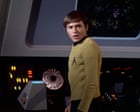
The American actor Walter Koenig, who has died aged 90, was unimpressed when, as a TV viewer, he caught a glimpse of Star Trek on its launch in 1966. “I’d flip through the channels,” he recalled, “and I’d see Styrofoam rocks – they were so obviously Styrofoam – and I said, ‘This has got to be phony.’ I didn’t give it a chance. I went past it.”
A year later, he was cast in the programme as Ensign Pavel Chekov, the baby-faced navigator of Russian parentage on the bridge of the starship USS Enterprise. This followed a search by Star Trek’s creator, Gene Roddenberry, for a character to appeal to young viewers, someone with the boyish, pop-star good looks of the Monkees singer Davy Jones.
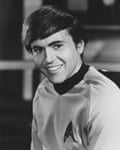
While denying the move was in response to complaints from the Soviet Union’s Pravda newspaper that there were no Russian crew members in Star Trek, Roddenberry conceded that it should acknowledge their achievement in putting the first cosmonaut into space.
Koenig (pronounced Kay-nig), the US-born son of Russian-Jewish immigrants from Lithuania, faked a Russian accent to take his place on the starship alongside William Shatner as Captain James T Kirk, Leonard Nimoy as the Vulcan science officer, Spock, DeForest Kelley as Dr Leonard “Bones” McCoy and George Takei as Hikaru Sulu at the helm, battling Klingons, Romulans and other alien races.
Fan mail poured in for Koenig as he relished playing a character in a programme that he had previously written off. Roddenberry suggested he ham up the accent to add a touch of comic relief, which meant Chekov would be seen looking at his monitor and warning Kirk of an imminent threat from an “enemy wessel”. Koenig said the accent was inspired by his father. “My dad inverted the Vs and the Ws,” he explained.
A patriot for his ancestral country, Chekov falsely gives credit to Russia for various inventions and achievements. He tells his colleagues that the biblical Garden of Eden was “outside Moscow”, Cinderella emanated from a Russian epic and scotch whisky “was een-vented by leetle old lady in Leningrad”.
Koenig appeared in 36 episodes throughout Star Trek’s second and third series (1967-69) before the programme was axed, having failed to attract a large enough audience on the US network NBC. But public interest in space missions after the 1969 moon landing, followed by syndicated re-runs across the US – and sales to more than 60 countries – turned it into a TV sci-fi classic.
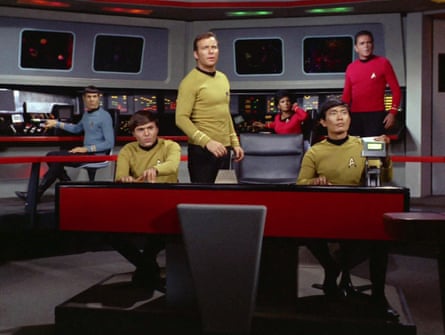
Koenig also appeared in all six feature films (1979-91) spun off from the series, plus Star Trek: Generations (1994), a “passing of the torch” story featuring the original stars with those from TV’s Star Trek: The Next Generation.
While he continued to land guest roles on TV, Koenig reached a sci-fi audience again in all five series of the 23rd-century “space opera” Babylon 5 (1993-98) as Alfred Bester, a manipulative senior cop with telepathic powers working for the Earth Alliance agency Psi Corps.
Born in Chicago, Illinois, Walter was the son of Sarah (nee Strauss) and Irving Koenig (born Isadore Naum Koenigsberg), who worked as a flautist, nightclub owner and translator after settling in the US and changing the family name.
As a communist, Irving survived investigation by the FBI during the McCarthy witch-hunts era. “His beliefs were very, very ideological and philosophical,” explained Koenig. “He wasn’t encouraging the overthrow of the US government. He was just trying to create a better world and have people come together.” It was a sentiment echoed by Roddenberry in Star Trek.
The family moved to Manhattan, New York, when Koenig was young, and he started acting at Fieldston high school. “I had a stutter until I took the lead in the school play and that killed the stutter,” he revealed.
After graduating in psychology from UCLA (the University of California Los Angeles), where a professor encouraged him to act, from 1958 he trained at the Neighborhood Playhouse School of the Theatre in New York alongside fellow students such as James Caan.
His early television appearances included parts as a student in The Untouchables (in 1963), a teenage street-gang leader in The Alfred Hitchcock Hour (in 1964) and a Las Vegas entertainer in I Spy (1966). He also appeared in a 1964 episode of The Lieutenant, one of Roddenberry’s early creations, playing a US Marine Corps sergeant recommended for officer candidates school.
After his run in Star Trek, Koenig voiced Pavel in spin-off video games and was a regular in front of Trekkies at fan conventions. He also popped up in other TV programmes in character roles and wrote for a handful of series, including Land of the Lost (1974) and The Powers of Matthew Star (1982), as well as an episode of Star Trek: The Animated Series (1973).
Koenig wrote an autobiography, Warped Factors: A Neurotic’s Guide to the Universe (1998), and a sci-fi novel, Buck Alice and the Actor-Robot (1988), a post-apocalyptic story featuring an actor who believes he is the robot he once portrayed on TV, as well as creating the comic-book superhero Raver (1993).
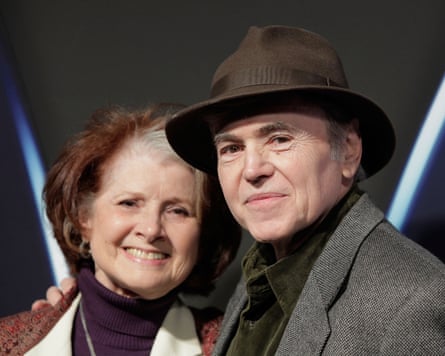
His first marriage, to the actor Anjanette Comer, ended in divorce. In 1965, Koenig married the actor Judy Levitt, who appeared in three Star Trek films; she died in 2022. Their son, Andrew, died in 2010. Koenig is survived by their daughter, Danielle.
KioskNews shows a cleaned-up reading view extracted from the publisher’s page — the original always lives on their site, not ours.