Mongolian herders enlist new tech against harsher, drier climate
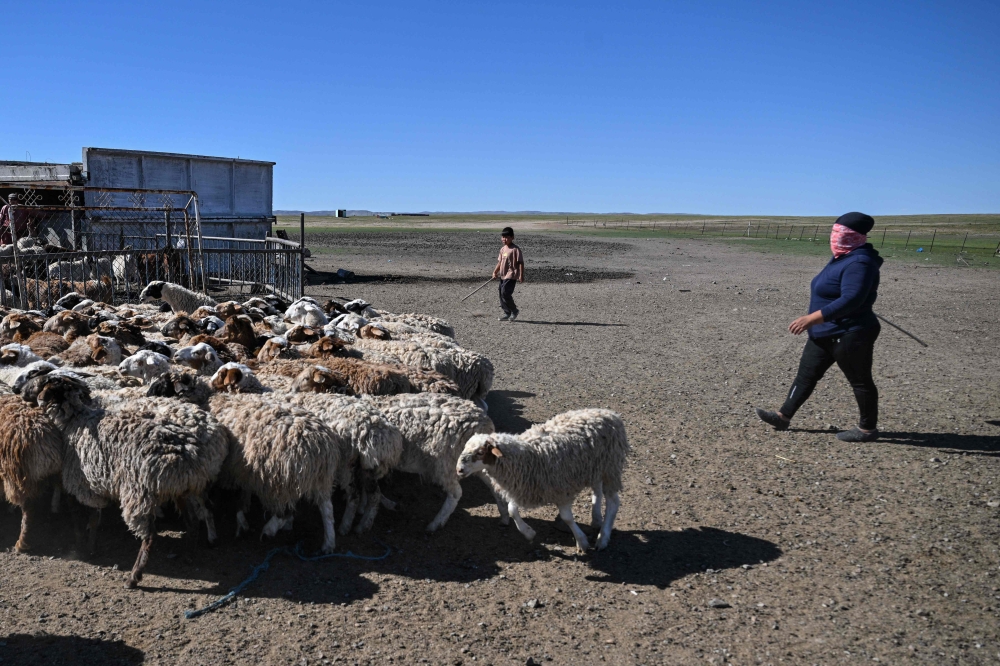

In this photo taken on August 25, 2026 sheep herder Ganchimeg (R) tends to her flock in Bayantal, Mongolia's Govisumber province. Mongolia is disproportionately affected by human-driven climate change, which scientists say is intensifying globally, threatening the country's nomadic population and their livestock. — AFP pic
First Published: Thursday, 24 Sep 2026 7:00 AM MYT
CHOYR (Mongolia), Sept 24 — Peter Catterall and Eenee Purevdorj When Mongolian herder Ganchimeg’s sheep strayed dangerously near a salty lake this summer, driven by hunger as nearby vegetation was poor, she was in a “total panic”.
“If they drank or stepped into it, the whole flock would be destroyed,” she told AFP outside her traditional ger, the tent’s shape silhouetted on the vast horizon of the Gobi Desert.
But thanks to an app helping herders navigate the risks that climate change is bringing to Mongolia, her husband was able to reach the sheep before they drank the brackish water.
“He immediately rushed over at top speed and intercepted them,” said Ganchimeg, a mother of four who, like many Mongolians, goes by just one name.
“If we hadn’t used that GPS tracker, we might have lost our entire flock.”
Herders are on the frontline of both climate change and desertification impacts — climate change is bringing extreme weather, including deadly cold snaps and droughts, which compound desertification caused by overgrazing.
Huge and sparsely populated, Mongolia is disproportionately affected by human-driven climate change, threatening the country’s nomadic population and livestock.
Bilgudei Gankhulug, the 26-year-old founder of the Hunu app used by Ganchimeg, told AFP he was inspired to help herders after a 2024 “dzud” — an extreme weather event that brought temperatures as low as minus 45C.
“Over eight million livestock died. I saw a lot of herders losing their income, losing their livelihoods in just the span of a few months,” said Bilgudei.
Meaning “strong nomad”, the name Hunu “embodies our mission of empowering nomadic herders with the help of technology,” he said.
‘Strong nomad’
The app allows nomads to track their livestock with a solar-charging GPS device attached to one animal per group — sufficient for herds that tend to stick together on the spacious steppe.
It has an artificial intelligence-powered weather feature with updates on the deadly dust storms and blizzards made more common in recent years by climate change, which scientists say is intensifying globally.
The app also compiles useful information on maps showing snow depth, wind direction, soil moisture and drought, assisting nomads in crucial decisions on where to move next.
Mongolia hosted talks on a global desertification treaty, known as COP17, last month.
Countries agreed financing for land restoration and tackling drought resilience, but concerns remain over a massive funding shortfall to the growing problem.
Bilgudei told AFP he hopes to expand Hunu to central Asian countries, and met with pastoralists from Tanzania and Uruguay at COP17 interested too.
“Our problems are pretty similar,” he said.
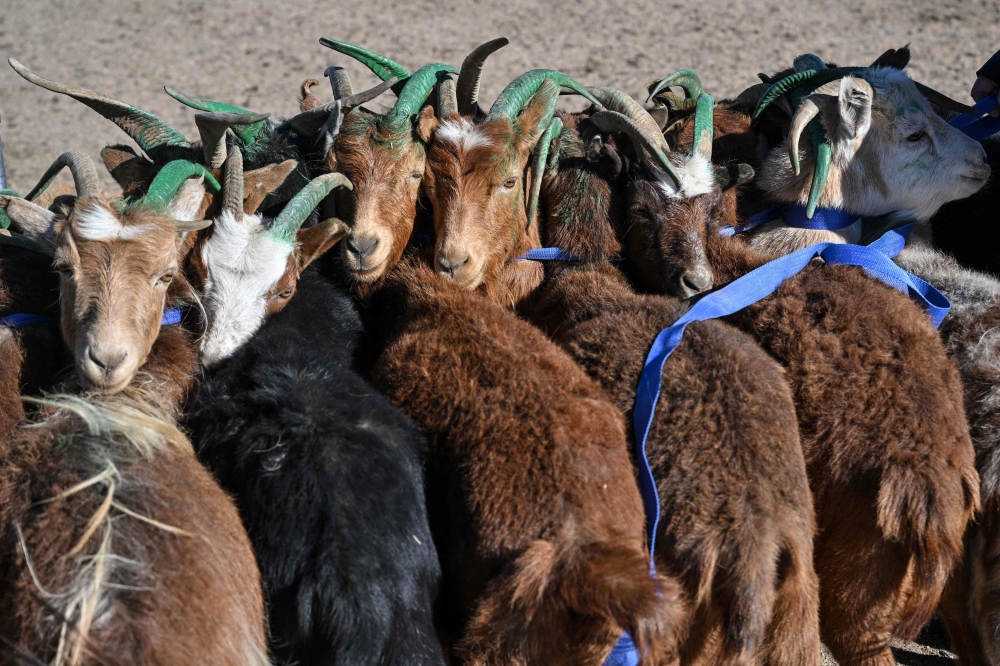
This photo taken on August 25, 2026 shows goats belonging to sheep herder Ganchimeg with painted horns in Bayantal, Mongolia's Govisumber province. Mongolia is disproportionately affected by human-driven climate change, which scientists say is intensifying globally, threatening the country's nomadic population and their livestock. — AFP pic
Global dilemma
About 80 per cent of Mongolia is rangelands, large tracts of unfarmed land covered by native grasses and shrubs, according to Chimeddorj Buyanaa, Mongolia conservation director at the World Wildlife Fund.
“Rangelands are critically important for the local communities and also for the livelihoods of all of the Mongolian people,” he told AFP.
Compounding the issue of climate change is rampant overgrazing that also endangers the region’s wildlife, including snow leopards and saiga antelope, Chimeddorj said.
Around one in four Mongolians are nomadic herders.
Nearly 82 per cent of the country’s territory is affected by desertification and land degradation, authorities said in August.
Many herder families have simply decided to pack up and seek new lives in the city.
“Dundgovi Province’s population has been declining continuously in recent years,” the southern region’s governor, Munkhchuluun Samdannyam, told AFP at COP17.
The worsening climate is a major problem for the province — three-fifths of its economy depends on livestock husbandry, Munkhchuluun said — but consequences are felt further afield.
“Dust storms can begin here and travel south to China, Korea, Japan and even as far as the United States,” Munkhchuluun said.
“(It) is not only Mongolia’s problem.
“It is also a global problem.”
‘Learn from traditions’
Speaking to AFP before heading to milk several camels tethered nearby, 49-year-old herder Bolormaa Erdenee said she was sceptical of forums like COP17.
“I often question whether the true voice of our herders is actually reaching decision-makers or not,” she said.
Bolormaa and her husband raise about 400 livestock.
In their usual summer grazing area, she said roads for heavy mining trucks now criss-cross the steppe, kicking up dust and disrupting her animals.
Several nomadic households nearby have already relocated nearly 200 kilometres (125 miles) away in search of greener pastures.
Hunu app founder Bilgudei — whose ancestors were nomadic herders — said traditional migration itself is a form of environmental protection.
Bilgudei told AFP it’s important to “learn from the traditions… and combine it with the science and technology”. — AFP
KioskNews shows a cleaned-up reading view extracted from the publisher’s page — the original always lives on their site, not ours.