Every Christopher Nolan and Anne Hathaway Movie, Ranked

Liam Gaughan is a film and TV writer at Collider. He has been writing film reviews and news coverage for ten years. Between relentlessly adding new titles to his watchlist and attending as many screenings as he can, Liam is always watching new movies and television shows.
In addition to reviewing, writing, and commentating on both new and old releases, Liam has interviewed talent such as Mark Wahlberg, Jesse Plemons, Sam Mendes, Billy Eichner, Dylan O'Brien, Luke Wilson, and B.J. Novak. Liam aims to get his spec scripts produced and currently writes short films and stage plays. He lives in Allentown, PA.
Christopher Nolan has had ongoing creative partnerships with several actors, but he has yet to find a singular muse. There are some obvious examples of iconic director-actor pairings like John Ford and John Wayne, Martin Scorsese and Robert De Niro, Akira Kurosawa and Toshiro Mifune, and John Cassavetes and Gena Rowlands, but Nolan is closer to someone like Wes Anderson or Quentin Tarantino because he employs a troupe of stars who frequently work alongside him. Michael Caine currently has the record with eight films (including an uncredited cameo in Dunkirk), but his roles are largely supporting. Cillian Murphy has six, and his fellow The Dark Knight stars Gary Oldman and Christian Bale each have four.
Anne Hathaway was in a fascinating place in her career when she first worked with Nolan, as it was during the moment in which she transformed from being a popular celebrity to one of the best actresses of her generation. Hathaway was Oscar-nominated for her performance in Rachel Getting Married, and she was met with heavy expectations when Nolan approached her to play Selina Kyle in the conclusion chapter in his Batman trilogy. Michelle Pfeiffer had been so iconic with her performance as Catwoman in Batman Returns that it was hard to imagine anyone else even coming close to matching what she did, but Hathaway owned the role and quickly became a Nolan favorite.
The most exciting thing about Nolan and Hathaway working together is the future, given that they are both in a position to keep putting out great work. Hathaway has an astounding year in 2026 with her dazzling role in the pop star odyssey Mother Mary, an acclaimed part in the dinosaur adventure The End of Oak Street, reprising her role in the blockbuster sequel to The Devil Wears Prada, and a performance in the highly-anticipated Colleen Hoover adaptation Verity. Nolan is in a position where he can do anything that he wants (and for good reason), so hopefully Hathaway will start adding more of his films to her credits.
3 ‘The Dark Knight Rises’ (2012)
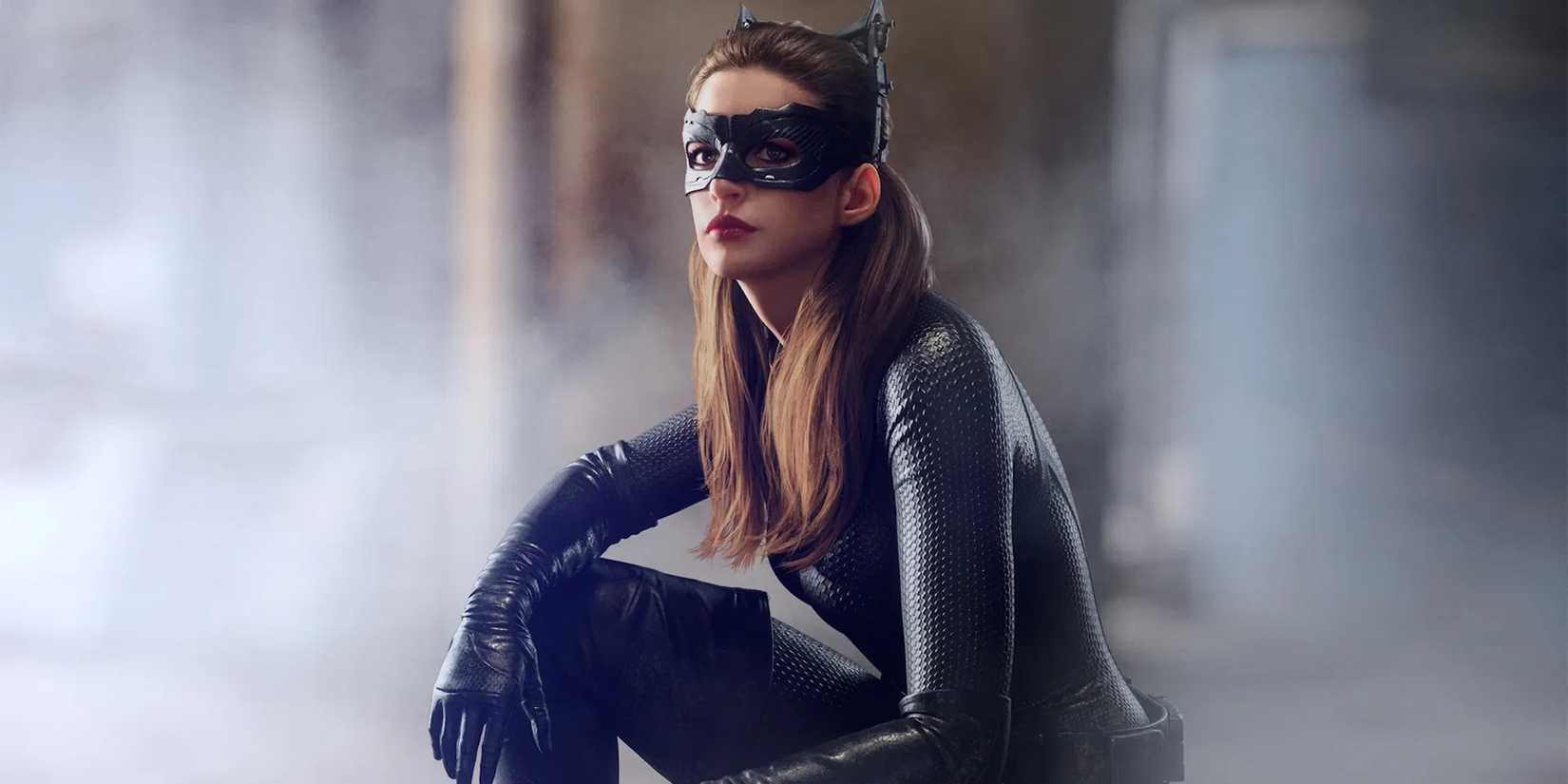
The Dark Knight Rises is one of the most underrated superhero films of the 21st century, which is an odd thing to say when considering that it made over $1 billion and was Nolan’s biggest hit ever up until this year. While it was easy to compare The Dark Knight Rises to the first two installments in the trilogy, which were arguably more polished and consistent, The Dark Knight Rises is more than satisfying as the end to a story. The trajectory of Nolan’s superhero series is similar to that of the original Star Wars trilogy, and The Dark Knight Rises is essentially his Return of the Jedi; it’s slightly more lighthearted, not quite as good as its predecessors (especially the mature and twisty second chapter), but still an absolute blast that gives the characters a proper sendoff and ends the overarching narrative in a profoundly emotional manner.
Hathaway is one of the reasons that The Dark Knight Rises works so well because it was a major step up for Nolan’s writing of female characters. Maggie Gyllenhaal did a better job in The Dark Knight than Katie Holmes did in Batman Begins, but Hathaway was a fully fleshed-out character who actually challenged Bruce Wayne because she came from a much different background and challenged him intellectually. Bale and Hathaway have enough chemistry to sell the romance, and she even gets to deliver a few memorable one liners (contrary to popular belief, Nolan’s films are often pretty funny). Yet, the most important aspect of The Dark Knight Rises and why it has aged so well is that it offers a definitive concussion that comes with a sense of finality, which isn’t seen in any other comic book franchise; Logan’s ending was altered when Hugh Jackman returned for Deadpool & Wolverine, and the Marvel Cinematic Universe has already turned to bring back Robert Downey Jr. and Chris Evans in the aftermath of the perfect end of Avengers: Endgame. The Dark Knight Rises ends by suggesting that there is hope for Bruce’s journey beyond being Batman, with the indication that Hathaway’s Selina is a big part of it.
2 ‘Interstellar’ (2014)

Interstellar was Nolan’s attempt to merge the influences of two of his biggest influences in Steven Spielberg and Stanley Kubrick, who are directors whose work couldn’t be more distinct from one another. Kubrick is an exacting director with intellectual, existential themes layered throughout his detailed work, and Spielberg is known for having emotional value through the most striking images in cinematic history. With Interstellar, Nolan merges a deeply philosophical and ambitious story of mankind’s role in the makeup of the universe with a powerful story of family, inspired by the love he has for his own children. Hathaway has an interesting role in the film because she exists outside of the Cooper family, yet still has an emotional calling as a result of her search for a lover lost in space.
Taking such swings with emotional sincerity was one of the most ambiguous gambles of Nolan’s career, and it’s one of the reasons that Interstellar has continued to resonate with viewers even more in the years since its release (with its IMAX re-release indicating just how beloved it has become). Although initially critics found it easy to take shots at Nolan for being detached, the purity of Interstellar’s emotional core is now a breath of fresh air when compared to the overwhelmingly snarky, irony-pilled language that has taken over nearly every blockbuster film; sensitivity is always going to be preferable to the non-stop quipiness that Ryan Reynolds and Dwayne Johnson have made into their entire personalities. Hathaway is given lines in Interstellar that might have felt too on-the-nose had they been delivered by anyone else, but Nolan clearly trusted her with carrying the emotional weight of the story. Matthew McConaughey is often praised for delivering a generational performance in Interstellar, but Hathaway’s wonderful work is further proof that the film’s ensemble is better than it has been given credit for.
1 ‘The Odyssey’ (2026)
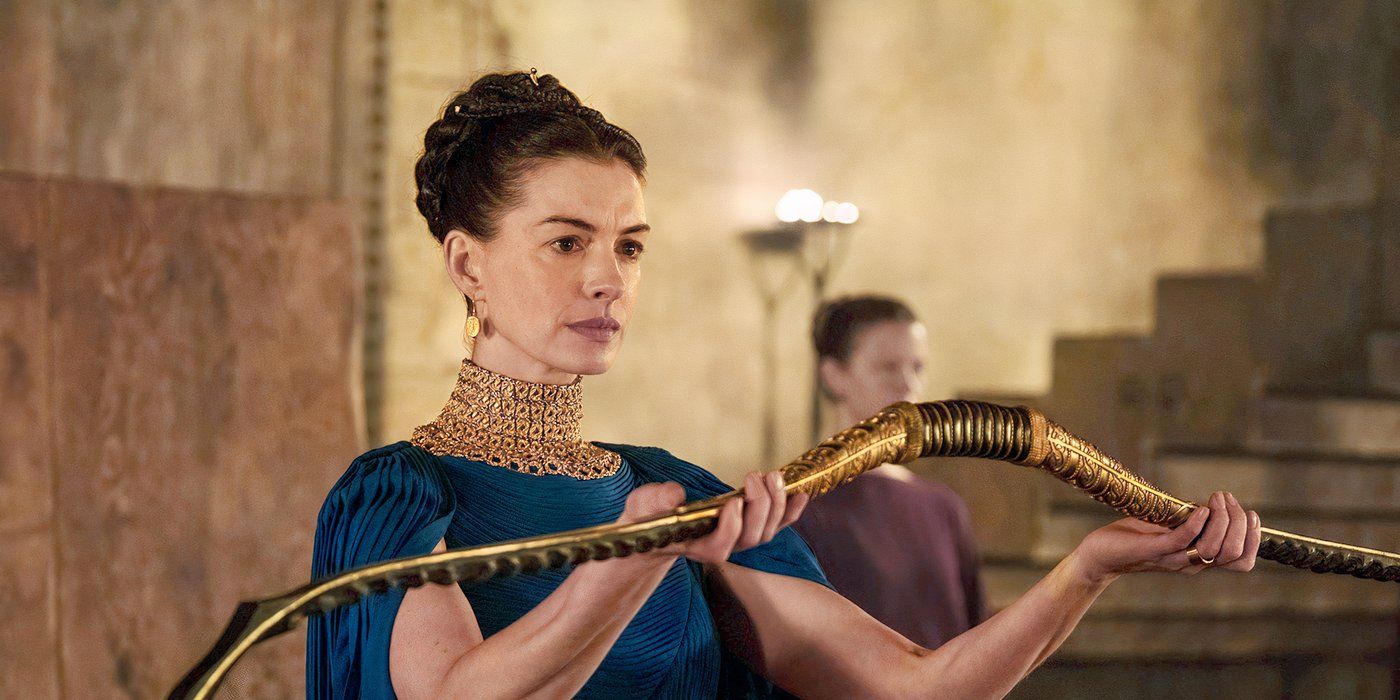
The Odyssey solidified that Nolan is on his way to become one of the greatest directors of all-time because it is simply unfeasible to imagine anyone else being capable of working with this scale and complexity. Nolan was coming off of a Best Picture winning instant classic that examined one of the most consequential moments in world history, and his next endeavor was to adapt the most famous myth of all-time, which just so happened to resonate throughout every hero’s journey in storytelling ever since. The Odyssey is a subversive adaptation that uses the passage of time as an antagonist that chases Odysseus (Matt Damon) on his journey to return home to Ithaca, and Hathaway’s role as Penelope is arguably just as important. Her role protecting Ithaca from another ruler who would marry her is the last hope for its freedom, as the Trojan War has threatened to destroy what remains of civilization.
Hathaway is able to impressively play Penelope over the course of decades, and that doesn’t just come from the makeup department. She has to embody the spirit of a woman who has slowly been beaten down by the pressures of isolation, offering distant hope to Telemachus (Tom Holland) without knowing if his father will ever return. Nolan cleverly chooses to isolate what takes place in Ithaca from any of the godly presences, meaning that Hathaway’s section of the film is the most objective; while any of Odyesseus’ experiences with the Gods might come down to personal interpretation, the years of emotional damage have clearly taken a toll on Penelope that affects her will. It’s the type of performance that only grows more impressive upon repeated viewings, especially when looking at the different tenor of Hathaway’s work during Odysseus’ departure and return.
The Odyssey has one of the most impressive ensemble casts in recent memory, and there are many names that can be singled out for praise; John Leguizamo and Samantha Morton are already singled out as being potential contenders in the awards race, but Oscar voters should consider the work by Himesh Patel and Charlize Theron as well. Yet, Hathaway provides the beginning and ending of the story, weathering through a very different type of Odyssey than the one that her husband experiences. The Odyssey is looking more and more like it will be the runaway Best Picture winner (La Bola Negra and Wild Horse Nine don’t seem like they could catch up), and Hathaway could very well end up being one of the few stars to win two Oscars if she picks up a second Academy Award for Best Supporting Actress after her previous victory for Les Miserables. It would be a fairly historical victory, but would not be an undeserving one when considering how critical she is to the success of one of the most successful films in the history of cinema.
KioskNews shows a cleaned-up reading view extracted from the publisher’s page — the original always lives on their site, not ours.