13 Great Movies You Didn't Realize Were Based on Books

Updated
Jeremy has more than 2900 published articles on Collider to his name, and has been writing for the site since February 2022. He's an omnivore when it comes to his movie-watching diet, so will gladly watch and write about almost anything, from old Godzilla films to gangster flicks to samurai movies to classic musicals to the French New Wave to the MCU... well, maybe not the Disney+ shows.
His favorite directors include Martin Scorsese, Sergio Leone, Akira Kurosawa, Quentin Tarantino, Werner Herzog, John Woo, Bob Fosse, Fritz Lang, Guillermo del Toro, and Yoji Yamada. He's also very proud of the fact that he's seen every single Nicolas Cage movie released before 2022, even though doing so often felt like a tremendous waste of time. He's plagued by the question of whether or not The Room is genuinely terrible or some kind of accidental masterpiece, and has been for more than 12 years (and a similar number of viewings).
When he's not writing lists - and the occasional feature article - for Collider, he also likes to upload film reviews to his Letterboxd profile (username: Jeremy Urquhart) and Instagram account.
He has achieved his 2025 goal of reading all 13,467 novels written by Stephen King, and plans to spend the next year or two getting through the author's 82,756 short stories and 105,433 novellas.
Sign in to your Collider account
Even if you watch movies more than you read books, you're probably aware that the likes of Dune, The Lord of the Rings, and IT (among many, many others) are based on books. Books have long been a source of stories for cinema, ever since movies first became a thing, and it doesn’t really feel like movie adaptations will ever go away. Not any time soon; not ever. That’s not the worst thing in the world, though, because they can be done right.
The following films were indeed instances of adaptations going right, but also, these movies eclipsed their source material either upon release, or eventually, some years on from first coming out. It’s not necessarily the case that all these adaptations are better than the source material by default, but they are more well-known, to the extent that you might well be surprised that some of these movies were even based on books in the first place.
13 'Drive' (2011)

2011’s Drive is very cinematic, as are all the movies here, but it’s got a style over substance thing (arguably) going for it, which means it’s particularly hard to imagine as something other than a film. The movie itself is probably a cult classic in the overall scheme of things, and so that makes the book it’s based on technically even more obscure, and… well, “whatever the book equivalent of a cult classic is” was about to be typed, but books can probably be cult classics, too.
Lots of Drive is hard to imagine without the music, but if you're reading the book it’s based on, and you don’t pull up that soundtrack and score separately, you do have to go without it. As for the book itself, it had the same name and was written by crime writer James Sallis, with the movie ultimately being a fairly faithful adaptation of the book in question, certainly in spirit, and then also, to some extent, on a narrative front.
12 'The Last Unicorn' (1982)
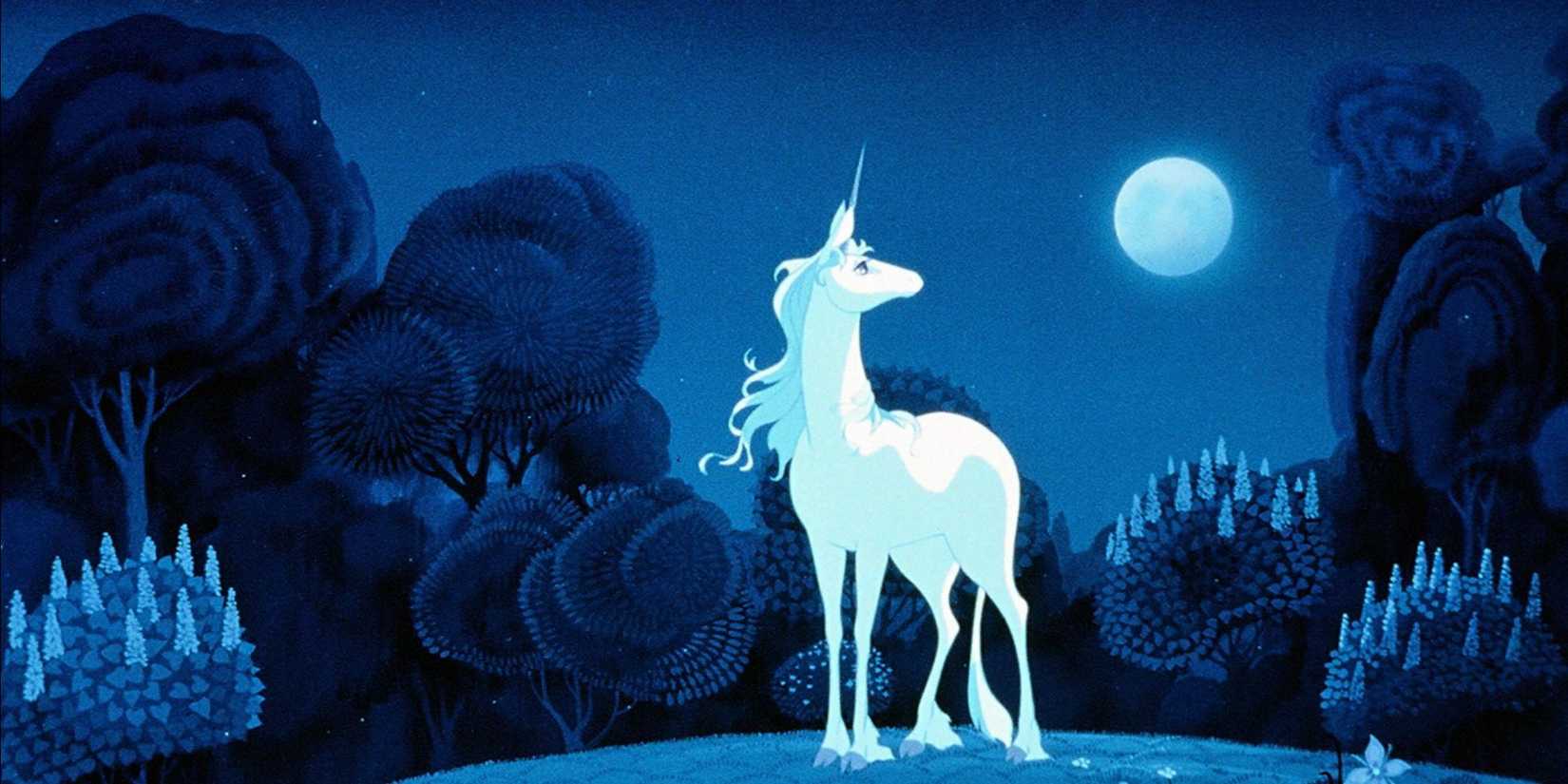
Peter S. Beagle's fantasy novel The Last Unicorn is one of the greatest fantasy books of the '60s, undoubtedly one of those perfect fantasy books that became even better movies. Indeed, Arthur Rankin Jr. and Jules Bass' film of the same name is a legendary American-Japanese co-production unlike any other movie the animated fantasy genre has ever delivered.
Though The Last Unicorn was a box office flop back in 1982, it has since maintained a steady cult following largely stemming from how excellent an adaptation of Beagle's classic it is. It was Beagle himself who penned the film's screenplay, which is greatly elevated by the stunning animation crafted by a team of artists who would later go on to form the core of Studio Ghibli. —Diego Pineda Pacheco
11 'One Battle After Another' (2025)

Thomas Pynchon is an author known for being a postmodernist author, and having a knack for writing challenging books that don’t really feel all that adaptable. That hasn’t stopped Paul Thomas Anderson from doing so twice, with Inherent Vice being the slightly more obvious adaptation of the two, just because the book and movie share a title, and also because the movie of Inherent Vice kind of follows the plot of the book (which is digestible/comprehensible by Pynchon’s standards).
One Battle After Another, though, is a looser adaptation, to the point where it’s probably more accurate to say that it was inspired by Vineland, rather than being something that adapted Vineland. They’ve got the different titles and all, and One Battle After Another, while being offbeat at times, isn't hard to follow, and feels a bit more exciting and crowd-pleasing overall.
10 'Coraline' (2009)

LAIKA has been the undisputed masters of 21st-century stop-motion animation in Hollywood since the release of their first-ever feature film, Henry Selick's Coraline. It's an adaptation of Neil Gaiman's iconic children's novella of the same title, itself recognized as one of the best and most important pieces of horror literature for children of all time.
Fittingly, Selick's Coraline could potentially be a phenomenal way to introduce younger audiences to the horror genre, seeing as it's one of the best dark fantasy movies in history. The stop-motion animation is absolutely stunning and utterly timeless; the writing is exceptional, and the way the source material is expanded upon is an absolute delight. There's a good reason why Coraline remains the only LAIKA feature that has been profitable at the box office thus far. —Diego Pineda Pacheco
9 'Forrest Gump' (1994)
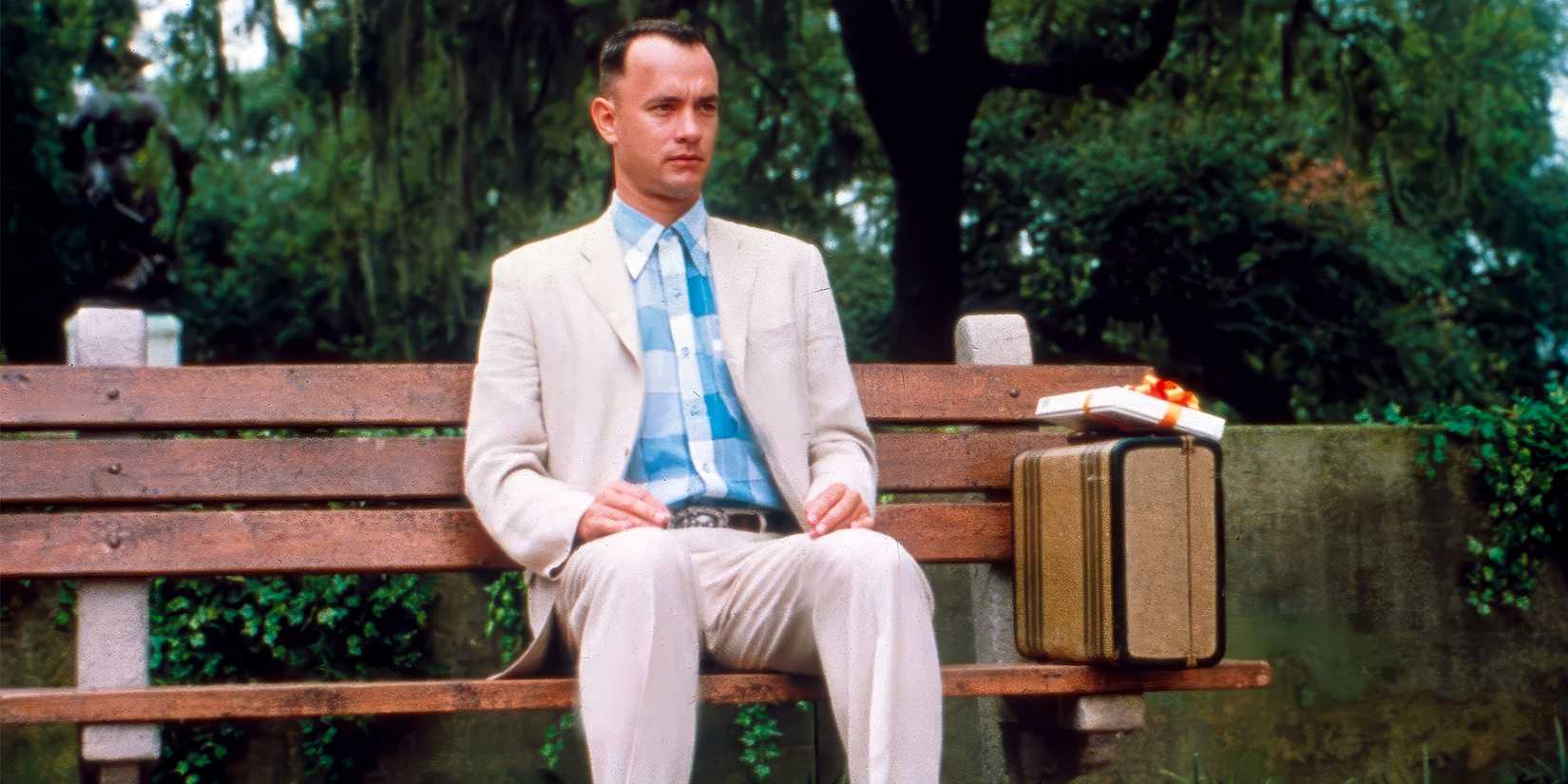
Forrest Gump can be included here just because the movie was so monumentally popular, and really overshadowed the Winston Groom book of the same name. As is the case with movie adaptations, the book did get a bit more attention once the film came out, but even then, never to the extent that it came close to matching the movie’s popularity, and that’s a factor in Forrest Gump ever being a book, proving surprising.
There was also a sequel to the book published one year after the movie came out, called Gump and Co., but that never became a film, obviously. Look, Forrest Gump (1994) is one of those cases where a movie took a book and improved it, Jaws-style, but unlike with Jaws (a decent book made into a great movie), Forrest Gump was more a flawed book reshaped into a… well, not a movie everyone loves, and it’s still flawed as an adaptation, but it’s not too hard to see why it was liked, and why it still might be liked.
8 'Grave of the Fireflies' (1988)

When it comes to Studio Ghibli and anime cinema in general, it's not all Hayao Miyazaki. Indeed, Isao Takahata is the studio's other poster boy, and many would confidently recognize Grave of the Fireflies as his best work. It's based on the short autobiographical story of the same name by Akiyuki Nosaka, originally published in a magazine and later made available in book form.
This WWII drama is easily one of the most hopeless movies of all time, made all the more gut-wrenching by the fact that it's based on a harrowing true story. It's difficult to imagine this adaptation working nearly as well in live-action form. Through its gorgeous animation, Grave of the Fireflies captures the grounded, devastatingly realistic nature of the source material perfectly. —Diego Pineda Pacheco
7 'Zodiac' (2007)

This might not be the best example, since Robert Graysmith’s Zodiac is a decently well-known book, and David Fincher’s Zodiac is kind of underrated (though not entirely overlooked, because it’s picked up acclaim and attention in the nearly 20 years since it came out). But the Zodiac book and movie are worth mentioning here because the movie so totally overshadows the book in quality, and also finds a more interesting angle to explore.
Graysmith’s more of a character in the movie, while he’s less introspective in the book, being somewhat of an insider during the whole Zodiac Killer investigation, but not being as insightful about the whole thing as he probably thought he was. Zodiac (2007) does follow some of his book, but then becomes more interesting as a psychological drama/thriller sort of thing in its back half, unpacking obsession and the way a lack of answers about certain things can lead to potential madness.
COLLIDERInteractive
Ballot sealed
Movies/Academy Awards/Best Picture
Collider · Best Picture
Which Oscar Best Picture
Is Your Perfect Movie?
Five winners · ten questions · one envelope
Five Oscar Best Picture winners. Five completely different visions of what cinema can be and what it can do to you. One of them is the film made for the way your mind works, and ten questions will work out which. The nominees
2020Parasite
2023Everything Everywhere All at Once
2024Oppenheimer
2015Birdman
2008No Country for Old Men
Reel01 / 10
Question 01 of 10TONE
01 What kind of film experience are you really after? The best movies do not just entertain. They leave something behind.
Keys 1 to 5 or A to E · Enter to advance
Reel02 / 10
Question 02 of 10THEME
02 Which idea grabs you most in a film? Great films are driven by a central obsession. What is yours?
Keys 1 to 5 or A to E · Enter to advance
Reel03 / 10
Question 03 of 10STRUCTURE
03 How do you like your story told? Form is content. The way a story is shaped changes what it means.
Keys 1 to 5 or A to E · Enter to advance
Reel04 / 10
Question 04 of 10VILLAIN
04 What makes a truly great antagonist? The opposition defines the protagonist. What kind of opposition fascinates you?
Keys 1 to 5 or A to E · Enter to advance
Reel05 / 10
Question 05 of 10ENDING
05 What do you want from a film's ending? The final note is the one that lingers. What do you want it to sound like?
Keys 1 to 5 or A to E · Enter to advance
Reel06 / 10
Question 06 of 10WORLD
06 Which setting pulls you in most? Where a film takes place shapes everything: mood, stakes, what is even possible.
Keys 1 to 5 or A to E · Enter to advance
Reel07 / 10
Question 07 of 10CRAFT
07 What cinematic craft impresses you most? Every great film has a signature, the element that makes it unmistakable.
Keys 1 to 5 or A to E · Enter to advance
Reel08 / 10
Question 08 of 10PROTAGONIST
08 What kind of main character do you root for? The protagonist is the lens. Who you follow says something about you.
Keys 1 to 5 or A to E · Enter to advance
Reel09 / 10
Question 09 of 10PACE
09 How do you feel about a film that takes its time? Pace is a choice. Some films sprint. Others let tension accumulate slowly, deliberately.
Keys 1 to 5 or A to E · Enter to advance
Reel10 / 10
Question 10 of 10AFTERMATH
10 What do you want to feel walking out of the cinema? The best films leave a mark. What kind of mark do you want?
Keys 1 to 5 or A to E · Enter to advance
The envelope, pleaseAnd the Oscar goes to
★ Best Picture, 2020 Parasite Bong Joon-ho, 2019 A film that hides its true intentions until the moment it is ready to reveal them.
You are drawn to films that operate on several levels at once, that begin in one genre and quietly, brilliantly migrate into another. Bong Joon-ho's Parasite is a film about class, desire and the architecture of inequality that manages to be darkly funny, deeply suspenseful and genuinely shocking across a single extraordinary running time. Your instinct is for cinema that rewards close attention and punishes assumptions, right up to its devastating final image. From the Collider file
- The first film not in the English language to win Best Picture, in the Academy's 92-year history to that point.
- It took four Oscars in one night: Picture, Director, Original Screenplay and International Feature.
- It won the Palme d'Or at Cannes in 2019 by a unanimous jury vote, the first Korean film to do so.
- The Park family's modernist house was not a location. It was built from scratch on an outdoor lot.
Reads between the lines Loves a reveal Attention to detail
★ Best Picture, 2023 Everything Everywhere All at Once Daniel Kwan and Daniel Scheinert, 2022 A film that refuses to choose between being entertaining and being meaningful.
You want it all, and this one gives you all of it. The Daniels' Everything Everywhere All at Once is among the most maximalist films ever made: action comedy, multiverse science fiction, family drama, existential crisis, and an emotional core that sneaks up on you in the middle of the chaos. You respond to ambition. Being overwhelmed is the design, not the side effect, because the feeling of being crushed by infinite possibility is exactly what the film is about. From the Collider file
- Seven Oscars, including three acting wins for Michelle Yeoh, Ke Huy Quan and Jamie Lee Curtis.
- Michelle Yeoh became the first Asian woman to win Best Actress.
- The visual effects were handled by a team of fewer than ten people, most of them self-taught.
- Ke Huy Quan had all but left acting for two decades before this role brought him back.
Wants everything Big swings Soft center
★ Best Picture, 2024 Oppenheimer Christopher Nolan, 2023 A film about the gap between what we can do and what we should do.
You are drawn to cinema on a grand scale, films that treat history not as a backdrop but as a force, then place their characters inside that force and watch what happens. Christopher Nolan's Oppenheimer sits inside one of the most consequential moments in human history and refuses to look away from it. You want your films to feel important without being self-important, earning their ambition through craft and the gravity of the subject. This one is enormous, complicated, and offers no easy comfort. From the Collider file
- Seven Oscars, including Nolan's first wins for directing and for Best Picture.
- Cillian Murphy and Robert Downey Jr. both took their first Academy Awards for it.
- Kodak engineered a black-and-white 65mm stock that did not previously exist so Nolan could shoot those sequences on IMAX.
- A three-hour, R-rated drama about theoretical physics that passed 950 million dollars worldwide.
Thinks in decades Scale and weight No easy comfort
★ Best Picture, 2015 Birdman Alejandro G. Iñárritu, 2014 A film doing something that probably should not be possible.
You are drawn to films that foreground their own construction, where the how of the filmmaking becomes part of the what it is about. Alejandro G. Iñárritu's Birdman, stitched to appear as one continuous take, is cinema examining itself through the cracked mirror of a fading actor's ego. You respond to formal daring. Michael Keaton's performance and Emmanuel Lubezki's restless camera make something unlike anything else: a film about creativity, relevance, self-destruction and never quite knowing whether your work means anything at all. From the Collider file
- Four Oscars, among them Best Picture and Best Director for Iñárritu.
- Emmanuel Lubezki's win here was the middle of three consecutive cinematography Oscars, after Gravity and before The Revenant.
- Antonio Sánchez's improvised drum score was ruled ineligible for the score category, which caused a minor uproar.
- The long-take illusion was built from a handful of extended shots joined by hidden cuts.
Formally daring Camera as character Ego and art
★ Best Picture, 2008 No Country for Old Men Joel and Ethan Coen, 2007 A film that treats dread as a form of meaning.
You are drawn to cinema that trusts silence, refuses to explain itself, and lets unease do the talking. The Coen Brothers' No Country for Old Men is about the arrival of a new kind of evil: implacable, arbitrary, and indifferent to the moral frameworks we use to make sense of things. It is one of the most tightly controlled films ever made, and that control is the source of the terror. You want your films to haunt you rather than comfort you, and you have no interest in a resolution that would be a lie. From the Collider file
- Four Oscars: Picture, Director, Adapted Screenplay, and Supporting Actor for Javier Bardem.
- Adapted from Cormac McCarthy's 2005 novel, with much of his dialogue carried over intact.
- Carter Burwell's score runs about sixteen minutes and is nearly inaudible by design.
- Roger Deakins was nominated twice that year, for this and The Assassination of Jesse James, and won for neither.
Trusts silence Dread over answers No tidy endings
Ballot tally · your top three
1
2
3
Copied to your clipboard
Ballot counted byCOLLIDERCollider.com · The Awards Desk
6 'Eyes Wide Shut' (1999)

Stanley Kubrick adapted so many books throughout his filmmaking career, which isn't odd for filmmakers generally, but it’s surprising to realize for a filmmaker like Kubrick, just because most of his movies feel so distinctly his own. He was one of the all-time great auteurs, after all, so he definitely knew how to take stories written by others and make them Kubrickian, for lack of a better word.
Adaptations like The Shining and (to a slightly lesser extent) A Clockwork Orange were based on well-known works of literature, but Eyes Wide Shut? Not so much. It was based on a 1926 novella called Traumnovelle (by Arthur Schnitzler), which translates to “Dream Story,” and that sounds about right, considering the fairly nightmarish mood Eyes Wide Shut has for much of its runtime.
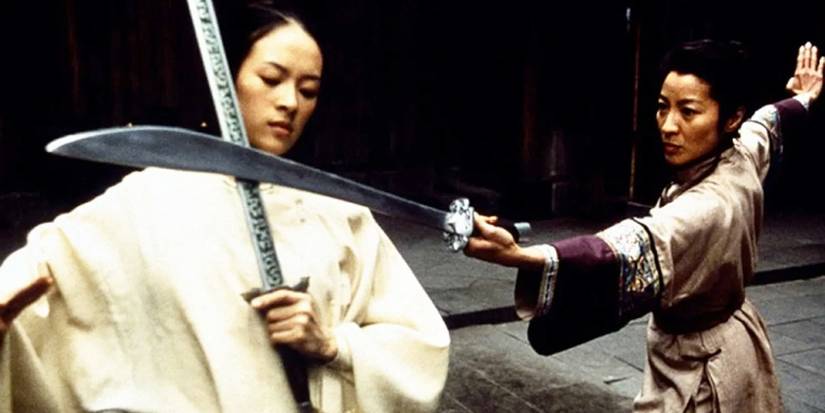
Up there among the best martial arts movies ever made (as far from hot as takes get, really), Crouching Tiger, Hidden Dragon is a bit like Drive in the sense that it feels inherently cinematic, but surprise, it’s here, on this ranking, and so it’s not. It’s based on the fourth part of the Crane-Iron Series by the Chinese author Wang Dulu (well, that's his pseudonym, with his real name being Wang Baoxiang).
So, Crouching Tiger, Hidden Dragon is technically based on a sequel, but the movie stands alone, and since it felt like a gateway martial arts movie for plenty of Western viewers, it probably goes without saying that it also sort of “introduced” those same viewers to that series. But if you're not familiar with Crane-Iron, and don’t see the “based on” credit, it’s pretty easy to assume Crouching Tiger, Hidden Dragon is just its own thing.
4 'Once Upon a Time in America' (1984)

There was a book called The Hoods (by Harry Grey) that was the basis for Once Upon a Time in America, but it’s stuck in obscurity compared to the movie. And the movie itself was underrated for a while, and might remain a bit more challenging and daunting than some other iconic gangster movies, admittedly, though it would be a stretch to call it properly overlooked 40+ years on from its release.
The book’s noted for being semi-autobiographical, but not to the extent that Once Upon a Time in America can be called a biopic. It’s also an instance where, sadly, the book was fairly obscure at the time of the author’s death, as Grey passed away four years before he might've received even a little more recognition for Once Upon a Time in America. Then again, director Sergio Leone passed away only five years after Once Upon a Time in America, so he arguably never received the recognition he deserved for it either.
KioskNews shows a cleaned-up reading view extracted from the publisher’s page — the original always lives on their site, not ours.